obtain the general equation of distance traveles of an object that moves under a constant acceleration....
obtain the general equation of distance traveles of an object that moves under a constant acceleration. You need to show how you obtain yout equation. Explain each step in detail as well as variables you employ in your derivation.
Homework Answers

Add Answer to:
obtain the general equation of distance traveles of an
object that moves under a constant acceleration....
Obtain the acceleration equation for general motion starting from the general motion velocity equation step by...
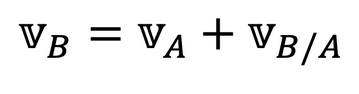 Obtain the acceleration equation for general motion starting
from the general motion velocity equation step by step.
JB VA + VB/A
Obtain the acceleration equation for general motion starting
from the general motion velocity equation step by step.
JB VA + VB/A
5. Consider an object weighing m (kg) that is initially at rest and experiences a constant...
5. Consider an object weighing m (kg) that is initially at rest and experiences a constant acceleration of a (m/s2) for a duration of t (s). Express your answer to each of the following questions in the form of an equation involving only the variables m, a, and t (neglecting the effects of friction). (a) What is the force on the object? (b) Integrate the acceleration to obtain the final velocity of the object. (c) Integrate the velocity to obtain...
Problem 1 to 6: You are driving your brand new Mustang on a straight highway. Suddenly...
 Problem 1 to 6: You are driving your brand new Mustang on a straight highway. Suddenly you felt a strong desire to check physics while driving and so you checked the gauge: It indicates that the speed is 80 kilometers per hour. You enjoyed driving for another hour while checking speeds. At the end of speeding up period of one hour, you read your car's speed as 160 kilometer per hour. Then suddenly you saw red and blue flashing light...
An object moves in one dimensional motion with constant acceleration a = 6.9 m/s2. At time...
An object moves in one dimensional motion with constant acceleration a = 6.9 m/s2. At time t = 0 s, the object is at x0 = 1.7 m and has an initial velocity of v0 = 3.6 m/s. How far will the object move before it achieves a velocity of v = 6.2 m/s? Your answer should be accurate to the nearest 0.1 m.
An object moves in one dimensional motion with constant acceleration a = 5.9 m/s2. At time...
An object moves in one dimensional motion with constant acceleration a = 5.9 m/s2. At time t = 0 s, the object is at x0 = 4.1 m and has an initial velocity of v0 = 4.4 m/s. How far will the object move before it achieves a velocity of v = 8.5 m/s? Your answer should be accurate to the nearest 0.1 m.
An object moves in one dimensional motion with constant acceleration a = 4.8 m/s2. At time...
An object moves in one dimensional motion with constant acceleration a = 4.8 m/s2. At time t = 0 s, the object is at x0 = 1.4 m and has an initial velocity of v0 = 3.6 m/s. How far will the object move before it achieves a velocity of v = 6.5 m/s? Your answer should be accurate to the nearest 0.1 m.
An object moves in one dimensional motion with constant acceleration a = 3.2 m/s2. At time...
An object moves in one dimensional motion with constant acceleration a = 3.2 m/s2. At time t = 0 s, the object is at x0 = 2.2 m and has an initial velocity of v0 = 4.9 m/s. How far will the object move before it achieves a velocity of v = 8.4 m/s? Your answer should be accurate to the nearest 0.1 m.
An object that is initially at rest begins to rotate under a constant angular acceleration of...
An object that is initially at rest begins to rotate under a constant angular acceleration of 1.56 rad/s2. How long does it take the object to undergo an angular displacement of 234 rad?
Velocity and acceleration problem Help please An object moves clockwise around the track shown in the...
 Velocity and acceleration problem
Help please
An object moves clockwise around the track shown in the diagram below. The instantaneous velocity and the instantaneous acceleration of the object when it is at point A are shown. a) Draw and label on the diagram above arrows to represent the direction and magnitude of the parallel and perpendicular components of the instantaneous acceleration of the object at point A. b) Is the object slowing down, speeding up or does it have constant...
Velocity and acceleration problem
Help please
An object moves clockwise around the track shown in the diagram below. The instantaneous velocity and the instantaneous acceleration of the object when it is at point A are shown. a) Draw and label on the diagram above arrows to represent the direction and magnitude of the parallel and perpendicular components of the instantaneous acceleration of the object at point A. b) Is the object slowing down, speeding up or does it have constant...
An object moves with constant acceleration 4.70 m/s2 and over a time interval reaches a final...
An object moves with constant acceleration 4.70 m/s2 and over a time interval reaches a final velocity of 13.6 m/s. (a) If its original velocity is 6.80 m/s, what is its displacement during the time interval? (b) What is the distance it travels during this interval? (c) If its initial velocity is −6.80 m/s, what is its displacement during this interval? (d) What is the total distance it travels during the interval in part (c)?
 Obtain the acceleration equation for general motion starting
from the general motion velocity equation step by step.
JB VA + VB/A
Obtain the acceleration equation for general motion starting
from the general motion velocity equation step by step.
JB VA + VB/A
 Problem 1 to 6: You are driving your brand new Mustang on a straight highway. Suddenly you felt a strong desire to check physics while driving and so you checked the gauge: It indicates that the speed is 80 kilometers per hour. You enjoyed driving for another hour while checking speeds. At the end of speeding up period of one hour, you read your car's speed as 160 kilometer per hour. Then suddenly you saw red and blue flashing light...
 Velocity and acceleration problem
Help please
An object moves clockwise around the track shown in the diagram below. The instantaneous velocity and the instantaneous acceleration of the object when it is at point A are shown. a) Draw and label on the diagram above arrows to represent the direction and magnitude of the parallel and perpendicular components of the instantaneous acceleration of the object at point A. b) Is the object slowing down, speeding up or does it have constant...
Velocity and acceleration problem
Help please
An object moves clockwise around the track shown in the diagram below. The instantaneous velocity and the instantaneous acceleration of the object when it is at point A are shown. a) Draw and label on the diagram above arrows to represent the direction and magnitude of the parallel and perpendicular components of the instantaneous acceleration of the object at point A. b) Is the object slowing down, speeding up or does it have constant...
Most questions answered within 3 hours.
-
Where is the error in this code sequence?
String s1 = "Hello";
String s2 = "ello";...
asked 11 months ago -
Financial data for Joel de Paris, Inc., for last year
follow:
Joel de Paris, Inc.
Balance...
asked 11 months ago -
Consider this reaction:
Al2(SO4)3 (aq)+ BaCl3
(aq) Al2Cl6 (aq)- +
3BaSO4(s) . What is the...
asked 11 months ago -
Suppose that Savneet is considering increasing her
recent random sample from 20 car rentals to 40...
asked 11 months ago -
Trucks arrive at an unloading terminal at an average rate of 120
per hour.
Trucks arrive...
asked 11 months ago -
Why are methanol and ethanol completely soluble in water while
octanol is not very little soluble....
asked 11 months ago -
A facilities manager at a university reads in a research report
that the mean amount of...
asked 11 months ago -
When the CuSO4 is rehydrated by adding water to the anhydrous
compound, is this an endothermic...
asked 11 months ago -
A ray of sunlight is passing from diamond into crown glass; the
angle of incidence is...
asked 11 months ago -
A block of mass 0.249 kg is placed on top of a light, vertical
spring of...
asked 11 months ago -
how do the kidneys compensate in the presences of acidosis
a) trigger hyperventilate
b) reserve acid...
asked 11 months ago -
Question 501 pts
The rental rate of capital to the firm increases. Which of the
following...
asked 11 months ago