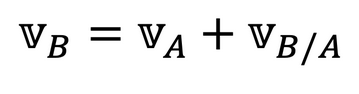
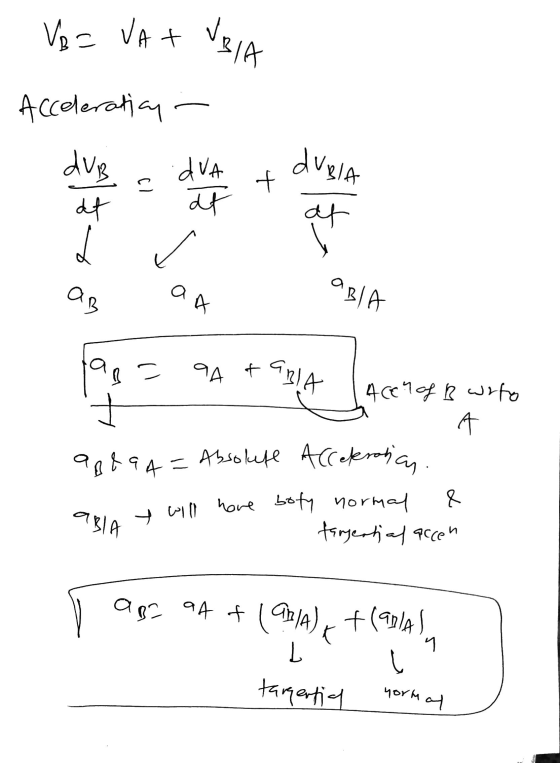
Obtain the acceleration equation for general motion starting from the general motion velocity equation step by step.
Homework Answers
Add Answer to:
Obtain the acceleration equation for general motion starting
from the general motion velocity equation step by...
obtain the general equation of distance traveles of an object that moves under a constant acceleration....
obtain the general equation of distance traveles of an object that moves under a constant acceleration. You need to show how you obtain yout equation. Explain each step in detail as well as variables you employ in your derivation.
Starting from first principles, determine the equation of motion for the system shown. Draw free body...
 Starting from first principles, determine the equation of motion
for the system shown.
Draw free body diagram for small displacements measured from
static equilibrium.
Take moments about the hinge to obtain the equation of motion
as.
Fosin Uniformbar, HTTTTT |-- -----|
Starting from first principles, determine the equation of motion
for the system shown.
Draw free body diagram for small displacements measured from
static equilibrium.
Take moments about the hinge to obtain the equation of motion
as.
Fosin Uniformbar, HTTTTT |-- -----|
Fosin Uniformer, Q.2 (35 pts) Starting from first principles, determine the equation of motion for the...
 Fosin Uniformer, Q.2 (35 pts) Starting from first principles, determine the equation of motion for the system shown. a. Draw free body diagram for small --- displacements measured from static equilibrium. b. Take moments about the hinge to obtain the equation of motion as. (a)
Position, Velocity & Acceleration II The following problem describes a motion. Complete the table by separating...
 Position, Velocity & Acceleration II The following problem describes a motion. Complete the table by separating the motion into parts and then specifying the signs (positive, negative or zero) of the position, velocity and acceleration of the position, velocity and acceleration remain constant during each part. ect during each part. You should choose the parts of the motion so that the signs of the A ball is sitting at rest on a table. A short time later, a woman pocket!...
Fysin 31 Q.2 (35 pts) Starting from first principles, determine the equation of motion for the...
 Fysin 31 Q.2 (35 pts) Starting from first principles, determine the equation of motion for the system shown. a. Draw free body diagram for small displacements measured from static equilibrium. b. Take moments about the hinge to obtain the equation of motion as Uniformbar, 1000 TH HT 1,0+0.6.8+(13 ke = F, L. Sin(wt) |
Find the average acceleration vector at point 1. Draw the completed motion diagram, showing the velocity...
 Find the average acceleration vector at point 1. Draw the
completed motion diagram, showing the velocity vectors and
acceleration vector (v0 is velocity between points 0 and 1 and v1
is velocity between points 1 and 2). Draw the velocity vectors
starting at the appropriate black dots and acceleration vector. The
location, orientation and length of the velocity vectors will be
graded. The orientation of the acceleration vector will be graded.
The location and length of the acceleration vector will...
Find the average acceleration vector at point 1. Draw the
completed motion diagram, showing the velocity vectors and
acceleration vector (v0 is velocity between points 0 and 1 and v1
is velocity between points 1 and 2). Draw the velocity vectors
starting at the appropriate black dots and acceleration vector. The
location, orientation and length of the velocity vectors will be
graded. The orientation of the acceleration vector will be graded.
The location and length of the acceleration vector will...
Find the average acceleration vector at point 1. Draw the completed motion diagram, showing the velocity...
 Find the average acceleration vector at point 1. Draw the completed motion diagram, showing the velocity vectors and acceleration vector (vo is velocity between points 0 and 1 and vi is velocity between points 1 and 2). Draw the velocity vectors starting at the appropriate black dots and acceleration vector. The location, orientation and length of the velocity vectors will be graded. The orientation of the acceleration vector will be graded. The location and length of the acceleration vector will...
(a) Obtain the equation of motion for a 2.75-g mass, at the end of a perfectly...
 (a) Obtain the equation of motion for a 2.75-g mass, at the end of a perfectly elastic spring which, when stretched 6.00 cm from equilibrium and then released from rest, undergoes simple harmonic motion with a period of 0.20944 s.(b) Find the (i) spring constant (ii) maximum velocity and (iii) total energy of the mass. 4. For the above spring, find the positions for which the potential energy is two-fifth the kinetic energy. 5.
Obtain the equation of motion for a 1.25-g mass, at the end of a perfectly elastic...
Obtain the equation of motion for a 1.25-g mass, at the end of a perfectly elastic spring which, when stretched 3.75 cm from equilibrium and then released from rest, undergoes simple harmonic motion with a period of 0.016667 s. B.) Find the (i) spring constant (ii) maximum velocity and (iii) total energy of the mass. C.) For the above spring find the positions for which the potential energy is one-third the kinetic energy.
n unrs S hown on this question sheet. Starting from the origin, the velocity of a...
 n unrs S hown on this question sheet. Starting from the origin, the velocity of a particle in rectilinear motion is given as Vo) 2t-14t + 20 m/s, with t in seconds, for the first 10 seconds. Plot the particle's acceleration, velocity, position, and total distance travelled as functions of time in the first 10 seconds.
 Starting from first principles, determine the equation of motion
for the system shown.
Draw free body diagram for small displacements measured from
static equilibrium.
Take moments about the hinge to obtain the equation of motion
as.
Fosin Uniformbar, HTTTTT |-- -----|
Starting from first principles, determine the equation of motion
for the system shown.
Draw free body diagram for small displacements measured from
static equilibrium.
Take moments about the hinge to obtain the equation of motion
as.
Fosin Uniformbar, HTTTTT |-- -----|
 Fosin Uniformer, Q.2 (35 pts) Starting from first principles, determine the equation of motion for the system shown. a. Draw free body diagram for small --- displacements measured from static equilibrium. b. Take moments about the hinge to obtain the equation of motion as. (a)
 Position, Velocity & Acceleration II The following problem describes a motion. Complete the table by separating the motion into parts and then specifying the signs (positive, negative or zero) of the position, velocity and acceleration of the position, velocity and acceleration remain constant during each part. ect during each part. You should choose the parts of the motion so that the signs of the A ball is sitting at rest on a table. A short time later, a woman pocket!...
 Fysin 31 Q.2 (35 pts) Starting from first principles, determine the equation of motion for the system shown. a. Draw free body diagram for small displacements measured from static equilibrium. b. Take moments about the hinge to obtain the equation of motion as Uniformbar, 1000 TH HT 1,0+0.6.8+(13 ke = F, L. Sin(wt) |
 Find the average acceleration vector at point 1. Draw the
completed motion diagram, showing the velocity vectors and
acceleration vector (v0 is velocity between points 0 and 1 and v1
is velocity between points 1 and 2). Draw the velocity vectors
starting at the appropriate black dots and acceleration vector. The
location, orientation and length of the velocity vectors will be
graded. The orientation of the acceleration vector will be graded.
The location and length of the acceleration vector will...
Find the average acceleration vector at point 1. Draw the
completed motion diagram, showing the velocity vectors and
acceleration vector (v0 is velocity between points 0 and 1 and v1
is velocity between points 1 and 2). Draw the velocity vectors
starting at the appropriate black dots and acceleration vector. The
location, orientation and length of the velocity vectors will be
graded. The orientation of the acceleration vector will be graded.
The location and length of the acceleration vector will...
 Find the average acceleration vector at point 1. Draw the completed motion diagram, showing the velocity vectors and acceleration vector (vo is velocity between points 0 and 1 and vi is velocity between points 1 and 2). Draw the velocity vectors starting at the appropriate black dots and acceleration vector. The location, orientation and length of the velocity vectors will be graded. The orientation of the acceleration vector will be graded. The location and length of the acceleration vector will...
 (a) Obtain the equation of motion for a 2.75-g mass, at the end of a perfectly elastic spring which, when stretched 6.00 cm from equilibrium and then released from rest, undergoes simple harmonic motion with a period of 0.20944 s.(b) Find the (i) spring constant (ii) maximum velocity and (iii) total energy of the mass. 4. For the above spring, find the positions for which the potential energy is two-fifth the kinetic energy. 5.
 n unrs S hown on this question sheet. Starting from the origin, the velocity of a particle in rectilinear motion is given as Vo) 2t-14t + 20 m/s, with t in seconds, for the first 10 seconds. Plot the particle's acceleration, velocity, position, and total distance travelled as functions of time in the first 10 seconds.
Most questions answered within 3 hours.
-
Where is the error in this code sequence?
String s1 = "Hello";
String s2 = "ello";...
asked 10 months ago -
Financial data for Joel de Paris, Inc., for last year
follow:
Joel de Paris, Inc.
Balance...
asked 10 months ago -
Consider this reaction:
Al2(SO4)3 (aq)+ BaCl3
(aq) Al2Cl6 (aq)- +
3BaSO4(s) . What is the...
asked 10 months ago -
Suppose that Savneet is considering increasing her
recent random sample from 20 car rentals to 40...
asked 10 months ago -
Trucks arrive at an unloading terminal at an average rate of 120
per hour.
Trucks arrive...
asked 10 months ago -
Why are methanol and ethanol completely soluble in water while
octanol is not very little soluble....
asked 10 months ago -
A facilities manager at a university reads in a research report
that the mean amount of...
asked 10 months ago -
When the CuSO4 is rehydrated by adding water to the anhydrous
compound, is this an endothermic...
asked 10 months ago -
A ray of sunlight is passing from diamond into crown glass; the
angle of incidence is...
asked 10 months ago -
A block of mass 0.249 kg is placed on top of a light, vertical
spring of...
asked 10 months ago -
how do the kidneys compensate in the presences of acidosis
a) trigger hyperventilate
b) reserve acid...
asked 10 months ago -
Question 501 pts
The rental rate of capital to the firm increases. Which of the
following...
asked 10 months ago