Negative affect of Human Activity on Coral Reefs. Essay question!!!
Homework Answers
Human impact on coral reefs is significant. Coral reefs are dying around the world. Damaging activities include coral mining, pollution (organic and non-organic), overfishing, blast fishing, the digging of canals and access into islands and bays. Other dangers include disease, destructive fishing practices and warming oceans. Factors that affect coral reefs include the ocean's role as a carbon dioxide sink, atmospheric changes, ultraviolet light, ocean acidification, viruses, impacts of dust storms carrying agents to far-flung reefs, pollutants, algal blooms and others. Reefs are threatened well beyond coastal areas. Climate change, such as warming temperatures, causes coral bleaching, which if severe kills the coral.
In 2008, a worldwide study estimated that 19% of the existing area of coral reefs has already been lost, and that a further 17% is likely to be lost over the subsequent 10–20 years. Only 46% of the world's reefs could be currently regarded as in good health and about 60% of the world's reefs may be at risk due to destructive, human-related activities. The threat to the health of reefs is particularly strong in Southeast Asia, where 80% of reefs are endangered. By the 2030s, 90% of reefs are expected to be at risk from both human activities and climate change; by 2050, it is predicted that all coral reefs will be in danger.
Competition
In the Caribbean Sea and tropical Pacific ocean, direct contact between coral and common seaweeds causes bleaching and death of coral tissue via allelopathic competition. The lipid-soluble extracts of seaweeds that harmed coral tissues, also produced rapid bleaching. At these sites, bleaching and mortality was limited to areas of direct contact with seaweed or their extracts.
Predation
Overfishing and Environmental effects of fishing
Overfishing, particularly selective overfishing, can unbalance coral ecosystems by encouraging the excessive growth of coral predators. Predators that eat living coral, such as the crown-of-thorns starfish, are called corallivores. Coral reefs are built from stony coral, which evolved with large amounts of the wax cetyl palmitate in their tissues. Most predators find this wax indigestible.The crown-of-thorns starfish is a large (up to one meter) starfish protected by long, venomous spines. Its enzyme system dissolves the wax in stony corals, and allows the starfish to feed on the living animal. Starfish face predators of their own, such as the giant triton sea snail. However, the giant triton is valued for its shell and has been over fished. As a result, crown-of-thorns starfish populations can periodically grow unchecked, devastating reefs.
Fishing practices
Although some marine aquarium fish species can reproduce in aquaria (such as Pomacentridae), most (95%) are collected from coral reefs. Intense harvesting, especially in maritime Southeast Asia (including Indonesia and the Philippines), damages the reefs. This is aggravated by destructive fishing practices, such as cyanide and blast fishing. Most (80–90%) aquarium fish from the Philippines are captured with sodium cyanide. This toxic chemical is dissolved in sea water and released into areas where fish shelter. It narcotizes the fish, which are then easily captured. However, most fish collected with cyanide die a few months later from liver damage. Moreover, many non-marketable specimens die in the process. It is estimated that 4,000 or more Filipino fish collectors have used over 1,000,000 kilograms (2,200,000 lb) of cyanide on Philippine reefs alone, about 150,000 kg per year. A major catalyst of cyanide fishing is poverty within fishing communities. In countries like the Philippines that regularly employ cyanide, more than thirty percent of the population lives below the poverty line.
Marine pollution
Reefs in close proximity to human populations are subject to poor water quality from land- and marine-based sources. In 2006 studies suggested that approximately 80 percent of ocean pollution originates from activities on land. Pollution arrives from land via runoff, the wind and "injection" (deliberate introduction, e.g., drainpipes). Runoff brings with it sediment from erosion and land-clearing, nutrients and pesticides from agriculture, wastewater, industrial effluent and miscellaneous material such as petroleum residue and trash that storms wash away. Some pollutants consume oxygen and lead to eutrophication, killing coral and other reef inhabitants.
An increasing fraction of the global population lives in coastal areas. Without appropriate precautions, development (e.g., buildings and paved roads) increases the fraction of rainfall and other water sources that enter the ocean as runoff by decreasing the land's ability to absorb it.
HOPE IT HELPS ;)
A new submarine is being developed to take tourists on sightseeing trips to tropical coral reefs....
A new submarine is being developed to take tourists on sightseeing trips to tropical coral reefs. According to guidelines of the American Society of Mechanical Engineers (ASME), to be safe for human occupancy the submarine’s hull must be able to withstand a pressure of 10.0 N/mm2.To what depth can the submarine safely descend in seawater?
Question 14 2 pts Cleaner fish and cleaner shrimp on coral reefs are in a mutualistic...
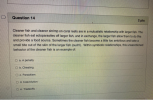 Question 14 2 pts Cleaner fish and cleaner shrimp on coral reefs are in a mutualistic relationship with larger fish. The cleaner fish eat ectoparasites off larger fish, and in exchange, the larger fish allow them to do this and provide a food source. Sometimes the cleaner fish become a little too ambitious and take a small bite out of the skin of the larger fish (ouch!). Within symbiotic relationships, this unsanctioned behavior of the cleaner fish is an example...
Question: Question 1 - Formulate the following queries in SQL. Schema REEF [reefname, latitude, longitude, ......
Question: Question 1 - Formulate the following queries in SQL. Schema REEF [reefname, latitude, longitude, ... Question 1 - Formulate the following queries in SQL. Schema REEF [reefname, latitude, longitude, 2006_bleachedarea, summer_maximum_monthly_mean_temperature] REEFTEMP [reefname, dateofreading, temperaturereading] CORAL [coralname, coralcode, thermalthreshold] CORALSAMPLING [sampleno, coralcode, reefname, dateofsampling, bleachpercent] Find the details of all of reefs which have recorded a temperature-reading above 22 degrees. Find the details of all reefs which have recorded a temperature-reading below the average temperature-reading across all reefs. Find...
Essay question: Why is paternalism negative for healthcare?
Essay question: Why is paternalism negative for healthcare?
Human resource recruitment is an organizational activity that is designed to affect the number of people...
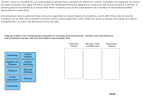 Human resource recruitment is an organizational activity that is designed to affect the number of people who apply for vacancies, the type of people who apply for them, and/or the likelihood that those applying for vacancies will accept positions if offered. A primary goal of recruitment is to ensure that when a vacancy occurs the organization has a number of reasonably qualified applicants to choose from. All companies have to address three concerns regarding recruiting: (1) personnel policies, which affect...
Short Essay Question, Please explain and give examples. Describe the positive and negative symptoms of schizophrenia,...
Short Essay Question, Please explain and give examples. Describe the positive and negative symptoms of schizophrenia, their underlying mechanisms and pharmacologic evidence supporting the existence of positive and negative symptoms.
NEED IN CORAL LANGUAGE ONLY When analyzing data sets, such as data for human heights or...
NEED IN CORAL LANGUAGE ONLY When analyzing data sets, such as data for human heights or for human weights, a common step is to adjust the data. This can be done by normalizing to values between 0 and 1, or throwing away outliers. For this program, adjust the values by subtracting the smallest value from all the values. The input consists of five integers. Ex: If the input is 30 50 10 70 65, the output is: 20 40 0...
Excess of what ion in seawater increases its acidity having a negative impact on reef-building coral? Select the correc...
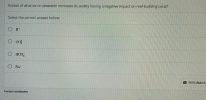 Excess of what ion in seawater increases its acidity having a negative impact on reef-building coral? Select the correct answer below: OH O co OHO, O Na I FEEDBACK Content attribution
COURSEWORK QUESTION Essay (25%) Question: Globalization has been described in both positive and negative connotations. Some...
 COURSEWORK QUESTION Essay (25%) Question: Globalization has been described in both positive and negative connotations. Some of the positive aspects of globalization include the reduction of global poverty and facilitating the exchange of technology between developed and less-developed countries while the negative opinions on globalization include the loss of jobs in developed countries to cheaper labour markets and failure to protect small and medium size businesses from being dominated by MNCs. I Your task is to discuss how forces impacting...
narrative essay: Human trafficking in United States. (800 words)
narrative essay: Human trafficking in United States. (800 words)
 Question 14 2 pts Cleaner fish and cleaner shrimp on coral reefs are in a mutualistic relationship with larger fish. The cleaner fish eat ectoparasites off larger fish, and in exchange, the larger fish allow them to do this and provide a food source. Sometimes the cleaner fish become a little too ambitious and take a small bite out of the skin of the larger fish (ouch!). Within symbiotic relationships, this unsanctioned behavior of the cleaner fish is an example...
 Human resource recruitment is an organizational activity that is designed to affect the number of people who apply for vacancies, the type of people who apply for them, and/or the likelihood that those applying for vacancies will accept positions if offered. A primary goal of recruitment is to ensure that when a vacancy occurs the organization has a number of reasonably qualified applicants to choose from. All companies have to address three concerns regarding recruiting: (1) personnel policies, which affect...
 Excess of what ion in seawater increases its acidity having a negative impact on reef-building coral? Select the correct answer below: OH O co OHO, O Na I FEEDBACK Content attribution
 COURSEWORK QUESTION Essay (25%) Question: Globalization has been described in both positive and negative connotations. Some of the positive aspects of globalization include the reduction of global poverty and facilitating the exchange of technology between developed and less-developed countries while the negative opinions on globalization include the loss of jobs in developed countries to cheaper labour markets and failure to protect small and medium size businesses from being dominated by MNCs. I Your task is to discuss how forces impacting...
Most questions answered within 3 hours.
-
Where is the error in this code sequence?
String s1 = "Hello";
String s2 = "ello";...
asked 10 months ago -
Financial data for Joel de Paris, Inc., for last year
follow:
Joel de Paris, Inc.
Balance...
asked 10 months ago -
Consider this reaction:
Al2(SO4)3 (aq)+ BaCl3
(aq) Al2Cl6 (aq)- +
3BaSO4(s) . What is the...
asked 10 months ago -
Suppose that Savneet is considering increasing her
recent random sample from 20 car rentals to 40...
asked 10 months ago -
Trucks arrive at an unloading terminal at an average rate of 120
per hour.
Trucks arrive...
asked 10 months ago -
Why are methanol and ethanol completely soluble in water while
octanol is not very little soluble....
asked 10 months ago -
A facilities manager at a university reads in a research report
that the mean amount of...
asked 10 months ago -
When the CuSO4 is rehydrated by adding water to the anhydrous
compound, is this an endothermic...
asked 10 months ago -
A ray of sunlight is passing from diamond into crown glass; the
angle of incidence is...
asked 10 months ago -
A block of mass 0.249 kg is placed on top of a light, vertical
spring of...
asked 10 months ago -
how do the kidneys compensate in the presences of acidosis
a) trigger hyperventilate
b) reserve acid...
asked 10 months ago -
Question 501 pts
The rental rate of capital to the firm increases. Which of the
following...
asked 10 months ago