A driver slams on her brakes while driving at 30 mph and skids to a halt...
A driver slams on her brakes while driving at 30 mph and skids to a halt in 60 feet. How long does it take the driver to come to a stop? Assume constant acceleration
Homework Answers

Add Answer to:
A driver slams on her brakes while driving at 30 mph and skids
to a halt...
A driver in a 1000 kg car travelling at 20 m/s slams on the brakes and...
A driver in a 1000 kg car travelling at 20 m/s slams on the brakes and skids to a stop. If the coefficient of friction between the tires and the horizontal road is 0.80, how long will the skid marks be? A) 33m B) 24m C) 21m D)26m
51. Safety research Under ideal conditions, if a person driving a car slams on the brakes and ski...
 51. Safety research Under ideal conditions, if a person driving a car slams on the brakes and skids to a stop, the length of the skid marks (in feet) is given by the formula L0.000 013 3xy2 where x is the weight of the car (in pounds) and y is the speed of the car (in miles per hour). What is the average length of the skid marks for cars weighing between 2,000 and 3,000 pounds and traveling at speeds...
10. Driving a car in the positive direction at 60 mph, Mary tests her brakes by...
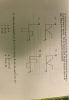 10. Driving a car in the positive direction at 60 mph, Mary tests her brakes by coming to a complete stop in 4 seconds. Then she resumes speed, taking 8 seconds to return to 60 mph. Which of the following best represents her acceleration? b) a a) d) a c) a 11. What is the resultant D=A+B-C if A = -44 +19, B = 3+29, and C = 18-35? a. D=0 b. D= 6 c. D = 62 d. ]=-28...
If the truck hits the deer 2.60 seconds after the driver slams on the brakes, what...
 If the truck hits the deer 2.60 seconds after the driver slams
on the brakes, what was the speed of the truck, in km/h, when the
deer was struck? Assume motion was at constant acceleration. Answer
will be 3 sig figs.
(Homework Assignment 1 (Chapter 2) Problem C2-04 Constants A truck is traveling at a constant speed of 56.3 km/h Suddenly, the driver sees a deer 23.6 m away and slams on the brakes
If the truck hits the deer 2.60 seconds after the driver slams
on the brakes, what was the speed of the truck, in km/h, when the
deer was struck? Assume motion was at constant acceleration. Answer
will be 3 sig figs.
(Homework Assignment 1 (Chapter 2) Problem C2-04 Constants A truck is traveling at a constant speed of 56.3 km/h Suddenly, the driver sees a deer 23.6 m away and slams on the brakes
The driver of a car slams on the brakes when he sees a tree blocking the...
The driver of a car slams on the brakes when he sees a tree blocking the road. The car slows uniformly with acceleration of −5.40 m/s2 for 4.15 s, making straight skid marks 63.3 m long, all the way to the tree. With what speed (in m/s) does the car then strike the tree? m/s (b) What If? If the car has the same initial velocity, and if the driver slams on the brakes at the same distance from the...
The driver of a car traveling on the highway suddenly slams on the brakes because of...
The driver of a car traveling on the highway suddenly slams on the brakes because of a slowdown in traffic ahead. If the car’s speed decreases at a constant rate from 68 mi/h to 40 mi/h in 3.0 s. The magnitude of acceleration is 3.4x10⁴ mi/hr2. What distance does the car travel during the braking period? Express your answer in FEET. Please show equation and work so I can learn the correct way to work this problem. Thanks
The driver of a car slams on the brakes when he sees a tree blocking the...
The driver of a car slams on the brakes when he sees a tree blocking the road. The car slows uniformly with acceleration of −5.00 m/s2 for 4.15 s, making straight skid marks 64.4 m long, all the way to the tree. With what speed (in m/s) does the car then strike the tree? i got 5.14 which is the the right answer but the second part im lost.. What If? If the car has the same initial velocity, and...
The driver of a truck slams on the brakes when he sees a tree blocking the...
The driver of a truck slams on the brakes when he sees a tree blocking the road. The truck slows down uniformly with acceleration −5.70 m/s2 for 4.20 s, making skid marks 57.2 m long that end at the tree. With what speed does the truck then strike the tree?
The driver of a car slams on the brakes when he sees a tree blocking the...
The driver of a car slams on the brakes when he sees a tree blocking the road. The car slows uniformly with acceleration of -5.35 m/s2 for 4.00 s, making straight skid marks 61.5 m long, all the way to the tree. With what speed does the car then strike the tree?
The driver of a car slams on the brakes when he sees a tree blocking the...
 The driver of a car slams on the brakes when he sees a tree blocking the road. The car slows uniformly with acceleration -5.50 m/s2 for 4.45 s, making straight skid marks 61.1 m long ending at the tree. With what speed does the car then strike the tree? m/s
 51. Safety research Under ideal conditions, if a person driving a car slams on the brakes and skids to a stop, the length of the skid marks (in feet) is given by the formula L0.000 013 3xy2 where x is the weight of the car (in pounds) and y is the speed of the car (in miles per hour). What is the average length of the skid marks for cars weighing between 2,000 and 3,000 pounds and traveling at speeds...
 10. Driving a car in the positive direction at 60 mph, Mary tests her brakes by coming to a complete stop in 4 seconds. Then she resumes speed, taking 8 seconds to return to 60 mph. Which of the following best represents her acceleration? b) a a) d) a c) a 11. What is the resultant D=A+B-C if A = -44 +19, B = 3+29, and C = 18-35? a. D=0 b. D= 6 c. D = 62 d. ]=-28...
 If the truck hits the deer 2.60 seconds after the driver slams
on the brakes, what was the speed of the truck, in km/h, when the
deer was struck? Assume motion was at constant acceleration. Answer
will be 3 sig figs.
(Homework Assignment 1 (Chapter 2) Problem C2-04 Constants A truck is traveling at a constant speed of 56.3 km/h Suddenly, the driver sees a deer 23.6 m away and slams on the brakes
If the truck hits the deer 2.60 seconds after the driver slams
on the brakes, what was the speed of the truck, in km/h, when the
deer was struck? Assume motion was at constant acceleration. Answer
will be 3 sig figs.
(Homework Assignment 1 (Chapter 2) Problem C2-04 Constants A truck is traveling at a constant speed of 56.3 km/h Suddenly, the driver sees a deer 23.6 m away and slams on the brakes
 The driver of a car slams on the brakes when he sees a tree blocking the road. The car slows uniformly with acceleration -5.50 m/s2 for 4.45 s, making straight skid marks 61.1 m long ending at the tree. With what speed does the car then strike the tree? m/s
Most questions answered within 3 hours.
-
Where is the error in this code sequence?
String s1 = "Hello";
String s2 = "ello";...
asked 10 months ago -
Financial data for Joel de Paris, Inc., for last year
follow:
Joel de Paris, Inc.
Balance...
asked 10 months ago -
Consider this reaction:
Al2(SO4)3 (aq)+ BaCl3
(aq) Al2Cl6 (aq)- +
3BaSO4(s) . What is the...
asked 10 months ago -
Suppose that Savneet is considering increasing her
recent random sample from 20 car rentals to 40...
asked 10 months ago -
Trucks arrive at an unloading terminal at an average rate of 120
per hour.
Trucks arrive...
asked 10 months ago -
Why are methanol and ethanol completely soluble in water while
octanol is not very little soluble....
asked 10 months ago -
A facilities manager at a university reads in a research report
that the mean amount of...
asked 10 months ago -
When the CuSO4 is rehydrated by adding water to the anhydrous
compound, is this an endothermic...
asked 10 months ago -
A ray of sunlight is passing from diamond into crown glass; the
angle of incidence is...
asked 10 months ago -
A block of mass 0.249 kg is placed on top of a light, vertical
spring of...
asked 10 months ago -
how do the kidneys compensate in the presences of acidosis
a) trigger hyperventilate
b) reserve acid...
asked 10 months ago -
Question 501 pts
The rental rate of capital to the firm increases. Which of the
following...
asked 10 months ago