PLEASE JUST ANSWER PART E AND PART F The two paths to the medium-run equilibrium explored...
PLEASE JUST ANSWER PART E AND PART F
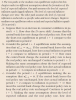
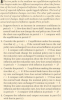
The two paths to the medium-run equilibrium explored in chapter 9 (seventh edition) make two different assumptions about the formation of the level of expected inflation. One path assumes the level of expected inflation equals lagged inflation. The level of expected inflation changes over time. The other path assumes the level of expected inflation is anchored to a specific value and never changes. Begin in medium-run equilibrium where actual and expected inflation equals 2% in period t.
a. Suppose there is an increase in the consumer confidence in period t + 1. How does the IS curve shift? Assume that the central bank does not change the real policy rate. How will the short-run equilibrium in period t + 1 compare to the equilibrium in period t?
b. Consider the period t + 2 equilibrium under the assumption that πe t+2 = πt+1. If the central bank leaves the real policy rate unchanged, how does the actual inflation in period t + 2 compare with inflation in period t + 1. How must the central bank change the nominal policy rate to keep the real policy unchanged? Continue to period t + 3. Making the same assumption about the level of expected inflation and the real policy rate, how does actual inflation in period t + 3 compare to inflation in period t + 2.
c. Consider the period t + 2 equilibrium making the assumption πe t+2 = πk (Constant). If the central bank leaves the real policy rate unchanged, how does actual inflation in period t + 2 compare to inflation in period t + 1. How must the central bank change the nominal policy rate to keep the real policy rate unchanged? Continue to period t + 3. Making the same assumption about the level of expected inflation and the real policy rate, how does actual inflation in period t + 3 compare to inflation in period t + 2.
d. Compare the inflation and output outcomes in part b to that in part c.
e. Which scenario, part b or part c, do you think is more realistic? Discuss.
f. Suppose in period t + 4, the central bank decides to raise the real policy rate high enough to return the economy immediately to potential output and the period t rate of inflation. Explain the difference between central bank policies using the two assumptions about expected inflation in part b and part c
Homework Answers


Add Answer to:
PLEASE JUST ANSWER PART E AND PART F
The two paths to the medium-run equilibrium explored...
3. The two paths to the mediun-run equilibrim explored in this chapter make two different assumptions...
 3. The two paths to the mediun-run equilibrim explored in this chapter make two different assumptions about the formation of the level of expected inflation. One path assumes the level of expected inflation equals lagged inflation. The level of expected inflation changes over time. The other path assumes the level of expected inflation is anchored to a specific value and never changes. Begin in medim-run equilibrium where actual and expected inflation equals 2% in period t. a. Suppose there is...
Expectations on inflation in the medium run - Blanchard, Macroeconomics, Chapter 9, Problem 5. We were...
 Expectations on inflation in the medium run - Blanchard,
Macroeconomics, Chapter 9, Problem 5.
We were unable to transcribe this imaged. Compare the inflation and output outcomes in part (b) e. Which scenario, part (b) or part (c), do you think is more f. Suppose in period t4, the central bank decides to raise with that in part (c). realistic? Discuss the real policy rate high enough to return the economy immediately to potential output and to the period t...
Expectations on inflation in the medium run - Blanchard,
Macroeconomics, Chapter 9, Problem 5.
We were unable to transcribe this imaged. Compare the inflation and output outcomes in part (b) e. Which scenario, part (b) or part (c), do you think is more f. Suppose in period t4, the central bank decides to raise with that in part (c). realistic? Discuss the real policy rate high enough to return the economy immediately to potential output and to the period t...
6.The Aggregate Demand (AD) curve is obtained by combining: (a) The consumption function, planned investment and...
6.The Aggregate Demand (AD) curve is obtained by combining: (a) The consumption function, planned investment and the central bank's policy reaction function. (b) The consumption function and the Taylor rule. (c) The equation for PAE, the central bank's policy reaction and Y = PAE. (d) Y=PAE and the consumption function. (e) The equation for planned investment and the central bank policy reaction function. 7.The AD curve is generally assumed to have a negative slope. However, which of the following would...
please answer Question 7: Inflation targeting and the Taylor rule in the IS-LM model Consider a...
 please answer Question 7:
Inflation targeting and the Taylor rule in the IS-LM model Consider a closed economy in which the central bank follows an interest rate rule. The IS relation is given by Y C(Y- T) I(Y,r) G Where r is the real interest rate. The central bank sets the nominal interest rate according to the rule i = i* + a(n° =- T*) + b(Y- Y1) Where T is expected inflation, T* is the target rate of inflation,...
please answer Question 7:
Inflation targeting and the Taylor rule in the IS-LM model Consider a closed economy in which the central bank follows an interest rate rule. The IS relation is given by Y C(Y- T) I(Y,r) G Where r is the real interest rate. The central bank sets the nominal interest rate according to the rule i = i* + a(n° =- T*) + b(Y- Y1) Where T is expected inflation, T* is the target rate of inflation,...
PROBLEM NO 2. An Open Economy in the Short Run and The Medium Run (25 Points)...
 PROBLEM NO 2. An Open Economy in the Short Run and The Medium Run (25 Points) a. Indonesia's equilibrium condition of goods and services market can be expressed by the following equation: Y = CAY - T) + (Y, r) +G-IMY, )) { + X(Y*, £) where: Y=domestic output; Y*= foreign output; C= consumption: T=tax; l=investment, r=real interest rate; G=government spending, € = Real Exchange Rate. If it is assumed that the Marshall-Lerner condition holds. Explain in words the effects...
Please provide an answer to all subquestions
Assume that unemployment, u, is related to inflation, π, according to the following Phillips curve: u = u − φ (π−πe), where u is the natural rate of unemployment and πe is the expected rate of inflation. Assume rational expectations and that the central bank’s preferences are given by the loss function L(u,π) =λu+π2, where λ denotes the weight that the central bank assigns unemployment.A. Suppose that φ = 1. Show what rate of inflation a central bank with λ...
4. Again refer to Figure 1, starting from point ", and assume the initial long-run equilibrium...
 4. Again refer to Figure 1, starting from point ", and assume the initial long-run equilibrium inflation rate is also the Fed's targeted inflation rate. (a) This cconomy sutfers a shock, and the inflation rate increases while real output falls. Most likely, this is a shock (indicate whether this isa positive (+) or a nagative (-)shock, causing thecurve toC Call the temporary equilibrium as "2" (b) The Central Bank decides to stabilize real output at the potential output level. It...
1. (The IS-LM-PC model): Assume the following relations characterize the goods market: (i) 1128 +...
 1. (The IS-LM-PC model): Assume the following relations characterize the goods market: (i) 1128 +0.2Y 300(rt + xt) (iii)G,-215 :T t = 200 (iv)st= 0.15 or 15% e) Derive the IS curve (as a relation between Y and r). (b) Assume the LM curve is given by r 0.16 (ie. in period t, the central bank sets the real interest rate at 16%). What is the short-run equilibrium level of output (Yt )? (c) Suppose that L = 2000 and...
The following graphs show the state of an economy that is currently in long-run equilibrium.
 3. The long-run effects of monetary policy The following graphs show the state of an economy that is currently in long-run equilibrium. The first graph shows the aggregate demand (AD) and long-run aggregate supply (LRAS) curves. The second shows the long-run and short-run Phillips curves (LRPC and SRPC).Which of the following statements are true based on these graphs? Check all that apply The natural level of output is $3 trillion. The unemployment rate is currently 6% higher than the natural rate of unemployment. The...
6. 7. Inflation targeting and the Taylor rule in the IS-LM model Consider a closed economy...
 6.
7.
Inflation targeting and the Taylor rule in the IS-LM model Consider a closed economy in which the central bank follows an interest rate rule. The IS relation is given by Y C(Y- T) I(Y,r) G Where r is the real interest rate. The central bank sets the nominal interest rate according to the rule i = i* + a(n° =- T*) + b(Y- Y1) Where T is expected inflation, T* is the target rate of inflation, and Yn...
6.
7.
Inflation targeting and the Taylor rule in the IS-LM model Consider a closed economy in which the central bank follows an interest rate rule. The IS relation is given by Y C(Y- T) I(Y,r) G Where r is the real interest rate. The central bank sets the nominal interest rate according to the rule i = i* + a(n° =- T*) + b(Y- Y1) Where T is expected inflation, T* is the target rate of inflation, and Yn...
 3. The two paths to the mediun-run equilibrim explored in this chapter make two different assumptions about the formation of the level of expected inflation. One path assumes the level of expected inflation equals lagged inflation. The level of expected inflation changes over time. The other path assumes the level of expected inflation is anchored to a specific value and never changes. Begin in medim-run equilibrium where actual and expected inflation equals 2% in period t. a. Suppose there is...
 Expectations on inflation in the medium run - Blanchard,
Macroeconomics, Chapter 9, Problem 5.
We were unable to transcribe this imaged. Compare the inflation and output outcomes in part (b) e. Which scenario, part (b) or part (c), do you think is more f. Suppose in period t4, the central bank decides to raise with that in part (c). realistic? Discuss the real policy rate high enough to return the economy immediately to potential output and to the period t...
Expectations on inflation in the medium run - Blanchard,
Macroeconomics, Chapter 9, Problem 5.
We were unable to transcribe this imaged. Compare the inflation and output outcomes in part (b) e. Which scenario, part (b) or part (c), do you think is more f. Suppose in period t4, the central bank decides to raise with that in part (c). realistic? Discuss the real policy rate high enough to return the economy immediately to potential output and to the period t...
 please answer Question 7:
Inflation targeting and the Taylor rule in the IS-LM model Consider a closed economy in which the central bank follows an interest rate rule. The IS relation is given by Y C(Y- T) I(Y,r) G Where r is the real interest rate. The central bank sets the nominal interest rate according to the rule i = i* + a(n° =- T*) + b(Y- Y1) Where T is expected inflation, T* is the target rate of inflation,...
please answer Question 7:
Inflation targeting and the Taylor rule in the IS-LM model Consider a closed economy in which the central bank follows an interest rate rule. The IS relation is given by Y C(Y- T) I(Y,r) G Where r is the real interest rate. The central bank sets the nominal interest rate according to the rule i = i* + a(n° =- T*) + b(Y- Y1) Where T is expected inflation, T* is the target rate of inflation,...
 PROBLEM NO 2. An Open Economy in the Short Run and The Medium Run (25 Points) a. Indonesia's equilibrium condition of goods and services market can be expressed by the following equation: Y = CAY - T) + (Y, r) +G-IMY, )) { + X(Y*, £) where: Y=domestic output; Y*= foreign output; C= consumption: T=tax; l=investment, r=real interest rate; G=government spending, € = Real Exchange Rate. If it is assumed that the Marshall-Lerner condition holds. Explain in words the effects...
 4. Again refer to Figure 1, starting from point ", and assume the initial long-run equilibrium inflation rate is also the Fed's targeted inflation rate. (a) This cconomy sutfers a shock, and the inflation rate increases while real output falls. Most likely, this is a shock (indicate whether this isa positive (+) or a nagative (-)shock, causing thecurve toC Call the temporary equilibrium as "2" (b) The Central Bank decides to stabilize real output at the potential output level. It...
 1. (The IS-LM-PC model): Assume the following relations characterize the goods market: (i) 1128 +0.2Y 300(rt + xt) (iii)G,-215 :T t = 200 (iv)st= 0.15 or 15% e) Derive the IS curve (as a relation between Y and r). (b) Assume the LM curve is given by r 0.16 (ie. in period t, the central bank sets the real interest rate at 16%). What is the short-run equilibrium level of output (Yt )? (c) Suppose that L = 2000 and...
 6.
7.
Inflation targeting and the Taylor rule in the IS-LM model Consider a closed economy in which the central bank follows an interest rate rule. The IS relation is given by Y C(Y- T) I(Y,r) G Where r is the real interest rate. The central bank sets the nominal interest rate according to the rule i = i* + a(n° =- T*) + b(Y- Y1) Where T is expected inflation, T* is the target rate of inflation, and Yn...
6.
7.
Inflation targeting and the Taylor rule in the IS-LM model Consider a closed economy in which the central bank follows an interest rate rule. The IS relation is given by Y C(Y- T) I(Y,r) G Where r is the real interest rate. The central bank sets the nominal interest rate according to the rule i = i* + a(n° =- T*) + b(Y- Y1) Where T is expected inflation, T* is the target rate of inflation, and Yn...
Most questions answered within 3 hours.
-
Where is the error in this code sequence?
String s1 = "Hello";
String s2 = "ello";...
asked 10 months ago -
Financial data for Joel de Paris, Inc., for last year
follow:
Joel de Paris, Inc.
Balance...
asked 10 months ago -
Consider this reaction:
Al2(SO4)3 (aq)+ BaCl3
(aq) Al2Cl6 (aq)- +
3BaSO4(s) . What is the...
asked 10 months ago -
Suppose that Savneet is considering increasing her
recent random sample from 20 car rentals to 40...
asked 10 months ago -
Trucks arrive at an unloading terminal at an average rate of 120
per hour.
Trucks arrive...
asked 10 months ago -
Why are methanol and ethanol completely soluble in water while
octanol is not very little soluble....
asked 10 months ago -
A facilities manager at a university reads in a research report
that the mean amount of...
asked 10 months ago -
When the CuSO4 is rehydrated by adding water to the anhydrous
compound, is this an endothermic...
asked 10 months ago -
A ray of sunlight is passing from diamond into crown glass; the
angle of incidence is...
asked 10 months ago -
A block of mass 0.249 kg is placed on top of a light, vertical
spring of...
asked 10 months ago -
how do the kidneys compensate in the presences of acidosis
a) trigger hyperventilate
b) reserve acid...
asked 10 months ago -
Question 501 pts
The rental rate of capital to the firm increases. Which of the
following...
asked 10 months ago