#19.8 For the polymerization of 1-hexene, (a) Write the polymerization reaction, giving the repeating unit for...
Homework Answers
19.8
a)
Reaction:
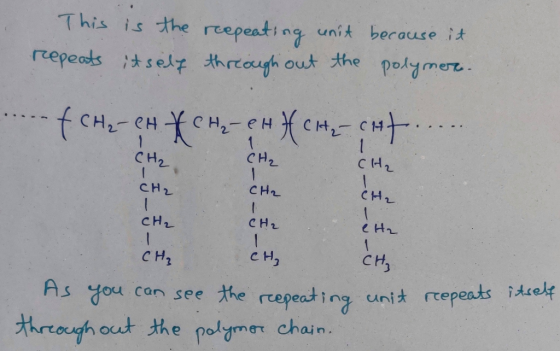
 we can write the polymer
as,
we can write the polymer
as,
 because there are 'n' numbers of repeating
units in the polymer.
because there are 'n' numbers of repeating
units in the polymer.
b)
The name of the polymer is poly(1-hexene).
Poly represents that it's a polymer.
1-hexene is the monomer.
Poly(1-hexene) represents that it's a polymer of 1-hexene.
c)
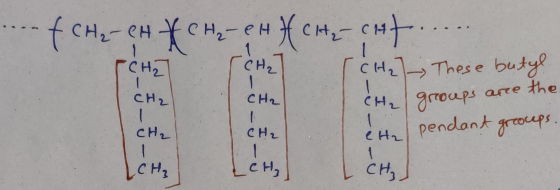
Pendant group means the side chains that are connected to the main polymer chain.
19.10
a)
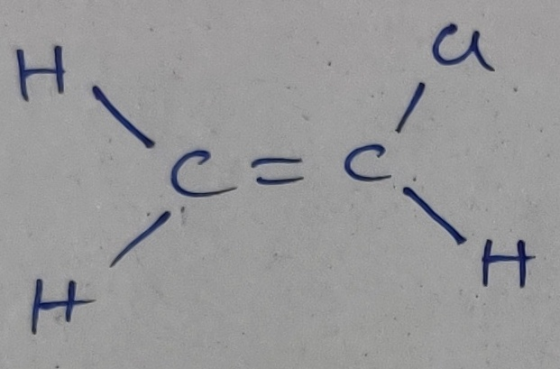
Polyvinylchloride means it is a polymer of vinylchloride. Vinylchloride is the monomer.
Structure of vinyl chloride is,
b)
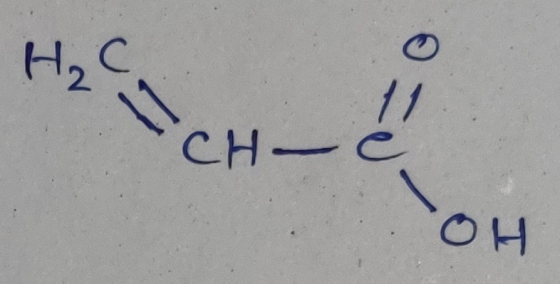
Polyacrylic acid means it is a polymer of acrylic acid. Acrylic acid is the monomer.
Structure of Acrylic acid is,
c)
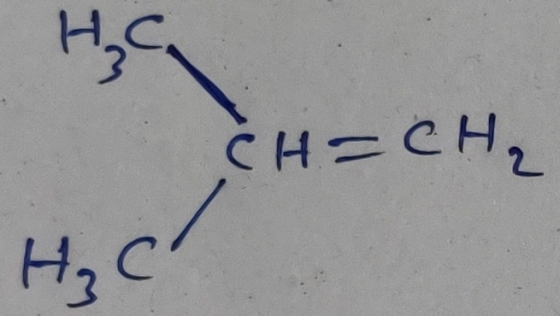
Poly-2-methylpropene is a polymer of 2-methylpropene. 2-methylpropene is the monomer.
Structure of 2-methylpropene is,
Add Answer to:
#19.8
For the polymerization of 1-hexene,
(a) Write the polymerization reaction, giving the repeating
unit for...
0. A fragment of the polymer, Dacron, is shown below. Dacron is made by condensation polymerization...
 0. A fragment of the polymer, Dacron, is shown below. Dacron is made by condensation polymerization of 2 monomers that combine in-A-B-A-B-A-B- structure similar to nylon. a. Draw brackets around one polymer unit in the structure below. b. Draw the structures of 2 difunctional monomers A and B that would underg polymerization to produce this polymer A= x-R-X and B-y-R,-y Identify the small molecule byproduct of condensation. 4 pts o condensation c. Ax-R-x B- y-R'-y Byproduct A fragment of the...
Consider the preparation of an addition polymer by a radical chain reaction Q. 2 (a) Give...
 Consider the preparation of an addition polymer by a radical chain reaction Q. 2 (a) Give the polymers that can be formed from each of the following monomers and show the repeating unit in each case CI OMe (b) Describe the key steps in a radical chain growth polymerisation. What is "head to tail" addition and explain why it preferentially occurs (c) (d) Show the resonance stabilisation for the radical formed where possible for each of the monomers given in...
3 Match the following polymer with the common product in which it is used (see intro...
 3 Match the following polymer with the common product in which it is used (see intro for help). 1. polystyrene 2. nylon 3. polypropylene 4. low density polyethylene 5. polycarbonate a. Plastic Bags b. Water Pipes c. Cookware d. Egg containers e. Milk cartons 6. polyethylene f. Carpet and Knitted fabrics 7. polyvinylchloride 9. Automobile bumpers 8. polytetrafluoroethylene h. Rope 4. Shown below are monomers for common polymers that get made. Draw two repeating units of the polymer structure for...
* Discussion Questions, continued. Kodel"is a condensation polymer produced by the co-polymerization of the two monomer...
 * Discussion Questions, continued. Kodel"is a condensation polymer produced by the co-polymerization of the two monomer molecules shown below Draw the 1,4-dihydroxymethyleyclohexane and rwo of terephthalic acid, in alternating order). Identify the two reactant functional groups, and the functional group of the linkage that's formed. When the polymer forms, thousands of these molecules link together (in alternating order) via condensation reactions. structure of a portion of a "Kodel"molecule by linking together FOUR of the reactant molecules (nwvo of он н...
Numbering the possible monomer molecules below as: 1 2 3 4 5 6 (A)...
Numbering the possible monomer molecules below as: 1 2 3 4 5 6 (A) Which monomers (give numbers) would be useful for creating an addition polymer? EXPLAIN what about them makes this possible. (B) Which monomers (give numbers) would be useful for creating a condensation polymer? EXPLAIN what about them makes this possible. (C) Which monomer could be used by itself to make a condensation polymer? (Note that this particular molecule is called an amino acid, and the...
1. Write equations for the reactions that occur in the following. (a) 2-methylbutanol and acetic acid...
 1. Write equations for the reactions that occur in the following. (a) 2-methylbutanol and acetic acid (ethanoic acid) are heated together in the presence of a small quantity of sulphuric acid. (b) Butanoic acid is added to a solution of thionyl chloride (SOCl2) and the mixture heated. After the reaction has occurred an excess of diethyl amine is added. 2. (a) How would you separate a mixture of benzoic acid and dibutyl amine, using a 1M HCl solution, a 1M...
accordingly answer and i pt): Polymers and Monomers. Read each question chemical structure, in a oymer chemical structure based on the polymer name and provide the monomer unit chemical st...
 accordingly answer and i pt): Polymers and Monomers. Read each question chemical structure, in a oymer chemical structure based on the polymer name and provide the monomer unit chemical structure, in addition. Lastly applications. An example answer is provided as guidance. , provide an example of how the polymers are utilized in (bio)engineering Polymer Chemical Structure Polymer Full Name and Abbreviation Usage Example for Monomer Unit Structure(s) _ _pt per box) pt per box) pt per box) Nucleic Acid (DNA)...
21. a) Ninhydrin reaction generates Ruhemann's comple which is in color,1) i) Red, ii) Blue, ii) Purple. b) Write the full form of Boc-protecting group? Boc is involved in solution phase pept...
 21. a) Ninhydrin reaction generates Ruhemann's comple which is in color,1) i) Red, ii) Blue, ii) Purple. b) Write the full form of Boc-protecting group? Boc is involved in solution phase peptide synthesis -T/F(2+1) 22. a) Terpenes are two or more five carbon units of i) Serpine, ii) Myrcene, c) Isoprene. b) Cholestero i) Tetra, ii) Penta, ii) Tri. c) Three dimentional functional form of protein is its i) Primary, ii) Secondary, ili) Tertiary. (2) l is actually composed of...
Pre-Laboratory Exercise: Plastics Identification I. List four properties that you will use in lab...
 can
someone help me find this information?
Pre-Laboratory Exercise: Plastics Identification I. List four properties that you will use in lab to determine the identity of the polymer samples 2. Describe the density test. What observation will help you determine the density of each polymer? What precautions should be taken in placing the sample in the solutions? 3. Write the name and abbreviation for the six recyclable polymers 2 huetn deisity polyetayene.HDpz poulene: PP 4. Given the list of wavenumber...
can
someone help me find this information?
Pre-Laboratory Exercise: Plastics Identification I. List four properties that you will use in lab to determine the identity of the polymer samples 2. Describe the density test. What observation will help you determine the density of each polymer? What precautions should be taken in placing the sample in the solutions? 3. Write the name and abbreviation for the six recyclable polymers 2 huetn deisity polyetayene.HDpz poulene: PP 4. Given the list of wavenumber...
1. Four elements make up 96% of the molecules involved chemical a) Oxygen, (0), b) Nitrogen...
 1. Four elements make up 96% of the molecules involved chemical a) Oxygen, (0), b) Nitrogen (N), c) Carbon (C), d) Hydrogen (H) Ne in chemical evolution. Which of the following is not one of these? 2. During Chemical Evolution, elements reacted with each other to form sl norga compounds is thought to have been a critical solvent for elements and simple molec Oxygen ef Water molecules? a) Formaldehyde b) Carbon dloxide c) Ammonia d lipid bilayer was important because:...
 0. A fragment of the polymer, Dacron, is shown below. Dacron is made by condensation polymerization of 2 monomers that combine in-A-B-A-B-A-B- structure similar to nylon. a. Draw brackets around one polymer unit in the structure below. b. Draw the structures of 2 difunctional monomers A and B that would underg polymerization to produce this polymer A= x-R-X and B-y-R,-y Identify the small molecule byproduct of condensation. 4 pts o condensation c. Ax-R-x B- y-R'-y Byproduct A fragment of the...
 Consider the preparation of an addition polymer by a radical chain reaction Q. 2 (a) Give the polymers that can be formed from each of the following monomers and show the repeating unit in each case CI OMe (b) Describe the key steps in a radical chain growth polymerisation. What is "head to tail" addition and explain why it preferentially occurs (c) (d) Show the resonance stabilisation for the radical formed where possible for each of the monomers given in...
 3 Match the following polymer with the common product in which it is used (see intro for help). 1. polystyrene 2. nylon 3. polypropylene 4. low density polyethylene 5. polycarbonate a. Plastic Bags b. Water Pipes c. Cookware d. Egg containers e. Milk cartons 6. polyethylene f. Carpet and Knitted fabrics 7. polyvinylchloride 9. Automobile bumpers 8. polytetrafluoroethylene h. Rope 4. Shown below are monomers for common polymers that get made. Draw two repeating units of the polymer structure for...
 * Discussion Questions, continued. Kodel"is a condensation polymer produced by the co-polymerization of the two monomer molecules shown below Draw the 1,4-dihydroxymethyleyclohexane and rwo of terephthalic acid, in alternating order). Identify the two reactant functional groups, and the functional group of the linkage that's formed. When the polymer forms, thousands of these molecules link together (in alternating order) via condensation reactions. structure of a portion of a "Kodel"molecule by linking together FOUR of the reactant molecules (nwvo of он н...
 1. Write equations for the reactions that occur in the following. (a) 2-methylbutanol and acetic acid (ethanoic acid) are heated together in the presence of a small quantity of sulphuric acid. (b) Butanoic acid is added to a solution of thionyl chloride (SOCl2) and the mixture heated. After the reaction has occurred an excess of diethyl amine is added. 2. (a) How would you separate a mixture of benzoic acid and dibutyl amine, using a 1M HCl solution, a 1M...
 accordingly answer and i pt): Polymers and Monomers. Read each question chemical structure, in a oymer chemical structure based on the polymer name and provide the monomer unit chemical structure, in addition. Lastly applications. An example answer is provided as guidance. , provide an example of how the polymers are utilized in (bio)engineering Polymer Chemical Structure Polymer Full Name and Abbreviation Usage Example for Monomer Unit Structure(s) _ _pt per box) pt per box) pt per box) Nucleic Acid (DNA)...
 21. a) Ninhydrin reaction generates Ruhemann's comple which is in color,1) i) Red, ii) Blue, ii) Purple. b) Write the full form of Boc-protecting group? Boc is involved in solution phase peptide synthesis -T/F(2+1) 22. a) Terpenes are two or more five carbon units of i) Serpine, ii) Myrcene, c) Isoprene. b) Cholestero i) Tetra, ii) Penta, ii) Tri. c) Three dimentional functional form of protein is its i) Primary, ii) Secondary, ili) Tertiary. (2) l is actually composed of...
 can
someone help me find this information?
Pre-Laboratory Exercise: Plastics Identification I. List four properties that you will use in lab to determine the identity of the polymer samples 2. Describe the density test. What observation will help you determine the density of each polymer? What precautions should be taken in placing the sample in the solutions? 3. Write the name and abbreviation for the six recyclable polymers 2 huetn deisity polyetayene.HDpz poulene: PP 4. Given the list of wavenumber...
can
someone help me find this information?
Pre-Laboratory Exercise: Plastics Identification I. List four properties that you will use in lab to determine the identity of the polymer samples 2. Describe the density test. What observation will help you determine the density of each polymer? What precautions should be taken in placing the sample in the solutions? 3. Write the name and abbreviation for the six recyclable polymers 2 huetn deisity polyetayene.HDpz poulene: PP 4. Given the list of wavenumber...
 1. Four elements make up 96% of the molecules involved chemical a) Oxygen, (0), b) Nitrogen (N), c) Carbon (C), d) Hydrogen (H) Ne in chemical evolution. Which of the following is not one of these? 2. During Chemical Evolution, elements reacted with each other to form sl norga compounds is thought to have been a critical solvent for elements and simple molec Oxygen ef Water molecules? a) Formaldehyde b) Carbon dloxide c) Ammonia d lipid bilayer was important because:...
Most questions answered within 3 hours.
-
Where is the error in this code sequence?
String s1 = "Hello";
String s2 = "ello";...
asked 10 months ago -
Financial data for Joel de Paris, Inc., for last year
follow:
Joel de Paris, Inc.
Balance...
asked 10 months ago -
Consider this reaction:
Al2(SO4)3 (aq)+ BaCl3
(aq) Al2Cl6 (aq)- +
3BaSO4(s) . What is the...
asked 10 months ago -
Suppose that Savneet is considering increasing her
recent random sample from 20 car rentals to 40...
asked 10 months ago -
Trucks arrive at an unloading terminal at an average rate of 120
per hour.
Trucks arrive...
asked 10 months ago -
Why are methanol and ethanol completely soluble in water while
octanol is not very little soluble....
asked 10 months ago -
A facilities manager at a university reads in a research report
that the mean amount of...
asked 10 months ago -
When the CuSO4 is rehydrated by adding water to the anhydrous
compound, is this an endothermic...
asked 10 months ago -
A ray of sunlight is passing from diamond into crown glass; the
angle of incidence is...
asked 10 months ago -
A block of mass 0.249 kg is placed on top of a light, vertical
spring of...
asked 10 months ago -
how do the kidneys compensate in the presences of acidosis
a) trigger hyperventilate
b) reserve acid...
asked 10 months ago -
Question 501 pts
The rental rate of capital to the firm increases. Which of the
following...
asked 10 months ago