Draw the structure of a soap surfactant molecule. Label the relevant features that enable it to...
Draw the structure of a soap surfactant molecule. Label the relevant features that enable it to be a good cleaning agent. Explain why surfactants dissolve in both water and water/oil mixtures. Use your knowledge of intermolecular forces in your explanation.
Homework Answers


Add Answer to:
Draw the structure of a soap surfactant molecule. Label the
relevant features that enable it to...
Post lab questions continue on the next page. 2. Consider how soap interacted with the whole milk and the water sol...
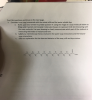 Post lab questions continue on the next page. 2. Consider how soap interacted with the whole milk and the water soluble dye. a. Build upon your answer to prelab question 4. Using the image of a soap molecule below to draw polar (water) and nonpolar molecules (hexane to represent milk fat) interacting with the soap molecule. Use your drawing to clearly communicate which part of the molecule is interacting with water or hexane and how. b. Label any intermolecular forces...
) Use ChemDraw to draw the structure of one molecule of canola oil soap from the...
) Use ChemDraw to draw the structure of one molecule of canola oil soap from the fatty acid that is most prevalent in your oil.
Re-draw the chemical structure of cinnamaldehyde (from the Reaction Scheme) and use it to answer the...
Re-draw the chemical structure of cinnamaldehyde (from the Reaction Scheme) and use it to answer the following solubility-based questions: 1. Circle and label all regions of the molecule that exhibit non-polar behavior. 2. Circle and label the region of the molecule that exhibits polar behavior. 3. Water prefers to interact with solute molecules with what type of intermolecular force (choose one answer): hydrogen bonding, dipole-induced dipole, or induced dipole-induced dipole (London dispersion)? 4. Based on the answers to parts (a)-(c),...
9. For the molecule CH20, a. Draw the Lewis Dot structure below. b. Draw CH2O in...
 9. For the molecule CH20, a. Draw the Lewis Dot structure below. b. Draw CH2O in the molecular shape. Name the molecular shape of CH20. c. Is CH20 polar or nonpolar? Draw arrows on your structure in Question 9b to show your understanding. d. Name the intermolecular forces that are found in this structure. e. Water is polar. Would you expect CH2O to be soluble in water? Explain.
Consider the structure of caffeine (re-draw it here), and answer the following questions from a structural...
Consider the structure of caffeine (re-draw it here), and answer the following questions from a structural perspective. Caffeine is an alkaloid and, as such, is weakly basic. Circle and label the basic atom or atoms (hints: consider the base in Experiment 4C, and consult the Derivative procedure on page 235). Identify (circle on your structure) and discuss two different structural features that would account for solubility in methylene chloride (hint: think intermolecular forces). Identify (circle on your structure) and discuss...
c)Draw the chemical structure of sodium benzoate and include all charges. d)Circle and label the region...
c)Draw the chemical structure of sodium benzoate and include all charges. d)Circle and label the region of the molecule that exhibits polar behavior. e) What is the strongest intermolecular force with which sodium benzoate will interact with the solvent water? In general, I am taking Organic Chemistry and I have no idea how to answer questions such as, " what are the intermolecular forces present in the non polar region of the molecule". Can someone help me with a guide...
Discussion Questions The structures of acetanilide and malonic acid are provided below 1. For each structure,...
 Discussion Questions The structures of acetanilide and malonic acid are provided below 1. For each structure, draw circles around the polar and nonpolar regions of the molecule, and label each circled regiorn with the type of intermolecular attractive force it can use to interact with other molecules. Acetanilide Malonic Acid но CH2 OH 2. Now-thoroughly explain (on the basis of polarity/nonpolarity and intermolecular attractive forces) how the acetanilide was separated from the malonic acid by recrystallization from water. And explain...
1. What is an amphiphilic molecule? How does this property influence the effectiveness of soaps? 2....
1. What is an amphiphilic molecule? How does this property influence the effectiveness of soaps? 2. Why was sud production used to assess the effectiveness of the synthesized soaps? 3. Explain the chemical reaction that occurs between soap molecules and the ions in hard water? How were the synthesized soaps affected by hard water? 4. What is the difference between soaps and detergents? How did the detergent tested in this laboratory compare to the soaps in both distilled water and...
I. Nylon 6-6 is a condensation polymer. The last two lab handouts pointed out that "condensation...
 I. Nylon 6-6 is a condensation polymer. The last two lab handouts pointed out that "condensation reactions are extremely common among a variety of organic functional groups." Pick two appropriate functional groups (your choice) and draw structures to show the condensation reaction between them. Identify the functional groups that are reacting, as well as the linkage formed by the condensation. 2. Rather than use a carboxylic acid for the nylon condensation, you'll use the more reactive acid chloride. This must...
Anser number 6 and 7 please in full detail 6. Draw structures showing how 2-ethoxybenzamide can...
 Anser number 6 and 7 please in
full detail
6. Draw structures showing how 2-ethoxybenzamide can serve as: a. a hydrogen bond donor with a water molecule 12 points) b. a hydrogen bond acceptor with a water molecule 12 points) In each case, use a dashed line to depict the hydrogen bond. 7. Would you expect N-methylbenzamide (structure shown below) to have a higher or lower solubility in water as compared to benzamide? Briefly explain your answer, making sure to...
Anser number 6 and 7 please in
full detail
6. Draw structures showing how 2-ethoxybenzamide can serve as: a. a hydrogen bond donor with a water molecule 12 points) b. a hydrogen bond acceptor with a water molecule 12 points) In each case, use a dashed line to depict the hydrogen bond. 7. Would you expect N-methylbenzamide (structure shown below) to have a higher or lower solubility in water as compared to benzamide? Briefly explain your answer, making sure to...
 Post lab questions continue on the next page. 2. Consider how soap interacted with the whole milk and the water soluble dye. a. Build upon your answer to prelab question 4. Using the image of a soap molecule below to draw polar (water) and nonpolar molecules (hexane to represent milk fat) interacting with the soap molecule. Use your drawing to clearly communicate which part of the molecule is interacting with water or hexane and how. b. Label any intermolecular forces...
 9. For the molecule CH20, a. Draw the Lewis Dot structure below. b. Draw CH2O in the molecular shape. Name the molecular shape of CH20. c. Is CH20 polar or nonpolar? Draw arrows on your structure in Question 9b to show your understanding. d. Name the intermolecular forces that are found in this structure. e. Water is polar. Would you expect CH2O to be soluble in water? Explain.
 Discussion Questions The structures of acetanilide and malonic acid are provided below 1. For each structure, draw circles around the polar and nonpolar regions of the molecule, and label each circled regiorn with the type of intermolecular attractive force it can use to interact with other molecules. Acetanilide Malonic Acid но CH2 OH 2. Now-thoroughly explain (on the basis of polarity/nonpolarity and intermolecular attractive forces) how the acetanilide was separated from the malonic acid by recrystallization from water. And explain...
 I. Nylon 6-6 is a condensation polymer. The last two lab handouts pointed out that "condensation reactions are extremely common among a variety of organic functional groups." Pick two appropriate functional groups (your choice) and draw structures to show the condensation reaction between them. Identify the functional groups that are reacting, as well as the linkage formed by the condensation. 2. Rather than use a carboxylic acid for the nylon condensation, you'll use the more reactive acid chloride. This must...
 Anser number 6 and 7 please in
full detail
6. Draw structures showing how 2-ethoxybenzamide can serve as: a. a hydrogen bond donor with a water molecule 12 points) b. a hydrogen bond acceptor with a water molecule 12 points) In each case, use a dashed line to depict the hydrogen bond. 7. Would you expect N-methylbenzamide (structure shown below) to have a higher or lower solubility in water as compared to benzamide? Briefly explain your answer, making sure to...
Anser number 6 and 7 please in
full detail
6. Draw structures showing how 2-ethoxybenzamide can serve as: a. a hydrogen bond donor with a water molecule 12 points) b. a hydrogen bond acceptor with a water molecule 12 points) In each case, use a dashed line to depict the hydrogen bond. 7. Would you expect N-methylbenzamide (structure shown below) to have a higher or lower solubility in water as compared to benzamide? Briefly explain your answer, making sure to...
Most questions answered within 3 hours.
-
Where is the error in this code sequence?
String s1 = "Hello";
String s2 = "ello";...
asked 10 months ago -
Financial data for Joel de Paris, Inc., for last year
follow:
Joel de Paris, Inc.
Balance...
asked 10 months ago -
Consider this reaction:
Al2(SO4)3 (aq)+ BaCl3
(aq) Al2Cl6 (aq)- +
3BaSO4(s) . What is the...
asked 10 months ago -
Suppose that Savneet is considering increasing her
recent random sample from 20 car rentals to 40...
asked 10 months ago -
Trucks arrive at an unloading terminal at an average rate of 120
per hour.
Trucks arrive...
asked 10 months ago -
Why are methanol and ethanol completely soluble in water while
octanol is not very little soluble....
asked 10 months ago -
A facilities manager at a university reads in a research report
that the mean amount of...
asked 10 months ago -
When the CuSO4 is rehydrated by adding water to the anhydrous
compound, is this an endothermic...
asked 10 months ago -
A ray of sunlight is passing from diamond into crown glass; the
angle of incidence is...
asked 10 months ago -
A block of mass 0.249 kg is placed on top of a light, vertical
spring of...
asked 10 months ago -
how do the kidneys compensate in the presences of acidosis
a) trigger hyperventilate
b) reserve acid...
asked 10 months ago -
Question 501 pts
The rental rate of capital to the firm increases. Which of the
following...
asked 10 months ago