A genetic test is use to determine if people have a disposition for thrombosis, which is...
Homework Answers
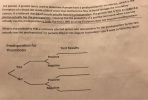
| P(tested positive)=P(has predisposition)*P(tested positive|has predisposition)+P(not has predisposition)*P(tested positive|not has predisposition) | |||||||||
| =0.03*0.99+0.97*(1-0.98)=0.0491 | |||||||||
| therefore P(has predisposition|tested positive)=P(has predisposition)*P(tested positive|has predisposition)/P(tested positive)=0.03*0.99/0.0491 =0.6049 | |||||||
Add Answer to:
A
genetic test is use to determine if people have a disposition for
thrombosis, which is...
Help please (12 points) A genetic test is used to determine if people have a pred...
 Help please
(12 points) A genetic test is used to determine if people have a pred formation of a blood clot inside a blood vessel that obstructs the flow of system. It is believed tha person actualy has the predisposition actually has the predisposition iso 99. Thetest is 98%accurate if a person doesn hich is the predisposition for thrombosis, w of blood through the circulatory urate ta predisposition. The genetic test is 99%acc , meaning that the probability of a...
Help please
(12 points) A genetic test is used to determine if people have a pred formation of a blood clot inside a blood vessel that obstructs the flow of system. It is believed tha person actualy has the predisposition actually has the predisposition iso 99. Thetest is 98%accurate if a person doesn hich is the predisposition for thrombosis, w of blood through the circulatory urate ta predisposition. The genetic test is 99%acc , meaning that the probability of a...
Only 5 out of 1000 people get sick from a specific disease. A test for the...
Only 5 out of 1000 people get sick from a specific disease. A test for the disease is 99% accurate. This test also has a 2% false positive result (2% of the people that test positive are actually not sick with the disease). What is the probability that if you receive a positive test result, that you actually have the disease?
It’s known that 2 % of people in a certain population have the disease. A blood...
It’s known that 2 % of people in a certain population have the disease. A blood test gives a positive result (indicating the presence of disease) for 95% of people who have the disease, and it is also positive for 3% of healthy people. One person is tested and the test gives positive result. a. If the test result is positive for the person, then the probability that this person actually has a disease is _________ b. If the test...
Suppose a biotech company just produced a convenient test for Coronavirus that can be administered with...
Suppose a biotech company just produced a convenient test for Coronavirus that can be administered with a small droplet of blood from a person. The test can give results instantly. The test detects Coronavirus 98% of the time. But the test also gives a false positive 1% of the time. CDC knows that 4% of people have Coronavirus infection. What is the probability that the test correctly identifies someone as negative if the person actually does not have infection? A.)...
Suppose next that we have even less knowledge of our patient, and we are only given the accuracy of the blood test and p...
Suppose next that we have even less knowledge of our patient, and we are only given the accuracy of the blood test and prevalence of the disease in our population. We are told that the blood test is 98 percent reliable, this means that the test will yield an accurate positive result in 98% of the cases where the disease is actually present. Gestational diabetes affects 9 percent of the population in our patient’s age group, and that our test...
The proportion of people in a given community who have a certain disease is 0.005. A...
The proportion of people in a given community who have a certain disease is 0.005. A test is available to diagnose the disease. If a person has the disease, the probability that the test will produce a positive signal is 0.99. If a person does not have the disease, the probability that the test will produce a positive signal is 0.01 a. If a person tests positive, what is the probability that the person has the disease? b. If a...
Suppose next that we have even less knowledge of our patient, and we are only given...
Suppose next that we have even less knowledge of our patient, and we are only given the accuracy of the blood test and prevalence of the disease in our population. We are told that the blood test is 98 percent reliable, this means that the test will yield an accurate positive result in 98% of the cases where the disease is actually present. Gestational diabetes affects 9 percent of the population in our patient’s age group, and that our test...
2. A rare disease affects 1% of the population. A test has a sensitivity of 98%,...
 2. A rare disease affects 1% of the population. A test has a sensitivity of 98%, i.e., it will give a positive result 98% of the time that a person actually has the disease. The same test also has a specificity of 95%, i.e., it will give a negative result 95% of the time when a person does not have the disease. Denote the event that a randomly person has a disease by D, and the event that a randomly...
3. Assume 6% of people have a certain disease. A test gives correct diagnosis with probability...
 3. Assume 6% of people have a certain disease. A test gives correct diagnosis with probability 0.85 i.e. if the person is sick, the test will be positive with probability 0.85, but if the person is not sick, the test will be positive with probability 0.15. A random person from the population has tested positive for the disease. What is the probability that he is actually sick? Part 2. Random Variables
2. Tay-Sachs disease is a genetic disorder caused by a mutation on chromosome 15 that is believed...
 Conditional probability
please follow the comment
2. Tay-Sachs disease is a genetic disorder caused by a mutation on chromosome 15 that is believed to occur in roughly 1 in 320000 babies in the U.S. As part of a cutting-edge genomics company, you've designed a new test for Tay-Sachs that is 99.2% accurate (ie, gives a positive result) in those babies that have the disorder, and 97% accurate (i.e. gives a negative result) in babies that don't have the disorder. Suppose...
Conditional probability
please follow the comment
2. Tay-Sachs disease is a genetic disorder caused by a mutation on chromosome 15 that is believed to occur in roughly 1 in 320000 babies in the U.S. As part of a cutting-edge genomics company, you've designed a new test for Tay-Sachs that is 99.2% accurate (ie, gives a positive result) in those babies that have the disorder, and 97% accurate (i.e. gives a negative result) in babies that don't have the disorder. Suppose...
 Help please
(12 points) A genetic test is used to determine if people have a pred formation of a blood clot inside a blood vessel that obstructs the flow of system. It is believed tha person actualy has the predisposition actually has the predisposition iso 99. Thetest is 98%accurate if a person doesn hich is the predisposition for thrombosis, w of blood through the circulatory urate ta predisposition. The genetic test is 99%acc , meaning that the probability of a...
Help please
(12 points) A genetic test is used to determine if people have a pred formation of a blood clot inside a blood vessel that obstructs the flow of system. It is believed tha person actualy has the predisposition actually has the predisposition iso 99. Thetest is 98%accurate if a person doesn hich is the predisposition for thrombosis, w of blood through the circulatory urate ta predisposition. The genetic test is 99%acc , meaning that the probability of a...
 2. A rare disease affects 1% of the population. A test has a sensitivity of 98%, i.e., it will give a positive result 98% of the time that a person actually has the disease. The same test also has a specificity of 95%, i.e., it will give a negative result 95% of the time when a person does not have the disease. Denote the event that a randomly person has a disease by D, and the event that a randomly...
 3. Assume 6% of people have a certain disease. A test gives correct diagnosis with probability 0.85 i.e. if the person is sick, the test will be positive with probability 0.85, but if the person is not sick, the test will be positive with probability 0.15. A random person from the population has tested positive for the disease. What is the probability that he is actually sick? Part 2. Random Variables
 Conditional probability
please follow the comment
2. Tay-Sachs disease is a genetic disorder caused by a mutation on chromosome 15 that is believed to occur in roughly 1 in 320000 babies in the U.S. As part of a cutting-edge genomics company, you've designed a new test for Tay-Sachs that is 99.2% accurate (ie, gives a positive result) in those babies that have the disorder, and 97% accurate (i.e. gives a negative result) in babies that don't have the disorder. Suppose...
Conditional probability
please follow the comment
2. Tay-Sachs disease is a genetic disorder caused by a mutation on chromosome 15 that is believed to occur in roughly 1 in 320000 babies in the U.S. As part of a cutting-edge genomics company, you've designed a new test for Tay-Sachs that is 99.2% accurate (ie, gives a positive result) in those babies that have the disorder, and 97% accurate (i.e. gives a negative result) in babies that don't have the disorder. Suppose...
Most questions answered within 3 hours.
-
Where is the error in this code sequence?
String s1 = "Hello";
String s2 = "ello";...
asked 10 months ago -
Financial data for Joel de Paris, Inc., for last year
follow:
Joel de Paris, Inc.
Balance...
asked 10 months ago -
Consider this reaction:
Al2(SO4)3 (aq)+ BaCl3
(aq) Al2Cl6 (aq)- +
3BaSO4(s) . What is the...
asked 10 months ago -
Suppose that Savneet is considering increasing her
recent random sample from 20 car rentals to 40...
asked 10 months ago -
Trucks arrive at an unloading terminal at an average rate of 120
per hour.
Trucks arrive...
asked 10 months ago -
Why are methanol and ethanol completely soluble in water while
octanol is not very little soluble....
asked 10 months ago -
A facilities manager at a university reads in a research report
that the mean amount of...
asked 10 months ago -
When the CuSO4 is rehydrated by adding water to the anhydrous
compound, is this an endothermic...
asked 10 months ago -
A ray of sunlight is passing from diamond into crown glass; the
angle of incidence is...
asked 10 months ago -
A block of mass 0.249 kg is placed on top of a light, vertical
spring of...
asked 10 months ago -
how do the kidneys compensate in the presences of acidosis
a) trigger hyperventilate
b) reserve acid...
asked 10 months ago -
Question 501 pts
The rental rate of capital to the firm increases. Which of the
following...
asked 10 months ago