Question: Vitamins A, D, E, and K are fat‑soluble vitamins. Classify the following phrases as describing...
Question: Vitamins A, D, E, and K are fat‑soluble vitamins. Classify the following phrases as describing vitamin A, vitamin D, vitamin E, or vitamin K. :
Options:
(1) hormone precursor and visual pigment
(2) production takes place in skin
(3) deficiency can cause dry skin
(4) regulates gene expression in epithelial tissue
(5) hormone precursor derived from a steroid
(6) regulates calcium uptake by intestine
(7) prevents oxidative damage to membrane lipids
(8) antioxidant
(9) cofactor
(10) functions in fibrin formation
Homework Answers
Fat soluble vitamins are those which soluble in fat which more likely oils and they donot dissolve in water. They are much abundant in fat foods and are much absorbed into bloodstream when we eat with fat.
Fat soluble vitamins- vitamin A, vitamin D, vitamin E and vitamin K are classified on the basis of given phrases as-
Vitamin A
* Hormone precursor and visual pigment.- Vitamin A(retinal) plays an important role in vision of the eye.
* Antioxidant. - Vitamin A is antioxidant which protect cell from free radicals.
* Deficiency causes dry skin. Deficiency of Vitamin A cause eczema which is dry skin.
* Cofactor - vitamin A is a cofactor.
Vitamin D
* Hormone precursor derived from a steroid. - Vitamin D is a steroid hormone they are relatef to estrogen, testosterone etc.
* Regulates calcium uptake by intestine. - they regulates active calcium in the proximal duodenum and jejunum and oppose to ileum.
* production takes place in skin. - skin is responsible for the formation of vitamin D when exposure to sunlight (ultraviolet rays cause vitamin D formation).
* Antioxidant.
Vitamin E
* Antioxidants. - Vitamin E is also a antioxidant which protect cells from free radicals from damaging.
* Prevent oxidative damage to membrane lipids. - They prevent by scavenging free radicals.
Vitamin K
* Function in fibrin formation. - They have a direct role in fibrin formation.
* Cofactor - Vitamin K serve as a cofactor for carboxylase that catalyses carboxylisation of glutamic acid.
* Antioxidant - Vitamin K also has this property.
Add Answer to:
Question: Vitamins A, D, E, and K are fat‑soluble vitamins.
Classify the following phrases as describing...
1. Unlike water-soluble vitamins, fat-soluble vitamins such as vitamin K are circulated away from the small...
1. Unlike water-soluble vitamins, fat-soluble vitamins such as vitamin K are circulated away from the small intestine by the ___________________. a. endocrine system b. pulmonary circulatory system c. systemic circulatory system d. lymphatic system 2. Muayyad was curious to learn more about fat-soluble vitamins. He was surprised that exposure to sunlight allows his body to synthesize ___________________. a. vitamin E b. vitamin A c. vitamin D d. vitamin K 3. Some fat-soluble vitamins, such as vitamin E, function as ____________...
Given that vitamins A, D, E, and K are fat-soluble because their structures include a hydrocarbon...
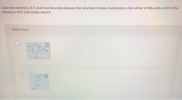 Given that vitamins A, D, E, and K are fat-soluble because their structures include a hydrocarbon chain similar to fatty acids, which of the following is NOT a fat-soluble vitamin? Multiple Choice പ || ഉണE ാ T I | C - Q - OH - .
Vitamin K, one of the fat-soluble vitamins, plays a role in both bone health and blood...
Vitamin K, one of the fat-soluble vitamins, plays a role in both bone health and blood clotting. There are two primary forms of the vitamin: phylloquinones and menaquinones. Choose the correct statement about vitamin K. a. Menaquinones are the primary form of vitamin K in the diet. b. Vitamin K deficiency inhibits the blood’s ability to clot. c. Excessive use of broad-spectrum antibiotics may cause vitamin K toxicity. d. The major source of vitamin K in our diets is from...
Chapter 7 Vitamins Define what a vitamin is. Identify the fat-soluble vitamins and water-soluble vitamins. Identify...
Chapter 7 Vitamins Define what a vitamin is. Identify the fat-soluble vitamins and water-soluble vitamins. Identify the functions and major food sources of: vitamin A, Vitamin D, Vitamin E, Vitamin K, Vitamin C, Vitamin B12, niacin, thiamin, riboflavin, pantothenic acid, folic acid/folate, and beta-carotene. What are the functions of antioxidants. Identify the causes of beriberi, scurvy, pellagra, hemolytic anemia, megaloblastic anemia, macrocytic anemia, pernicious anemia, neural tube defects, rickets, osteoporosis, xerophthalmia. Chapter 8 Minerals Define what a mineral is. What...
1. Which of the following vitamins are classified as water-soluble? a. Vitamins B,D b. Vitamins B, E, and Cool...
 1. Which of the following vitamins are classified as water-soluble? a. Vitamins B,D b. Vitamins B, E, and Coolbit boold ved nosotrounida c. Vitamins A, C, and E nonto A cimal d tulot d. Vitamins A, D, E, and K e. Vitamins B and C molto ai bashollobrd to ge briboi s broodmulando 2. This nutrient helps our blood clot. a. vitamin D b. vitamin A , vitamin K d. vitamin E 81 3. This nutrient helps form and maintain...
Fat soluble vitamins have all the following characteristics except: They are organic They provide energy Are...
 Fat soluble vitamins have all the following characteristics except: They are organic They provide energy Are absorbed into the lymph system O Are stored in large quantities Multiple Choice: Fat soluble vitamins have all the following characteristics except: They are organic They are dependent on fat intake Are absorbed into the lymph system Are vulnerable to cooking losses are not toxic but may cause yellowing of the palms and soles when consumed in large quantities. is considered a vitamin as...
QUESTION 1 What vitamin improves iron absorption? Vitamin C Vitamin D Vitamin E Vitamin B-12 QUESTIO...
 QUESTION 1 What vitamin improves iron absorption? Vitamin C Vitamin D Vitamin E Vitamin B-12 QUESTION 2 Which of the following is a good source of zinc? table salt, seaweed, dairy Bananas, oranges, potatoes Oysters, sirloin steak, peanuts Brazil nuts, fish, meat & organ meats QUESTION 3 Chromium deficiency results in .... high blood lipids high blood pressure impaired glucose uptake impaired cholesterol clearance QUESTION 9 During his wrestling workout, Damon loses about 4 pounds. He should consume cups of...
1, A college student running low on money switches to eating only cheap instant noodles for...
1, A college student running low on money switches to eating only cheap instant noodles for a month. He develops sensitive gums, dry skin and dandruff. He is chronically tired and it seems to him that he gets every virus that passes through the dorm. a) Based on the knowledge you have acquired in this unit, what vitamin deficiency is the likely reason for his symptoms? b) If he could add only a single extra food item to his diet...
1. Which of the following is not considered a nutrient a Vitamin B. Water c.Carbohydrate (d)...
 1. Which of the following is not considered a nutrient a Vitamin B. Water c.Carbohydrate (d) Alcohol e Mineral 2. For which of the following causes of death does a person's diet play a part? a. Lung disease (6) Cancer Chronic lower respiratory diseases d. Infections of the blood e AIDS 3. Researchers repeatedly report that people who consume a variety of foods such as fruits, vegetables, legumes, nuts, and whole grains have reduced risks of which of the following...
Need answers. thank you VOCABULARY BUILDER Misspelled Words Find the words below that are misspelled; circle...
 Need answers. thank you
VOCABULARY BUILDER Misspelled Words Find the words below that are misspelled; circle them, and then correctly spell them in the spaces provided. Then fill in the blanks below with the correct vocabulary terms from the following list. amino acids digestion clectrolytes nutrients antioxident nutrition basal metabolic rate extracellulare oxydation calories fat-soluble presearvatives catalist glycogen processed foods cellulose homeostasis saturated fats major mineral coenzyeme trace minerals diaretics metabolism water-soluable 1. Artificial flavors, colors, and commonly added to...
Need answers. thank you
VOCABULARY BUILDER Misspelled Words Find the words below that are misspelled; circle them, and then correctly spell them in the spaces provided. Then fill in the blanks below with the correct vocabulary terms from the following list. amino acids digestion clectrolytes nutrients antioxident nutrition basal metabolic rate extracellulare oxydation calories fat-soluble presearvatives catalist glycogen processed foods cellulose homeostasis saturated fats major mineral coenzyeme trace minerals diaretics metabolism water-soluable 1. Artificial flavors, colors, and commonly added to...
 Given that vitamins A, D, E, and K are fat-soluble because their structures include a hydrocarbon chain similar to fatty acids, which of the following is NOT a fat-soluble vitamin? Multiple Choice പ || ഉണE ാ T I | C - Q - OH - .
 1. Which of the following vitamins are classified as water-soluble? a. Vitamins B,D b. Vitamins B, E, and Coolbit boold ved nosotrounida c. Vitamins A, C, and E nonto A cimal d tulot d. Vitamins A, D, E, and K e. Vitamins B and C molto ai bashollobrd to ge briboi s broodmulando 2. This nutrient helps our blood clot. a. vitamin D b. vitamin A , vitamin K d. vitamin E 81 3. This nutrient helps form and maintain...
 Fat soluble vitamins have all the following characteristics except: They are organic They provide energy Are absorbed into the lymph system O Are stored in large quantities Multiple Choice: Fat soluble vitamins have all the following characteristics except: They are organic They are dependent on fat intake Are absorbed into the lymph system Are vulnerable to cooking losses are not toxic but may cause yellowing of the palms and soles when consumed in large quantities. is considered a vitamin as...
 QUESTION 1 What vitamin improves iron absorption? Vitamin C Vitamin D Vitamin E Vitamin B-12 QUESTION 2 Which of the following is a good source of zinc? table salt, seaweed, dairy Bananas, oranges, potatoes Oysters, sirloin steak, peanuts Brazil nuts, fish, meat & organ meats QUESTION 3 Chromium deficiency results in .... high blood lipids high blood pressure impaired glucose uptake impaired cholesterol clearance QUESTION 9 During his wrestling workout, Damon loses about 4 pounds. He should consume cups of...
 1. Which of the following is not considered a nutrient a Vitamin B. Water c.Carbohydrate (d) Alcohol e Mineral 2. For which of the following causes of death does a person's diet play a part? a. Lung disease (6) Cancer Chronic lower respiratory diseases d. Infections of the blood e AIDS 3. Researchers repeatedly report that people who consume a variety of foods such as fruits, vegetables, legumes, nuts, and whole grains have reduced risks of which of the following...
 Need answers. thank you
VOCABULARY BUILDER Misspelled Words Find the words below that are misspelled; circle them, and then correctly spell them in the spaces provided. Then fill in the blanks below with the correct vocabulary terms from the following list. amino acids digestion clectrolytes nutrients antioxident nutrition basal metabolic rate extracellulare oxydation calories fat-soluble presearvatives catalist glycogen processed foods cellulose homeostasis saturated fats major mineral coenzyeme trace minerals diaretics metabolism water-soluable 1. Artificial flavors, colors, and commonly added to...
Need answers. thank you
VOCABULARY BUILDER Misspelled Words Find the words below that are misspelled; circle them, and then correctly spell them in the spaces provided. Then fill in the blanks below with the correct vocabulary terms from the following list. amino acids digestion clectrolytes nutrients antioxident nutrition basal metabolic rate extracellulare oxydation calories fat-soluble presearvatives catalist glycogen processed foods cellulose homeostasis saturated fats major mineral coenzyeme trace minerals diaretics metabolism water-soluable 1. Artificial flavors, colors, and commonly added to...
Most questions answered within 3 hours.
-
Where is the error in this code sequence?
String s1 = "Hello";
String s2 = "ello";...
asked 11 months ago -
Financial data for Joel de Paris, Inc., for last year
follow:
Joel de Paris, Inc.
Balance...
asked 11 months ago -
Consider this reaction:
Al2(SO4)3 (aq)+ BaCl3
(aq) Al2Cl6 (aq)- +
3BaSO4(s) . What is the...
asked 11 months ago -
Suppose that Savneet is considering increasing her
recent random sample from 20 car rentals to 40...
asked 11 months ago -
Trucks arrive at an unloading terminal at an average rate of 120
per hour.
Trucks arrive...
asked 11 months ago -
Why are methanol and ethanol completely soluble in water while
octanol is not very little soluble....
asked 11 months ago -
A facilities manager at a university reads in a research report
that the mean amount of...
asked 11 months ago -
When the CuSO4 is rehydrated by adding water to the anhydrous
compound, is this an endothermic...
asked 11 months ago -
A ray of sunlight is passing from diamond into crown glass; the
angle of incidence is...
asked 11 months ago -
A block of mass 0.249 kg is placed on top of a light, vertical
spring of...
asked 11 months ago -
how do the kidneys compensate in the presences of acidosis
a) trigger hyperventilate
b) reserve acid...
asked 11 months ago -
Question 501 pts
The rental rate of capital to the firm increases. Which of the
following...
asked 11 months ago