Total Profit/Loss = Total Revenue - Total Expenses Revenue = Price * Units Discuss the following...
Total Profit/Loss = Total Revenue - Total Expenses Revenue = Price * Units Discuss the following pricing concepts: profit, revenue, pricing objectives (profit maximization vs. sales maximization), market share (in units and revenues), demand & supply, price equilibrium (shortage and surplus), the cost determinants of pricing (fixed cost and variable cost), and the breakeven analysis.
Homework Answers
Profit - It is the sum left after deducting total expenses incurred from total revenue earned.
Revenue - It is the total proceedings from sales of goods, which is number of units sold multiplied by price per unit.
Pricing objectives - The objectives of pricing is to maximise the sales, which is to attract the maximum buyers to buy the product, so as to not only maximise the market share but also be able to be profitable at lower margins ( i.e. earning more profit through higher numbers)
Market share - The market share can be expressed in terms of percentage of units sold by the company against the total number of such items sold in the market or fraction of revenue earned by the company when measured against total market siZe in terms of revenue.
Demand - It is the per period requirement of a commodity within q group of consumers.
Supply - It is the availability of the commodity from its sources of supply per unit period.
Price equilibrium - When demand increases and supply remains constant, the consumers are willing to pay the high prices for the commodity. However, the high price reduces the consumption of commodity, and the producers would like to produce more of that commodity, which increases the supply and reduces the demand, which in turn brings the price down. This again increases the demand, and this variation continues till an equilibrium is reached which is called price equilibrium.
Variable cost - It is the cost which varies per unit prduced. Example is material cost , packging cost and labour cost ( when the labours get their wages on per unit produced basis).
Fixed cost - It is the cost which the company incurs irrespective of the number of units produced. Examples are fixed employee costs, rent, utilities etc.
BEP - Breakeven point is the number of units, the contribution realised from which is equal to the fixed cost.
Add Answer to:
Total Profit/Loss = Total Revenue - Total Expenses Revenue =
Price * Units Discuss the following...
Table 3 Again, it's a new price so only the Total Revenue, Marginal Revenue, and Profit/Loss...
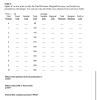 Table 3 Again, it's a new price so only the Total Revenue, Marginal Revenue, and Profit/Loss calculations will change. You can just copy all of the costs columns from a previous Table. Price = Total Product 32 Fixed Cost Variable Cost Total Cost Average Variable Marginal Cost Cost Total Marginal Revenue Revenue Profit or Loss ||||||||||| III LIITTI What is the optimum level of production in units? What is the profit or loss at this point? Should this company produce?...
You are a consultant who is advising a monopoly on the optimal pricing strategy. Your analysis...
You are a consultant who is advising a monopoly on the optimal pricing strategy. Your analysis has yielded the following information. The marginal cost (MC) is $3. The demand equation is P = 90 - 3Q The total cost (TC)is given by 35 + 3Q The marginal revenue (MR) is given by 90 - 6Q Based on this information, answer the following questions. Show FULL calculations! (a) Following the concepts of profit maximization, what is the profit maximizing quantity for this...
Total Revenue Profit Total Cost CVP Analysis Variable Cout Fed Cost Units Sold In Class Example...
 Total Revenue Profit Total Cost CVP Analysis Variable Cout Fed Cost Units Sold In Class Example Ritchie Manufacturing Company makes a product that it sells for $150 per unit. The company incurs variable manufacturing costs of $60 per unit. Variable selling expenses are $18 per unit, annual fixed manufacturing costs are $480,000, and fixed selling and administrative costs are $240,000 per year. (1) Calculate the breakeven point in units and sales dollars. (2) Prepare a contribution margin income statement to...
1. Recall that total revenue is price times quantity (or P x Q). Which of the...
1. Recall that total revenue is price times quantity (or P x Q). Which of the following will clearly cause a decrease in the total revenue for the entire market? A. Buyers’ income decreases and sellers expect the price to decrease B. Buyers' income increases C. Tastes and preferences for the product decline D. The implementation of an effective price floor on the market E. None of the above 2. If a market is initially in equilibrium, what is the...
1. Recall that total revenue is price times quantity (or P x Q). Which of the...
1. Recall that total revenue is price times quantity (or P x Q). Which of the following will clearly cause a decrease in the total revenue for the entire market? A. Buyers’ income decreases and sellers expect the price to decrease B. Buyers' income increases C. Tastes and preferences for the product decline D. The implementation of an effective price floor on the market E. None of the above 2. If a market is initially in equilibrium, what is the...
1. If the current market demand is D1 then price will equal _ __ dollars. The...
 1. If the current market demand is D1 then price will equal _ __
dollars. The individual firm’s demand
curve will be _______________________________ at a price of
______ dollars. Average revenue will be
equal to ______ dollars. Marginal revenue will be equal to
______dollars. The typical firm will produce
______ units of output. Its total revenue will equal ________
dollars. The firm will earn a profit / suffer a
loss of _______dollars.
2. Now assume that a change in consumer...
1. If the current market demand is D1 then price will equal _ __
dollars. The individual firm’s demand
curve will be _______________________________ at a price of
______ dollars. Average revenue will be
equal to ______ dollars. Marginal revenue will be equal to
______dollars. The typical firm will produce
______ units of output. Its total revenue will equal ________
dollars. The firm will earn a profit / suffer a
loss of _______dollars.
2. Now assume that a change in consumer...
The profit equation for John Billiard Supply company is given as follows: Profit=200X-1000-100X Find selling price...
The profit equation for John Billiard Supply company is given as follows: Profit=200X-1000-100X Find selling price per unit, fixed cost and variable cost per unit. If company sells 10 units, then find total expenses of the company? If company sells 15 units, then what will be the total profit of the company? 2. Ina Production Company, the materials and labor cost for making a product is $200 and the fixed cost per week is $2000. The selling price for each...
Cost-volume-profit (CVP) analysis is a powerful tool for planning and decision making. Thus, CVP analysis emphasized...
Cost-volume-profit (CVP) analysis is a powerful tool for planning and decision making. Thus, CVP analysis emphasized the interrelationships of costs, quantity sold, and price. This analysis is defined as assessment of total revenues, total costs and operating income in response to changes in the volume of sales, the selling price, variable cost or fixed costs of production. The CVP analysis can be a valuable tool in identifying the extent and magnitude of the economic trouble a company is facing and...
Discuss an impact of price elasticity of demand on total revenue of the producer in case...
Discuss an impact of price elasticity of demand on total revenue of the producer in case of an increase and a decrease of product price. Give the example of producers that manipulate the price of their products to affect revenues on sales.
A monopolist’s inverse demand is P=500-2Q, the total cost function is TC=50Q2 + 1000Q and Marginal...
A monopolist’s inverse demand is P=500-2Q, the total cost function is TC=50Q2 + 1000Q and Marginal cost is MC=100Q+100, where Q is thousands of units. a). what price would the monopolist charge to maximize profits and how many units will the monopolist sell? (hint, recall that the slope of the MARGINAL Revenue is twice as steep as the inverse demand curve. b). at the profit-maximizing price, how much profit would the monopolist earn? c). find consumer surplus and Producer surplus...
 Table 3 Again, it's a new price so only the Total Revenue, Marginal Revenue, and Profit/Loss calculations will change. You can just copy all of the costs columns from a previous Table. Price = Total Product 32 Fixed Cost Variable Cost Total Cost Average Variable Marginal Cost Cost Total Marginal Revenue Revenue Profit or Loss ||||||||||| III LIITTI What is the optimum level of production in units? What is the profit or loss at this point? Should this company produce?...
 Total Revenue Profit Total Cost CVP Analysis Variable Cout Fed Cost Units Sold In Class Example Ritchie Manufacturing Company makes a product that it sells for $150 per unit. The company incurs variable manufacturing costs of $60 per unit. Variable selling expenses are $18 per unit, annual fixed manufacturing costs are $480,000, and fixed selling and administrative costs are $240,000 per year. (1) Calculate the breakeven point in units and sales dollars. (2) Prepare a contribution margin income statement to...
 1. If the current market demand is D1 then price will equal _ __
dollars. The individual firm’s demand
curve will be _______________________________ at a price of
______ dollars. Average revenue will be
equal to ______ dollars. Marginal revenue will be equal to
______dollars. The typical firm will produce
______ units of output. Its total revenue will equal ________
dollars. The firm will earn a profit / suffer a
loss of _______dollars.
2. Now assume that a change in consumer...
1. If the current market demand is D1 then price will equal _ __
dollars. The individual firm’s demand
curve will be _______________________________ at a price of
______ dollars. Average revenue will be
equal to ______ dollars. Marginal revenue will be equal to
______dollars. The typical firm will produce
______ units of output. Its total revenue will equal ________
dollars. The firm will earn a profit / suffer a
loss of _______dollars.
2. Now assume that a change in consumer...
Most questions answered within 3 hours.
-
Where is the error in this code sequence?
String s1 = "Hello";
String s2 = "ello";...
asked 11 months ago -
Financial data for Joel de Paris, Inc., for last year
follow:
Joel de Paris, Inc.
Balance...
asked 11 months ago -
Consider this reaction:
Al2(SO4)3 (aq)+ BaCl3
(aq) Al2Cl6 (aq)- +
3BaSO4(s) . What is the...
asked 11 months ago -
Suppose that Savneet is considering increasing her
recent random sample from 20 car rentals to 40...
asked 11 months ago -
Trucks arrive at an unloading terminal at an average rate of 120
per hour.
Trucks arrive...
asked 11 months ago -
Why are methanol and ethanol completely soluble in water while
octanol is not very little soluble....
asked 11 months ago -
A facilities manager at a university reads in a research report
that the mean amount of...
asked 11 months ago -
When the CuSO4 is rehydrated by adding water to the anhydrous
compound, is this an endothermic...
asked 11 months ago -
A ray of sunlight is passing from diamond into crown glass; the
angle of incidence is...
asked 11 months ago -
A block of mass 0.249 kg is placed on top of a light, vertical
spring of...
asked 11 months ago -
how do the kidneys compensate in the presences of acidosis
a) trigger hyperventilate
b) reserve acid...
asked 11 months ago -
Question 501 pts
The rental rate of capital to the firm increases. Which of the
following...
asked 11 months ago