Describe and explain the effect of changing the reactant concentration or the temperature on the reaction...
Describe and explain the effect of changing the reactant concentration or the temperature on the reaction rate. (In terms of energy and collisions).
Homework Answers

Add Answer to:
Describe and explain the effect of changing the reactant
concentration or the temperature on the reaction...
29 (6 pts) How do concentration of reactants, temperature and catalysts affect the rate of a chemical reaction? Exp...
 29 (6 pts) How do concentration of reactants, temperature and catalysts affect the rate of a chemical reaction? Explain. Concentration of reactants: mcreases more collisions within the reactants. collisions Temperature: Increase in temperature causes increase in more and more energy in collisions. (increases rate? Catalyst: Lowens energy of activation of reactants cate? (increases rutes
3. Explain how both temperature and concentration affects the rate of reaction in terms of collision model by DRAWIN...
 3. Explain how both temperature and concentration affects the rate of reaction in terms of collision model by DRAWING the reactants' particles behavior and motion at low and high temperature and likewise at low and high concentration in the boxes below (4 marks) Temperature effect: -High Low Concentration effect: High Low
3. Explain how both temperature and concentration affects the rate of reaction in terms of collision model by DRAWING the reactants' particles behavior and motion at low and high...
3. Explain how both temperature and concentration affects the rate of reaction in terms of collision model by DRAWING the reactants' particles behavior and motion at low and high temperature and likewise at low and high concentration in the boxes below (4 marks) Temperature effect: -High Low Concentration effect: High Low
3. Explain how both temperature and concentration affects the rate of reaction in terms of collision model by DRAWING the reactants' particles behavior and motion at low and high...
Effect of a Catalyst on Reaction Rate: with a lower Ea than for the uncatalyzed reaction....
 Effect of a Catalyst on Reaction Rate: with a lower Ea than for the uncatalyzed reaction. This is shown as the blue path with Ea in the diagram below t a given temperature, a catalyst increases the rate of a reaction by providing a pathway E (RJ) products Reaction Coordinale Since the potential energy barrier is lower in the presence of a catalyst, a greater fraction of the molecules will have sufficient energy to react. Because the reactants and products...
12.) Which of the following factors influence the rate of a reaction? A) Temperature B) Reactant...
 12.) Which of the following factors influence the rate of a reaction? A) Temperature B) Reactant concentration C) A catalyst D) Temperature, reactant concentration, and a catalyst 13.) A fast reaction rate for a chemical reaction is dependent on: A) having a large activation energy B) having a small activation energy C) being exothermic D) being endothermic 14.)) A catalyst is A) a substance that decreases the energy of the products. B) a product in a chemical reaction. c) a...
Which of the following provide(s) a valid description relating collisions and reaction rate? Decreasing the reactant...
 Which of the following provide(s) a valid description relating collisions and reaction rate? Decreasing the reactant concentration will increase reaction rate because if there are fewer particles there is more room to collide. Increasing the temperature will decrease reaction rate because if the particles are moving faster there will be fewer collisions. both of the above neither of the above
Select the factors that might influence the rate of a chemical reaction. changing the concentration of...
 Select the factors that might influence the rate of a chemical reaction. changing the concentration of reactants reaction rate cannot change adding a catalyst changing the temperature
Explain the collision model and why concentration and temperature affect rate Explain how catalysts affect reaction...
Explain the collision model and why concentration and temperature affect rate Explain how catalysts affect reaction rate. Draw and interpret reaction energy diagrams – catalyzed, uncatalyzed, and multi-step.
a. Describe how changing the amplitude changes the wave. b. Describe the effect of changing the...
 a. Describe how changing the amplitude changes the wave. b. Describe the effect of changing the wavelength. c. Describe the effect of changing the frequency.
Question 13.42 update to study the effect of reactant concentration on reaction rate is to initial...
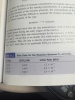 Question 13.42 update
to study the effect of reactant concentration on reaction rate is to initial rate depends on the starting concentrations. It is preferable rates because as the reaction proceeds, the concentrations of the and it may become difficult to measure the changes accurately, be a reverse reaction of the type products rightarrow reactants which would introduce error into the rate measurement. Both of these virtually absent during the early stages of the reaction. Table 13.2 shows three rate...
Question 13.42 update
to study the effect of reactant concentration on reaction rate is to initial rate depends on the starting concentrations. It is preferable rates because as the reaction proceeds, the concentrations of the and it may become difficult to measure the changes accurately, be a reverse reaction of the type products rightarrow reactants which would introduce error into the rate measurement. Both of these virtually absent during the early stages of the reaction. Table 13.2 shows three rate...
Explain why each change in conditions would affect the reaction rate of reaction when sodium metal...
Explain why each change in conditions would affect the reaction rate of reaction when sodium metal reacts with chlorine gas to form NaCl? As a catalyst is added to the mixture the reaction rate will increase because As temperature decreases the reaction rate will decrease because As volume decreases the reaction rate will increase because As concentration increases the reaction rate will increase because As the surface area of a molecule is decreased the reaction rate will decrease because As...
 29 (6 pts) How do concentration of reactants, temperature and catalysts affect the rate of a chemical reaction? Explain. Concentration of reactants: mcreases more collisions within the reactants. collisions Temperature: Increase in temperature causes increase in more and more energy in collisions. (increases rate? Catalyst: Lowens energy of activation of reactants cate? (increases rutes
 3. Explain how both temperature and concentration affects the rate of reaction in terms of collision model by DRAWING the reactants' particles behavior and motion at low and high temperature and likewise at low and high concentration in the boxes below (4 marks) Temperature effect: -High Low Concentration effect: High Low
3. Explain how both temperature and concentration affects the rate of reaction in terms of collision model by DRAWING the reactants' particles behavior and motion at low and high...
3. Explain how both temperature and concentration affects the rate of reaction in terms of collision model by DRAWING the reactants' particles behavior and motion at low and high temperature and likewise at low and high concentration in the boxes below (4 marks) Temperature effect: -High Low Concentration effect: High Low
3. Explain how both temperature and concentration affects the rate of reaction in terms of collision model by DRAWING the reactants' particles behavior and motion at low and high...
 Effect of a Catalyst on Reaction Rate: with a lower Ea than for the uncatalyzed reaction. This is shown as the blue path with Ea in the diagram below t a given temperature, a catalyst increases the rate of a reaction by providing a pathway E (RJ) products Reaction Coordinale Since the potential energy barrier is lower in the presence of a catalyst, a greater fraction of the molecules will have sufficient energy to react. Because the reactants and products...
 12.) Which of the following factors influence the rate of a reaction? A) Temperature B) Reactant concentration C) A catalyst D) Temperature, reactant concentration, and a catalyst 13.) A fast reaction rate for a chemical reaction is dependent on: A) having a large activation energy B) having a small activation energy C) being exothermic D) being endothermic 14.)) A catalyst is A) a substance that decreases the energy of the products. B) a product in a chemical reaction. c) a...
 Which of the following provide(s) a valid description relating collisions and reaction rate? Decreasing the reactant concentration will increase reaction rate because if there are fewer particles there is more room to collide. Increasing the temperature will decrease reaction rate because if the particles are moving faster there will be fewer collisions. both of the above neither of the above
 Select the factors that might influence the rate of a chemical reaction. changing the concentration of reactants reaction rate cannot change adding a catalyst changing the temperature
 a. Describe how changing the amplitude changes the wave. b. Describe the effect of changing the wavelength. c. Describe the effect of changing the frequency.
 Question 13.42 update
to study the effect of reactant concentration on reaction rate is to initial rate depends on the starting concentrations. It is preferable rates because as the reaction proceeds, the concentrations of the and it may become difficult to measure the changes accurately, be a reverse reaction of the type products rightarrow reactants which would introduce error into the rate measurement. Both of these virtually absent during the early stages of the reaction. Table 13.2 shows three rate...
Question 13.42 update
to study the effect of reactant concentration on reaction rate is to initial rate depends on the starting concentrations. It is preferable rates because as the reaction proceeds, the concentrations of the and it may become difficult to measure the changes accurately, be a reverse reaction of the type products rightarrow reactants which would introduce error into the rate measurement. Both of these virtually absent during the early stages of the reaction. Table 13.2 shows three rate...
Most questions answered within 3 hours.
-
Where is the error in this code sequence?
String s1 = "Hello";
String s2 = "ello";...
asked 10 months ago -
Financial data for Joel de Paris, Inc., for last year
follow:
Joel de Paris, Inc.
Balance...
asked 10 months ago -
Consider this reaction:
Al2(SO4)3 (aq)+ BaCl3
(aq) Al2Cl6 (aq)- +
3BaSO4(s) . What is the...
asked 10 months ago -
Suppose that Savneet is considering increasing her
recent random sample from 20 car rentals to 40...
asked 10 months ago -
Trucks arrive at an unloading terminal at an average rate of 120
per hour.
Trucks arrive...
asked 10 months ago -
Why are methanol and ethanol completely soluble in water while
octanol is not very little soluble....
asked 10 months ago -
A facilities manager at a university reads in a research report
that the mean amount of...
asked 10 months ago -
When the CuSO4 is rehydrated by adding water to the anhydrous
compound, is this an endothermic...
asked 10 months ago -
A ray of sunlight is passing from diamond into crown glass; the
angle of incidence is...
asked 10 months ago -
A block of mass 0.249 kg is placed on top of a light, vertical
spring of...
asked 10 months ago -
how do the kidneys compensate in the presences of acidosis
a) trigger hyperventilate
b) reserve acid...
asked 10 months ago -
Question 501 pts
The rental rate of capital to the firm increases. Which of the
following...
asked 10 months ago