Force # m (g) Magnitude of the force F (N) Direction in o 1 50...
|
Force # |
m (g) |
Magnitude of the force F (N) |
Direction in o |
|
1 |
50 |
.49 |
135 |
|
2 |
150 |
1.47 |
65 |
|
3 |
250 |
2.45 |
330 |
|
Resultant Force FR |
450 |
4.41 |
10 |
Finding the Resultant force FR=F1+ F2+ F3
-Experimental
-Analytical or algebraic (analyze to components)
-Graphical
Homework Answers

Suppose that F1 = 400 N. Part A Determine the magnitude of the resultant F'=F1 + F2.
 Suppose that F1 = 400 N.Part A Determine the magnitude of the resultant F'=F1 + F2. Part B Determine the direction of the resultant force F'=F1 + F2, measured counterclockwise from the positive x axis. Part C Determine the magnitude of the resultant force FR = F1 + F2 + F3. Part D Determine the direction of the resultant force FR = F1 + F2 + F3. measured counterclockwise from the positive x axis.
Determine the magnitude and direction of the resultant force, measured counterclockwise from the positive x axis
 Determine the magnitude and direction of the resultant force, measured counterclockwise from the positive x axis. Solve by first finding the resultant F' = F2 + F3 and then forming FR = F'+F1. Make sure to show all steps. Use the Parallelogram method.
Suppose that F1-350 N.(Figure 1)
 Suppose that F1-350 N.(Figure 1) Part A Determine the magnitude of the resultant F' = F1+F2 Part B Determine the direction of the resultant force F' = F1+F2, measured counterclockwise from the positive x axis.Part C Determine the magnitude of the resultant force FR = F1 + F2 + F3. Part D Determine the direction of the resultant force FR = F1 + F2 + F3, measured counterclockwise from the positive x axis.
2-6. Determine the magnitude of the resultant force FR = F1 + F2 and its direction,...
 2-6. Determine the magnitude of the resultant force FR = F1 + F2 and its direction, measured clockwise from the positive u axis. 2-7. Resolve the force F1 into components acting along the u and v axes and determine the magnitudes of the components. 2-8. Resolve the force F2 into components acting along the u and v axes and determine the magnitudes of the components.
Gomez issues 240000 of 6% F1 F2 Deermine the resultant(magnitude and direction) of the two forces...
 Gomez issues 240000 of 6%
F1 F2 Deermine the resultant(magnitude and direction) of the two forces shown Forces F1 and F3 are equal in magnitude, have the same line of action and opposite direction F3 F1 7 Resolve the Force F2 into x and y components 45 8. Resolve the Force F1 into x and y components ri
Gomez issues 240000 of 6%
F1 F2 Deermine the resultant(magnitude and direction) of the two forces shown Forces F1 and F3 are equal in magnitude, have the same line of action and opposite direction F3 F1 7 Resolve the Force F2 into x and y components 45 8. Resolve the Force F1 into x and y components ri
Group# Course/Section Instructor Tables 1 (15 points) Force F Experimental Mass (kg) Force (N) 0.050 SA...
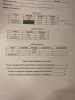 Group# Course/Section Instructor Tables 1 (15 points) Force F Experimental Mass (kg) Force (N) 0.050 SA 0.100 1024 1.373 Direction 20.0° 90.0 Equilibrant Fu Resultant Fri 249.2°C ZUL Graphical Solution Force Force (N) Direction 20.0° FT 980 Resultant Fri 1.237 Go CD 90.0° Analytical Solution Force Force (N) X-component y -component F Direction 20.0° 90.0° Resultant FR2 Part 1: Error Calculations (15 points) % Error of magnitude for Experimental compared to Analytical = % Error of direction for Experimental compared...
6. Determine the magnitude F1 and the direction of force F1 so that the resultant of...
 6. Determine the magnitude F1 and the direction of force F1 so that the resultant of the force system is zero (i.e., FR = 0). F2 = 300 lb F = 260 lb
Determine the magnitude of the resultant force acting on the plate and its direction
 Determine the magnitude of the resultant force acting on the plate and its direction, measured counterclockwise from the positive x-axis.F1 = 900N, F3 = 650N, F2 = 750N
Show all workout please. 2. v . F3 600 N F, 700 N 450 F2 -900...
 Show all workout please.
2. v . F3 600 N F, 700 N 450 F2 -900 N o Resolve each force acting on the gusset plate into its x and y components, and express the force Fi as a Cartesian vector o Express the force F2 as a Cartesian vector o Express the force F3 as Cartesian vector 。The magnitude ofthe resultant force, FR IN i+l j) N j) N o The direction of the resultant force, measured counterclockwise from...
Show all workout please.
2. v . F3 600 N F, 700 N 450 F2 -900 N o Resolve each force acting on the gusset plate into its x and y components, and express the force Fi as a Cartesian vector o Express the force F2 as a Cartesian vector o Express the force F3 as Cartesian vector 。The magnitude ofthe resultant force, FR IN i+l j) N j) N o The direction of the resultant force, measured counterclockwise from...
Determine the magnitude of the resultant force and its direction, measured clockwise from the positive x...
 Determine the magnitude of the resultant force and its direction, measured clockwise from the positive x axis F1 = 4kNF2 = 5kN F3 = 8kN
 Gomez issues 240000 of 6%
F1 F2 Deermine the resultant(magnitude and direction) of the two forces shown Forces F1 and F3 are equal in magnitude, have the same line of action and opposite direction F3 F1 7 Resolve the Force F2 into x and y components 45 8. Resolve the Force F1 into x and y components ri
Gomez issues 240000 of 6%
F1 F2 Deermine the resultant(magnitude and direction) of the two forces shown Forces F1 and F3 are equal in magnitude, have the same line of action and opposite direction F3 F1 7 Resolve the Force F2 into x and y components 45 8. Resolve the Force F1 into x and y components ri
 Group# Course/Section Instructor Tables 1 (15 points) Force F Experimental Mass (kg) Force (N) 0.050 SA 0.100 1024 1.373 Direction 20.0° 90.0 Equilibrant Fu Resultant Fri 249.2°C ZUL Graphical Solution Force Force (N) Direction 20.0° FT 980 Resultant Fri 1.237 Go CD 90.0° Analytical Solution Force Force (N) X-component y -component F Direction 20.0° 90.0° Resultant FR2 Part 1: Error Calculations (15 points) % Error of magnitude for Experimental compared to Analytical = % Error of direction for Experimental compared...
 6. Determine the magnitude F1 and the direction of force F1 so that the resultant of the force system is zero (i.e., FR = 0). F2 = 300 lb F = 260 lb
 Show all workout please.
2. v . F3 600 N F, 700 N 450 F2 -900 N o Resolve each force acting on the gusset plate into its x and y components, and express the force Fi as a Cartesian vector o Express the force F2 as a Cartesian vector o Express the force F3 as Cartesian vector 。The magnitude ofthe resultant force, FR IN i+l j) N j) N o The direction of the resultant force, measured counterclockwise from...
Show all workout please.
2. v . F3 600 N F, 700 N 450 F2 -900 N o Resolve each force acting on the gusset plate into its x and y components, and express the force Fi as a Cartesian vector o Express the force F2 as a Cartesian vector o Express the force F3 as Cartesian vector 。The magnitude ofthe resultant force, FR IN i+l j) N j) N o The direction of the resultant force, measured counterclockwise from...
Most questions answered within 3 hours.
-
Where is the error in this code sequence?
String s1 = "Hello";
String s2 = "ello";...
asked 11 months ago -
Financial data for Joel de Paris, Inc., for last year
follow:
Joel de Paris, Inc.
Balance...
asked 11 months ago -
Consider this reaction:
Al2(SO4)3 (aq)+ BaCl3
(aq) Al2Cl6 (aq)- +
3BaSO4(s) . What is the...
asked 11 months ago -
Suppose that Savneet is considering increasing her
recent random sample from 20 car rentals to 40...
asked 11 months ago -
Trucks arrive at an unloading terminal at an average rate of 120
per hour.
Trucks arrive...
asked 11 months ago -
Why are methanol and ethanol completely soluble in water while
octanol is not very little soluble....
asked 11 months ago -
A facilities manager at a university reads in a research report
that the mean amount of...
asked 11 months ago -
When the CuSO4 is rehydrated by adding water to the anhydrous
compound, is this an endothermic...
asked 11 months ago -
A ray of sunlight is passing from diamond into crown glass; the
angle of incidence is...
asked 11 months ago -
A block of mass 0.249 kg is placed on top of a light, vertical
spring of...
asked 11 months ago -
how do the kidneys compensate in the presences of acidosis
a) trigger hyperventilate
b) reserve acid...
asked 11 months ago -
Question 501 pts
The rental rate of capital to the firm increases. Which of the
following...
asked 11 months ago