A mountain climber was trapped in a high mountain ravine for five days. During that time...
A mountain climber was trapped in a high mountain ravine for five days. During that time she had no food but had plenty of water. She continued to try to find a way out so she was still moving most of the time she was trapped but was not able to find her way out. What is happening biochemically in this person in that fifth day without food?
For one of the following tissues discuss the fuels and pathways in the places in the template as indication.
a. Skeletal muscle
i. Fuels being
utilized and why these are the major fuels being utilized in this
situation (2).
ii.
Pathways of fuel metabolism, both utilization and storage, which
are being activated and pathways which are being inhibited under
these conditions. Also briefly explain how and why these pathways
are being affected by this situation. Be sure your answers include
the most highly regulated steps/enzymes of each of these mentioned
pathways (show the reactions and enzymes)
(5).
Homework Answers
During 5-day starvation, gluconeogenesis would occur as cells would try to make glucose from sources other than non-carbohydrate sources such as amino acids and fats. Thus fatty acid oxidation would occur along with TCA cycle and electron transport chain. Ketone oxidation would also occur.
Glycogen stores last for roughly 24 hours. The liver manufactures new glucose from amino acids in a process called “gluconeogenesis”. The low levels of insulin reached during fasting stimulate lipolysis, the breakdown of fat for energy. The storage form of fat, known as triglycerides, is broken into the glycerol backbone and three fatty acid chains. Glycerol is used for gluconeogenesis. Fatty acids cannot be used by the brain directly. Thus Ketone bodies(beta-hydroxybutyrate and acetoacetate, ), capable of crossing the blood-brain barrier, are produced from fatty acids for use by the brain. After four days of fasting, approximately 75% of the energy used by the brain is provided by ketones. Finally when all the fat stores are depleted the muscle proteins come into action to provide energy.
Fatty acids by themselves cannot be used as a direct fuel source. They must first undergo beta-oxidation in the mitochondria in skeletal muscle, cardiac muscle, and liver cells. Fatty acids are transported into the mitochondria as an acyl-carnitine via the action of the enzyme CAT-1. Ketogenesis converts long-chain fatty acids to short chain fatty acids as they are less hydrophobic and thus can pass easily into brain cells in comparison to long chain fatty acids. The resulting ketone bodies, acetoacetate and β-hydroxybutyrate, are amphipathic and can be transported into the brain and broken down into acetyl-CoA for use in the TCA cycle. Acetoacetate breaks down spontaneously into acetone, and the acetone is released through the urine and lungs to produce the “acetone breath” that accompanies prolonged fasting.
. Acetoacetate breaks down spontaneously into acetone, and the acetone is released through the urine and lungs to produce the “acetone breath” that accompanies prolonged fasting i.e, in this case, this happens after 5 days. For example, primary gluconeogenic acid alanine comes from muscle proteins.
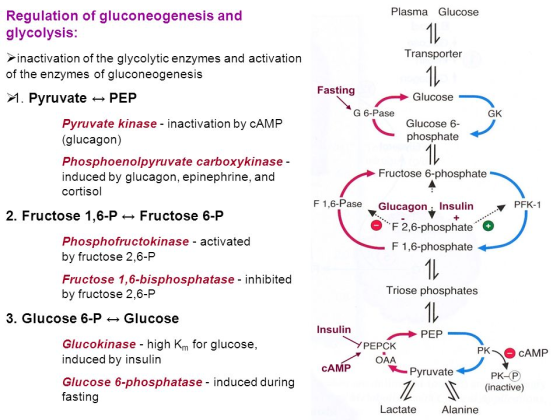
During starvation, gluconeogenesis is activated hence the enzymes of gluconeogenesis are activated and enzymes of glycolysis are inhibited. Also, enzymes of fatty acid oxidation are activated.
Add Answer to:
A mountain climber was trapped in a high mountain ravine for
five days. During that time...
CASE 20 Enron: Not Accounting for the Future* INTRODUCTION Once upon a time, there was a...
 CASE 20 Enron: Not Accounting for the Future* INTRODUCTION Once upon a time, there was a gleaming office tower in Houston, Texas. In front of that gleaming tower was a giant "E" slowly revolving, flashing in the hot Texas sun. But in 2001, the Enron Corporation, which once ranked among the top Fortune 500 companies, would collapse under a mountain of debt that had been concealed through a complex scheme of off-balance-sheet partnerships. Forced to declare bankruptcy, the energy firm...
microbiology help TOT Zoo Add Page Insert Table Chart Text Shape Media Comment These questions will...
 microbiology help
TOT Zoo Add Page Insert Table Chart Text Shape Media Comment These questions will serve in lieu of a lab report for Exercise 15, 16, and 17 You will find the answer to these questions in the background, procedure, results and interpretation sections of manual Exercise 15, 16, and 17, videos, Actions of Selective and Differential Media Chart, and the Principle/Theory article in homework section.) General Questions 1. What is the purpose (function) of selective media? (How does...
microbiology help
TOT Zoo Add Page Insert Table Chart Text Shape Media Comment These questions will serve in lieu of a lab report for Exercise 15, 16, and 17 You will find the answer to these questions in the background, procedure, results and interpretation sections of manual Exercise 15, 16, and 17, videos, Actions of Selective and Differential Media Chart, and the Principle/Theory article in homework section.) General Questions 1. What is the purpose (function) of selective media? (How does...
 CASE 20 Enron: Not Accounting for the Future* INTRODUCTION Once upon a time, there was a gleaming office tower in Houston, Texas. In front of that gleaming tower was a giant "E" slowly revolving, flashing in the hot Texas sun. But in 2001, the Enron Corporation, which once ranked among the top Fortune 500 companies, would collapse under a mountain of debt that had been concealed through a complex scheme of off-balance-sheet partnerships. Forced to declare bankruptcy, the energy firm...
 microbiology help
TOT Zoo Add Page Insert Table Chart Text Shape Media Comment These questions will serve in lieu of a lab report for Exercise 15, 16, and 17 You will find the answer to these questions in the background, procedure, results and interpretation sections of manual Exercise 15, 16, and 17, videos, Actions of Selective and Differential Media Chart, and the Principle/Theory article in homework section.) General Questions 1. What is the purpose (function) of selective media? (How does...
microbiology help
TOT Zoo Add Page Insert Table Chart Text Shape Media Comment These questions will serve in lieu of a lab report for Exercise 15, 16, and 17 You will find the answer to these questions in the background, procedure, results and interpretation sections of manual Exercise 15, 16, and 17, videos, Actions of Selective and Differential Media Chart, and the Principle/Theory article in homework section.) General Questions 1. What is the purpose (function) of selective media? (How does...
Most questions answered within 3 hours.
-
Where is the error in this code sequence?
String s1 = "Hello";
String s2 = "ello";...
asked 10 months ago -
Financial data for Joel de Paris, Inc., for last year
follow:
Joel de Paris, Inc.
Balance...
asked 10 months ago -
Consider this reaction:
Al2(SO4)3 (aq)+ BaCl3
(aq) Al2Cl6 (aq)- +
3BaSO4(s) . What is the...
asked 10 months ago -
Suppose that Savneet is considering increasing her
recent random sample from 20 car rentals to 40...
asked 10 months ago -
Trucks arrive at an unloading terminal at an average rate of 120
per hour.
Trucks arrive...
asked 10 months ago -
Why are methanol and ethanol completely soluble in water while
octanol is not very little soluble....
asked 10 months ago -
A facilities manager at a university reads in a research report
that the mean amount of...
asked 10 months ago -
When the CuSO4 is rehydrated by adding water to the anhydrous
compound, is this an endothermic...
asked 10 months ago -
A ray of sunlight is passing from diamond into crown glass; the
angle of incidence is...
asked 10 months ago -
A block of mass 0.249 kg is placed on top of a light, vertical
spring of...
asked 10 months ago -
how do the kidneys compensate in the presences of acidosis
a) trigger hyperventilate
b) reserve acid...
asked 10 months ago -
Question 501 pts
The rental rate of capital to the firm increases. Which of the
following...
asked 10 months ago