Define and give examples of the four types of organization culture found in MNC's and include...
Define and give examples of the four types of organization culture found in MNC's and include the advantages and disadvantages of each.
Homework Answers
thank you so much for asking good question i really appreciate it.
by understanding your question i would like to give the answer in the following ways:
Definition of organization culture: 1st Definition: Organizational culture is a system of shared assumptions, values, and
beliefs, which governs how people behave in organizations. These shared values have a strong influence on the people in
the organization and dictate how they dress, act, and perform their jobs.

2nd Definition of Organization Culture: The values and behaviors that contribute to the unique social and psychological
environment of an organization.
Organizational culture includes an organization's expectations, experiences, philosophy, and values that hold it together, and
is expressed in its self-image, inner workings, interactions with the outside world, and future expectations.
It is based on shared attitudes, beliefs, customs, and written and unwritten rules that have been developed over time and are
considered valid.
Also called corporate culture, it's shown in:
(1) the ways the organization conducts its business, treats its
employees, customers, and the wider community,
(2) the extent to which freedom is allowed in decision making,
developing new ideas, and personal expression,
(3) how power and information flow through its hierarchy, and
(4) how committed employees are towards collective
objectives.
It affects the organization's productivity and performance, and
provides guidelines on customer care and service, product
quality and safety, attendance and punctuality, and concern for
the environment.
It also extends to production-methods, marketing and advertising
practices, and to new product creation. Organizational
culture is unique for every organization and one of the hardest things to change.

- Now we will discuss about the four type of organization culture one by one with the help of examples which is are as follows:
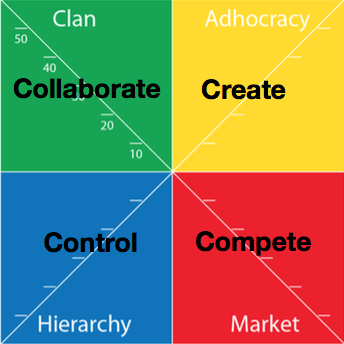
- The Clan Culture: This culture is rooted in collaboration. Members share commonalities and see themselves are part of one big family who are active and involved. Leadership takes the form of mentorship, and the organization is bound by commitments and traditions. The main values are rooted in teamwork, communication and consensus. A prominent clan culture is Tom’s of Maine, the maker of all-natural hygiene products. To build the brand, founder Tom Chappell focused on building respectful relationships with employees, customers, suppliers and the environment itself.
- To understand in easy way we can also explain Clan cultures have a friendly, collaborative culture and can be compared to a large family—i.e., a clan—where people have a lot in common. Strong bonds of loyalty, tradition, and commonality generally form.
- Examples of companies that may have a clan culture include Google, Zappos, or Tom’s of Maine.
- The Adhocracy Culture: This culture is based on energy and creativity. Employees are encouraged to take risks, and leaders are seen as innovators or entrepreneurs. The organization is held together by experimentation, with an emphasis on individual ingenuity and freedom. The core values are based on change and agility. Facebook can be seen as a prototypical adhocracy organization, based on CEO Mark Zuckerberg’s famous admonition to, “Move fast and break things – unless you are breaking stuff, you are not moving fast enough.”
- Further we can also explain it is the root word here is “ad hoc.” An adhocracy is a dynamic and innovative environment where employees are willing to take chances and leaders are typically seen as inspirational innovators willing to challenge assumptions and take risks. Core values reflect change and agility—this is not the type of culture where employees are likely to hear, “We tried that already, and it didn’t work.” Think Facebook and any variety of tech companies that must stay nimble and innovative to remain competitive.
- The Market Culture: This culture is built upon the dynamics of competition and achieving concrete results. The focus is goal-oriented, with leaders who are tough and demanding.The organization is united by a common goal to succeed and beat all rivals. The main value drivers are market share and profitability.
- Example General Electric under ex-CEO Jack Welch is a good example of this culture. Welch vowed that every G.E. business unit must rank first or second in its respective market or face being sold off. Another example of the market culture is software giant Oracle under hard-driving Executive Chairman Larry Ellison.
- The Hierarchy Culture: This culture is founded on structure and control. The work environment is formal, with strict institutional procedures in place for guidance. Leadership is based on organized coordination and monitoring, with a culture emphasizing efficiency and predictability. The values include consistency and uniformity. Think of stereotypical large, bureaucratic organizations such as McDonald’s, the military, or the Department of Motor Vehicles.
- We can further explain it is Process and procedure are everything in a hierarchy culture. Leaders are there to monitor and facilitate adherence to tried and true ways of doing business. Costs and mistakes are kept low by following the rules and the guidelines that have gotten the business this far in the first place. Government organizations are good examples of this type of culture, as are organizations where safety is a primary concern—health care and aviation,
- Example: “Corporate culture” is a somewhat vague term, but it can have a huge impact on the fortune of a company and the company’s employees. What kind of culture does your organization have? Is it the right culture to help you succeed in the market you’re in and with the customers you wish to serve? While corporate culture is notoriously difficult to change, it’s not something that should be left to chance or overlooked. As Peter Drucker famously said, “Culture eats strategy for breakfast.” We’d add lunch and dinner, too.
- Now we will understand the advantages and disadvantages of each of them:
- Clan culture Advantages:
- Promoting flexibility in terms of dress code, hours and working locations can help towards developing a respectful professional relationship between superiors and their team. Let's look at the other benefits clan-culture breeds:
- Productivity and company growth:
- A happy team creates a happy business. There is positive correlation between satisfied employees, productivity and business growth. When employees' needs are put first, office morale is high and staff feel valued within the workplace. Cue the power of pride for encouraging a valuable sense of workplace purpose...
- Instead of complaining and gossiping, employees who trust their managers and colleagues feel more driven to go above and beyond their general workload. They can openly voice their ideas, take greater risks and step out that box - when your whole team's behind you, it's comforting to know they can catch you if you fall.
- Clear communication
- Adopting an organisational culture with a 'tribe-like' feel helps employees think and work as a dream-team. Just as we're encouraged to regularly sit down and 'chew the fat' with our families at dinnertime, there are many marked benefits for companies that communicate freely and often.
- Clan cultures put more precedence on weekly one-to-ones, team presentations and meetings where everyone is invited. From the cleaner to the CEO, clan cultures urge the company as a whole to sing from the same hymn sheet. It's no surprise then that the more employees you involve, the louder and further your message can spread.
- Ideas and feedback
- Family-like culture adopts a more 'inclusive' approach; welcoming ideas and feedback with open arms (a bit like a much-missed daughter back from travelling). From a review standpoint, it's actually beneficial to air out the office laundry and collectively seek honest feedback. Only when you know there's an issue can you scrum together and produce resolutions to move past them.
- Unsurprisingly, employee surveys, suggestion boxes and creativity rooms are prominent features in the rich tapestry of clan culture traits. Look around you. Does your office offer an environment or provide a forum or place for ideas and feedback that's open to all? Designating an area for such creativity can help staff align with your business ethos, goals and procedures and thus sets the wheels in motion for lucrative success.
-
Healthier working environment
When you focus your attention on the people who make up your team and company, their well being, health and even personal goals sharpen into the forefront. We've touched upon the positive effect that designating different areas, rooms and visuals for creative idea generation can bring, but clan culture urges companies to nurture their everyday office space too.
Clan culture Disadvantage:
Too much talk
There's a very fine line between communicating enough and over-collaboration. We've all been there. Absent-mindedly sat in a meeting and unable to provide or take anything valuable from it because we're so consumed and distracted by our own work schedule.
The boss is not the best friend
As the boss or a senior manager it’s great to build a rapport with your staff. But boundaries are important. You can have fun with your team, join in and even lark about at times but ultimately you need a good leader to guide and assert authority when necessary.
Personality clashes
Inevitably, when you promote employee individualism and flexibility alongside a 'one vision' company, you run the risk of personality clashes and stepping on toes. It’s tough going against the grain and if you're stepping into a new pack, singling yourself out by raising a different opinion takes a serious amount of courage. In this instance, clan culture can lead to blind spots where your employees could fear challenging a wrongly held group assumption or collective prejudice.
Inappropriate behaviour
Likewise to communication, there's a very fine line between encouraging employee jollying and invading a person's basic rights. Clan culture workplaces can trip up if their team misunderstand.
-
Now we will understand advantages and disadvantages of Adhocracy culture in four ways and it is discuss one by one:
-
Adaptive mindset
-
Flexible working conditions
-
On-trend innovation
-
Dynamic production
-
Adaptive pros:
The stakes are high and the rewards mountainous. You're in a versatile environment, so strategy and the way you move is imperative. Consider each variable; it's time to weigh the risks up against the rewards and adapt to any hidden drops.
Most importantly, when you fall (because it will happen), you need to be ready to collect your equipment, brush yourself off and get back up.
'Keep moving' is this culture's motto and this environment is suited to those who think big then act larger. It's that leap of faith and caution-to-the-wind mentality, which makes ad-hoc culture so engaging.
If you'd played it safe, you wouldn't be enjoying the thrill of untouched routes or indeed the benefits that stem from exclusivity. And, the more you experience, the more you learn. After all, there's truth in the fact that power is applied knowledge.
Adaptive cons:
Apprentices and newbies aren't best placed here. That's why one of the pitfalls of adhoc culture includes recruitment. Leaders look to gather a team of individuals who not only enjoy living life on the edge, but are also experienced within their particular field. Let's face it, the enjoyment from your day on the mountain will - to some extent - be determined by the people in your team/ group.
Remember, when you're committed to an all-encompassing, fast-paced environment, there's little time to stop and check the technique. You need confidence in your team, yourself and the run that you've decided to take.
There's no walk-out plan, so you have no other option than to drop-in and run the journey. Hopefully you'll float and not sink.
-
Flexible pros:
This culture gets its kicks from adversity and change, so naturally lends itself to flexible, remote and dynamic working patterns. This is great for those who put precedence on living a life with activities and responsibilities outside of work. (Plenty of time to shoot down that mountain then.)
Flexible cons:
What's the opposite of flexibility? Stability. Needless to say, our hierarchical, routine-dependent employees won't gel so well with ad-hoc. There's a fine-line between flexibility and insecurity and for those that invest big, the risks are scary. The higher you elevate, the further the drop. And, unfortunately, the harder and more damaging the tumble.
Think back to our skiing scenario; for those less-experienced adventurers, it's safer to start small and leave the tougher off-piste terrain and black mogul fields to the experts.
-
Staying on trend - the pros:
Keeping on trend and at the forefront of your industry is imperative to adhoc workplace culture. The focus is firmly on the future and the part that your employees can play in building yours. This is great news for the creatives out there.
Adhoc cultures support individuals who are apt at keeping all plates spinning and twelve eyes on the prize. Adaptive mindsets fuse with out-of-the-box thinking to create projects and products we don't even know we need yet. There's an element of fortune telling in this, so it's great for those who have more extroverted tendencies or confidence in their specific field.
Staying on trend - the cons:
Specific and dependable recruitment is paramount. As an adhoc leader, you need complete confidence in your team, their talents and their ability to adapt. This can make things harder for larger businesses who've neglected establishing their staff's strengths and weaknesses.
If one of your twelve eyes does wander from the trending prize and those plates slip, you're at risk of one hell of a landslide.
-
Dynamic production pros:
One obvious pro from adhocracy culture is the creation of innovative products. Leaders and employees evaluate working conditions, briefs and products then improve, enhance and adjust.
What do we need? What do we want? How can we do better? How do we go from good to great? Regular question-and-answer sessions help adhocracy cultures develop their team attributes and plot out their strategies for successful business ventures.
If we didn't have adhoc cultures that create success by working out the grain and then going against it to make something unique and useful, we wouldn't have: aerospace, internet, mobile phones, applications, the cloud and even Breathe.
Dynamic production cons:
Difficult collaboration spurred on by individualism and personality clashes. When the majority of your team is made up of creative experts in their field, sparks will fly.
To succeed and avoid the devastation that stems from a particularly aggressive spark, you'll need a tenacious management team, built from leaders who earn respect.
-
The advantages of adopting a market culture
Despite the aggressive nature of market culture, there is no doubt that it has its up-sides for business productivity and growth. Here are some examples of the advantages that adopting this type of organisational culture can bring.
Maximised profit
Naturally, with a culture that is solely customer, results and success orientated comes a higher revenue. Goals are met, or if they aren’t, new ways are explored to reach them.
Additionally, employees who are consistently motivated and pushed to achieve big results are more likely to generate a bigger income than those who aren’t.
-
Disadvantages of adopting Market Culture:
Burn-out
Team members who are being constantly pushed to achieve results in a fast-paced environment can often become over-worked, meaning their well-being takes a back seat. This can often result in cases of presenteeism, or in severe cases poor mental health and employee burnout - not just bad news for productivity and team morale, but your bottom line, too.
Toxic atmospheres
With a highly competitive working environment, employees who are up against each other can often adopt a dishonest (and therefore unproductive) way of working. This is definitely one to watch out for as it could have gut-wrenching consequences for your team’s productivity levels, fluidity and morale. You might also face difficulty in your team collaborating and working together smoothly on important projects.
-
Advantages and disadvantages of Hierarchial culture:
Advantage – Clear Chain of Command
In an hierarchical structure, members know to whom they report and who reports to them. This means that communication gets channeled along defined and predictable paths, which allows those higher in the organization to direct questions to the appropriate parties. It also means that individuals tend to know who does and does not possess the authority to assign or change tasks. A clear chain of command also generates clearly defined sets of responsibilities. Military structures rely heavily on this division and assignment of responsibility and authority to maintain discipline.
Advantage – Clear Paths of Advancement
Most people want to advance in their careers. Hierarchical structures offer very clear, if not always easy, advancement paths. In business organizations, for example, advancement frequently means replacing a departing or advancing superior. Alternatively, it can mean moving from one company to another to take a better position in a similarly structured organization. In either case, those seeking advancement know the next step.
Advantage – Specialization
Larger organizations must manage a variety of diverse tasks, ranging from human resources and accounting to marketing and purchasing. The hierarchical structure divides these areas of concern into various department configurations that specialize. Specialization allows organizations to concentrate particular skill sets and resources to achieve maximum efficiency.
Disadvantage – Poor Flexibility
Hierarchical structures tend to adapt slowly to changing needs. Governmental organizations, for example, frequently come under fire for maintaining layers of bureaucracy that inhibit change. Organizations that cannot adapt to new market demands or advancing technologies in pace with or ahead of other organizations often end up marginalized. This problem affects enough organizations that an entire field of study, called change management, has developed.
Disadvantage – Communication Barriers
The success of an organization often depends on the quality of internal communication within it. As hierarchical organizational structures tend to channel communication vertically, interdepartmental or inter-agency communication suffers. Departmental specialization can lead to communication barriers when no shared jargon exists that allows members of different departments to communicate on the same level. In worst-case scenarios, departments purposefully withhold information from each other.
Disadvantage – Organizational Disunity
In theory, organizations pursue a goal or goals as a unified team. The departmentalizing of specializations leads, in some cases, to decisions made to benefit a department rather than the organization goals.
-
So form above all the point wise discussion you can understand the answer of your question.
Add Answer to:
Define and give examples of the four types of organization
culture found in MNC's and include...
Define and give examples of five types of angular movements: flexion and extension, abduction and adduction,...
Define and give examples of five types of angular movements: flexion and extension, abduction and adduction, and circumduction. Include the plane of movement for each action.
(microbiology) define/explain the major types of symbioses in which microorganisms engage. give exakples that explaijnrhe advantages...
(microbiology) define/explain the major types of symbioses in which microorganisms engage. give exakples that explaijnrhe advantages and disadvantages for the symbiotic partners
Define therapeutic reasoning, name different types, and give examples. Define the stages of therapeutic reasoning development...
Define therapeutic reasoning, name different types, and give examples. Define the stages of therapeutic reasoning development and give examples. Identify and discuss the complementary roles of the OTR and the OTA and the use of therapeutic reasoning in addressing client goals. Define the COAST method for writing appropriate goal statements. Relate long-term goals and short term goals to each other.
identify and define the three types of integration strategies. Define and give examples of three intensive...
identify and define the three types of integration strategies. Define and give examples of three intensive strategies
" A Just Culture" define and describe the 2nd class of errors (at-risk behavior) give examples...
" A Just Culture" define and describe the 2nd class of errors (at-risk behavior) give examples and describe how can it we prevent it?
Describe the four types of inventory. Give examples.
Describe the four types of inventory. Give examples.
List and define four of the ten core competencies. Give examples of each.
List and define four of the ten core competencies. Give examples of each.
Define Asset, Liabilities and Equity and give two examples of each of these account types. ...
Define Asset, Liabilities and Equity and give two examples of each of these account types. 2. Define Normal Balance, list the 6 types of accounts mentioned in class (AEDLRC), and list the normal balance for each of those 6. 3. Create a sample T Account with several debit and credit amounts and then calculate the balance of the account and explain the balancing process.
explain and give examples of how the nurse can include the patient culture when providing care
explain and give examples of how the nurse can include the patient culture when providing care
: Define and give examples of three types of corporate mergers, and explain the role of leveraged...
: Define and give examples of three types of corporate mergers, and explain the role of leveraged buyouts and taking a firm private.
Most questions answered within 3 hours.
-
Where is the error in this code sequence?
String s1 = "Hello";
String s2 = "ello";...
asked 10 months ago -
Financial data for Joel de Paris, Inc., for last year
follow:
Joel de Paris, Inc.
Balance...
asked 10 months ago -
Consider this reaction:
Al2(SO4)3 (aq)+ BaCl3
(aq) Al2Cl6 (aq)- +
3BaSO4(s) . What is the...
asked 10 months ago -
Suppose that Savneet is considering increasing her
recent random sample from 20 car rentals to 40...
asked 10 months ago -
Trucks arrive at an unloading terminal at an average rate of 120
per hour.
Trucks arrive...
asked 10 months ago -
Why are methanol and ethanol completely soluble in water while
octanol is not very little soluble....
asked 10 months ago -
A facilities manager at a university reads in a research report
that the mean amount of...
asked 10 months ago -
When the CuSO4 is rehydrated by adding water to the anhydrous
compound, is this an endothermic...
asked 10 months ago -
A ray of sunlight is passing from diamond into crown glass; the
angle of incidence is...
asked 10 months ago -
A block of mass 0.249 kg is placed on top of a light, vertical
spring of...
asked 10 months ago -
how do the kidneys compensate in the presences of acidosis
a) trigger hyperventilate
b) reserve acid...
asked 10 months ago -
Question 501 pts
The rental rate of capital to the firm increases. Which of the
following...
asked 10 months ago