A malfunction in the pH meter has caused the reading to be 1 pH unit too...
A malfunction in the pH meter has caused the reading to be 1 pH unit too high. What effect would this have on the calculated pKa of the unknown acid? On the calculated Ka?
Homework Answers

Add Answer to:
A malfunction in the pH meter has caused the reading to be 1 pH
unit too...
Determination of Ka and Identification of an Unknown Weak Acid Post-lab Question 1. Suppose that a student performi...
 Determination of Ka and Identification of an Unknown Weak Acid Post-lab Question 1. Suppose that a student performing this experiment mistakenly calibrated the pH meter using pH 8 buffer instead of pH 7 buffer. As a result of this error, all of the student's pH readings were too low. a) Would this error have affected the calculated molar mass of the unknown acid? Briefly explain. b) Would this error have affected the experimentally determined pKa of the unknown acid? Briefly...
4. As a result of adding the NaOH titrant too rapidly and an unwillingness to allow...
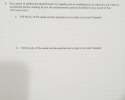 4. As a result of adding the NaOH titrant too rapidly and an unwillingness to allow the pH meter to equilibrate before reading its pH, the stoichiometric point is ill defined. As a result of this technique error a. Will the K, of the weak acid be reported as too high or too low? Explain! b. Will the pka of the weak acid be reported as too high or too low? Explain!
Change in buffer pH versus change in pH meter reading
Explain how each of the following errors would have altered your results. Clearly explain why your calculated answer would be high, low, or unchanged. (A single word answer is not acceptable.)The pH buffers used to calibrate the pH meter were each 0.5 pH units high (4.5 and 7.5 rather than 4.0 and 7.0 respectively).
HELP! Part B: Determination of acid ionization constant (K.) and molar mass of an u Concentration...
 HELP!
Part B: Determination of acid ionization constant (K.) and molar mass of an u Concentration of NaOH (mol/L) from bottle: 0.1053 Mass concentration of unknown acid (g/L) from bottle: 3.120 pH of unknown acid solution: 228 from pH meter. 1) Titration of unknown acid using indicator only Trial 2 Trial 1 1.593 30.851 090909 ml Mass of empty beaker Mass of beaker + unknown acid solution Mass of unknown acid solution Volume of unknown acid solution Initial volume of...
HELP!
Part B: Determination of acid ionization constant (K.) and molar mass of an u Concentration of NaOH (mol/L) from bottle: 0.1053 Mass concentration of unknown acid (g/L) from bottle: 3.120 pH of unknown acid solution: 228 from pH meter. 1) Titration of unknown acid using indicator only Trial 2 Trial 1 1.593 30.851 090909 ml Mass of empty beaker Mass of beaker + unknown acid solution Mass of unknown acid solution Volume of unknown acid solution Initial volume of...
1. What is the pH of a buffer solution prepared with a 0.4 M sodium citrate...
 1. What is the pH of a buffer solution prepared with a 0.4 M sodium citrate and 1% citric acid (pka for citric acid - 3.13, MW - 192 g/mol)? 8. A buffer solution is prepared using 0.4 mole of a weakly basic drug (pka - 10.1) and an unknown quantity of its salt. The final solution has a pH of 8.99. How much of the salt was used? 9. A buffer solution with a desired pH of 8.15 needs...
calculations for: concentration of the unknown acid and values for pKa and Ka. Part E: pH...
 calculations for:
concentration of the unknown acid and values for pKa and
Ka.
Part E: pH pH pH pH Average Volume Trial 1 Trial 2 Trial 3 5.0 0 5 5.0। 5.1 .0 । 5.1 5.1 5.2 5.3 [5.0। 5.1 5.1 5.1 5.2 5.3 [5.2 5.3 5.3 5.4 5.5 16. 16.5 17.0 | 17.5। 18.0 18.5 19.0 19.5 | 20.0 20.5 21.0 | 21.5 | 22.0 22.5 23.0 23.5 24.0 24.5 | 5.6 5.7 [5.3 [5.4 | 5.5 | 5.6...
calculations for:
concentration of the unknown acid and values for pKa and
Ka.
Part E: pH pH pH pH Average Volume Trial 1 Trial 2 Trial 3 5.0 0 5 5.0। 5.1 .0 । 5.1 5.1 5.2 5.3 [5.0। 5.1 5.1 5.1 5.2 5.3 [5.2 5.3 5.3 5.4 5.5 16. 16.5 17.0 | 17.5। 18.0 18.5 19.0 19.5 | 20.0 20.5 21.0 | 21.5 | 22.0 22.5 23.0 23.5 24.0 24.5 | 5.6 5.7 [5.3 [5.4 | 5.5 | 5.6...
Post-Lab Assignment: pH and Buffers 1. A buffer is prepared from a weak acid with a...
 Post-Lab Assignment: pH and Buffers 1. A buffer is prepared from a weak acid with a Ka - 7.1 x 10⁴ and its conjugate base. a. What pH would provide maximum buffer capacity? b. What would be the buffer range for this acid? (Your answer should show the lowest and the highest pH that would provide a reasonably effective buffer.) 2. If you were provided with a 0.1 M solution of an unknown weak acid and a 0.1 M solution...
5. The Ka and Molar Mass of a Monoprotic Weak Acid a. Suppose that–unknown to you–the...
5. The Ka and Molar Mass of a Monoprotic Weak Acid a. Suppose that–unknown to you–the primary standard KHP (potassium hydrogen phthalate, KHC8H4O4) had a potassium iodide impurity of approximately one percent by mass. How would this have influenced the calculated molarity of your sodium hydroxide solution? Would your calculated value be too low, too high, or unchanged? Explain your answer. b. Sketch a typical titration curve for a monoprotic weak acid titrated with a strong base. Label the axes...
This is from a Study of Buffer Solutions and pH of Salt Solutions Lab. I calculated...
 This is from a Study of Buffer Solutions and pH of Salt
Solutions Lab. I calculated Ka to be 3.2*10^-5. Why is my value
larger than the standard value?
Procedure:
10. How does your calculated value of Ka compare with the standard value of Ka for acetic acid? Discuss why your value may be larger or smaller than the standard value. Caleutats Ka 3.2x 10⁻⁵) Cyato-s Learning Objectives: 1. To test the acidic and basic properties of ionic compounds 2....
This is from a Study of Buffer Solutions and pH of Salt
Solutions Lab. I calculated Ka to be 3.2*10^-5. Why is my value
larger than the standard value?
Procedure:
10. How does your calculated value of Ka compare with the standard value of Ka for acetic acid? Discuss why your value may be larger or smaller than the standard value. Caleutats Ka 3.2x 10⁻⁵) Cyato-s Learning Objectives: 1. To test the acidic and basic properties of ionic compounds 2....
Data Table 2: Titration Curve Values pH Value Trial 1 pH Value Trial 2 pH Value...
 Data Table 2: Titration Curve Values pH Value Trial 1 pH Value Trial 2 pH Value (Average) Drops NaOH Added Half- Equivalence Point Equivalence Point ? ? ? ? ? ? 0 2.5 2.5 2.5 10 4.5 4.5 4.5 20 4.5 4.5 4.5 30 4.5 4.5 4.5 40 4.5 4.5 4.5 50 O7 5 5 60 5.5 5.5 5.5 70 6 6.5 6.25 80 12.5 13 12.75 90 13.5 13.5 13.5 100 13.5 13.5 13.5 110 14 14 14 120...
 Determination of Ka and Identification of an Unknown Weak Acid Post-lab Question 1. Suppose that a student performing this experiment mistakenly calibrated the pH meter using pH 8 buffer instead of pH 7 buffer. As a result of this error, all of the student's pH readings were too low. a) Would this error have affected the calculated molar mass of the unknown acid? Briefly explain. b) Would this error have affected the experimentally determined pKa of the unknown acid? Briefly...
 4. As a result of adding the NaOH titrant too rapidly and an unwillingness to allow the pH meter to equilibrate before reading its pH, the stoichiometric point is ill defined. As a result of this technique error a. Will the K, of the weak acid be reported as too high or too low? Explain! b. Will the pka of the weak acid be reported as too high or too low? Explain!
 HELP!
Part B: Determination of acid ionization constant (K.) and molar mass of an u Concentration of NaOH (mol/L) from bottle: 0.1053 Mass concentration of unknown acid (g/L) from bottle: 3.120 pH of unknown acid solution: 228 from pH meter. 1) Titration of unknown acid using indicator only Trial 2 Trial 1 1.593 30.851 090909 ml Mass of empty beaker Mass of beaker + unknown acid solution Mass of unknown acid solution Volume of unknown acid solution Initial volume of...
HELP!
Part B: Determination of acid ionization constant (K.) and molar mass of an u Concentration of NaOH (mol/L) from bottle: 0.1053 Mass concentration of unknown acid (g/L) from bottle: 3.120 pH of unknown acid solution: 228 from pH meter. 1) Titration of unknown acid using indicator only Trial 2 Trial 1 1.593 30.851 090909 ml Mass of empty beaker Mass of beaker + unknown acid solution Mass of unknown acid solution Volume of unknown acid solution Initial volume of...
 1. What is the pH of a buffer solution prepared with a 0.4 M sodium citrate and 1% citric acid (pka for citric acid - 3.13, MW - 192 g/mol)? 8. A buffer solution is prepared using 0.4 mole of a weakly basic drug (pka - 10.1) and an unknown quantity of its salt. The final solution has a pH of 8.99. How much of the salt was used? 9. A buffer solution with a desired pH of 8.15 needs...
 calculations for:
concentration of the unknown acid and values for pKa and
Ka.
Part E: pH pH pH pH Average Volume Trial 1 Trial 2 Trial 3 5.0 0 5 5.0। 5.1 .0 । 5.1 5.1 5.2 5.3 [5.0। 5.1 5.1 5.1 5.2 5.3 [5.2 5.3 5.3 5.4 5.5 16. 16.5 17.0 | 17.5। 18.0 18.5 19.0 19.5 | 20.0 20.5 21.0 | 21.5 | 22.0 22.5 23.0 23.5 24.0 24.5 | 5.6 5.7 [5.3 [5.4 | 5.5 | 5.6...
calculations for:
concentration of the unknown acid and values for pKa and
Ka.
Part E: pH pH pH pH Average Volume Trial 1 Trial 2 Trial 3 5.0 0 5 5.0। 5.1 .0 । 5.1 5.1 5.2 5.3 [5.0। 5.1 5.1 5.1 5.2 5.3 [5.2 5.3 5.3 5.4 5.5 16. 16.5 17.0 | 17.5। 18.0 18.5 19.0 19.5 | 20.0 20.5 21.0 | 21.5 | 22.0 22.5 23.0 23.5 24.0 24.5 | 5.6 5.7 [5.3 [5.4 | 5.5 | 5.6...
 Post-Lab Assignment: pH and Buffers 1. A buffer is prepared from a weak acid with a Ka - 7.1 x 10⁴ and its conjugate base. a. What pH would provide maximum buffer capacity? b. What would be the buffer range for this acid? (Your answer should show the lowest and the highest pH that would provide a reasonably effective buffer.) 2. If you were provided with a 0.1 M solution of an unknown weak acid and a 0.1 M solution...
 This is from a Study of Buffer Solutions and pH of Salt
Solutions Lab. I calculated Ka to be 3.2*10^-5. Why is my value
larger than the standard value?
Procedure:
10. How does your calculated value of Ka compare with the standard value of Ka for acetic acid? Discuss why your value may be larger or smaller than the standard value. Caleutats Ka 3.2x 10⁻⁵) Cyato-s Learning Objectives: 1. To test the acidic and basic properties of ionic compounds 2....
This is from a Study of Buffer Solutions and pH of Salt
Solutions Lab. I calculated Ka to be 3.2*10^-5. Why is my value
larger than the standard value?
Procedure:
10. How does your calculated value of Ka compare with the standard value of Ka for acetic acid? Discuss why your value may be larger or smaller than the standard value. Caleutats Ka 3.2x 10⁻⁵) Cyato-s Learning Objectives: 1. To test the acidic and basic properties of ionic compounds 2....
 Data Table 2: Titration Curve Values pH Value Trial 1 pH Value Trial 2 pH Value (Average) Drops NaOH Added Half- Equivalence Point Equivalence Point ? ? ? ? ? ? 0 2.5 2.5 2.5 10 4.5 4.5 4.5 20 4.5 4.5 4.5 30 4.5 4.5 4.5 40 4.5 4.5 4.5 50 O7 5 5 60 5.5 5.5 5.5 70 6 6.5 6.25 80 12.5 13 12.75 90 13.5 13.5 13.5 100 13.5 13.5 13.5 110 14 14 14 120...
Most questions answered within 3 hours.
-
Where is the error in this code sequence?
String s1 = "Hello";
String s2 = "ello";...
asked 10 months ago -
Financial data for Joel de Paris, Inc., for last year
follow:
Joel de Paris, Inc.
Balance...
asked 10 months ago -
Consider this reaction:
Al2(SO4)3 (aq)+ BaCl3
(aq) Al2Cl6 (aq)- +
3BaSO4(s) . What is the...
asked 10 months ago -
Suppose that Savneet is considering increasing her
recent random sample from 20 car rentals to 40...
asked 10 months ago -
Trucks arrive at an unloading terminal at an average rate of 120
per hour.
Trucks arrive...
asked 10 months ago -
Why are methanol and ethanol completely soluble in water while
octanol is not very little soluble....
asked 10 months ago -
A facilities manager at a university reads in a research report
that the mean amount of...
asked 10 months ago -
When the CuSO4 is rehydrated by adding water to the anhydrous
compound, is this an endothermic...
asked 10 months ago -
A ray of sunlight is passing from diamond into crown glass; the
angle of incidence is...
asked 10 months ago -
A block of mass 0.249 kg is placed on top of a light, vertical
spring of...
asked 10 months ago -
how do the kidneys compensate in the presences of acidosis
a) trigger hyperventilate
b) reserve acid...
asked 10 months ago -
Question 501 pts
The rental rate of capital to the firm increases. Which of the
following...
asked 10 months ago