1. How can the operation of the plasma membrane H+-ATPase affect (a) the diffusion of K+...
1. How can the operation of the plasma membrane H+-ATPase affect (a) the diffusion of K+ through membrane channels, and (b) the accumulation of sugars from the apoplast into the cell?
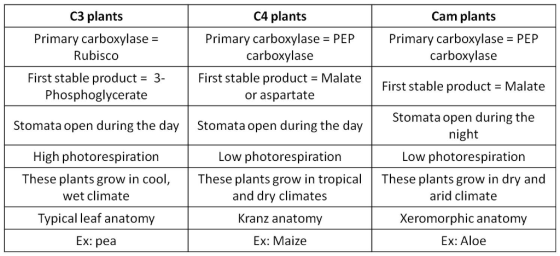
2. There is current concern that the level of CO2 is increasing in the biosphere due to the burning of fossil fuels. If the level of atmospheric CO2 were to double, how would photosynthetic rates of C3 plants be affected?
3. Nuclear encoded chloroplast proteins are synthesized in the cytosol, and then selectively translocated into the various chloroplast membrane compartments (eg outer membrane, inner membrane space, inner membrane, stroma or thylakoid membranes). You suspect that a protein you are studying in the lab as a graduate student is one that transported to the chloroplast. Explain the set of experiments you might do to test your hypothesis. Remember your controls!
Homework Answers
An swer:
swer:
1):
a):
 Role
of plasma membrane H+ ATPase on the diffusion of K+ through
membrane channels :
Role
of plasma membrane H+ ATPase on the diffusion of K+ through
membrane channels :
- The experiment was conducted using Beta vulgaris L.( Red beet) showed -
- In case of partially purified preparation of red beet plasma mebrane - For Plasma membrane vesicles , ATP dependent K+ efflux was partially inhibited by 100 [mu] vandate.
- In case of partially purified preparation of red beet plasma membrane and reconstitued in proteoliposomes - For plasma membrane vesicles, ATP dependent K+ efflux was fully inhibited by 100 [mu] vandate.
- When it is reconstituted with planar bilayer membrane, there was very little effect on K+ being imposed on the bilayer membrane.
- The above experiments shows that plasma membrane H+ -ATPase does not mediate direct K+ transport chemically linked to ATP hydrolysis.
- But ATP provides a driving force for cellular K+ update through other secondary mechanisms like K+ channels or H+/K+ symporters.
b):
Role
of plasma membrane H+ ATPase on the accumulation of sugars from the
apoplast into the cell :
- Plant plasma membrane H+ ATPase acts as a primary transporter via proton pumping which regulates various physiological responses.
- Phoshorylation of penultimate threonine and subsequent binding of proteins in C terminus of the enzyme activates H+ATPase.
- Light reversibly phosphorylated H+ ATPase and this process was inhibited by pharmacological and genetic suppression of photosynthesis. T
- experiment was conducted on Arabidopsis leaves .
- Immunohistochemical and biochemical analysis showed light induced phosphorylation of H+ATPase occured in the mesophyll cells along with accumulation of sugars from the apoplast into the cell.
- This sugars again promoted phosphorylation .
This
is how the photosynthesis activated H+ATPase influenced the sugar
production in mesophyll cells from the apoplast into the
cell.
2):
Please Rate My Answer...... Thank......u...
Add Answer to:
1. How can the operation of the plasma membrane H+-ATPase affect
(a) the diffusion of K+...
How many membranes does the chloroplast have? 30. How many membranes doos the mitochondria have? 31....
 How many membranes does the chloroplast have? 30. How many membranes doos the mitochondria have? 31. A stack of thylakoids are known as d, 4 e, 3 a. Thylakoid dises b, c. thy lakoid lumen 32. The products produced in the light independent reaction are used to drive the light dependent reac a. True b, False 33. The ATP and NADPH produces in the light reaction are used to drive the synthesis of sugars from CO2 a. True b. False...
The inner membrane divides the mitochondrion into two internal compartments. The first compartment is the and...
 The inner membrane divides the mitochondrion into two internal compartments. The first compartment is the and outer membranes. The inner membrane encloses the mitochondrial mitochondrial DNA, ribosomes, and enzymes. Some of the metabolic steps of cellular respiration are catalyzed by enzymes in the matrix. Other proteins that function in respiration, including the enzyme that makes ATP, are built into the inner membrane. The highly folded cristae present a region between the inner space, a narrow a fluid-filled space with surface...
 How many membranes does the chloroplast have? 30. How many membranes doos the mitochondria have? 31. A stack of thylakoids are known as d, 4 e, 3 a. Thylakoid dises b, c. thy lakoid lumen 32. The products produced in the light independent reaction are used to drive the light dependent reac a. True b, False 33. The ATP and NADPH produces in the light reaction are used to drive the synthesis of sugars from CO2 a. True b. False...
 The inner membrane divides the mitochondrion into two internal compartments. The first compartment is the and outer membranes. The inner membrane encloses the mitochondrial mitochondrial DNA, ribosomes, and enzymes. Some of the metabolic steps of cellular respiration are catalyzed by enzymes in the matrix. Other proteins that function in respiration, including the enzyme that makes ATP, are built into the inner membrane. The highly folded cristae present a region between the inner space, a narrow a fluid-filled space with surface...
Most questions answered within 3 hours.
-
Where is the error in this code sequence?
String s1 = "Hello";
String s2 = "ello";...
asked 11 months ago -
Financial data for Joel de Paris, Inc., for last year
follow:
Joel de Paris, Inc.
Balance...
asked 11 months ago -
Consider this reaction:
Al2(SO4)3 (aq)+ BaCl3
(aq) Al2Cl6 (aq)- +
3BaSO4(s) . What is the...
asked 11 months ago -
Suppose that Savneet is considering increasing her
recent random sample from 20 car rentals to 40...
asked 11 months ago -
Trucks arrive at an unloading terminal at an average rate of 120
per hour.
Trucks arrive...
asked 11 months ago -
Why are methanol and ethanol completely soluble in water while
octanol is not very little soluble....
asked 11 months ago -
A facilities manager at a university reads in a research report
that the mean amount of...
asked 11 months ago -
When the CuSO4 is rehydrated by adding water to the anhydrous
compound, is this an endothermic...
asked 11 months ago -
A ray of sunlight is passing from diamond into crown glass; the
angle of incidence is...
asked 11 months ago -
A block of mass 0.249 kg is placed on top of a light, vertical
spring of...
asked 11 months ago -
how do the kidneys compensate in the presences of acidosis
a) trigger hyperventilate
b) reserve acid...
asked 11 months ago -
Question 501 pts
The rental rate of capital to the firm increases. Which of the
following...
asked 11 months ago