chemistry an atoms focused approach Draw a molecular level diagram showing the results of a physical...
Homework Answers


Add Answer to:
chemistry an atoms focused approach
Draw a
molecular level diagram showing the
results of a physical...
CHEMISTRY Thomas R. Gilbert, Rein V. Kirss, and Natalie Foster Chemistry: An Atoms Focused Approach, W.W....
 CHEMISTRY Thomas R. Gilbert, Rein V. Kirss, and Natalie Foster Chemistry: An Atoms Focused Approach, W.W. Norton & Company, 2014. (Required) (ISBN: 978-0-393-91234-0) GILBERT KIRSS FOSTER J An object with a heat capacity of 545- °C released in this process? experiences a temperature change from 68°C to 43°C. How much heat is • Do not include a negative sign in your response. Provide your answer below:
Write the chemical formula of sodium hydrosulfite. and draw the expanded formula (i.e. showing all atoms...
Write the chemical formula of sodium hydrosulfite. and draw the expanded formula (i.e. showing all atoms and bonds) of luminol (5-amino-1,4- phthalazdione) and calculate its molecular weight.
inorganic chemistry 5) Using Ligand Field Theory, draw the molecular orbital diagram for (MoCl)
 inorganic chemistry
5) Using Ligand Field Theory, draw the molecular orbital diagram for (MoCl)
inorganic chemistry
5) Using Ligand Field Theory, draw the molecular orbital diagram for (MoCl)
inorganic chemistry 5) Using Ligand Field Theory, draw the molecular orbital diagram for (MoCl)
 inorganic chemistry
5) Using Ligand Field Theory, draw the molecular orbital diagram for (MoCl)
inorganic chemistry
5) Using Ligand Field Theory, draw the molecular orbital diagram for (MoCl)
Draw the molecular orbital diagram for Ne2+ and determine if the bond between the two atoms...
Draw the molecular orbital diagram for Ne2+ and determine if the bond between the two atoms will be stable. If 2p orbitals on an atom are all the same energy, why do they form molecular orbitals of different engergies when theu mix?
PLEASE COMPLETE AND EXPLAIN Draw a Molecular Orbital Energy Diagram showing how each of the following...
 PLEASE COMPLETE AND EXPLAIN
Draw a Molecular Orbital Energy Diagram showing how each of the following pairs of orbitals can overlap in the orientation shown to form bonding and antibonding orbitals. Clearly draw the starting atomic orbitals and the resulting molecular orbitals, and show their relative energies. a) b) S3d O2
PLEASE COMPLETE AND EXPLAIN
Draw a Molecular Orbital Energy Diagram showing how each of the following pairs of orbitals can overlap in the orientation shown to form bonding and antibonding orbitals. Clearly draw the starting atomic orbitals and the resulting molecular orbitals, and show their relative energies. a) b) S3d O2
inorganic chemistry 4) Using Ligand Field Theory, draw the molecular orbital diagram for [Fe(NCME).], given that...
 inorganic chemistry
4) Using Ligand Field Theory, draw the molecular orbital diagram for [Fe(NCME).], given that the magnetic moment is 4.90 MB.
inorganic chemistry
4) Using Ligand Field Theory, draw the molecular orbital diagram for [Fe(NCME).], given that the magnetic moment is 4.90 MB.
inorganic chemistry 4) Using Ligand Field Theory, draw the molecular orbital diagram for [Fe(NCME).], given that...
 inorganic chemistry
4) Using Ligand Field Theory, draw the molecular orbital diagram for [Fe(NCME).], given that the magnetic moment is 4.90 MB.
inorganic chemistry
4) Using Ligand Field Theory, draw the molecular orbital diagram for [Fe(NCME).], given that the magnetic moment is 4.90 MB.
examine the following molecular level diagram . is a chemical reaction occurring ? Examine the following...
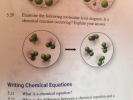 examine the following molecular level diagram . is a chemical
reaction occurring ?
Examine the following molecular-level diagram. Is a chemical reaction occurring? Explain your answer. 5.20 Writing Chemical Equations 5.21 What is a chemical equation? 5.22 Whot ic the difference between a chemical equation and a
examine the following molecular level diagram . is a chemical
reaction occurring ?
Examine the following molecular-level diagram. Is a chemical reaction occurring? Explain your answer. 5.20 Writing Chemical Equations 5.21 What is a chemical equation? 5.22 Whot ic the difference between a chemical equation and a
Draw a molecular orbital energy level diagram for O2 and NO. Compare and contrast the formation...
 Draw a molecular orbital energy level diagram for O2 and NO. Compare and contrast the formation of molecular orbitals from atomic orbitals in homonuclear and heteronuclear diatomic molecules. Make sure to address parity in your discussion.
 CHEMISTRY Thomas R. Gilbert, Rein V. Kirss, and Natalie Foster Chemistry: An Atoms Focused Approach, W.W. Norton & Company, 2014. (Required) (ISBN: 978-0-393-91234-0) GILBERT KIRSS FOSTER J An object with a heat capacity of 545- °C released in this process? experiences a temperature change from 68°C to 43°C. How much heat is • Do not include a negative sign in your response. Provide your answer below:
 inorganic chemistry
5) Using Ligand Field Theory, draw the molecular orbital diagram for (MoCl)
inorganic chemistry
5) Using Ligand Field Theory, draw the molecular orbital diagram for (MoCl)
 inorganic chemistry
5) Using Ligand Field Theory, draw the molecular orbital diagram for (MoCl)
inorganic chemistry
5) Using Ligand Field Theory, draw the molecular orbital diagram for (MoCl)
 PLEASE COMPLETE AND EXPLAIN
Draw a Molecular Orbital Energy Diagram showing how each of the following pairs of orbitals can overlap in the orientation shown to form bonding and antibonding orbitals. Clearly draw the starting atomic orbitals and the resulting molecular orbitals, and show their relative energies. a) b) S3d O2
PLEASE COMPLETE AND EXPLAIN
Draw a Molecular Orbital Energy Diagram showing how each of the following pairs of orbitals can overlap in the orientation shown to form bonding and antibonding orbitals. Clearly draw the starting atomic orbitals and the resulting molecular orbitals, and show their relative energies. a) b) S3d O2
 inorganic chemistry
4) Using Ligand Field Theory, draw the molecular orbital diagram for [Fe(NCME).], given that the magnetic moment is 4.90 MB.
inorganic chemistry
4) Using Ligand Field Theory, draw the molecular orbital diagram for [Fe(NCME).], given that the magnetic moment is 4.90 MB.
 inorganic chemistry
4) Using Ligand Field Theory, draw the molecular orbital diagram for [Fe(NCME).], given that the magnetic moment is 4.90 MB.
inorganic chemistry
4) Using Ligand Field Theory, draw the molecular orbital diagram for [Fe(NCME).], given that the magnetic moment is 4.90 MB.
 examine the following molecular level diagram . is a chemical
reaction occurring ?
Examine the following molecular-level diagram. Is a chemical reaction occurring? Explain your answer. 5.20 Writing Chemical Equations 5.21 What is a chemical equation? 5.22 Whot ic the difference between a chemical equation and a
examine the following molecular level diagram . is a chemical
reaction occurring ?
Examine the following molecular-level diagram. Is a chemical reaction occurring? Explain your answer. 5.20 Writing Chemical Equations 5.21 What is a chemical equation? 5.22 Whot ic the difference between a chemical equation and a
 Draw a molecular orbital energy level diagram for O2 and NO. Compare and contrast the formation of molecular orbitals from atomic orbitals in homonuclear and heteronuclear diatomic molecules. Make sure to address parity in your discussion.
Most questions answered within 3 hours.
-
Where is the error in this code sequence?
String s1 = "Hello";
String s2 = "ello";...
asked 10 months ago -
Financial data for Joel de Paris, Inc., for last year
follow:
Joel de Paris, Inc.
Balance...
asked 10 months ago -
Consider this reaction:
Al2(SO4)3 (aq)+ BaCl3
(aq) Al2Cl6 (aq)- +
3BaSO4(s) . What is the...
asked 10 months ago -
Suppose that Savneet is considering increasing her
recent random sample from 20 car rentals to 40...
asked 10 months ago -
Trucks arrive at an unloading terminal at an average rate of 120
per hour.
Trucks arrive...
asked 10 months ago -
Why are methanol and ethanol completely soluble in water while
octanol is not very little soluble....
asked 10 months ago -
A facilities manager at a university reads in a research report
that the mean amount of...
asked 10 months ago -
When the CuSO4 is rehydrated by adding water to the anhydrous
compound, is this an endothermic...
asked 10 months ago -
A ray of sunlight is passing from diamond into crown glass; the
angle of incidence is...
asked 10 months ago -
A block of mass 0.249 kg is placed on top of a light, vertical
spring of...
asked 10 months ago -
how do the kidneys compensate in the presences of acidosis
a) trigger hyperventilate
b) reserve acid...
asked 10 months ago -
Question 501 pts
The rental rate of capital to the firm increases. Which of the
following...
asked 10 months ago