The three fictitious life forms described below are based around information-flow patterns that are different than...
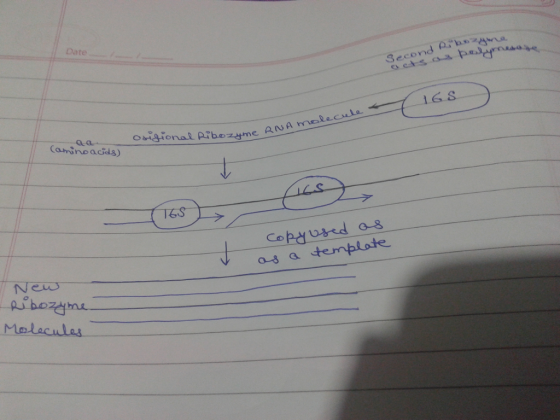
The three fictitious life forms described below are based around information-flow patterns that are different than the Central Dogma. diagram how information flows and make clear how this is different from most life on the surface of the Earth.
Species 1) Parasitic microbes use previously-unknown enzymes to harvest nucleic acids from neighboring organisms. This helps them to produce new working molecules that are appropriate to whatever conditions they find themselves in without needing their own RNA polymerases.
Species 2) In rock layers low in sulfur, strange archaea build ribozymes to conduct catalysis. When conditions make biosynthesis of nucleic acids even more difficult, special ribozymes help the production of new ribozymes without a template.
Species 3) Extreme temperatures allow magma-foraging bacteria to utilize polymers that are not nucleic acids to guide the production of flexible DNA molecules which can be used as the building blocks of cellular structures and catalysts.
Homework Answers
The flow of information from DNA to RNA and from RNA to protein describes the central dogma of life.
DNA -> RNA -> Proteins
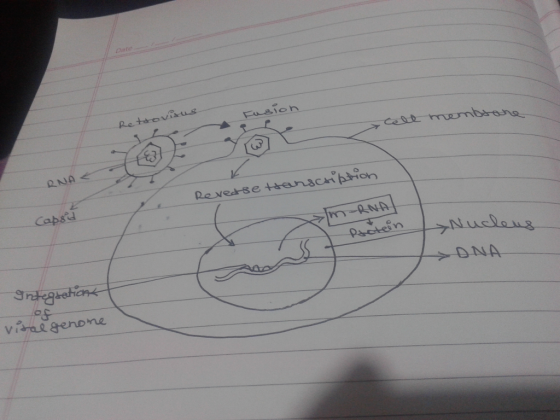
Species 1. The information provided in the question indicates the role of Reverse transcriptase that is useful in making DNA from RNA. This process of retrotransposition is used by retroviruses. Retrovirus is an RNA virus that integrates its genome in the chromosomal DNA of the host cell.
Species 2. Ribozymes are enzymes that are actually part RNA molecule. Ribozymes play a major role in catalyzing excision of RNA.
Species 3. Thermophiles are a group of archaebacteria, for example, Pyrolobus fumarri is able to grow at 113-degree Celsius temperature. DNA ligase found in these bacteria reduces flexibility and increase the stability of DNA. High temperature requires stability in protein structure and activity.
In conclusion, Most of the life forms on this earth use central dogma in which information in the form of nucleotide sequences is transcribed into messenger RNA, through the process of transcription. This mRNA after post-transcriptional modifications comes out of the nucleus to the cytoplasm of the cell, where translation occurs with the help tRNA, and ribosome subunits. Ultimately this leads to the formation of proteins.
But some life forms as mentioned above show a different mode of transmission of information.
Add Answer to:
The three fictitious life forms described below are based around
information-flow patterns that are different than...
Most questions answered within 3 hours.
-
Where is the error in this code sequence?
String s1 = "Hello";
String s2 = "ello";...
asked 10 months ago -
Financial data for Joel de Paris, Inc., for last year
follow:
Joel de Paris, Inc.
Balance...
asked 10 months ago -
Consider this reaction:
Al2(SO4)3 (aq)+ BaCl3
(aq) Al2Cl6 (aq)- +
3BaSO4(s) . What is the...
asked 10 months ago -
Suppose that Savneet is considering increasing her
recent random sample from 20 car rentals to 40...
asked 10 months ago -
Trucks arrive at an unloading terminal at an average rate of 120
per hour.
Trucks arrive...
asked 10 months ago -
Why are methanol and ethanol completely soluble in water while
octanol is not very little soluble....
asked 10 months ago -
A facilities manager at a university reads in a research report
that the mean amount of...
asked 10 months ago -
When the CuSO4 is rehydrated by adding water to the anhydrous
compound, is this an endothermic...
asked 10 months ago -
A ray of sunlight is passing from diamond into crown glass; the
angle of incidence is...
asked 10 months ago -
A block of mass 0.249 kg is placed on top of a light, vertical
spring of...
asked 10 months ago -
how do the kidneys compensate in the presences of acidosis
a) trigger hyperventilate
b) reserve acid...
asked 10 months ago -
Question 501 pts
The rental rate of capital to the firm increases. Which of the
following...
asked 10 months ago