Explain how protein pumps are able to move small molecules and ions across a cell membrane...
Explain how protein pumps are able to move small molecules and ions across a cell membrane
What are the upsides/benefits given to a cell from the phospholipid bilayer
Homework Answers
Small molecules which are of hydrophilic nature can not transfer easily because they are blocked by the hydrophobic core of the cell membrane so that with the help of protein pump they easily transfer passively but large molecule are require energy so transfer actively. Phospholipid bilayer gives that benefit to the cell by selectively permeability,by the selection of the substance which is required by the cell to continue the process
Add Answer to:
Explain how protein pumps are able to move small molecules and
ions across a cell membrane...
ABC transporters and P-type ATPase transporters are membrane pumps that move ions and molecules across membranes....
 ABC transporters and P-type ATPase transporters are membrane pumps that move ions and molecules across membranes.
Each of the following phrases describes ABC transporters, P-type ATPases, or both. Sort all the phrases to the appropriate bins. (Note that membrane pumps containing ATP-binding cassette domains are referred to as ABC transporters.)
ABC transporters and P-type ATPase transporters are membrane pumps that move ions and molecules across membranes.
Each of the following phrases describes ABC transporters, P-type ATPases, or both. Sort all the phrases to the appropriate bins. (Note that membrane pumps containing ATP-binding cassette domains are referred to as ABC transporters.)
Under certain circumstances, potassium ions in a cell will move across the cell membrane from the...
 Under certain circumstances, potassium ions in a cell will move
across the cell membrane from the inside to the outside. The
potential inside the cell is -75.5mV and the potential outside he
cell is zero. What is the change in the electrical potential energy
of a single potassium ion as it moves across the membrane ?
orries TxLakehead University-PHYS 1N Net iscms/mod/ficn/view.php?id 429903 Jump to... Winter19-MACKAY > Activities and Due Dates > HW: Electric Potential re: ResourcesGive Up Feedback Attempt...
Under certain circumstances, potassium ions in a cell will move
across the cell membrane from the inside to the outside. The
potential inside the cell is -75.5mV and the potential outside he
cell is zero. What is the change in the electrical potential energy
of a single potassium ion as it moves across the membrane ?
orries TxLakehead University-PHYS 1N Net iscms/mod/ficn/view.php?id 429903 Jump to... Winter19-MACKAY > Activities and Due Dates > HW: Electric Potential re: ResourcesGive Up Feedback Attempt...
Under certain circumstances, potassium ions (K") in a cell will move across the cell membrane from...
 Under certain circumstances, potassium ions (K") in a cell will move across the cell membrane from the inside to the outside. The potential inside the cell is -80.5 mV and the potential outside the cell is zero. What is the change in the electrical potential energy of a single potassium ion as it moves across the membrane? change in potential energy: 1.36 x10 Does the potential energy of the potassium ions increase, decrease, or remain the same as the ions...
Under certain circumstances, potassium ions (K+) in a cell will move across the cell membrane from...
 Under certain circumstances, potassium ions (K+) in a cell will move across the cell membrane from the inside to the outside. The potential inside the cell is-80.5 mV and the potential outside the cell is zero. What is the change in the electrical potential energy of a single potassium ion as it moves across the membrane? change in potential energy: Does the potential energy of the potassium ions increase, decrease, or remain the same as the ions move from the...
Under certain circumstances, potassium ions (K) in a cell will move across the cell membrane from...
 Under certain circumstances, potassium ions (K) in a cell will move across the cell membrane from the inside to the outside. The potential inside the cell is -70.5 mV and the potential outside the cell is zero. What is the change in the electrical potential energy of a single potassium ion as it moves across the membrane? change in potential energy: Does the potential energy of the potassium ions increase, decrease, or remain the same as the ions move from...
MEMBRANE STRUCTURE AND TRANSPORT ACROSS CELL MEMBRANES 1. An organelle that is characterized by extensive, folded...
 MEMBRANE STRUCTURE AND TRANSPORT ACROSS CELL MEMBRANES 1. An organelle that is characterized by extensive, folded membranes and is often associated with ribosomes 2. Label the following diagram Qutsde of cel LE nside of cell 3. List 4 functions of the plasma membrane c. d. 4. Complete the table below with the role cach component of the plasma membrane plays Plasma membrane components Role in the membrane Phospholipid Bilayer Cholesterol Glycopeoteins Glycolipids Protein Receptor Site Protein channel Protein Carrier 5....
Potassium ions (K+) move across a 7.0-nm- thick cell membrane from the inside to the outside....
Potassium ions (K+) move across a 7.0-nm- thick cell membrane from the inside to the outside. The potential inside the cell is −80.0 mV, and the potential outside is zero. What is the change in the electrical potential energy Δ? electric of the potassium ions as they move across the membrane?
0 Attempt 1 of 22> Potassium ions (K) move across a 9.0-nm-thick cell membrane from the...
 0 Attempt 1 of 22> Potassium ions (K) move across a 9.0-nm-thick cell membrane from the inside to the outside. The potential inside the cell is -70.0 mV, and the potential outside is zero. What is the change in the electrical potential energy AU of the potassium ions as they move across the membrane? AUelectric =1 1.214 ×10⁻²⁰
Figure 1 represents a plasma membrane and molecules present on either side. Figure 1. A...
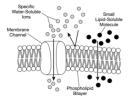 Figure 1 represents a plasma membrane and molecules present on either side.
Figure 1. A model of a plasma membrane demonstrating selective permeability
(a) Describe the biological need for cells to be surrounded by a membrane that is selectively permeable for different materials.
(b) Explain how the model shows selective permeability of the membrane to specific ions.
(c) Describe the characteristics of the phospholipid bilayer that permit small hydrophobic lipid molecules to pass directly across the membrane.
(d)...
Figure 1 represents a plasma membrane and molecules present on either side.
Figure 1. A model of a plasma membrane demonstrating selective permeability
(a) Describe the biological need for cells to be surrounded by a membrane that is selectively permeable for different materials.
(b) Explain how the model shows selective permeability of the membrane to specific ions.
(c) Describe the characteristics of the phospholipid bilayer that permit small hydrophobic lipid molecules to pass directly across the membrane.
(d)...
Under certain circumstances, potassium ions ( K+ ) in a cell will move across the cell...
Under certain circumstances, potassium ions ( K+ ) in a cell will move across the cell membrane from the inside to the outside. The potential inside the cell is −85.5 mV and the potential outside the cell is zero. What is the change in the electrical potential energy of a single potassium ion as it moves across the membrane? change in potential energy: J Does the potential energy of the potassium ions increase, decrease, or remain the same as the...
 ABC transporters and P-type ATPase transporters are membrane pumps that move ions and molecules across membranes.
Each of the following phrases describes ABC transporters, P-type ATPases, or both. Sort all the phrases to the appropriate bins. (Note that membrane pumps containing ATP-binding cassette domains are referred to as ABC transporters.)
ABC transporters and P-type ATPase transporters are membrane pumps that move ions and molecules across membranes.
Each of the following phrases describes ABC transporters, P-type ATPases, or both. Sort all the phrases to the appropriate bins. (Note that membrane pumps containing ATP-binding cassette domains are referred to as ABC transporters.)
 Under certain circumstances, potassium ions in a cell will move
across the cell membrane from the inside to the outside. The
potential inside the cell is -75.5mV and the potential outside he
cell is zero. What is the change in the electrical potential energy
of a single potassium ion as it moves across the membrane ?
orries TxLakehead University-PHYS 1N Net iscms/mod/ficn/view.php?id 429903 Jump to... Winter19-MACKAY > Activities and Due Dates > HW: Electric Potential re: ResourcesGive Up Feedback Attempt...
Under certain circumstances, potassium ions in a cell will move
across the cell membrane from the inside to the outside. The
potential inside the cell is -75.5mV and the potential outside he
cell is zero. What is the change in the electrical potential energy
of a single potassium ion as it moves across the membrane ?
orries TxLakehead University-PHYS 1N Net iscms/mod/ficn/view.php?id 429903 Jump to... Winter19-MACKAY > Activities and Due Dates > HW: Electric Potential re: ResourcesGive Up Feedback Attempt...
 Under certain circumstances, potassium ions (K") in a cell will move across the cell membrane from the inside to the outside. The potential inside the cell is -80.5 mV and the potential outside the cell is zero. What is the change in the electrical potential energy of a single potassium ion as it moves across the membrane? change in potential energy: 1.36 x10 Does the potential energy of the potassium ions increase, decrease, or remain the same as the ions...
 Under certain circumstances, potassium ions (K+) in a cell will move across the cell membrane from the inside to the outside. The potential inside the cell is-80.5 mV and the potential outside the cell is zero. What is the change in the electrical potential energy of a single potassium ion as it moves across the membrane? change in potential energy: Does the potential energy of the potassium ions increase, decrease, or remain the same as the ions move from the...
 Under certain circumstances, potassium ions (K) in a cell will move across the cell membrane from the inside to the outside. The potential inside the cell is -70.5 mV and the potential outside the cell is zero. What is the change in the electrical potential energy of a single potassium ion as it moves across the membrane? change in potential energy: Does the potential energy of the potassium ions increase, decrease, or remain the same as the ions move from...
 MEMBRANE STRUCTURE AND TRANSPORT ACROSS CELL MEMBRANES 1. An organelle that is characterized by extensive, folded membranes and is often associated with ribosomes 2. Label the following diagram Qutsde of cel LE nside of cell 3. List 4 functions of the plasma membrane c. d. 4. Complete the table below with the role cach component of the plasma membrane plays Plasma membrane components Role in the membrane Phospholipid Bilayer Cholesterol Glycopeoteins Glycolipids Protein Receptor Site Protein channel Protein Carrier 5....
 0 Attempt 1 of 22> Potassium ions (K) move across a 9.0-nm-thick cell membrane from the inside to the outside. The potential inside the cell is -70.0 mV, and the potential outside is zero. What is the change in the electrical potential energy AU of the potassium ions as they move across the membrane? AUelectric =1 1.214 ×10⁻²⁰
 Figure 1 represents a plasma membrane and molecules present on either side.
Figure 1. A model of a plasma membrane demonstrating selective permeability
(a) Describe the biological need for cells to be surrounded by a membrane that is selectively permeable for different materials.
(b) Explain how the model shows selective permeability of the membrane to specific ions.
(c) Describe the characteristics of the phospholipid bilayer that permit small hydrophobic lipid molecules to pass directly across the membrane.
(d)...
Figure 1 represents a plasma membrane and molecules present on either side.
Figure 1. A model of a plasma membrane demonstrating selective permeability
(a) Describe the biological need for cells to be surrounded by a membrane that is selectively permeable for different materials.
(b) Explain how the model shows selective permeability of the membrane to specific ions.
(c) Describe the characteristics of the phospholipid bilayer that permit small hydrophobic lipid molecules to pass directly across the membrane.
(d)...
Most questions answered within 3 hours.
-
Where is the error in this code sequence?
String s1 = "Hello";
String s2 = "ello";...
asked 10 months ago -
Financial data for Joel de Paris, Inc., for last year
follow:
Joel de Paris, Inc.
Balance...
asked 10 months ago -
Consider this reaction:
Al2(SO4)3 (aq)+ BaCl3
(aq) Al2Cl6 (aq)- +
3BaSO4(s) . What is the...
asked 10 months ago -
Suppose that Savneet is considering increasing her
recent random sample from 20 car rentals to 40...
asked 10 months ago -
Trucks arrive at an unloading terminal at an average rate of 120
per hour.
Trucks arrive...
asked 10 months ago -
Why are methanol and ethanol completely soluble in water while
octanol is not very little soluble....
asked 10 months ago -
A facilities manager at a university reads in a research report
that the mean amount of...
asked 10 months ago -
When the CuSO4 is rehydrated by adding water to the anhydrous
compound, is this an endothermic...
asked 10 months ago -
A ray of sunlight is passing from diamond into crown glass; the
angle of incidence is...
asked 10 months ago -
A block of mass 0.249 kg is placed on top of a light, vertical
spring of...
asked 10 months ago -
how do the kidneys compensate in the presences of acidosis
a) trigger hyperventilate
b) reserve acid...
asked 10 months ago -
Question 501 pts
The rental rate of capital to the firm increases. Which of the
following...
asked 10 months ago