IN MULTIPLE PARTS WITH PICTURE AND IN DEPTH DESCRIPTION. PLEASE AND THANK YOU. 1. Show/discuss how...
IN MULTIPLE PARTS WITH PICTURE AND IN DEPTH DESCRIPTION. PLEASE AND THANK YOU.
1. Show/discuss how a firewall works to protect a network
Homework Answers
--------------Answer-----------------
At their most basic, firewalls work like a filter between your computer/network and the Internet. You can program what you want to get out and what you want to get in. Everything else is not allowed. There are several different methods firewalls use to filter out information, and some are used in combination. These methods work at different layers of a network, which determines how specific the filtering options can be.
Firewalls can be used in a number of ways to add security to your home or business.

When your computer has firewall protection, everything that goes in and out of it is monitored. The firewall monitors all this information traffic to allow ‘good data’ in, but block ‘bad data’ from entering your computer.
Firewalls use one or a combination of the following three methods to control traffic flowing in and out of the network:
- Packet filtering
The most basic form of firewall software uses pre-determined security rules to create filters – if an incoming packet of information (small chunk of data) is flagged by the filters, it is not allowed through. Packets that make it through the filters are sent to the requesting system and all others are discarded.
- Proxy service
A firewall proxy server is an application that acts as an intermediary between systems. Information from the internet is retrieved by the firewall and then sent to the requesting system and vice versa. Firewall proxy servers operate at the application layer of the firewall, where both ends of a connection are forced to conduct the session through the proxy. They operate by creating and running a process on the firewall that mirrors a service as if it were running on the end host, and thus centralise all information transfer for an activity to the firewall for scanning.
- Stateful inspection
The most modern method of firewall scanning, that doesn't rely on the memory-intensive examination of all information packets is ‘stateful inspection’. A ‘stateful’ firewall holds significant attributes of each connection in a database of trusted information, for the duration of the session. These attributes, which are collectively known as the ‘state’ of the connection, may include such details as the IP addresses and ports involved in the connection and the sequence numbers of the packets being transferred. The firewall compares information being transferred to the copy relevant to that transfer held in the database – if the comparison yields a positive match the information is allowed through, otherwise it is denied.
Types of firewalls
There are two types of firewalls: software and hardware.

Hardware firewalls are built into network devices such as routers and can protect every single machine on a network and require little configuration to work effectively. They use packet filtering techniques to examine the header of a packet, determining his source and destination and then, comparing the data to a set of predefined rules, they decide whether to drop the packet or forward it to the next step or to its destination.
Software firewalls are the most popular network protection method for home users. They usually come as stand-alone applications or as part of a complete anti virus protection software, such as the one BullGuard provides. Besides providing protection for inbound and outbound traffic, a software firewall can also protect against Trojan or Worm applications and allows various options of control over its functions and features.
A reliable software firewall should run in the background of your computer and leave a small print on overall performance by using few of its resources. The firewall software must be regularly updated to keep up with the latest technological improvements and provide effective protection against the latest network attack tactics.
Add Answer to:
IN MULTIPLE PARTS WITH PICTURE AND IN DEPTH DESCRIPTION. PLEASE
AND THANK YOU.
1. Show/discuss how...
Please show ALL work for the multiple parts. Please show ALL equations and math too, thank...
 Please show ALL work for the multiple parts. Please show ALL
equations and math too, thank you!
Consider the circuit shown in thye figure above. Take Let ε = 6 V, L = 6 mH, and R = 4 Ohms. S + E 000 L R w (a) Calculate the inductive time constant (4 Pts) (b) Calculate the current in the circuit 250 ms after the switch is closed. (6 Pts) (c) Assumed the switched is closed for a long...
Please show ALL work for the multiple parts. Please show ALL
equations and math too, thank you!
Consider the circuit shown in thye figure above. Take Let ε = 6 V, L = 6 mH, and R = 4 Ohms. S + E 000 L R w (a) Calculate the inductive time constant (4 Pts) (b) Calculate the current in the circuit 250 ms after the switch is closed. (6 Pts) (c) Assumed the switched is closed for a long...
Please show ALL work for the multiple parts. Please show ALL equations and math too, thank...
 Please show ALL work for the multiple parts. Please show ALL
equations and math too, thank you!
Using the circuit diagram below, answer the following questions: Α Ω Β Ω w 15.0 V C 12 D2 15.0 V Assume the following resistor values for the resistors above: A = 6 Ohms B = 6 Ohms C = 8 Ohms D = 4 Ohms a) What is the value of lat resistor AQ?(12 points) b) What is the potential difference across...
Please show ALL work for the multiple parts. Please show ALL
equations and math too, thank you!
Using the circuit diagram below, answer the following questions: Α Ω Β Ω w 15.0 V C 12 D2 15.0 V Assume the following resistor values for the resistors above: A = 6 Ohms B = 6 Ohms C = 8 Ohms D = 4 Ohms a) What is the value of lat resistor AQ?(12 points) b) What is the potential difference across...
Please answer both questions, Thank you! What are the basic ways microorganisms exchange DNA? Discuss how...
Please answer both questions, Thank you! What are the basic ways microorganisms exchange DNA? Discuss how bacteria protect themselves from invading bacteriophages.
Please answer all parts and show work. Thank you!
 Please answer all parts and show work. Thank you!
Please answer all parts of this question and show work. Thank you!
 Please answer all parts of this question and show
work. Thank you!
Please answer all parts of this question and show
work. Thank you!
Please show the works, thank you.
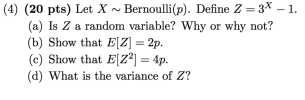 Please show the works, thank
you.
Please show the works, thank
you.
Please show full in depth solution and explanation. Thank you! A 25 kg steel tank initially...
 Please show full in depth solution and explanation. Thank
you!
A 25 kg steel tank initially at -10 degree C is filled up with 100 kg of milk (assume properties as water) at 30 degree C. The milk and the steel come to a uniform temperature of +5 degree C in a storage room. How much heat transfer is needed for this process?
Please show full in depth solution and explanation. Thank
you!
A 25 kg steel tank initially at -10 degree C is filled up with 100 kg of milk (assume properties as water) at 30 degree C. The milk and the steel come to a uniform temperature of +5 degree C in a storage room. How much heat transfer is needed for this process?
Please see picture below for question #1, parts a-d. Do you agree with my answers ?...
 Please see picture below for question #1, parts a-d. Do you
agree with my answers ?
a. 25 borings seems like enough for a 100' x 100' building,
that's 4 every 25ft.
b. Borings are only 20 feet, I feel like this should be deeper
for a 3-story building on poor soil. I would bore to 40ft.
c. If the number or depth of borings seem inadequate, as does
the depth of the borings, I'd have them done to a...
Please see picture below for question #1, parts a-d. Do you
agree with my answers ?
a. 25 borings seems like enough for a 100' x 100' building,
that's 4 every 25ft.
b. Borings are only 20 feet, I feel like this should be deeper
for a 3-story building on poor soil. I would bore to 40ft.
c. If the number or depth of borings seem inadequate, as does
the depth of the borings, I'd have them done to a...
PLEASE ANSWER THE QUESTIONS IN FULL DETAIL(PARAGRAPHS OR IN DEPTH), THANK YOU. 1. Have you every...
PLEASE ANSWER THE QUESTIONS IN FULL DETAIL(PARAGRAPHS OR IN DEPTH), THANK YOU. 1. Have you every personally experienced or witnessed incivility, bullying, or horizontal or lateral violence? Please describe the incident. 2. How did you handle it or how was it handled by others? 3. Please provide 3 recommendations on what you would do differently now or what would you recommend others to do after reading this article and participating in the class discussion?
Please show all work and answer parts a and b! Thank you! Problem 1: The velocity...
 Please show all work and answer parts a and b! Thank
you!
Problem 1: The velocity of a particle traveling in a straight line is given by v- (6t 3t) m/s, where t is in seconds. If x-0 when t = 0, (a) determine the particle's deceleration and position when t = 3s. b) How far has the particle traveled during the 3-s time interval, and what is its average speed?
Please show all work and answer parts a and b! Thank
you!
Problem 1: The velocity of a particle traveling in a straight line is given by v- (6t 3t) m/s, where t is in seconds. If x-0 when t = 0, (a) determine the particle's deceleration and position when t = 3s. b) How far has the particle traveled during the 3-s time interval, and what is its average speed?
 Please show ALL work for the multiple parts. Please show ALL
equations and math too, thank you!
Consider the circuit shown in thye figure above. Take Let ε = 6 V, L = 6 mH, and R = 4 Ohms. S + E 000 L R w (a) Calculate the inductive time constant (4 Pts) (b) Calculate the current in the circuit 250 ms after the switch is closed. (6 Pts) (c) Assumed the switched is closed for a long...
Please show ALL work for the multiple parts. Please show ALL
equations and math too, thank you!
Consider the circuit shown in thye figure above. Take Let ε = 6 V, L = 6 mH, and R = 4 Ohms. S + E 000 L R w (a) Calculate the inductive time constant (4 Pts) (b) Calculate the current in the circuit 250 ms after the switch is closed. (6 Pts) (c) Assumed the switched is closed for a long...
 Please show ALL work for the multiple parts. Please show ALL
equations and math too, thank you!
Using the circuit diagram below, answer the following questions: Α Ω Β Ω w 15.0 V C 12 D2 15.0 V Assume the following resistor values for the resistors above: A = 6 Ohms B = 6 Ohms C = 8 Ohms D = 4 Ohms a) What is the value of lat resistor AQ?(12 points) b) What is the potential difference across...
Please show ALL work for the multiple parts. Please show ALL
equations and math too, thank you!
Using the circuit diagram below, answer the following questions: Α Ω Β Ω w 15.0 V C 12 D2 15.0 V Assume the following resistor values for the resistors above: A = 6 Ohms B = 6 Ohms C = 8 Ohms D = 4 Ohms a) What is the value of lat resistor AQ?(12 points) b) What is the potential difference across...
 Please answer all parts and show work. Thank you!
 Please answer all parts of this question and show
work. Thank you!
Please answer all parts of this question and show
work. Thank you!
 Please show the works, thank
you.
Please show the works, thank
you.
 Please show full in depth solution and explanation. Thank
you!
A 25 kg steel tank initially at -10 degree C is filled up with 100 kg of milk (assume properties as water) at 30 degree C. The milk and the steel come to a uniform temperature of +5 degree C in a storage room. How much heat transfer is needed for this process?
Please show full in depth solution and explanation. Thank
you!
A 25 kg steel tank initially at -10 degree C is filled up with 100 kg of milk (assume properties as water) at 30 degree C. The milk and the steel come to a uniform temperature of +5 degree C in a storage room. How much heat transfer is needed for this process?
 Please see picture below for question #1, parts a-d. Do you
agree with my answers ?
a. 25 borings seems like enough for a 100' x 100' building,
that's 4 every 25ft.
b. Borings are only 20 feet, I feel like this should be deeper
for a 3-story building on poor soil. I would bore to 40ft.
c. If the number or depth of borings seem inadequate, as does
the depth of the borings, I'd have them done to a...
Please see picture below for question #1, parts a-d. Do you
agree with my answers ?
a. 25 borings seems like enough for a 100' x 100' building,
that's 4 every 25ft.
b. Borings are only 20 feet, I feel like this should be deeper
for a 3-story building on poor soil. I would bore to 40ft.
c. If the number or depth of borings seem inadequate, as does
the depth of the borings, I'd have them done to a...
 Please show all work and answer parts a and b! Thank
you!
Problem 1: The velocity of a particle traveling in a straight line is given by v- (6t 3t) m/s, where t is in seconds. If x-0 when t = 0, (a) determine the particle's deceleration and position when t = 3s. b) How far has the particle traveled during the 3-s time interval, and what is its average speed?
Please show all work and answer parts a and b! Thank
you!
Problem 1: The velocity of a particle traveling in a straight line is given by v- (6t 3t) m/s, where t is in seconds. If x-0 when t = 0, (a) determine the particle's deceleration and position when t = 3s. b) How far has the particle traveled during the 3-s time interval, and what is its average speed?
Most questions answered within 3 hours.
-
Where is the error in this code sequence?
String s1 = "Hello";
String s2 = "ello";...
asked 10 months ago -
Financial data for Joel de Paris, Inc., for last year
follow:
Joel de Paris, Inc.
Balance...
asked 10 months ago -
Consider this reaction:
Al2(SO4)3 (aq)+ BaCl3
(aq) Al2Cl6 (aq)- +
3BaSO4(s) . What is the...
asked 10 months ago -
Suppose that Savneet is considering increasing her
recent random sample from 20 car rentals to 40...
asked 10 months ago -
Trucks arrive at an unloading terminal at an average rate of 120
per hour.
Trucks arrive...
asked 10 months ago -
Why are methanol and ethanol completely soluble in water while
octanol is not very little soluble....
asked 10 months ago -
A facilities manager at a university reads in a research report
that the mean amount of...
asked 10 months ago -
When the CuSO4 is rehydrated by adding water to the anhydrous
compound, is this an endothermic...
asked 10 months ago -
A ray of sunlight is passing from diamond into crown glass; the
angle of incidence is...
asked 10 months ago -
A block of mass 0.249 kg is placed on top of a light, vertical
spring of...
asked 10 months ago -
how do the kidneys compensate in the presences of acidosis
a) trigger hyperventilate
b) reserve acid...
asked 10 months ago -
Question 501 pts
The rental rate of capital to the firm increases. Which of the
following...
asked 10 months ago