question 1 know the function and composition of the cell membrane? (this question is essential cell...
question 1 know the function and composition of the cell membrane?
(this question is essential cell biology 4th edition chapter 11 )
Homework Answers
The composition of cell membrane are
1. Phospholipids
2. Cholestrol
3. Protein
4. Carbohydrates
Fluid mosaic model describe the structure of cell membrane, it is not in solid and it is flexible and allow individual molecules are just floating in fluid-medium.
Phospholipids is the basic structure and has single phsopholipid molecules has two different ends, a head and a tail. Head is hydrophilic and tail is hydrophobic.
Cholesterol is made up of 4 rings of hydrogen and carbon . It maintain the consistency of cell membrane.
Protein is located on lipid bilayered called integral protein and peripheral protein are found either side of lipid bilayer , in side the cell it acts as enzymes and as receptors of specific molecule across the cell membrane.
Carbohydrates found outside the cell membrane attached to protein. They form glycocalyx it's function as to provide cushioning and protection for plasma membrane and important in cell membrane.
The main function of cell membrane are
- It forms a physical barrier
- It regulates exchange of material with it's surrounding
- Keep toxic substance outside the cell
-Contains receptors and chennel and allow specific molecule like ion, nutrients , waste product etc
Hope the answer is clear!! Please give positive ratings! Thank you
Add Answer to:
question 1 know the function and composition of
the cell membrane?
(this question is essential cell...
what is the general structure of detergents? how do these affect membranes and membranes proteins? (this...
what is the general structure of detergents? how do these affect membranes and membranes proteins? (this question is essential cell biology 4th edition chapter 11 membrane structure))
what is the role of oxygen in cellular respiration? AND describe the structure and function...
what is the role of oxygen in cellular respiration? AND describe the structure and function of ATP synthase? ((this question is essential cell biology 4th edition chapter 14 )
this question on cell biology 4th edition chapter 20 1 describe cell polarity? 2 describe the...
this question on cell biology 4th edition chapter 20 1 describe cell polarity? 2 describe the role of: tight junction, adherent junctions, desmosomes, gap junctions? 3 describe stem cell? 4 describe pluripotent cells? 5 what are iPS cells- how are they formed?
CELL BIOLOGY Chapter 10 The function of a lipid bilayer How is the lipid bilayer formed...
CELL BIOLOGY Chapter 10 The function of a lipid bilayer How is the lipid bilayer formed Know the different types of phospholipids and any unique features and locations (if there are any) Know the overall structure of a phospholipid How does a lipid membrane stay fluid? How to lipid move in a membrane? Just as important, know the movement lipids are unable to do in the absence of flipase. Alberts.-.Molecular.Biology.Of.The.Cell.5th.Ed IS THE TEXT
Q1 describe the permeability of lipid membranes? what are the relative permeability of different substances? this...
Q1 describe the permeability of lipid membranes? what are the relative permeability of different substances? this question is essential biology 4th edition chapter 12
Transcription of rRNA genes captured in a Transmission Electron Micrograph Figure 7-8 Essential C...
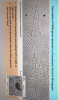 Transcription of rRNA genes captured in a Transmission Electron Micrograph Figure 7-8 Essential Cell Biology, 4th ed.(O Garland Science 2014) Which direction is transcription proceeding? Left to right, or right to left? Why are the RNA transcripts shorter than the DNA segments that encode them? 1. 2.
Transcription of rRNA genes captured in a Transmission Electron Micrograph Figure 7-8 Essential Cell Biology, 4th ed.(O Garland Science 2014) Which direction is transcription proceeding? Left to right, or right to left? Why...
Transcription of rRNA genes captured in a Transmission Electron Micrograph Figure 7-8 Essential Cell Biology, 4th ed.(O Garland Science 2014) Which direction is transcription proceeding? Left to right, or right to left? Why are the RNA transcripts shorter than the DNA segments that encode them? 1. 2.
Transcription of rRNA genes captured in a Transmission Electron Micrograph Figure 7-8 Essential Cell Biology, 4th ed.(O Garland Science 2014) Which direction is transcription proceeding? Left to right, or right to left? Why...
QUESTION 9 Describe the structure and function of cell membrane-embedded enzymes using a clinical example.
 QUESTION 9 Describe the structure and function of cell membrane-embedded enzymes using a clinical example.
If the lipid bilayer in Section B represents the ER membrane, which part of the protein...
 If the lipid bilayer in Section B represents the ER membrane, which part of the protein is found INSIDE the ER (in the ER lumen)? A. COOH 26 oligosaccharides transmembrane a helix cause lipid bilayer B. LSH- C. -NH2 SH Figure 10-22. Molecular Biology of the Cell, 4th Edition O The entire protein must be inside the lumen of the ER. O All sections are equally likely to be in the ER lumen. Section B is inside the ER lumen....
Considering that the Nat-K+ ATPase membrane protein is essential for maintaining an electrochemical gradient across cell...
 Considering that the Nat-K+ ATPase membrane protein is essential for maintaining an electrochemical gradient across cell membranes, which of the following is likely not a component of an electrolyte solution for treating dehydration? Choose one: O Ο Α. ΑΤΡ B. potassium o C. glucose • D. sodium
Chapter 4: A Tour of the Cell 3. A cell's plasma membrane is described as being...
 Chapter 4: A Tour of the Cell 3. A cell's plasma membrane is described as being a because it is composed of a variety of molecules that are constantly in motion around each other. 4. Figure 4.4b on pg. 60 of your textbook indicates that membrane proteins will have both hydro- philic and hydrophobic regions. Briefly explain why a membrane protein would need both regions. Refer to the figure to aid you in answering the question. Chapter Content: The Nucleus...
 Transcription of rRNA genes captured in a Transmission Electron Micrograph Figure 7-8 Essential Cell Biology, 4th ed.(O Garland Science 2014) Which direction is transcription proceeding? Left to right, or right to left? Why are the RNA transcripts shorter than the DNA segments that encode them? 1. 2.
Transcription of rRNA genes captured in a Transmission Electron Micrograph Figure 7-8 Essential Cell Biology, 4th ed.(O Garland Science 2014) Which direction is transcription proceeding? Left to right, or right to left? Why...
Transcription of rRNA genes captured in a Transmission Electron Micrograph Figure 7-8 Essential Cell Biology, 4th ed.(O Garland Science 2014) Which direction is transcription proceeding? Left to right, or right to left? Why are the RNA transcripts shorter than the DNA segments that encode them? 1. 2.
Transcription of rRNA genes captured in a Transmission Electron Micrograph Figure 7-8 Essential Cell Biology, 4th ed.(O Garland Science 2014) Which direction is transcription proceeding? Left to right, or right to left? Why...
 QUESTION 9 Describe the structure and function of cell membrane-embedded enzymes using a clinical example.
 If the lipid bilayer in Section B represents the ER membrane, which part of the protein is found INSIDE the ER (in the ER lumen)? A. COOH 26 oligosaccharides transmembrane a helix cause lipid bilayer B. LSH- C. -NH2 SH Figure 10-22. Molecular Biology of the Cell, 4th Edition O The entire protein must be inside the lumen of the ER. O All sections are equally likely to be in the ER lumen. Section B is inside the ER lumen....
 Considering that the Nat-K+ ATPase membrane protein is essential for maintaining an electrochemical gradient across cell membranes, which of the following is likely not a component of an electrolyte solution for treating dehydration? Choose one: O Ο Α. ΑΤΡ B. potassium o C. glucose • D. sodium
 Chapter 4: A Tour of the Cell 3. A cell's plasma membrane is described as being a because it is composed of a variety of molecules that are constantly in motion around each other. 4. Figure 4.4b on pg. 60 of your textbook indicates that membrane proteins will have both hydro- philic and hydrophobic regions. Briefly explain why a membrane protein would need both regions. Refer to the figure to aid you in answering the question. Chapter Content: The Nucleus...
Most questions answered within 3 hours.
-
Where is the error in this code sequence?
String s1 = "Hello";
String s2 = "ello";...
asked 11 months ago -
Financial data for Joel de Paris, Inc., for last year
follow:
Joel de Paris, Inc.
Balance...
asked 11 months ago -
Consider this reaction:
Al2(SO4)3 (aq)+ BaCl3
(aq) Al2Cl6 (aq)- +
3BaSO4(s) . What is the...
asked 11 months ago -
Suppose that Savneet is considering increasing her
recent random sample from 20 car rentals to 40...
asked 11 months ago -
Trucks arrive at an unloading terminal at an average rate of 120
per hour.
Trucks arrive...
asked 11 months ago -
Why are methanol and ethanol completely soluble in water while
octanol is not very little soluble....
asked 11 months ago -
A facilities manager at a university reads in a research report
that the mean amount of...
asked 11 months ago -
When the CuSO4 is rehydrated by adding water to the anhydrous
compound, is this an endothermic...
asked 11 months ago -
A ray of sunlight is passing from diamond into crown glass; the
angle of incidence is...
asked 11 months ago -
A block of mass 0.249 kg is placed on top of a light, vertical
spring of...
asked 11 months ago -
how do the kidneys compensate in the presences of acidosis
a) trigger hyperventilate
b) reserve acid...
asked 11 months ago -
Question 501 pts
The rental rate of capital to the firm increases. Which of the
following...
asked 11 months ago