
What is the frequency of gray, sleek testcross progeny?
What is the frequency of gray, friendly testcross progeny?
What is the frequency of black, friendly testcross progeny?
What is the frequency of black, pudgy, mean testcross progeny?
What is the frequency of gray, pudgy, friendly testcross progeny?
What is the frequency of gray, sleek, mean testcross progeny?
What is the frequency of pudgy, friendly testcross progeny?
What is the frequency of pudgy, mean testcross progeny?
Homework Answers
Coefficient of coincidence is given by
The observed frequency of double recombinant/ expected frequency of double recombinant
given that COC = 0.8
Map distance between color and body type gene is 10cM
Map distance between body type and disposition is 5cM
expected frequency of double recombinant is given by
Map distance between color and body type /100 * map distance body type and disposition/100
10/100 * 5/100 = 0.005
The observed frequency of double recombinant we need to find out
Coefficient of coincidence = the observed frequency of double recombinant/ expected frequency of double recombinant
0.80 = X /0.005
0.004
The observed frequency of double recombinant = sum of the
frequency of both the double recombination
Since nothing is given about the progeny numbers so we will take
the double recombinant frequency as half of the total double
recombinants that we got.
So the frequency will be 0.004/2 = 0.002
The frequency of gray, pudgy, friendly testcross progeny = 0.002
The frequency of black, sleek, mean testcross progeny 0.002
The distance between black and sleek is 10 cM.
A total number of the recombinant/total number of progeny = frequency of recombinant.
The frequency of recombination between black and sleek will be a sum of frequencies of gray, pudgy, friendly testcross progeny, black, sleek, mean testcross progeny, Black sleek and friendly progeny and gray, pudgy and mean progeny
Linkage distance = total number of recombinant * 100 / total number of progeny
10 = Recombination frequency between black and sleek* 100
Recombination frequency between black and sleek = 10/100 =
0.1
0.1 = sum of gray, pudgy, friendly testcross progeny, black, sleek, mean testcross progeny, Black sleek and friendly progeny and gray, pudgy and mean progeny
0.1 = 0.002 + 0.002 = Frequency of Black sleek and friendly progeny and frequency of gray, pudgy and mean progeny
0.1- 0.004 = 0.096
Frequency of Black sleek and friendly progeny = 0.096/2 =
0.048
frequency of gray, pudgy and mean progeny =0.096/2 = 0.048
The distance between Friendly and sleek is 5 cM.
A total number of the recombinant/total number of progeny = frequency of recombinant.
The frequency of recombination between friendly and sleek will be a sum of frequencies of gray, pudgy, friendly testcross progeny, black, sleek, mean testcross progeny, gray sleek and mean progeny and black, pudgy and friendly progeny
Linkage distance = total number of recombinant * 100 / total number of progeny
5 = Recombination frequency between black and sleek* 100
Recombination frequency between black and sleek = 5/100 =
0.05
0.05= sum of gray, pudgy, friendly testcross progeny, black sleek,
mean testcross progeny, gray sleek and mean progeny and black,
pudgy and friendly progeny
0.05= 0.002 + 0.002 + Frequency of Black sleek and friendly progeny and frequency of gray, pudgy and mean progeny
0.05 - 0.004 = 0.0.046
Frequency of Black sleek and friendly progeny = 0.046 / 2 =0.023
Frequency of gray, pudgy and mean progeny = 0.046 / 2 =0.023
As we know the frequency is always equal to one. So subtract 1 from all the frequencies that we have got we can get the parent frequency.
1 – 0.046+0.004+0.096
= 1 – 0.146
= 0.854
Frequency of Gray sleek pudgy = 0.854/2 = 0.427
Frequency of black pudgy and mean = 0.854/2 = 0.427
The frequency of gray, pudgy, friendly testcross progeny =
0.048
The frequency of black, sleek, mean testcross progeny 0.048
The frequency of gray, pudgy, friendly testcross progeny = 0.002
The frequency of black, sleek, mean testcross progeny 0.002
Frequency of Black sleek and friendly progeny = 0.023
Frequency of gray, pudgy and mean progeny = 0.023
Please write to me if you need more help.
Add Answer to:
What is the frequency of gray, sleek testcross progeny? What is the frequency of gray, friendly testcross progeny? What...
a. What is the frequency of gray, sleek testcross progeny? b. What is the frequency of...
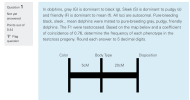 a. What is the frequency of
gray, sleek testcross progeny?
b. What is the frequency of pudgy, mean testcross progeny?
c.What is the frequency of gray, friendly testcross progeny?
d. What is the frequency of pudgy, friendly testcross
progeny?
e.What is the frequency of black, friendly testcross
progeny?
f. What is the frequency of black, pudgy, mean testcross
progeny?
g.What is the frequency of gray, sleek, mean testcross
progeny?
h. What is the frequency of gray, pudgy, friendly testcross
progeny?...
a. What is the frequency of
gray, sleek testcross progeny?
b. What is the frequency of pudgy, mean testcross progeny?
c.What is the frequency of gray, friendly testcross progeny?
d. What is the frequency of pudgy, friendly testcross
progeny?
e.What is the frequency of black, friendly testcross
progeny?
f. What is the frequency of black, pudgy, mean testcross
progeny?
g.What is the frequency of gray, sleek, mean testcross
progeny?
h. What is the frequency of gray, pudgy, friendly testcross
progeny?...
In dolphins, gray (G) is dominant to black (g), Sleek (S) is dominant to pudgy (s)...
In dolphins, gray (G) is dominant to black (g), Sleek (S) is dominant to pudgy (s) and friendly (F) is dominant to mean (f). All loci are autosomal. Pure-breeding black, sleek , mean dolphins were mated to pure-breeding gray, pudgy, friendly dolphins. The F1 were testcrossed. Based on the map below and a coefficient of coincidence of 0.61, determine the frequency of each phenotype in the testcross progeny. Round each answer to 5 decimal digits. Color Body Type Disposition 6cM...
In dolphins, gray (G) is dominant to black (g), Sleek (S) is dominant to pudgy (s)...
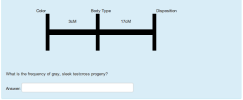 In dolphins, gray (G) is dominant to black (g), Sleek (S) is
dominant to pudgy (s) and friendly (F) is dominant to mean (f). All
loci are autosomal. Pure-breeding black, sleek , mean dolphins were
mated to pure-breeding gray, pudgy, friendly dolphins. The F1 were
testcrossed. Based on the map below and a coefficient of
coincidence of 0.64, determine the frequency of each phenotype in
the testcross progeny. Round each answer to 5 decimal digits.
What is the frequency of...
In dolphins, gray (G) is dominant to black (g), Sleek (S) is
dominant to pudgy (s) and friendly (F) is dominant to mean (f). All
loci are autosomal. Pure-breeding black, sleek , mean dolphins were
mated to pure-breeding gray, pudgy, friendly dolphins. The F1 were
testcrossed. Based on the map below and a coefficient of
coincidence of 0.64, determine the frequency of each phenotype in
the testcross progeny. Round each answer to 5 decimal digits.
What is the frequency of...
In soybeans, dwarf (D) is dominant to tall (d), round (R) is dominant to oval (r),...
In soybeans, dwarf (D) is dominant to tall (d), round (R) is dominant to oval (r), and green (G) is dominant to brown (g). The genes are linked and the map is given below. Pure-breeding tall, round, green plants were mated to pure-breeding dwarf, oval, brown plants. The F1 were testcrossed. All loci are autosomal. The coefficient of coincidence is 1. Height Shape Color 14cM 22cM Rank the progeny phenotypes below to indicate their frequency in the testcross progeny based...
Three linked autosomal loci were studied in smurfs. Locus Dominant Allele Recessive Allele Color Blue Pink...
 Three
linked autosomal loci were studied in smurfs.
Locus
Dominant
Allele
Recessive
Allele
Color
Blue
Pink
Mood
Happy
Gloomy
Height
Tall
Dwarf
Pure breeding pink, happy, tall smurfs were mated to pure
breeding blue, gloomy, dwarf smurfs. The F1 were
testcrossed and the testcross progeny are given below.
Phenotype
Number
pink, happy, tall
532
blue, gloomy, dwarf
517
pink, gloomy, tall
97
blue, happy, dwarf
84
blue, happy, tall
103
pink, gloomy, dwarf
111
blue, gloomy, tall
14
pink, happy,...
Three
linked autosomal loci were studied in smurfs.
Locus
Dominant
Allele
Recessive
Allele
Color
Blue
Pink
Mood
Happy
Gloomy
Height
Tall
Dwarf
Pure breeding pink, happy, tall smurfs were mated to pure
breeding blue, gloomy, dwarf smurfs. The F1 were
testcrossed and the testcross progeny are given below.
Phenotype
Number
pink, happy, tall
532
blue, gloomy, dwarf
517
pink, gloomy, tall
97
blue, happy, dwarf
84
blue, happy, tall
103
pink, gloomy, dwarf
111
blue, gloomy, tall
14
pink, happy,...
I need the steps to how to work this problem out. Three linked autosomal loci were...
 I need the steps to how to work this problem out.
Three linked autosomal loci were studied in smurfs. Dominant Recessive Locus Height Color Mood Allele Dwarf Blue Happy Allele Tall Pink Gloomy Pure breeding tall, pink, happy smurfs were mated to pure breeding dwarf, blue, gloomy smurfs. The Fi were testcrossed and the testcross progeny are given below Phenotype tall, pink, happy dwarf, blue, gloomy tall, pink, gloomy dwarf, blue, happy tall, blue, happy dwarf, pink, gloomy tall, blue,...
I need the steps to how to work this problem out.
Three linked autosomal loci were studied in smurfs. Dominant Recessive Locus Height Color Mood Allele Dwarf Blue Happy Allele Tall Pink Gloomy Pure breeding tall, pink, happy smurfs were mated to pure breeding dwarf, blue, gloomy smurfs. The Fi were testcrossed and the testcross progeny are given below Phenotype tall, pink, happy dwarf, blue, gloomy tall, pink, gloomy dwarf, blue, happy tall, blue, happy dwarf, pink, gloomy tall, blue,...
5. You started working in a Drospohila lab. You are studying two different autosomal traits, body...
 5. You started working in a Drospohila lab. You are studying two different autosomal traits, body color and antennae length. Gray body (B) is completely dominant to black body (b) and long antennae length (A) is completely dominant to short antennae length (a). You cross true-breeding gray bodied, long antennae files to true-breeding black bodied, short antennae. The F1 progeny all have gray bodies and long antennae. a. You perform a testcross to the F1 progeny produced from the parent...
On the island of Notion, in the Factotum Archipelago, there lives a population of pencil bears....
On the island of Notion, in the Factotum Archipelago, there lives a population of pencil bears. A portion of these bears have silky fur, and as a result, are much better surfers. The texture of the fur is determined by a single autosomal locus with two alleles: S (trait allele) and s (wild type allele). In a recent study, researched collected the values in the following table: Table 1. Counts of Pencil Bear fur style by genotype Phenotype Genotype Silky...
 a. What is the frequency of
gray, sleek testcross progeny?
b. What is the frequency of pudgy, mean testcross progeny?
c.What is the frequency of gray, friendly testcross progeny?
d. What is the frequency of pudgy, friendly testcross
progeny?
e.What is the frequency of black, friendly testcross
progeny?
f. What is the frequency of black, pudgy, mean testcross
progeny?
g.What is the frequency of gray, sleek, mean testcross
progeny?
h. What is the frequency of gray, pudgy, friendly testcross
progeny?...
a. What is the frequency of
gray, sleek testcross progeny?
b. What is the frequency of pudgy, mean testcross progeny?
c.What is the frequency of gray, friendly testcross progeny?
d. What is the frequency of pudgy, friendly testcross
progeny?
e.What is the frequency of black, friendly testcross
progeny?
f. What is the frequency of black, pudgy, mean testcross
progeny?
g.What is the frequency of gray, sleek, mean testcross
progeny?
h. What is the frequency of gray, pudgy, friendly testcross
progeny?...
 In dolphins, gray (G) is dominant to black (g), Sleek (S) is
dominant to pudgy (s) and friendly (F) is dominant to mean (f). All
loci are autosomal. Pure-breeding black, sleek , mean dolphins were
mated to pure-breeding gray, pudgy, friendly dolphins. The F1 were
testcrossed. Based on the map below and a coefficient of
coincidence of 0.64, determine the frequency of each phenotype in
the testcross progeny. Round each answer to 5 decimal digits.
What is the frequency of...
In dolphins, gray (G) is dominant to black (g), Sleek (S) is
dominant to pudgy (s) and friendly (F) is dominant to mean (f). All
loci are autosomal. Pure-breeding black, sleek , mean dolphins were
mated to pure-breeding gray, pudgy, friendly dolphins. The F1 were
testcrossed. Based on the map below and a coefficient of
coincidence of 0.64, determine the frequency of each phenotype in
the testcross progeny. Round each answer to 5 decimal digits.
What is the frequency of...
 Three
linked autosomal loci were studied in smurfs.
Locus
Dominant
Allele
Recessive
Allele
Color
Blue
Pink
Mood
Happy
Gloomy
Height
Tall
Dwarf
Pure breeding pink, happy, tall smurfs were mated to pure
breeding blue, gloomy, dwarf smurfs. The F1 were
testcrossed and the testcross progeny are given below.
Phenotype
Number
pink, happy, tall
532
blue, gloomy, dwarf
517
pink, gloomy, tall
97
blue, happy, dwarf
84
blue, happy, tall
103
pink, gloomy, dwarf
111
blue, gloomy, tall
14
pink, happy,...
Three
linked autosomal loci were studied in smurfs.
Locus
Dominant
Allele
Recessive
Allele
Color
Blue
Pink
Mood
Happy
Gloomy
Height
Tall
Dwarf
Pure breeding pink, happy, tall smurfs were mated to pure
breeding blue, gloomy, dwarf smurfs. The F1 were
testcrossed and the testcross progeny are given below.
Phenotype
Number
pink, happy, tall
532
blue, gloomy, dwarf
517
pink, gloomy, tall
97
blue, happy, dwarf
84
blue, happy, tall
103
pink, gloomy, dwarf
111
blue, gloomy, tall
14
pink, happy,...
 I need the steps to how to work this problem out.
Three linked autosomal loci were studied in smurfs. Dominant Recessive Locus Height Color Mood Allele Dwarf Blue Happy Allele Tall Pink Gloomy Pure breeding tall, pink, happy smurfs were mated to pure breeding dwarf, blue, gloomy smurfs. The Fi were testcrossed and the testcross progeny are given below Phenotype tall, pink, happy dwarf, blue, gloomy tall, pink, gloomy dwarf, blue, happy tall, blue, happy dwarf, pink, gloomy tall, blue,...
I need the steps to how to work this problem out.
Three linked autosomal loci were studied in smurfs. Dominant Recessive Locus Height Color Mood Allele Dwarf Blue Happy Allele Tall Pink Gloomy Pure breeding tall, pink, happy smurfs were mated to pure breeding dwarf, blue, gloomy smurfs. The Fi were testcrossed and the testcross progeny are given below Phenotype tall, pink, happy dwarf, blue, gloomy tall, pink, gloomy dwarf, blue, happy tall, blue, happy dwarf, pink, gloomy tall, blue,...
 5. You started working in a Drospohila lab. You are studying two different autosomal traits, body color and antennae length. Gray body (B) is completely dominant to black body (b) and long antennae length (A) is completely dominant to short antennae length (a). You cross true-breeding gray bodied, long antennae files to true-breeding black bodied, short antennae. The F1 progeny all have gray bodies and long antennae. a. You perform a testcross to the F1 progeny produced from the parent...
Most questions answered within 3 hours.
-
Where is the error in this code sequence?
String s1 = "Hello";
String s2 = "ello";...
asked 11 months ago -
Financial data for Joel de Paris, Inc., for last year
follow:
Joel de Paris, Inc.
Balance...
asked 11 months ago -
Consider this reaction:
Al2(SO4)3 (aq)+ BaCl3
(aq) Al2Cl6 (aq)- +
3BaSO4(s) . What is the...
asked 11 months ago -
Suppose that Savneet is considering increasing her
recent random sample from 20 car rentals to 40...
asked 11 months ago -
Trucks arrive at an unloading terminal at an average rate of 120
per hour.
Trucks arrive...
asked 11 months ago -
Why are methanol and ethanol completely soluble in water while
octanol is not very little soluble....
asked 11 months ago -
A facilities manager at a university reads in a research report
that the mean amount of...
asked 11 months ago -
When the CuSO4 is rehydrated by adding water to the anhydrous
compound, is this an endothermic...
asked 11 months ago -
A ray of sunlight is passing from diamond into crown glass; the
angle of incidence is...
asked 11 months ago -
A block of mass 0.249 kg is placed on top of a light, vertical
spring of...
asked 11 months ago -
how do the kidneys compensate in the presences of acidosis
a) trigger hyperventilate
b) reserve acid...
asked 11 months ago -
Question 501 pts
The rental rate of capital to the firm increases. Which of the
following...
asked 11 months ago