
Homework Answers
Proof is fairly straightforward. Just have to do a few clever
substitutions. 
Add Answer to:
2.17 Prove that a system is linear if and only if 1. It is homogeneous, i.e., for all input signals x(t) and all real n...
1) Linearity: In order for a system to be linear it must satisfy the following equation: In other...
 need solution and code for this signal and system
problem
1) Linearity: In order for a system to be linear it must satisfy the following equation: In other words, the response of a linear system to an input that is a linear combination of two signals is the linear combination of the responses of the system to each one of these signals. Let xi)- u(t) -u(t-1) and x2t) u- u(t-2) be input signals to the systems described by the i/o...
need solution and code for this signal and system
problem
1) Linearity: In order for a system to be linear it must satisfy the following equation: In other words, the response of a linear system to an input that is a linear combination of two signals is the linear combination of the responses of the system to each one of these signals. Let xi)- u(t) -u(t-1) and x2t) u- u(t-2) be input signals to the systems described by the i/o...
show all steps with explanation in clear graph: If you're not sure don't answer Problem 3 Three signals r(t), x...
 show all steps with explanation in clear graph:
If you're not sure don't answer
Problem 3 Three signals r(t), x2(t) and r3(t) are given graphically below (a) Express 2(t), r3(t) in terms of 1(t) using time shifting and amplitude scaling (No time scaling (b) If r1 (t) is applied as input to a linear time invariant system and the corresponding output is y (t) given graphically below as well, determine the outputs of the system y2(t) and y3(t) when r2(t)...
show all steps with explanation in clear graph:
If you're not sure don't answer
Problem 3 Three signals r(t), x2(t) and r3(t) are given graphically below (a) Express 2(t), r3(t) in terms of 1(t) using time shifting and amplitude scaling (No time scaling (b) If r1 (t) is applied as input to a linear time invariant system and the corresponding output is y (t) given graphically below as well, determine the outputs of the system y2(t) and y3(t) when r2(t)...
A system is BIBO (bounded-input, bounded-output) stable if every bounded input X(t) yields a bounded output...
 A system is BIBO (bounded-input, bounded-output) stable if every bounded input X(t) yields a bounded output y(t). A system is NOT BIBO stable if there exists any bounded input that results in an unbounded output. By "bounded", we mean that the magnitude of the signal is always less than some finite number. (The signal x(t)=sin(t) would be considered a bounded signal, but X(t)t would not be a bounded signal.) Signals that are infinite in time, but with a magnitude that...
Problem # 1 [30 Points] Superposition-The Backbone of Linear Systems: For an engineer who wishes to find the response u to a linear system from an input f, a common approach is (a) Break finto e...
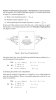 Problem # 1 [30 Points] Superposition-The Backbone of Linear Systems: For an engineer who wishes to find the response u to a linear system from an input f, a common approach is (a) Break finto elementary parts, f-L (b) Find the system response u to fk (c) Add (superimpose) the simple responses uto get u-k It turns out if the system is linear, then the sum u is the response we get if the function f were inputed directly; this...
Please help me with QUESTION 2. 1. Consider the electrical system shown below, for which the input variable u, the out...
 Please help me with QUESTION 2.
1. Consider the electrical system shown below, for which the input variable u, the output variable y, and the state variables xi and x2 have been specified. R L + C (a) Determine the state-space model of the system (b) Show that the transfer function (from u to y) has the form bis H(s)=2+ajs+ a0 by relating (ao, ai, bi) to (R, L, C) (c) Show that the frequency response function (from u to...
Please help me with QUESTION 2.
1. Consider the electrical system shown below, for which the input variable u, the output variable y, and the state variables xi and x2 have been specified. R L + C (a) Determine the state-space model of the system (b) Show that the transfer function (from u to y) has the form bis H(s)=2+ajs+ a0 by relating (ao, ai, bi) to (R, L, C) (c) Show that the frequency response function (from u to...
 need solution and code for this signal and system
problem
1) Linearity: In order for a system to be linear it must satisfy the following equation: In other words, the response of a linear system to an input that is a linear combination of two signals is the linear combination of the responses of the system to each one of these signals. Let xi)- u(t) -u(t-1) and x2t) u- u(t-2) be input signals to the systems described by the i/o...
need solution and code for this signal and system
problem
1) Linearity: In order for a system to be linear it must satisfy the following equation: In other words, the response of a linear system to an input that is a linear combination of two signals is the linear combination of the responses of the system to each one of these signals. Let xi)- u(t) -u(t-1) and x2t) u- u(t-2) be input signals to the systems described by the i/o...
 show all steps with explanation in clear graph:
If you're not sure don't answer
Problem 3 Three signals r(t), x2(t) and r3(t) are given graphically below (a) Express 2(t), r3(t) in terms of 1(t) using time shifting and amplitude scaling (No time scaling (b) If r1 (t) is applied as input to a linear time invariant system and the corresponding output is y (t) given graphically below as well, determine the outputs of the system y2(t) and y3(t) when r2(t)...
show all steps with explanation in clear graph:
If you're not sure don't answer
Problem 3 Three signals r(t), x2(t) and r3(t) are given graphically below (a) Express 2(t), r3(t) in terms of 1(t) using time shifting and amplitude scaling (No time scaling (b) If r1 (t) is applied as input to a linear time invariant system and the corresponding output is y (t) given graphically below as well, determine the outputs of the system y2(t) and y3(t) when r2(t)...
 A system is BIBO (bounded-input, bounded-output) stable if every bounded input X(t) yields a bounded output y(t). A system is NOT BIBO stable if there exists any bounded input that results in an unbounded output. By "bounded", we mean that the magnitude of the signal is always less than some finite number. (The signal x(t)=sin(t) would be considered a bounded signal, but X(t)t would not be a bounded signal.) Signals that are infinite in time, but with a magnitude that...
 Problem # 1 [30 Points] Superposition-The Backbone of Linear Systems: For an engineer who wishes to find the response u to a linear system from an input f, a common approach is (a) Break finto elementary parts, f-L (b) Find the system response u to fk (c) Add (superimpose) the simple responses uto get u-k It turns out if the system is linear, then the sum u is the response we get if the function f were inputed directly; this...
 Please help me with QUESTION 2.
1. Consider the electrical system shown below, for which the input variable u, the output variable y, and the state variables xi and x2 have been specified. R L + C (a) Determine the state-space model of the system (b) Show that the transfer function (from u to y) has the form bis H(s)=2+ajs+ a0 by relating (ao, ai, bi) to (R, L, C) (c) Show that the frequency response function (from u to...
Please help me with QUESTION 2.
1. Consider the electrical system shown below, for which the input variable u, the output variable y, and the state variables xi and x2 have been specified. R L + C (a) Determine the state-space model of the system (b) Show that the transfer function (from u to y) has the form bis H(s)=2+ajs+ a0 by relating (ao, ai, bi) to (R, L, C) (c) Show that the frequency response function (from u to...
Most questions answered within 3 hours.
-
Where is the error in this code sequence?
String s1 = "Hello";
String s2 = "ello";...
asked 11 months ago -
Financial data for Joel de Paris, Inc., for last year
follow:
Joel de Paris, Inc.
Balance...
asked 11 months ago -
Consider this reaction:
Al2(SO4)3 (aq)+ BaCl3
(aq) Al2Cl6 (aq)- +
3BaSO4(s) . What is the...
asked 11 months ago -
Suppose that Savneet is considering increasing her
recent random sample from 20 car rentals to 40...
asked 11 months ago -
Trucks arrive at an unloading terminal at an average rate of 120
per hour.
Trucks arrive...
asked 11 months ago -
Why are methanol and ethanol completely soluble in water while
octanol is not very little soluble....
asked 11 months ago -
A facilities manager at a university reads in a research report
that the mean amount of...
asked 11 months ago -
When the CuSO4 is rehydrated by adding water to the anhydrous
compound, is this an endothermic...
asked 11 months ago -
A ray of sunlight is passing from diamond into crown glass; the
angle of incidence is...
asked 11 months ago -
A block of mass 0.249 kg is placed on top of a light, vertical
spring of...
asked 11 months ago -
how do the kidneys compensate in the presences of acidosis
a) trigger hyperventilate
b) reserve acid...
asked 11 months ago -
Question 501 pts
The rental rate of capital to the firm increases. Which of the
following...
asked 11 months ago