
Homework Answers
The answer is given in the attachment.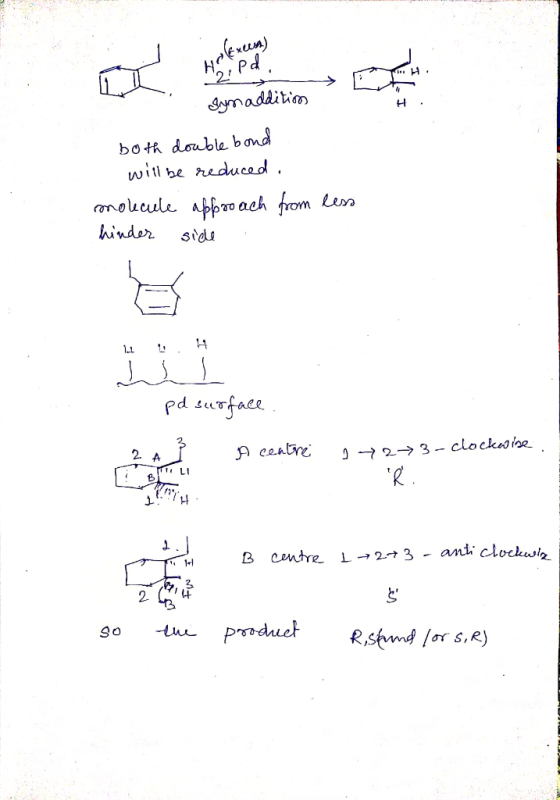
Add Answer to:
Ma Draw the structure(s) produced by the catalytic reduction of the following compound. (H2 is in excess.) Draw hydroge...
Draw the structure(s) produced by the catalytic reduction of the following compound. (H2 is in excess.) Draw hydrogen a...
 Draw the structure(s) produced by the catalytic reduction of the
following compound. (H2 is in excess.) Draw hydrogen at a chirality
center and use wedge-and-dash bonds to designate the
stereochemistry, if applicable.
Select all that apply: The alcohol product(s) of the reaction is
characterized as being
_____ R,R
_____ R,S (and/or S,R)
_____ S,S
_____ achiral
_____ racemic
_____ diastereomers
_____ R
_____ S
Draw the structure(s) produced by the catalytic reduction of the
following compound. (H2 is in excess.) Draw hydrogen at a chirality
center and use wedge-and-dash bonds to designate the
stereochemistry, if applicable.
Select all that apply: The alcohol product(s) of the reaction is
characterized as being
_____ R,R
_____ R,S (and/or S,R)
_____ S,S
_____ achiral
_____ racemic
_____ diastereomers
_____ R
_____ S
Draw the structure(s) produced by the catalytic reduction of the following compound. (H2 is in...
 Draw the structure(s) produced by the catalytic reduction of the following compound. (H2 is in excess.) Draw hydrogen at a chirality center and use wedge-and-dashbonds to designate the stereochemistry, if applicable.Select all that apply: The product(s) of the reaction is characterized as being: (R,R), (R,S(and/or S,R)), (S,S), (achiral), (racemic), (diastereomers), (R),(S).
Draw the structure(s) produced by the catalytic reduction of the following compound. (H2 is in excess.)...
 Draw the structure(s) produced by the catalytic reduction of the following compound. (H2 is in excess.) Draw hydrogen at a chirality center and use wedge-and-dash bonds to designate the stereochemistry, if applicable.
Draw the structure(s) produced by the catalytic reduction of the following compound. (H2 is in excess.) Draw hydrogen a...
 Draw the structure(s) produced by the catalytic reduction of the
following compound. (H2 is in excess.) Draw hydrogen at a chirality
center and use wedge-and-dash bonds to designate the
stereochemistry, if applicable.
Draw the structure(s) produced by the catalytic reduction of the
following compound. (H2 is in excess.) Draw hydrogen at a chirality
center and use wedge-and-dash bonds to designate the
stereochemistry, if applicable.
Alkenes can be converted to alcohols by hydroboration-oxidation. Draw the structure of the alcohol(s) formed in...
 Alkenes can be converted to alcohols by hydroboration-oxidation.
Draw the structure of the alcohol(s) formed in the following
reaction sequence. If applicable, draw hydrogen at a chirality
center and use wedge-and-dash bonds to designate the
stereochemistry.
Select all that apply: The alcohol product(s) of the reaction is
characterized as being
_____ R,R
_____ R,S (and/or S,R)
_____ S,S
_____ achiral
_____ racemic
_____ diastereomers
_____ R
_____ S
Alkenes can be converted to alcohols by hydroboration-oxidation.
Draw the structure of the alcohol(s) formed in the following
reaction sequence. If applicable, draw hydrogen at a chirality
center and use wedge-and-dash bonds to designate the
stereochemistry.
Select all that apply: The alcohol product(s) of the reaction is
characterized as being
_____ R,R
_____ R,S (and/or S,R)
_____ S,S
_____ achiral
_____ racemic
_____ diastereomers
_____ R
_____ S
Alkenes can be converted to alcohols by hydroboration-oxidation. Draw the structure of the alcohol(s) formed in the f...
 Alkenes can be converted to alcohols by hydroboration-oxidation.
Draw the structure of the alcohol(s) formed in the following
reaction sequence. If applicable, draw hydrogen at a chirality
center and use wedge-and-dash bonds to designate the
stereochemistry.
Select all that apply: The product(s) of the reaction are
characterized as being: (R,R), (R,S(and/orS,R)), (S,S), (achiral),
(racemic), (diastereomers), (R), (S).
Alkenes can be converted to alcohols by hydroboration-oxidation.
Draw the structure of the alcohol(s) formed in the following
reaction sequence. If applicable, draw hydrogen at a chirality
center and use wedge-and-dash bonds to designate the
stereochemistry.
Select all that apply: The product(s) of the reaction are
characterized as being: (R,R), (R,S(and/orS,R)), (S,S), (achiral),
(racemic), (diastereomers), (R), (S).
Organic Chem - these are not two independent questions, both are part of the same answer
 1)Characterize the following
alkene as having the E or Z configuration. Draw the product(s) of
bromination of this compound, including all expected stereoisomers
(if any). Use wedge-and-dash bonds to designate the stereochemistry
at any chirality centers, and make sure to draw an explicit
hydrogen if a chirality center has one.
2)
Alkenes can be converted to alcohols by
hydroboration–oxidation. Draw the structure of the alcohol(s)
formed in the following reaction sequence. If applicable, draw
hydrogen at a chirality center and...
1)Characterize the following
alkene as having the E or Z configuration. Draw the product(s) of
bromination of this compound, including all expected stereoisomers
(if any). Use wedge-and-dash bonds to designate the stereochemistry
at any chirality centers, and make sure to draw an explicit
hydrogen if a chirality center has one.
2)
Alkenes can be converted to alcohols by
hydroboration–oxidation. Draw the structure of the alcohol(s)
formed in the following reaction sequence. If applicable, draw
hydrogen at a chirality center and...
ORGANIC
 1. A compound with two chirality centers, (2S,3R)-2-bromo-3-chlorobutane, is shown below. Convert the given structure to the wedge-and-dash structure.2. Alkenes can be converted to alcohols by reaction with mercuric acetate to form a β-hydroxyalkylmercury(II) acetate compound, a reaction called oxymercuration.Subsequent reduction with NaBH4 reduces the C–Hg bond to a C–H bond, forming the alkyl alcohol, a reaction called demercuration. Draw the structures of theHg-containing compound(s) and the final alcohol product(s) formed in the following reaction sequence, omitting byproducts. If applicable,...
Alkenes can be converted to ethers by reaction with mercuric acetate to form a β-hydroxyalkylmercury(II) acetate...
 Alkenes can be converted to ethers by reaction with mercuric
acetate to form a β-hydroxyalkylmercury(II) acetate compound, a
reaction called alkoxymercuration. Subsequent reduction with NaBH4
reduces the C–Hg bond to a C–H bond, forming the alkyl ether, a
reaction called demercuration. Draw the structures of the
Hg-containing compound(s) and the final ether product(s) formed in
the following reaction sequence, omitting byproducts. If
applicable, draw hydrogen at a chirality center and indicate
stereochemistry via wedge-and-dash bonds.
Neutral product(s) of oxymercuration. Include...
Alkenes can be converted to ethers by reaction with mercuric
acetate to form a β-hydroxyalkylmercury(II) acetate compound, a
reaction called alkoxymercuration. Subsequent reduction with NaBH4
reduces the C–Hg bond to a C–H bond, forming the alkyl ether, a
reaction called demercuration. Draw the structures of the
Hg-containing compound(s) and the final ether product(s) formed in
the following reaction sequence, omitting byproducts. If
applicable, draw hydrogen at a chirality center and indicate
stereochemistry via wedge-and-dash bonds.
Neutral product(s) of oxymercuration. Include...
Alkenes can be converted to alcohols by reaction with mercuric acetate to form a...
Alkenes can be converted to alcohols by reaction with mercuric acetate to form a ?-hydroxyalkylmercury(II) acetate compound, a reaction called oxymercuration. Subsequent reduction with NaBH4 reduces the C?Hg bond to a C?H bond, forming the alkyl alcohol, a reaction called demercuration. Draw the structures of the Hg-containing compound(s) and the final alcohol product(s) formed in the following reaction sequence, omitting, by products. If applicable, draw hydrogen at a chirality center and indicate stereochemistry via wedge-and-dash bonds. Neutral produst (s) of...
 Draw the structure(s) produced by the catalytic reduction of the
following compound. (H2 is in excess.) Draw hydrogen at a chirality
center and use wedge-and-dash bonds to designate the
stereochemistry, if applicable.
Select all that apply: The alcohol product(s) of the reaction is
characterized as being
_____ R,R
_____ R,S (and/or S,R)
_____ S,S
_____ achiral
_____ racemic
_____ diastereomers
_____ R
_____ S
Draw the structure(s) produced by the catalytic reduction of the
following compound. (H2 is in excess.) Draw hydrogen at a chirality
center and use wedge-and-dash bonds to designate the
stereochemistry, if applicable.
Select all that apply: The alcohol product(s) of the reaction is
characterized as being
_____ R,R
_____ R,S (and/or S,R)
_____ S,S
_____ achiral
_____ racemic
_____ diastereomers
_____ R
_____ S
 Draw the structure(s) produced by the catalytic reduction of the following compound. (H2 is in excess.) Draw hydrogen at a chirality center and use wedge-and-dashbonds to designate the stereochemistry, if applicable.Select all that apply: The product(s) of the reaction is characterized as being: (R,R), (R,S(and/or S,R)), (S,S), (achiral), (racemic), (diastereomers), (R),(S).
 Draw the structure(s) produced by the catalytic reduction of the following compound. (H2 is in excess.) Draw hydrogen at a chirality center and use wedge-and-dash bonds to designate the stereochemistry, if applicable.
 Draw the structure(s) produced by the catalytic reduction of the
following compound. (H2 is in excess.) Draw hydrogen at a chirality
center and use wedge-and-dash bonds to designate the
stereochemistry, if applicable.
Draw the structure(s) produced by the catalytic reduction of the
following compound. (H2 is in excess.) Draw hydrogen at a chirality
center and use wedge-and-dash bonds to designate the
stereochemistry, if applicable.
 Alkenes can be converted to alcohols by hydroboration-oxidation.
Draw the structure of the alcohol(s) formed in the following
reaction sequence. If applicable, draw hydrogen at a chirality
center and use wedge-and-dash bonds to designate the
stereochemistry.
Select all that apply: The alcohol product(s) of the reaction is
characterized as being
_____ R,R
_____ R,S (and/or S,R)
_____ S,S
_____ achiral
_____ racemic
_____ diastereomers
_____ R
_____ S
Alkenes can be converted to alcohols by hydroboration-oxidation.
Draw the structure of the alcohol(s) formed in the following
reaction sequence. If applicable, draw hydrogen at a chirality
center and use wedge-and-dash bonds to designate the
stereochemistry.
Select all that apply: The alcohol product(s) of the reaction is
characterized as being
_____ R,R
_____ R,S (and/or S,R)
_____ S,S
_____ achiral
_____ racemic
_____ diastereomers
_____ R
_____ S
 Alkenes can be converted to alcohols by hydroboration-oxidation.
Draw the structure of the alcohol(s) formed in the following
reaction sequence. If applicable, draw hydrogen at a chirality
center and use wedge-and-dash bonds to designate the
stereochemistry.
Select all that apply: The product(s) of the reaction are
characterized as being: (R,R), (R,S(and/orS,R)), (S,S), (achiral),
(racemic), (diastereomers), (R), (S).
Alkenes can be converted to alcohols by hydroboration-oxidation.
Draw the structure of the alcohol(s) formed in the following
reaction sequence. If applicable, draw hydrogen at a chirality
center and use wedge-and-dash bonds to designate the
stereochemistry.
Select all that apply: The product(s) of the reaction are
characterized as being: (R,R), (R,S(and/orS,R)), (S,S), (achiral),
(racemic), (diastereomers), (R), (S).
 1)Characterize the following
alkene as having the E or Z configuration. Draw the product(s) of
bromination of this compound, including all expected stereoisomers
(if any). Use wedge-and-dash bonds to designate the stereochemistry
at any chirality centers, and make sure to draw an explicit
hydrogen if a chirality center has one.
2)
Alkenes can be converted to alcohols by
hydroboration–oxidation. Draw the structure of the alcohol(s)
formed in the following reaction sequence. If applicable, draw
hydrogen at a chirality center and...
1)Characterize the following
alkene as having the E or Z configuration. Draw the product(s) of
bromination of this compound, including all expected stereoisomers
(if any). Use wedge-and-dash bonds to designate the stereochemistry
at any chirality centers, and make sure to draw an explicit
hydrogen if a chirality center has one.
2)
Alkenes can be converted to alcohols by
hydroboration–oxidation. Draw the structure of the alcohol(s)
formed in the following reaction sequence. If applicable, draw
hydrogen at a chirality center and...
 1. A compound with two chirality centers, (2S,3R)-2-bromo-3-chlorobutane, is shown below. Convert the given structure to the wedge-and-dash structure.2. Alkenes can be converted to alcohols by reaction with mercuric acetate to form a β-hydroxyalkylmercury(II) acetate compound, a reaction called oxymercuration.Subsequent reduction with NaBH4 reduces the C–Hg bond to a C–H bond, forming the alkyl alcohol, a reaction called demercuration. Draw the structures of theHg-containing compound(s) and the final alcohol product(s) formed in the following reaction sequence, omitting byproducts. If applicable,...
 Alkenes can be converted to ethers by reaction with mercuric
acetate to form a β-hydroxyalkylmercury(II) acetate compound, a
reaction called alkoxymercuration. Subsequent reduction with NaBH4
reduces the C–Hg bond to a C–H bond, forming the alkyl ether, a
reaction called demercuration. Draw the structures of the
Hg-containing compound(s) and the final ether product(s) formed in
the following reaction sequence, omitting byproducts. If
applicable, draw hydrogen at a chirality center and indicate
stereochemistry via wedge-and-dash bonds.
Neutral product(s) of oxymercuration. Include...
Alkenes can be converted to ethers by reaction with mercuric
acetate to form a β-hydroxyalkylmercury(II) acetate compound, a
reaction called alkoxymercuration. Subsequent reduction with NaBH4
reduces the C–Hg bond to a C–H bond, forming the alkyl ether, a
reaction called demercuration. Draw the structures of the
Hg-containing compound(s) and the final ether product(s) formed in
the following reaction sequence, omitting byproducts. If
applicable, draw hydrogen at a chirality center and indicate
stereochemistry via wedge-and-dash bonds.
Neutral product(s) of oxymercuration. Include...
Most questions answered within 3 hours.
-
Where is the error in this code sequence?
String s1 = "Hello";
String s2 = "ello";...
asked 10 months ago -
Financial data for Joel de Paris, Inc., for last year
follow:
Joel de Paris, Inc.
Balance...
asked 10 months ago -
Consider this reaction:
Al2(SO4)3 (aq)+ BaCl3
(aq) Al2Cl6 (aq)- +
3BaSO4(s) . What is the...
asked 10 months ago -
Suppose that Savneet is considering increasing her
recent random sample from 20 car rentals to 40...
asked 10 months ago -
Trucks arrive at an unloading terminal at an average rate of 120
per hour.
Trucks arrive...
asked 10 months ago -
Why are methanol and ethanol completely soluble in water while
octanol is not very little soluble....
asked 10 months ago -
A facilities manager at a university reads in a research report
that the mean amount of...
asked 10 months ago -
When the CuSO4 is rehydrated by adding water to the anhydrous
compound, is this an endothermic...
asked 10 months ago -
A ray of sunlight is passing from diamond into crown glass; the
angle of incidence is...
asked 10 months ago -
A block of mass 0.249 kg is placed on top of a light, vertical
spring of...
asked 10 months ago -
how do the kidneys compensate in the presences of acidosis
a) trigger hyperventilate
b) reserve acid...
asked 10 months ago -
Question 501 pts
The rental rate of capital to the firm increases. Which of the
following...
asked 10 months ago