
Homework Answers
1)a)we know A= €Cl , A= absorbance of the solution, €= molar absorptivity constant , C = concentration and l= length of the cell . Here, A= 0.815 and €= 4258 lit mol-1 cm-1 , l= 1 . So, C = A/(€×l) = 0.815/4258 = 1.914×10^-4 (M) . So, the concentration of the solution = 1.914×10^-4(M). b) As the above reaction is in equilibrium at room temperature, and the absorbance is measured at room temperature so option 1 is correct. .. 2) a)b) Here, the concentration of Fe(NO3)3 = 0.0030(M), Volume= 5 ml , Total volume of the solution= 25 ml ,. so concentration in mixture= (5×0.0030 )/25 = 6×10^-4(M) . Similarly, concentration of KSCN = 0.0050(M), volume of solution= 3ml , Now in mixture concentration= 3×0.0050 / 25 = 6 ×10^-4(M). But , if we measure the concentration before dilution then total volume of solution = 8 ml. So, the concentration of Fe(NO3)3 = 5×0.0030/8 = 1.875×10^-3(M). Similarly, concentration of KSCN = 3×0.0050/8 = 1.875×10^-3(M).
Add Answer to:
Fe3(aq) FESCN (aq) SCN (aq) In this experiment, we'll be examining the temperature-dependence of the rate constant...
1- A calibration plot to model Beer’s Law is constructed for a range of [FeSCN]2+ solutions...
1- A calibration plot to model Beer’s Law is constructed for a range of [FeSCN]2+ solutions between 1.00 x 10⁻⁵ M and 5 x 10⁻⁴ M. The equation of the line is y=5325x. Determine the molar absorptivity of FeSCN2+ in this range. 2- An unknown FeSCN2+ solution is prepared by adding 8.00 mL of 2.00 x 10⁻³ M Fe(NO3)3, 4.00 mL of 2.00 x 10⁻³ M KSCN, and 3.00 mL of water. The absorbance of the unknown [FeSCN]2+ solution is...
2. In Part A of this experiment, you prepare five FeSCN solutions (one that is just...
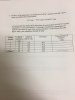 2. In Part A of this experiment, you prepare five FeSCN solutions (one that is just a blank) according to the reaction below Fe (aq) SCN (aq) > FeSCN (a) SCN formed We assume that the starting SCN determines the concentration of Fe (because Fe is in excess and SCN is limiting). Calculate the concentration ot FeSCN2 that forms for each of the solutions (Beakers 1-4) and fill out the table below. Show your calculations beneath the table. Concentration of...
5. A student does an experiment to determine the equili but at a higher temperature. ermine...
 5. A student does an experiment to determine the equili but at a higher temperature. ermine the equilibrium constant for the same reaction that you will study, Fe** (aq) + SCN (aq) FeSCN2+ (aq) The student prepares solution 1, by mixing 5. s Solution, by mixing 5.00 ml of 0.002 M Fe(NO2)2 solution with 5.00 mL of .00011M KSCN solution, heats the mixture, and finds that the equilibrium concentration of F and finds that the equilibrium concentration of FeSCN2+ in...
1) Consider the following equilibrium: Fe3+(aq) + SCN-(aq) ⇌ FeSCN2+(aq) Initial concentrations: [Fe3+] = 0.590; [SCN-]...
1) Consider the following equilibrium: Fe3+(aq) + SCN-(aq) ⇌ FeSCN2+(aq) Initial concentrations: [Fe3+] = 0.590; [SCN-] = 1.239; [FeSCN2+] = 0 The equilibrium concentration of [FeSCN2+]eq = 0.454 M. What is the numerical value of KC for this equilibrium? KC = __________________ 2) Consider the following equilibrium: Fe3+(aq) + SCN-(aq) ⇌ FeSCN2+(aq) Initial concentrations: [Fe3+] = 0.370; [SCN-] = 0.777; [FeSCN2+] = 0 The equilibrium concentration of [FeSCN2+]eq = 0.285 M. What is the equilibrium concentration of Fe3+? [Fe3+]eq =...
Fe (aq)SCN-(aq) FeSCN (aq) thiocyanate iron(II) thiocyanoiron(il) Introduction When the reactants shown above, are combined, chemical...
 Fe (aq)SCN-(aq) FeSCN (aq) thiocyanate iron(II) thiocyanoiron(il) Introduction When the reactants shown above, are combined, chemical equilibrium is reached rapidly. Once equilibrium is established, the equilibrium constant can be calculated if the concentration of all the ions are known: [FeSCNP.he [SCN-... and (Feng Your task is to prepare three different equilibrium systems that contain different concentrations of these ions. Keep in mind that although the concentrations will be different, the value of the equilibrium constant Ke will be indeed constant...
After completing Part A of this experiment, a student determines the slope of their calibration graph...
 After completing Part A of this experiment, a student determines
the slope of their calibration graph of absorbance versus [FeSCN2]
to be 5140 M1. In Part B, a student combines 2.00 mL of a 0.00200 M
solution of KSCN with 5.00 mL of 0.00200 M solution of Fe(NO,), and
3.00 mL of water. The following equilibrium is established. Fe (aq)
+ SCN (aq) FeSCN (aq) The absorbance of the equilibrium solution is
measured as 0.246. What is the equilibrium constant...
After completing Part A of this experiment, a student determines
the slope of their calibration graph of absorbance versus [FeSCN2]
to be 5140 M1. In Part B, a student combines 2.00 mL of a 0.00200 M
solution of KSCN with 5.00 mL of 0.00200 M solution of Fe(NO,), and
3.00 mL of water. The following equilibrium is established. Fe (aq)
+ SCN (aq) FeSCN (aq) The absorbance of the equilibrium solution is
measured as 0.246. What is the equilibrium constant...
What's the concentration of [FeSCN2+] using limiting reactant theory and equation? For each test tube solution...
 What's the concentration of [FeSCN2+] using limiting
reactant theory and equation?
For each test tube solution enter the initial concentration of Fe+ and SCNthe equilibrium concentration of FeSCN2: into the ICE table given. Complete entries for the rest of the table and calculate the K value for each of the tables. The values of K should be confined to a narrow range to reflect constancy. Comment on the quality of your work in this regard and calculate the average K....
What's the concentration of [FeSCN2+] using limiting
reactant theory and equation?
For each test tube solution enter the initial concentration of Fe+ and SCNthe equilibrium concentration of FeSCN2: into the ICE table given. Complete entries for the rest of the table and calculate the K value for each of the tables. The values of K should be confined to a narrow range to reflect constancy. Comment on the quality of your work in this regard and calculate the average K....
4 please in part 1 gires us absorbance values for each sample , changes in concentration...
 4 please
in part 1 gires us absorbance values for each sample , changes in concentration and absorbance will cause a curve 1. For each new concentration of FeSCN2+ a new absorbance will be plotted. 4. After completing Part A of this experiment, a student determines the slope of their calibration graph of absorbance versus (FeSCN to be 5140 M". In Part B, a student combines 2.00 mL of a 0.00200 M solution of KSCN with 5.00 mL of a...
4 please
in part 1 gires us absorbance values for each sample , changes in concentration and absorbance will cause a curve 1. For each new concentration of FeSCN2+ a new absorbance will be plotted. 4. After completing Part A of this experiment, a student determines the slope of their calibration graph of absorbance versus (FeSCN to be 5140 M". In Part B, a student combines 2.00 mL of a 0.00200 M solution of KSCN with 5.00 mL of a...
Lab Report: Determination of Kc for a Complex Ion Formation tube 2.00e-3 Fe3+ (mL) 2.00E-3M SCN-...
 Lab Report: Determination of Kc for a Complex Ion Formation
tube
2.00e-3 Fe3+ (mL)
2.00E-3M SCN- (mL)
water (mL)
initial conc. Fe3+
initial conc. SCN-
1
5.00
5.00
0
1.00e-3M
1.00E-3M
2
5.00
4.00
1.00
1.00E-3M
8.00E-3M
3
5.00
3.00
2.00
1.00E-3,
6.00E-3M
4
5.00
2.00
3.00
1.00E-3M
4.00E-3M
5
5.00
1.00
4.00
1.00E-3M
2.00E-3M
10ml of 0.200M Fe3+, 2.00ml of 0.00200M SCN-, AND 8.00ml of
water results in an eq. [FeSCN2+] IN Standard
Soln.:2.00E-4M
Could you please explain how...
Lab Report: Determination of Kc for a Complex Ion Formation
tube
2.00e-3 Fe3+ (mL)
2.00E-3M SCN- (mL)
water (mL)
initial conc. Fe3+
initial conc. SCN-
1
5.00
5.00
0
1.00e-3M
1.00E-3M
2
5.00
4.00
1.00
1.00E-3M
8.00E-3M
3
5.00
3.00
2.00
1.00E-3,
6.00E-3M
4
5.00
2.00
3.00
1.00E-3M
4.00E-3M
5
5.00
1.00
4.00
1.00E-3M
2.00E-3M
10ml of 0.200M Fe3+, 2.00ml of 0.00200M SCN-, AND 8.00ml of
water results in an eq. [FeSCN2+] IN Standard
Soln.:2.00E-4M
Could you please explain how...
please do 1 through 4. Thank you. 0 1. Fe 1.SCN Procedure B: 1. Prepare ICE...
 please do 1 through 4. Thank you.
0 1. Fe 1.SCN Procedure B: 1. Prepare ICE tables for beakers 2 - 6 using the example below as a guideline (you will have 5 different ICE tables). Table 3. Sample "ICE" table. Fe(aq)*3 + SCN(aq) = FeSCN2 Initial: **M calculated **M calculated using your Table 2 using your Table 2 volumes volumes Change: - 1x - 1x Equilibrium: M 1x 1x = concentration calculated from Procedure A slope-intercept equation +1x M...
please do 1 through 4. Thank you.
0 1. Fe 1.SCN Procedure B: 1. Prepare ICE tables for beakers 2 - 6 using the example below as a guideline (you will have 5 different ICE tables). Table 3. Sample "ICE" table. Fe(aq)*3 + SCN(aq) = FeSCN2 Initial: **M calculated **M calculated using your Table 2 using your Table 2 volumes volumes Change: - 1x - 1x Equilibrium: M 1x 1x = concentration calculated from Procedure A slope-intercept equation +1x M...
 2. In Part A of this experiment, you prepare five FeSCN solutions (one that is just a blank) according to the reaction below Fe (aq) SCN (aq) > FeSCN (a) SCN formed We assume that the starting SCN determines the concentration of Fe (because Fe is in excess and SCN is limiting). Calculate the concentration ot FeSCN2 that forms for each of the solutions (Beakers 1-4) and fill out the table below. Show your calculations beneath the table. Concentration of...
 5. A student does an experiment to determine the equili but at a higher temperature. ermine the equilibrium constant for the same reaction that you will study, Fe** (aq) + SCN (aq) FeSCN2+ (aq) The student prepares solution 1, by mixing 5. s Solution, by mixing 5.00 ml of 0.002 M Fe(NO2)2 solution with 5.00 mL of .00011M KSCN solution, heats the mixture, and finds that the equilibrium concentration of F and finds that the equilibrium concentration of FeSCN2+ in...
 Fe (aq)SCN-(aq) FeSCN (aq) thiocyanate iron(II) thiocyanoiron(il) Introduction When the reactants shown above, are combined, chemical equilibrium is reached rapidly. Once equilibrium is established, the equilibrium constant can be calculated if the concentration of all the ions are known: [FeSCNP.he [SCN-... and (Feng Your task is to prepare three different equilibrium systems that contain different concentrations of these ions. Keep in mind that although the concentrations will be different, the value of the equilibrium constant Ke will be indeed constant...
 After completing Part A of this experiment, a student determines
the slope of their calibration graph of absorbance versus [FeSCN2]
to be 5140 M1. In Part B, a student combines 2.00 mL of a 0.00200 M
solution of KSCN with 5.00 mL of 0.00200 M solution of Fe(NO,), and
3.00 mL of water. The following equilibrium is established. Fe (aq)
+ SCN (aq) FeSCN (aq) The absorbance of the equilibrium solution is
measured as 0.246. What is the equilibrium constant...
After completing Part A of this experiment, a student determines
the slope of their calibration graph of absorbance versus [FeSCN2]
to be 5140 M1. In Part B, a student combines 2.00 mL of a 0.00200 M
solution of KSCN with 5.00 mL of 0.00200 M solution of Fe(NO,), and
3.00 mL of water. The following equilibrium is established. Fe (aq)
+ SCN (aq) FeSCN (aq) The absorbance of the equilibrium solution is
measured as 0.246. What is the equilibrium constant...
 What's the concentration of [FeSCN2+] using limiting
reactant theory and equation?
For each test tube solution enter the initial concentration of Fe+ and SCNthe equilibrium concentration of FeSCN2: into the ICE table given. Complete entries for the rest of the table and calculate the K value for each of the tables. The values of K should be confined to a narrow range to reflect constancy. Comment on the quality of your work in this regard and calculate the average K....
What's the concentration of [FeSCN2+] using limiting
reactant theory and equation?
For each test tube solution enter the initial concentration of Fe+ and SCNthe equilibrium concentration of FeSCN2: into the ICE table given. Complete entries for the rest of the table and calculate the K value for each of the tables. The values of K should be confined to a narrow range to reflect constancy. Comment on the quality of your work in this regard and calculate the average K....
 4 please
in part 1 gires us absorbance values for each sample , changes in concentration and absorbance will cause a curve 1. For each new concentration of FeSCN2+ a new absorbance will be plotted. 4. After completing Part A of this experiment, a student determines the slope of their calibration graph of absorbance versus (FeSCN to be 5140 M". In Part B, a student combines 2.00 mL of a 0.00200 M solution of KSCN with 5.00 mL of a...
4 please
in part 1 gires us absorbance values for each sample , changes in concentration and absorbance will cause a curve 1. For each new concentration of FeSCN2+ a new absorbance will be plotted. 4. After completing Part A of this experiment, a student determines the slope of their calibration graph of absorbance versus (FeSCN to be 5140 M". In Part B, a student combines 2.00 mL of a 0.00200 M solution of KSCN with 5.00 mL of a...
 Lab Report: Determination of Kc for a Complex Ion Formation
tube
2.00e-3 Fe3+ (mL)
2.00E-3M SCN- (mL)
water (mL)
initial conc. Fe3+
initial conc. SCN-
1
5.00
5.00
0
1.00e-3M
1.00E-3M
2
5.00
4.00
1.00
1.00E-3M
8.00E-3M
3
5.00
3.00
2.00
1.00E-3,
6.00E-3M
4
5.00
2.00
3.00
1.00E-3M
4.00E-3M
5
5.00
1.00
4.00
1.00E-3M
2.00E-3M
10ml of 0.200M Fe3+, 2.00ml of 0.00200M SCN-, AND 8.00ml of
water results in an eq. [FeSCN2+] IN Standard
Soln.:2.00E-4M
Could you please explain how...
Lab Report: Determination of Kc for a Complex Ion Formation
tube
2.00e-3 Fe3+ (mL)
2.00E-3M SCN- (mL)
water (mL)
initial conc. Fe3+
initial conc. SCN-
1
5.00
5.00
0
1.00e-3M
1.00E-3M
2
5.00
4.00
1.00
1.00E-3M
8.00E-3M
3
5.00
3.00
2.00
1.00E-3,
6.00E-3M
4
5.00
2.00
3.00
1.00E-3M
4.00E-3M
5
5.00
1.00
4.00
1.00E-3M
2.00E-3M
10ml of 0.200M Fe3+, 2.00ml of 0.00200M SCN-, AND 8.00ml of
water results in an eq. [FeSCN2+] IN Standard
Soln.:2.00E-4M
Could you please explain how...
 please do 1 through 4. Thank you.
0 1. Fe 1.SCN Procedure B: 1. Prepare ICE tables for beakers 2 - 6 using the example below as a guideline (you will have 5 different ICE tables). Table 3. Sample "ICE" table. Fe(aq)*3 + SCN(aq) = FeSCN2 Initial: **M calculated **M calculated using your Table 2 using your Table 2 volumes volumes Change: - 1x - 1x Equilibrium: M 1x 1x = concentration calculated from Procedure A slope-intercept equation +1x M...
please do 1 through 4. Thank you.
0 1. Fe 1.SCN Procedure B: 1. Prepare ICE tables for beakers 2 - 6 using the example below as a guideline (you will have 5 different ICE tables). Table 3. Sample "ICE" table. Fe(aq)*3 + SCN(aq) = FeSCN2 Initial: **M calculated **M calculated using your Table 2 using your Table 2 volumes volumes Change: - 1x - 1x Equilibrium: M 1x 1x = concentration calculated from Procedure A slope-intercept equation +1x M...
Most questions answered within 3 hours.
-
Where is the error in this code sequence?
String s1 = "Hello";
String s2 = "ello";...
asked 11 months ago -
Financial data for Joel de Paris, Inc., for last year
follow:
Joel de Paris, Inc.
Balance...
asked 11 months ago -
Consider this reaction:
Al2(SO4)3 (aq)+ BaCl3
(aq) Al2Cl6 (aq)- +
3BaSO4(s) . What is the...
asked 11 months ago -
Suppose that Savneet is considering increasing her
recent random sample from 20 car rentals to 40...
asked 11 months ago -
Trucks arrive at an unloading terminal at an average rate of 120
per hour.
Trucks arrive...
asked 11 months ago -
Why are methanol and ethanol completely soluble in water while
octanol is not very little soluble....
asked 11 months ago -
A facilities manager at a university reads in a research report
that the mean amount of...
asked 11 months ago -
When the CuSO4 is rehydrated by adding water to the anhydrous
compound, is this an endothermic...
asked 11 months ago -
A ray of sunlight is passing from diamond into crown glass; the
angle of incidence is...
asked 11 months ago -
A block of mass 0.249 kg is placed on top of a light, vertical
spring of...
asked 11 months ago -
how do the kidneys compensate in the presences of acidosis
a) trigger hyperventilate
b) reserve acid...
asked 11 months ago -
Question 501 pts
The rental rate of capital to the firm increases. Which of the
following...
asked 11 months ago