Please solve this problem
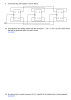
Below is an N-bit register consisting of a D Flip-Flop. Indicate the state of the register when Load = 0 and CLK = 1 and when Load = 1 and CLK = 1. In this case, the signal notation should be written as Di, Qi, CLK, etc.

Homework Answers

Add Answer to:
Please solve this problem Below is an N-bit register consisting of a D Flip-Flop. Indicate the state of the register whe...
Design a 3- bit Multipurpose Register. The register utilizes 3 "D" type flip flops with outputs...
Design a 3- bit Multipurpose Register. The register utilizes 3 "D" type flip flops with outputs Q0, Q1, Q2. The Registers has a synchronous clock input(CLK) that clocks all 3 flip flops on its positive edge The Registers has an asynchronous clear input(CLR' ) that sets all flip flops to "0" when active low. The Register has 2 select inputs, S0 and S1 that selects the functions as folows: S1 = 0, 0, 1, 1 and S0 = 0,1,0,1 and...
I need help doing the code using Verilog modelsim Design a 32-bit register using the D...
I need help doing the code using Verilog modelsim Design a 32-bit register using the D Flip-Flop from part (1) so that it has the following features: (a) The Register has these ports Outputs: Q[31:0] Inputs: D[31:0] CLK is the clock signal EN is a synchronous signal for enabling the register. When EN is asserted at the sensitive edge of the CLK, the input D is loaded into the register. RESET We will leave this input unconnected, but will define...
4. A three flip-flop shift register is shown below: K_2 Q_21 0 1 0 (a) If...
 4. A three flip-flop shift register is shown below: K_2 Q_21 0 1 0 (a) If the flip-flops are initially loaded with the word [Q2 = 1, Q1 = 1, QO = 0], find out the words that will be generated after the next 6 clocks. [4 points] (b) By observing the output sequence at Q_0, identify the bit pattern that is being repeated. [2 points]
The following is an equivalent way of creating the circuit above. Below is the truth table...
 The following is an equivalent way of creating the circuit
above.
Below is the truth table
Q2, Q1, and Q0 are LED outputs from left to right respectively
and D2, D1, and D0 are switches from left to right respectively
Answer the following questions:
1. What signal(s) represent the present state and next state of
the circuit?
2. Sketch a Finite State Machine diagram of the circuit (Be sure
to show inputs and outputs).
3. Describe the high-level behavior of...
The following is an equivalent way of creating the circuit
above.
Below is the truth table
Q2, Q1, and Q0 are LED outputs from left to right respectively
and D2, D1, and D0 are switches from left to right respectively
Answer the following questions:
1. What signal(s) represent the present state and next state of
the circuit?
2. Sketch a Finite State Machine diagram of the circuit (Be sure
to show inputs and outputs).
3. Describe the high-level behavior of...
Design a counter to count-up from 2 to 5 using 3 D Flip-Flops similar to the...
 Design a counter to count-up from 2 to 5 using 3 D Flip-Flops similar to the following sample: Important Steps: After you simplify D2, D1 and DO by kmap Have a piece of paper to draw it then open iCircuit to design it using BCD If it works well as a counter, copy the design from iCircuit and paste it here. 3-Bit Counter Using D Flip-Flop: The State Equation of D Flip-Flop: Q(t+1)=D(t) => Dn=An Count Up From 3 To...
Problem 4: Design a 2 bit register whose operation is controlled by the signals C1 and C2 as follows: (Use D- Flip Flop...
 Problem 4: Design a 2 bit register whose operation is controlled by the signals C1 and C2 as follows: (Use D- Flip Flops) Y2 Y1 C 2-Bit Register Clock SD PD1 PD2 Y1 Y2+ Operation Hold C1 C2 Y2 Y1 0 10 Shift Right Y1 SD 1 0 SD Y2 Shift Left PD2 PD1 Parallel Load 1 SD: Serial Data input PD1 PD2: Parallel Data input
Problem 4: Design a 2 bit register whose operation is controlled by the signals...
Problem 4: Design a 2 bit register whose operation is controlled by the signals C1 and C2 as follows: (Use D- Flip Flops) Y2 Y1 C 2-Bit Register Clock SD PD1 PD2 Y1 Y2+ Operation Hold C1 C2 Y2 Y1 0 10 Shift Right Y1 SD 1 0 SD Y2 Shift Left PD2 PD1 Parallel Load 1 SD: Serial Data input PD1 PD2: Parallel Data input
Problem 4: Design a 2 bit register whose operation is controlled by the signals...
Problem 7. Consider the 74x194 4-bit bidirectional universal shift register shown below Determine the operation of...
 Problem 7. Consider the 74x194 4-bit bidirectional universal shift register shown below Determine the operation of this circuit by filling out the table. Assume that the register is cleared initially as indicated by the first row in the table, and then connected to +5V (before time t), as shown in schematic. Also assume that t 'is that time at which a positive edge occurs in the input signal 'clock'. Si and S0 inputs (given) are used to switch between modes...
The following three images accompany one another. The second image is another version of the first...
 The following three images accompany one another. The second
image is another version of the first which we are using in the
example. How does image 4 change the function of the circuit (an
input, 'a', has been added that logically influences the next state
bits)?? Fill out the truth table to show the change.
Note: Q2, Q1, and Q0 are LED outputs from left to right
respectively. D2, D1, and D0 are switches from left to right
respectively. 'a'...
The following three images accompany one another. The second
image is another version of the first which we are using in the
example. How does image 4 change the function of the circuit (an
input, 'a', has been added that logically influences the next state
bits)?? Fill out the truth table to show the change.
Note: Q2, Q1, and Q0 are LED outputs from left to right
respectively. D2, D1, and D0 are switches from left to right
respectively. 'a'...
Lab Description Follow the instructions in the lab tasks below to behaviorially create and simulate a flip-flop. Af...
 Lab Description Follow the instructions in the lab tasks below to behaviorially create and simulate a flip-flop. Afterwards, you will create a register and use your ALU from Lab 3 to create an accumulator-based processor. This will act ike a simple processor; the ALU will execute si operations and each result will be stored in the register. In an accumulator, the value of the register will be updated with each operation; the register is used as an input to the...
Basically it is asking to draw the state machine using the D-flipflops and the ICs provided....
 Basically it is asking to draw the state machine using the
D-flipflops and the ICs provided.
6.1.4 Simulation Draw the the elevator controller. You must use the ICs listed for this laboratory, i.e., you will need bubble-to-bubble logic to implement the OR functions. Connect the CLK inputs of the flip-flops to a CLOCK signal, and the asynchronous CLR inputs to an active low RESET signal. 25 The sequence of commands to be applied for simulating the elevator controller is (starting...
Basically it is asking to draw the state machine using the
D-flipflops and the ICs provided.
6.1.4 Simulation Draw the the elevator controller. You must use the ICs listed for this laboratory, i.e., you will need bubble-to-bubble logic to implement the OR functions. Connect the CLK inputs of the flip-flops to a CLOCK signal, and the asynchronous CLR inputs to an active low RESET signal. 25 The sequence of commands to be applied for simulating the elevator controller is (starting...
 4. A three flip-flop shift register is shown below: K_2 Q_21 0 1 0 (a) If the flip-flops are initially loaded with the word [Q2 = 1, Q1 = 1, QO = 0], find out the words that will be generated after the next 6 clocks. [4 points] (b) By observing the output sequence at Q_0, identify the bit pattern that is being repeated. [2 points]
 The following is an equivalent way of creating the circuit
above.
Below is the truth table
Q2, Q1, and Q0 are LED outputs from left to right respectively
and D2, D1, and D0 are switches from left to right respectively
Answer the following questions:
1. What signal(s) represent the present state and next state of
the circuit?
2. Sketch a Finite State Machine diagram of the circuit (Be sure
to show inputs and outputs).
3. Describe the high-level behavior of...
The following is an equivalent way of creating the circuit
above.
Below is the truth table
Q2, Q1, and Q0 are LED outputs from left to right respectively
and D2, D1, and D0 are switches from left to right respectively
Answer the following questions:
1. What signal(s) represent the present state and next state of
the circuit?
2. Sketch a Finite State Machine diagram of the circuit (Be sure
to show inputs and outputs).
3. Describe the high-level behavior of...
 Design a counter to count-up from 2 to 5 using 3 D Flip-Flops similar to the following sample: Important Steps: After you simplify D2, D1 and DO by kmap Have a piece of paper to draw it then open iCircuit to design it using BCD If it works well as a counter, copy the design from iCircuit and paste it here. 3-Bit Counter Using D Flip-Flop: The State Equation of D Flip-Flop: Q(t+1)=D(t) => Dn=An Count Up From 3 To...
 Problem 4: Design a 2 bit register whose operation is controlled by the signals C1 and C2 as follows: (Use D- Flip Flops) Y2 Y1 C 2-Bit Register Clock SD PD1 PD2 Y1 Y2+ Operation Hold C1 C2 Y2 Y1 0 10 Shift Right Y1 SD 1 0 SD Y2 Shift Left PD2 PD1 Parallel Load 1 SD: Serial Data input PD1 PD2: Parallel Data input
Problem 4: Design a 2 bit register whose operation is controlled by the signals...
Problem 4: Design a 2 bit register whose operation is controlled by the signals C1 and C2 as follows: (Use D- Flip Flops) Y2 Y1 C 2-Bit Register Clock SD PD1 PD2 Y1 Y2+ Operation Hold C1 C2 Y2 Y1 0 10 Shift Right Y1 SD 1 0 SD Y2 Shift Left PD2 PD1 Parallel Load 1 SD: Serial Data input PD1 PD2: Parallel Data input
Problem 4: Design a 2 bit register whose operation is controlled by the signals...
 Problem 7. Consider the 74x194 4-bit bidirectional universal shift register shown below Determine the operation of this circuit by filling out the table. Assume that the register is cleared initially as indicated by the first row in the table, and then connected to +5V (before time t), as shown in schematic. Also assume that t 'is that time at which a positive edge occurs in the input signal 'clock'. Si and S0 inputs (given) are used to switch between modes...
 The following three images accompany one another. The second
image is another version of the first which we are using in the
example. How does image 4 change the function of the circuit (an
input, 'a', has been added that logically influences the next state
bits)?? Fill out the truth table to show the change.
Note: Q2, Q1, and Q0 are LED outputs from left to right
respectively. D2, D1, and D0 are switches from left to right
respectively. 'a'...
The following three images accompany one another. The second
image is another version of the first which we are using in the
example. How does image 4 change the function of the circuit (an
input, 'a', has been added that logically influences the next state
bits)?? Fill out the truth table to show the change.
Note: Q2, Q1, and Q0 are LED outputs from left to right
respectively. D2, D1, and D0 are switches from left to right
respectively. 'a'...
 Lab Description Follow the instructions in the lab tasks below to behaviorially create and simulate a flip-flop. Afterwards, you will create a register and use your ALU from Lab 3 to create an accumulator-based processor. This will act ike a simple processor; the ALU will execute si operations and each result will be stored in the register. In an accumulator, the value of the register will be updated with each operation; the register is used as an input to the...
 Basically it is asking to draw the state machine using the
D-flipflops and the ICs provided.
6.1.4 Simulation Draw the the elevator controller. You must use the ICs listed for this laboratory, i.e., you will need bubble-to-bubble logic to implement the OR functions. Connect the CLK inputs of the flip-flops to a CLOCK signal, and the asynchronous CLR inputs to an active low RESET signal. 25 The sequence of commands to be applied for simulating the elevator controller is (starting...
Basically it is asking to draw the state machine using the
D-flipflops and the ICs provided.
6.1.4 Simulation Draw the the elevator controller. You must use the ICs listed for this laboratory, i.e., you will need bubble-to-bubble logic to implement the OR functions. Connect the CLK inputs of the flip-flops to a CLOCK signal, and the asynchronous CLR inputs to an active low RESET signal. 25 The sequence of commands to be applied for simulating the elevator controller is (starting...
Most questions answered within 3 hours.
-
Where is the error in this code sequence?
String s1 = "Hello";
String s2 = "ello";...
asked 10 months ago -
Financial data for Joel de Paris, Inc., for last year
follow:
Joel de Paris, Inc.
Balance...
asked 10 months ago -
Consider this reaction:
Al2(SO4)3 (aq)+ BaCl3
(aq) Al2Cl6 (aq)- +
3BaSO4(s) . What is the...
asked 10 months ago -
Suppose that Savneet is considering increasing her
recent random sample from 20 car rentals to 40...
asked 10 months ago -
Trucks arrive at an unloading terminal at an average rate of 120
per hour.
Trucks arrive...
asked 10 months ago -
Why are methanol and ethanol completely soluble in water while
octanol is not very little soluble....
asked 10 months ago -
A facilities manager at a university reads in a research report
that the mean amount of...
asked 10 months ago -
When the CuSO4 is rehydrated by adding water to the anhydrous
compound, is this an endothermic...
asked 10 months ago -
A ray of sunlight is passing from diamond into crown glass; the
angle of incidence is...
asked 10 months ago -
A block of mass 0.249 kg is placed on top of a light, vertical
spring of...
asked 10 months ago -
how do the kidneys compensate in the presences of acidosis
a) trigger hyperventilate
b) reserve acid...
asked 10 months ago -
Question 501 pts
The rental rate of capital to the firm increases. Which of the
following...
asked 10 months ago