
Homework Answers
Generally, the coordinate with positive x-axis and positive y-axis are the basis to resolve the vectors.
The x-component towards right is positive and the x-component towards left is negative.
The y-component vertically upward is positive and the y-component vertically downwards is negative.
Therefore, the set of coordinate axes in third figure are the correct represents to solve the problem.
Add Answer to:
Which set of coordinate axes is the most convenient to use in this problem?
Draw the most appropriate set of coordinate axes for this problem (Figure 1 below).
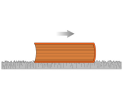 Draw the most appropriate set of coordinate axes for this
problem (Figure 1 below).
Draw the most appropriate set of coordinate axes for this
problem (Figure 1 below).
Sketch a set of coordinate axes and plot the given point. Answers:
 Sketch a set of coordinate axes and plot the given point. Answers:
A rabbit runs across a parking lot on which a set of coordinate axes has, strangely...
A rabbit runs across a parking lot on which a set of coordinate axes has, strangely enough, been drawn. The coordinates of the rabbit’s position as a function of time are given by x = -0.31t^2 + 7.2t + 28, y = 0.22t^2 – 9.1t + 30, with x in meters and t in seconds. At t =15 s, what is the rabbit’s position vector in unit vector notation and in magnitude-angle notion?
5. Draw a set of coordinate axes on a piece of graph paper. Label the x...
5. Draw a set of coordinate axes on a piece of graph paper. Label the x axis“Output” (0 to 20 units) and the y axis “Cost” (0 to 20 units). Plot the following (x, y) points on your graph: (0, 4); (2, 6); (4, 7); (7, 8); (9, 9); (11, 11); (13, 14). Connect these points with a smooth curve and label it “Total Cost.” Working from this curve, construct a total fixed cost curve and total variable cost curve...
Help Choosing the coordinate axes to use is often one of the more difficult choices to...
 Help
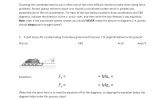
Choosing the coordinate axes to use is often one of the more difficult choices to make when doing force problems. Almost always the best choice is to choose a coordinate system which is parallel and perpendicular to the net acceleration. For each of the two below situations draw acceleration and FBD diagrams, indicate the direction of the x- and y- axes, and then write the two Newton's law equations. Note: even if the coordinate system rotates you should NEVER...
Help
Choosing the coordinate axes to use is often one of the more difficult choices to make when doing force problems. Almost always the best choice is to choose a coordinate system which is parallel and perpendicular to the net acceleration. For each of the two below situations draw acceleration and FBD diagrams, indicate the direction of the x- and y- axes, and then write the two Newton's law equations. Note: even if the coordinate system rotates you should NEVER...
The electric potential depends on x and y as shown, for the coordinate axes, in the...
 The electric potential depends on x and y as shown, for the
coordinate axes, in the figure (the potential does not depend on
z). The scale of the vertical axis is set by Vs = 500 V. What is
the direction of the electric field?
0.2 V (V) o'z od x(m) y (m)
The electric potential depends on x and y as shown, for the
coordinate axes, in the figure (the potential does not depend on
z). The scale of the vertical axis is set by Vs = 500 V. What is
the direction of the electric field?
0.2 V (V) o'z od x(m) y (m)
17) (10 pts) Draw the FBDs for this problem. Include the choice of coordinate axes and...
 17) (10 pts) Draw the FBDs for this problem. Include the choice of coordinate axes and label all the forces. Details count. There is coefficient of kinetic friction of 0.500 between the tabletop and block A. The rope and the pulley are massless and frictionless. Calculate the acceleration of the system using force analysis. Show all of your work. Object A has mass 15-kg and object B has mass 20-kg. MA тв
identify a convenient coordinate system for analyzing each of the following situations
Identify a convenient coordinate system for analyzing each of the following situationsa. a dog walking along a sidewalkb. an acrobat walking along a high wirec. a submarine submerging at an angle of 30 degrees to the horizontal
this example shows the uses of co-coordinate axes, my question is why is it that we...
 this example shows the uses of co-coordinate axes,
my question is why is it that we can substitute T for w2 for
the second equation , won t it be wrong since we are using two
different sets of axes
does it have something to do with expressing newtons second
law in terms of magnittude?
can someone explain more about the uses of co-coordinate axes
and when is it not apprioriate not to use it?
5.2 Using Newton's Second Law:...
this example shows the uses of co-coordinate axes,
my question is why is it that we can substitute T for w2 for
the second equation , won t it be wrong since we are using two
different sets of axes
does it have something to do with expressing newtons second
law in terms of magnittude?
can someone explain more about the uses of co-coordinate axes
and when is it not apprioriate not to use it?
5.2 Using Newton's Second Law:...
Which method, the graphical method, component method or the experimental method, is most convenient to find...
Which method, the graphical method, component method or the experimental method, is most convenient to find the resultant vector. Explain why.
 Draw the most appropriate set of coordinate axes for this
problem (Figure 1 below).
Draw the most appropriate set of coordinate axes for this
problem (Figure 1 below).
 Sketch a set of coordinate axes and plot the given point. Answers:
 Help
Choosing the coordinate axes to use is often one of the more difficult choices to make when doing force problems. Almost always the best choice is to choose a coordinate system which is parallel and perpendicular to the net acceleration. For each of the two below situations draw acceleration and FBD diagrams, indicate the direction of the x- and y- axes, and then write the two Newton's law equations. Note: even if the coordinate system rotates you should NEVER...
Help
Choosing the coordinate axes to use is often one of the more difficult choices to make when doing force problems. Almost always the best choice is to choose a coordinate system which is parallel and perpendicular to the net acceleration. For each of the two below situations draw acceleration and FBD diagrams, indicate the direction of the x- and y- axes, and then write the two Newton's law equations. Note: even if the coordinate system rotates you should NEVER...
 The electric potential depends on x and y as shown, for the
coordinate axes, in the figure (the potential does not depend on
z). The scale of the vertical axis is set by Vs = 500 V. What is
the direction of the electric field?
0.2 V (V) o'z od x(m) y (m)
The electric potential depends on x and y as shown, for the
coordinate axes, in the figure (the potential does not depend on
z). The scale of the vertical axis is set by Vs = 500 V. What is
the direction of the electric field?
0.2 V (V) o'z od x(m) y (m)
 17) (10 pts) Draw the FBDs for this problem. Include the choice of coordinate axes and label all the forces. Details count. There is coefficient of kinetic friction of 0.500 between the tabletop and block A. The rope and the pulley are massless and frictionless. Calculate the acceleration of the system using force analysis. Show all of your work. Object A has mass 15-kg and object B has mass 20-kg. MA тв
 this example shows the uses of co-coordinate axes,
my question is why is it that we can substitute T for w2 for
the second equation , won t it be wrong since we are using two
different sets of axes
does it have something to do with expressing newtons second
law in terms of magnittude?
can someone explain more about the uses of co-coordinate axes
and when is it not apprioriate not to use it?
5.2 Using Newton's Second Law:...
this example shows the uses of co-coordinate axes,
my question is why is it that we can substitute T for w2 for
the second equation , won t it be wrong since we are using two
different sets of axes
does it have something to do with expressing newtons second
law in terms of magnittude?
can someone explain more about the uses of co-coordinate axes
and when is it not apprioriate not to use it?
5.2 Using Newton's Second Law:...
Most questions answered within 3 hours.
-
Where is the error in this code sequence?
String s1 = "Hello";
String s2 = "ello";...
asked 10 months ago -
Financial data for Joel de Paris, Inc., for last year
follow:
Joel de Paris, Inc.
Balance...
asked 10 months ago -
Consider this reaction:
Al2(SO4)3 (aq)+ BaCl3
(aq) Al2Cl6 (aq)- +
3BaSO4(s) . What is the...
asked 10 months ago -
Suppose that Savneet is considering increasing her
recent random sample from 20 car rentals to 40...
asked 10 months ago -
Trucks arrive at an unloading terminal at an average rate of 120
per hour.
Trucks arrive...
asked 10 months ago -
Why are methanol and ethanol completely soluble in water while
octanol is not very little soluble....
asked 10 months ago -
A facilities manager at a university reads in a research report
that the mean amount of...
asked 10 months ago -
When the CuSO4 is rehydrated by adding water to the anhydrous
compound, is this an endothermic...
asked 10 months ago -
A ray of sunlight is passing from diamond into crown glass; the
angle of incidence is...
asked 10 months ago -
A block of mass 0.249 kg is placed on top of a light, vertical
spring of...
asked 10 months ago -
how do the kidneys compensate in the presences of acidosis
a) trigger hyperventilate
b) reserve acid...
asked 10 months ago -
Question 501 pts
The rental rate of capital to the firm increases. Which of the
following...
asked 10 months ago