
Homework Answers
Solution)
The direction of the electric force on the electron will be
Parallel to dipole in the direction negative to positive charge.
========
Good luck!:)
Add Answer to:
Please explain A. An electron is in the plane that bisects a dipole. What is the...
The Electric dipole, with magnitude of charge q and separation of d is oriented vertically with...
The Electric dipole, with magnitude of charge q and separation of d is oriented vertically with dipole moment in the +y direction. Find the dipole Electric field in the plane that bisects this dipole. What is the approximation of field at distances much larger than charge separation
The figure below shows an electron placed on the horizontal axis near an electric dipole lined...
 The figure below shows an electron placed on the horizontal axis near an electric dipole lined up on the vertical axis with its center at the origin. In which direction does the electron experience a force from the electric dipole? 0 0 Select one: a. 1 О b. C. d. → e.
Can someone carefully explain and answer questions A, B, C, D and E in detail, please!!!...
 Can someone carefully explain and answer questions A, B, C, D
and E in detail, please!!!
Score Name Student ID last first [25 points total] Tutorial question IV An electrically neutral cylinder is made out of a polarizable material. The cylinder is placed in a region of strong electric field that points upward A. [4 pts] Sketch bound charges on the diagram at right. Briefly explain your reasoning B. [6 pts] In what direction is the dipole moment of the...
Can someone carefully explain and answer questions A, B, C, D
and E in detail, please!!!
Score Name Student ID last first [25 points total] Tutorial question IV An electrically neutral cylinder is made out of a polarizable material. The cylinder is placed in a region of strong electric field that points upward A. [4 pts] Sketch bound charges on the diagram at right. Briefly explain your reasoning B. [6 pts] In what direction is the dipole moment of the...
Please explain problems 14 & 15. Problem 14: An electric dipole consists of a particle with...
 Please explain problems 14
& 15.
Problem 14: An electric dipole consists of a particle with a charge of -6.0 x 10⁶ C at the origin and a particle with a charge of +6.0 x 10-C on the y axis at y = 3 x 10-'m. Its dipole moment is: A) 1.8 x 10⁻⁸ C m, in the positive x direction B) 1.8 x 10⁻⁸ Cm, in the negative x direction C) O, because the net charge is 0 D)...
Please explain problems 14
& 15.
Problem 14: An electric dipole consists of a particle with a charge of -6.0 x 10⁶ C at the origin and a particle with a charge of +6.0 x 10-C on the y axis at y = 3 x 10-'m. Its dipole moment is: A) 1.8 x 10⁻⁸ C m, in the positive x direction B) 1.8 x 10⁻⁸ Cm, in the negative x direction C) O, because the net charge is 0 D)...
Can someone please answer in detialed steps with explantion. (thank you!) 27. A dipole consists of...
 Can someone please answer in detialed steps with explantion.
(thank you!)
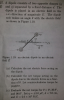
27. A dipole consists of two opposite charges (q E and q) separated by a fixed distance d. The dipole is placed in an electric field in the +a-direction of magnitude E. The dipole axis makes an angle θ with the electric field as shown in Figure 1.10. +x -q Figure 1.10: an electric dipole in an electric field E (a) Calculate the net electric force acting orn the...
Can someone please answer in detialed steps with explantion.
(thank you!)
27. A dipole consists of two opposite charges (q E and q) separated by a fixed distance d. The dipole is placed in an electric field in the +a-direction of magnitude E. The dipole axis makes an angle θ with the electric field as shown in Figure 1.10. +x -q Figure 1.10: an electric dipole in an electric field E (a) Calculate the net electric force acting orn the...
A small glass bead charged to 4.0 nC is in the plane that bisects a thin,...
A small glass bead charged to 4.0 nC is in the plane that bisects a thin, uniformly charged, 10-cm-long glass rod and is 4.0 cm from the rod's center. The bead is repelled from the rod with a force of 840 μN. What is the total charge on the rod?
The dipole moment of the water molecule (H2O) is 6.17×10⁻³⁰ C.m. Consider a water molecule located...
The dipole moment of the water molecule (H2O) is 6.17×10⁻³⁰ C.m. Consider a water molecule located at the origin whose dipole moment p? points in the +x-direction. A chlorine ion (Cl-), of charge −1.60 × 10⁻¹⁹ C, is located at x = 3 nm. Assume that x is much larger than the separation d between the charges in the dipole, so that the approximate expression for the electric field along the dipole axis can be used. (a) Find the magnitude...
A particular electric dipole consists of a proton of charge of 1.6x10⁻¹⁹ Coulomb and an electron...
A particular electric dipole consists of a proton of charge of 1.6x10⁻¹⁹ Coulomb and an electron of charge of -1.6x10⁻¹⁹ Coulomb, separated by 2x10⁻¹⁰[m] = 0.2[nm]. 1a. What’s the electrostatic force between the charges (magnitude and direction), and why? 1b. What’s the electric field magnitude and direction at a point halfway between the two charges, and why? 1c. How much energy (in electron Volts OR in Joules) is needed to separate these two charges? 1d. If these two charges “fell...
An electron is a distance d from a dipole moving along the axis of the dipole,...
An electron is a distance d from a dipole moving along the axis of the dipole, where d is much larger than the separation between the charges of the dipole. At this point, the magnitude of the force on the electron is 6e-8N. the electron moves a distance 3d from the dipole. What is the new magnitude of the force on the electron due to the dipole at this point? --The answer is F= 2.2x10⁻⁹but I don't understand how to...
The figure shows a metal ring seen from the plane that bisects its axis. The ring...
 The figure shows a metal ring seen from the plane that bisects its axis. The ring in the figure is cut in half such that we can see the direction of current through it, but this question concerns the full, uncut ring. Where is the north magnetic pole of this current loop? Select one: a. On the top side. b. On the bottom side. c. On the right side. d. On the left side. e. Current loops don't have north...
 The figure below shows an electron placed on the horizontal axis near an electric dipole lined up on the vertical axis with its center at the origin. In which direction does the electron experience a force from the electric dipole? 0 0 Select one: a. 1 О b. C. d. → e.
 Can someone carefully explain and answer questions A, B, C, D
and E in detail, please!!!
Score Name Student ID last first [25 points total] Tutorial question IV An electrically neutral cylinder is made out of a polarizable material. The cylinder is placed in a region of strong electric field that points upward A. [4 pts] Sketch bound charges on the diagram at right. Briefly explain your reasoning B. [6 pts] In what direction is the dipole moment of the...
Can someone carefully explain and answer questions A, B, C, D
and E in detail, please!!!
Score Name Student ID last first [25 points total] Tutorial question IV An electrically neutral cylinder is made out of a polarizable material. The cylinder is placed in a region of strong electric field that points upward A. [4 pts] Sketch bound charges on the diagram at right. Briefly explain your reasoning B. [6 pts] In what direction is the dipole moment of the...
 Please explain problems 14
& 15.
Problem 14: An electric dipole consists of a particle with a charge of -6.0 x 10⁶ C at the origin and a particle with a charge of +6.0 x 10-C on the y axis at y = 3 x 10-'m. Its dipole moment is: A) 1.8 x 10⁻⁸ C m, in the positive x direction B) 1.8 x 10⁻⁸ Cm, in the negative x direction C) O, because the net charge is 0 D)...
Please explain problems 14
& 15.
Problem 14: An electric dipole consists of a particle with a charge of -6.0 x 10⁶ C at the origin and a particle with a charge of +6.0 x 10-C on the y axis at y = 3 x 10-'m. Its dipole moment is: A) 1.8 x 10⁻⁸ C m, in the positive x direction B) 1.8 x 10⁻⁸ Cm, in the negative x direction C) O, because the net charge is 0 D)...
 Can someone please answer in detialed steps with explantion.
(thank you!)
27. A dipole consists of two opposite charges (q E and q) separated by a fixed distance d. The dipole is placed in an electric field in the +a-direction of magnitude E. The dipole axis makes an angle θ with the electric field as shown in Figure 1.10. +x -q Figure 1.10: an electric dipole in an electric field E (a) Calculate the net electric force acting orn the...
Can someone please answer in detialed steps with explantion.
(thank you!)
27. A dipole consists of two opposite charges (q E and q) separated by a fixed distance d. The dipole is placed in an electric field in the +a-direction of magnitude E. The dipole axis makes an angle θ with the electric field as shown in Figure 1.10. +x -q Figure 1.10: an electric dipole in an electric field E (a) Calculate the net electric force acting orn the...
 The figure shows a metal ring seen from the plane that bisects its axis. The ring in the figure is cut in half such that we can see the direction of current through it, but this question concerns the full, uncut ring. Where is the north magnetic pole of this current loop? Select one: a. On the top side. b. On the bottom side. c. On the right side. d. On the left side. e. Current loops don't have north...
Most questions answered within 3 hours.
-
Where is the error in this code sequence?
String s1 = "Hello";
String s2 = "ello";...
asked 10 months ago -
Financial data for Joel de Paris, Inc., for last year
follow:
Joel de Paris, Inc.
Balance...
asked 10 months ago -
Consider this reaction:
Al2(SO4)3 (aq)+ BaCl3
(aq) Al2Cl6 (aq)- +
3BaSO4(s) . What is the...
asked 10 months ago -
Suppose that Savneet is considering increasing her
recent random sample from 20 car rentals to 40...
asked 10 months ago -
Trucks arrive at an unloading terminal at an average rate of 120
per hour.
Trucks arrive...
asked 10 months ago -
Why are methanol and ethanol completely soluble in water while
octanol is not very little soluble....
asked 10 months ago -
A facilities manager at a university reads in a research report
that the mean amount of...
asked 10 months ago -
When the CuSO4 is rehydrated by adding water to the anhydrous
compound, is this an endothermic...
asked 10 months ago -
A ray of sunlight is passing from diamond into crown glass; the
angle of incidence is...
asked 10 months ago -
A block of mass 0.249 kg is placed on top of a light, vertical
spring of...
asked 10 months ago -
how do the kidneys compensate in the presences of acidosis
a) trigger hyperventilate
b) reserve acid...
asked 10 months ago -
Question 501 pts
The rental rate of capital to the firm increases. Which of the
following...
asked 10 months ago