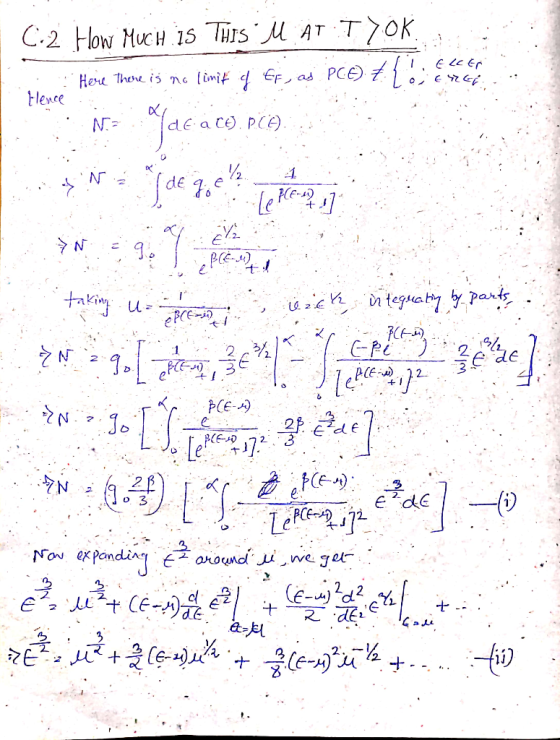
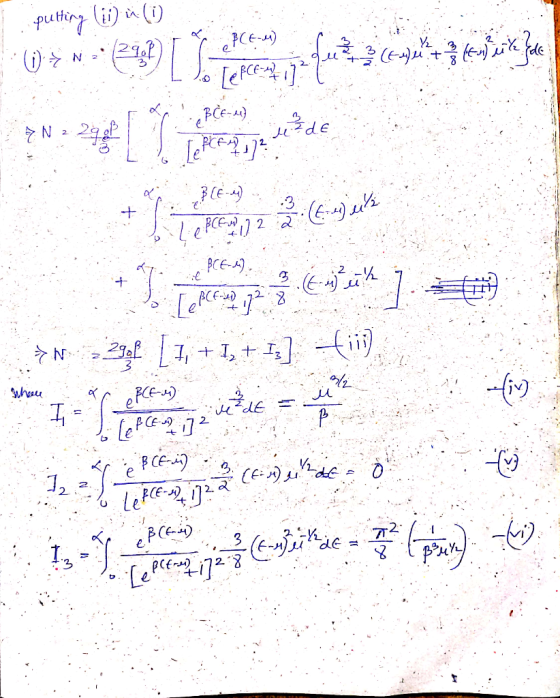
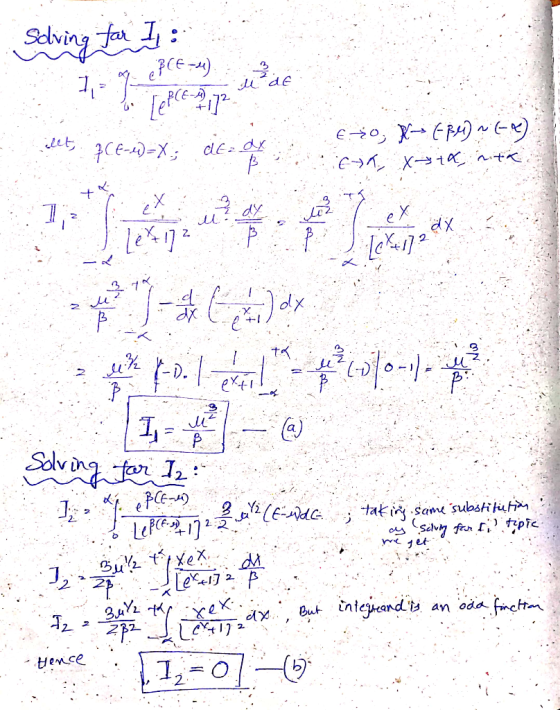
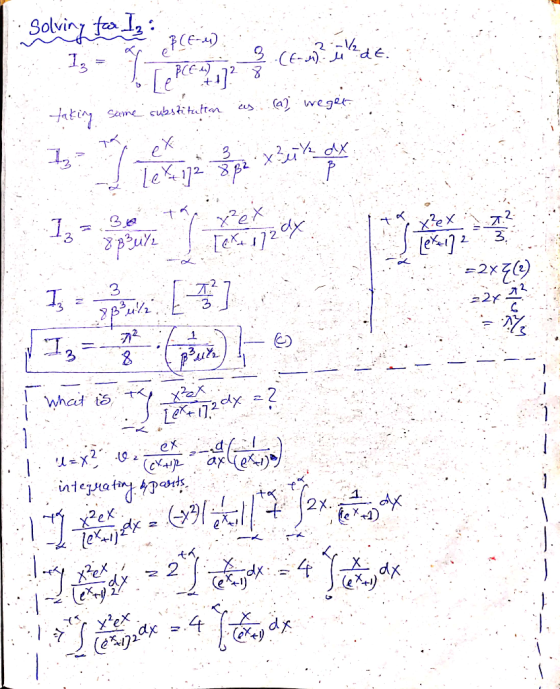
Consider a gas of fermion at 
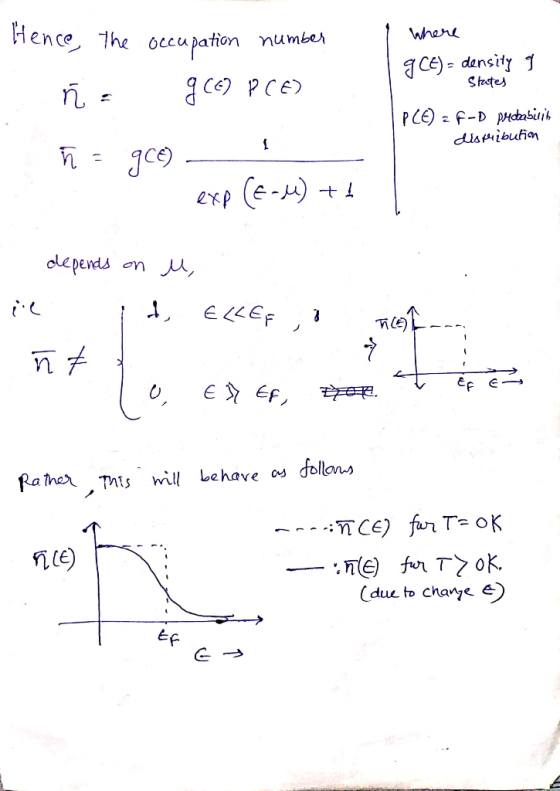
1) At finite temperature 

Homework Answers

Add Answer to:
Consider a gas of fermion at . 1) At finite temperature , find the occupation number...
3. Consider a gas of fermion at a) Express the mean number of particle , and mean energy by polylogarithm function...
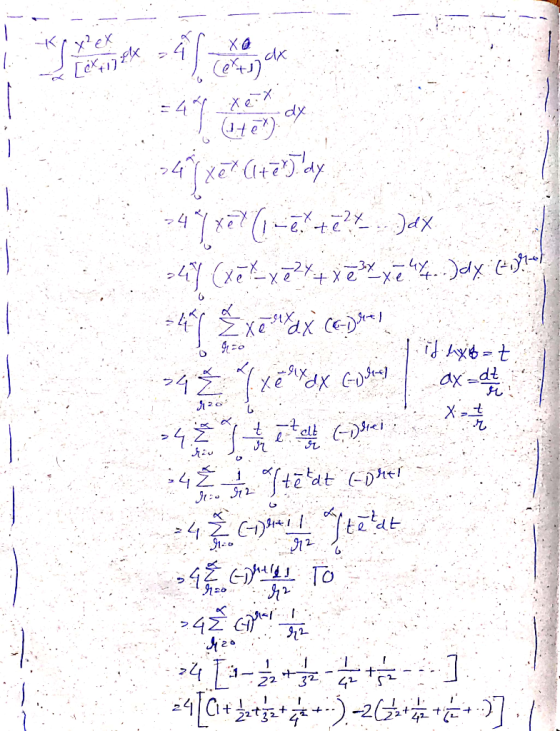
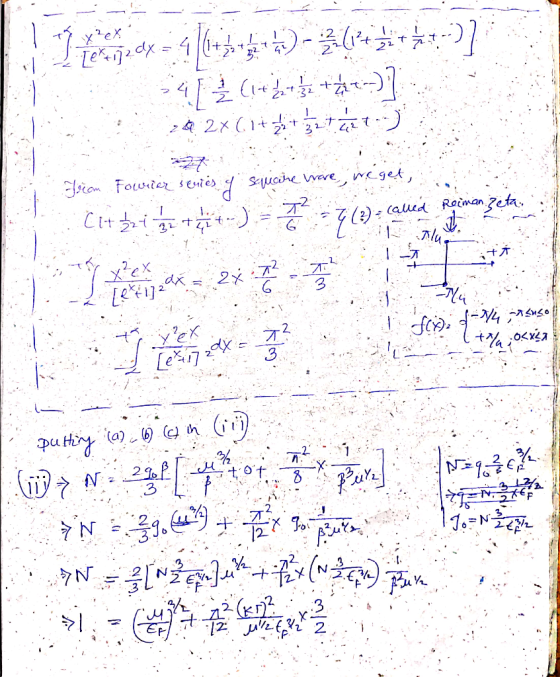
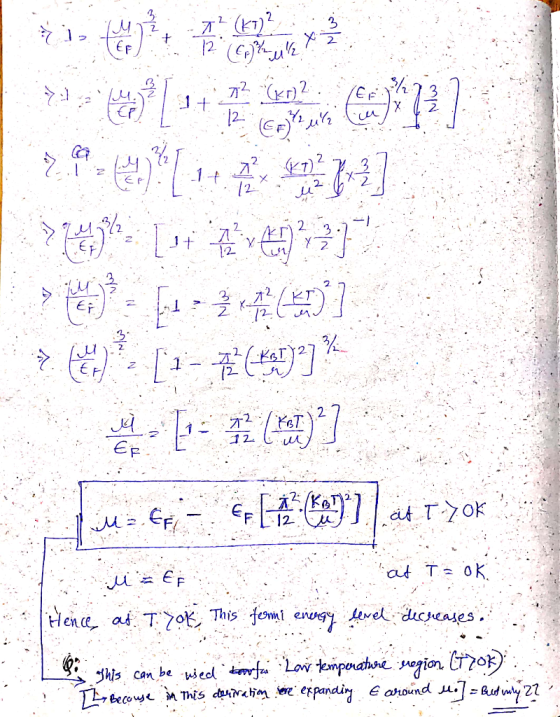
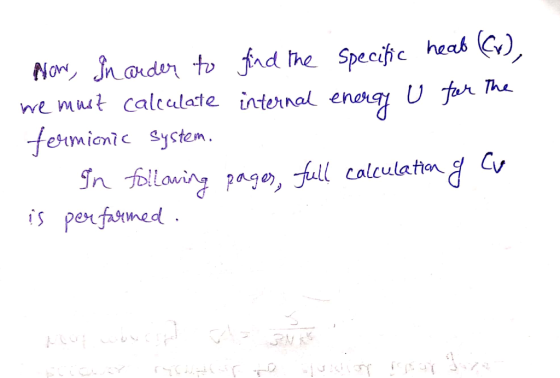
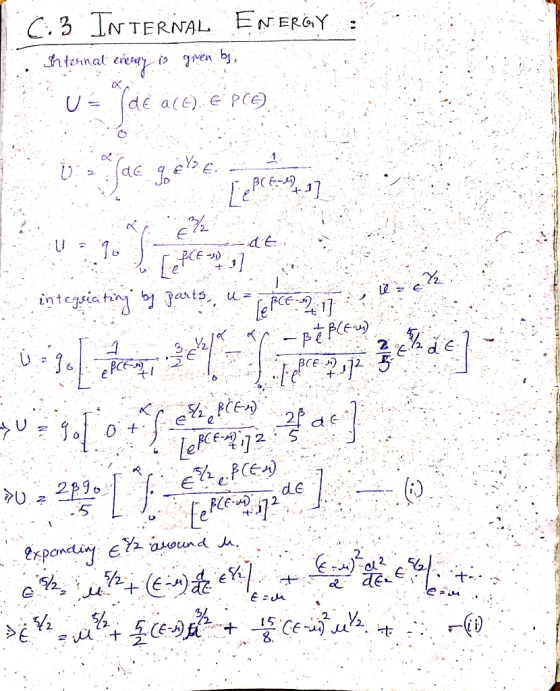
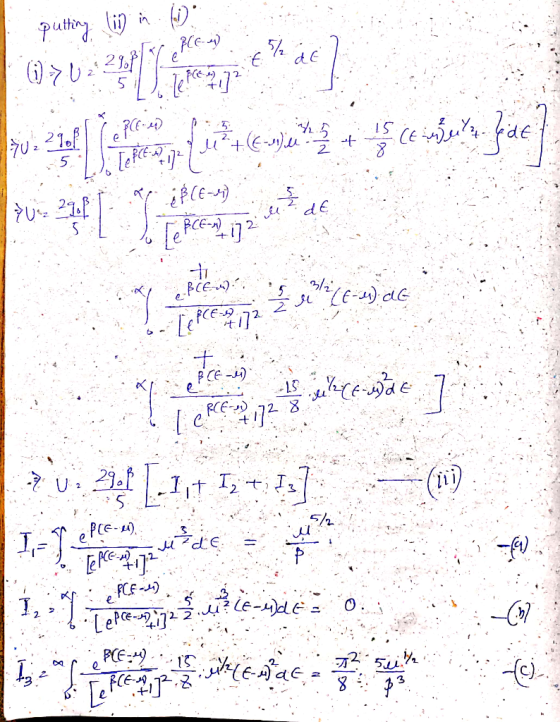
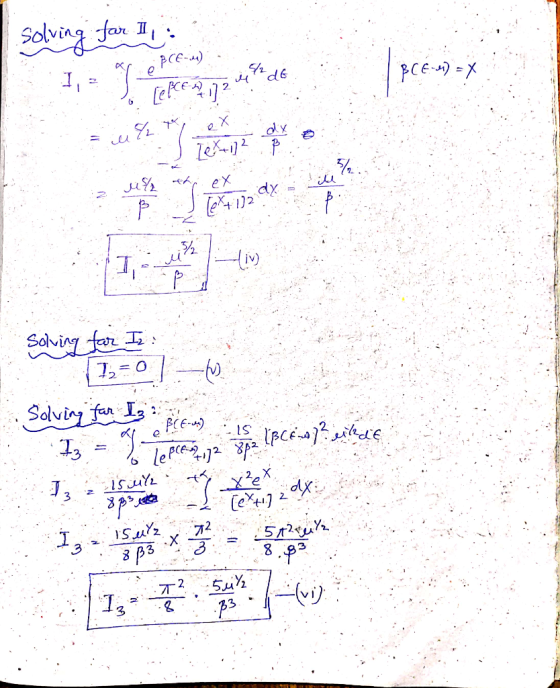
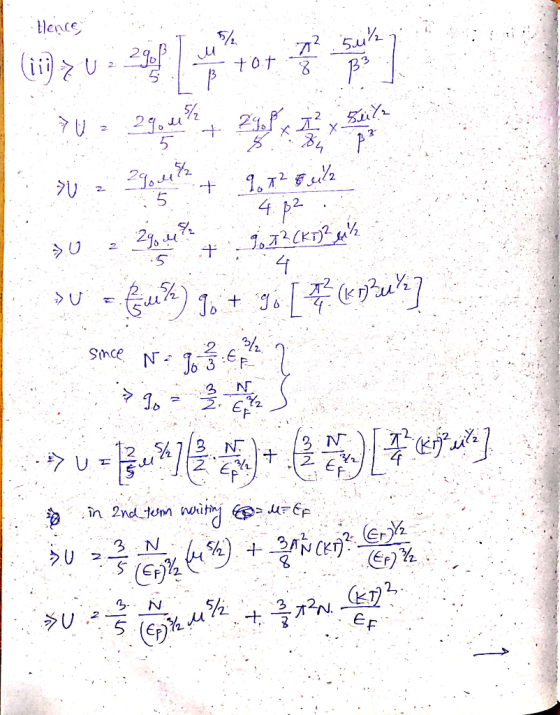
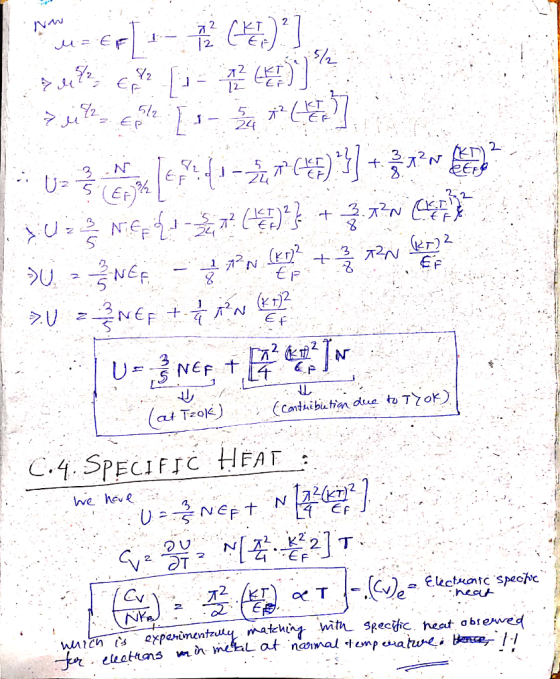
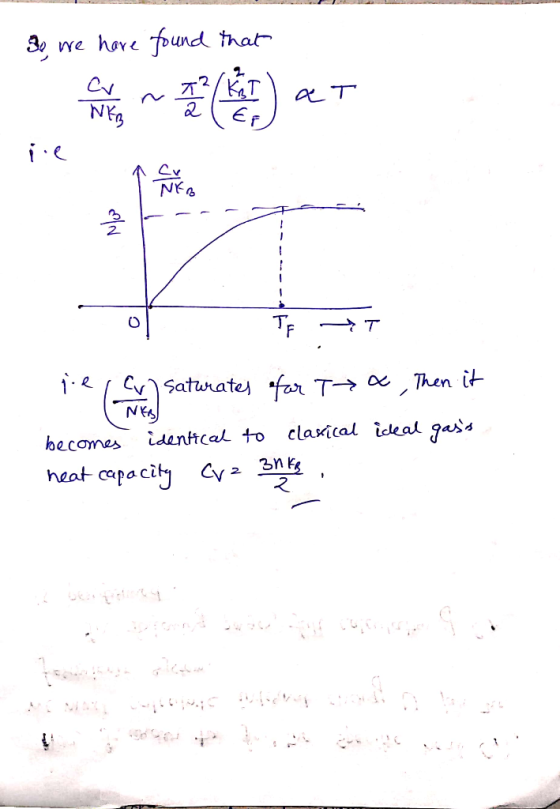
3. Consider a gas of fermion at a) Express the mean number of particle , and mean energy by polylogarithm function a) For a gas of fermion with density of state , show that the chemical potential is given by b) At finite temperature find the occupation number of the quantum state with energy . Explain qualitatively how this distribution would influence on the specific heat of the system. T7 0 We were unable to transcribe this imageWe were unable...
Consider an 3-dimensional ideal bose gas system whose dispersion relation is given by a) Find the mean occupation numb...
Consider an 3-dimensional ideal bose gas system whose dispersion relation is given by a) Find the mean occupation number of quantum state with a wave vector b) Find the total number of particles at excited states and internal energy at temperature and express it in terms of Bose-Einstein integral and thermal wave length h2k2 E hw 2m We were unable to transcribe this imageWe were unable to transcribe this imageU (T We were unable to transcribe this imagegn(z; h2 1/2...
Quantum mechanics Consider a two-dimensional harmonic oscillator . If find the energy of the base state...
 Quantum mechanics
Consider a two-dimensional harmonic oscillator
. If
find the energy of the base state until second order in theory of
disturbances and the energies of the first level excited to first
order in
.
We were unable to transcribe this imageWe were unable to transcribe this imageWe were unable to transcribe this image
Quantum mechanics
Consider a two-dimensional harmonic oscillator
. If
find the energy of the base state until second order in theory of
disturbances and the energies of the first level excited to first
order in
.
We were unable to transcribe this imageWe were unable to transcribe this imageWe were unable to transcribe this image
1. 1240 Consider the ideal Stirling cycle shown above, working between a maximum temperature of 600...
 1.
1240
Consider the ideal Stirling cycle shown above, working between a
maximum temperature of 600 K and a minimum temperature of 370 K and
a minimum volume of 0.3 L and a maximum volume of 1.6 L. The
working gas of the cycle is 0.10 mol of an ideal gas with
c′v = 20.8 J/mol-K.
Note, +Q = heat absorbed by the gas and +W = work done
by the gas.
Part
Description
Answer
Chk
History
A.
What...
1.
1240
Consider the ideal Stirling cycle shown above, working between a
maximum temperature of 600 K and a minimum temperature of 370 K and
a minimum volume of 0.3 L and a maximum volume of 1.6 L. The
working gas of the cycle is 0.10 mol of an ideal gas with
c′v = 20.8 J/mol-K.
Note, +Q = heat absorbed by the gas and +W = work done
by the gas.
Part
Description
Answer
Chk
History
A.
What...
Define a prime number, a finite group, as a Sylow -subgroup of . Assume there exists...
 Define
a prime number,
a finite group,
as a Sylow
-subgroup of
.
Assume there exists
a proper subgroup of
where
, i.e. the normaliser of
in
is a subgroup of
.
Prove that
isn't normal in
.
We were unable to transcribe this imageT We were unable to transcribe this imageWe were unable to transcribe this imageWe were unable to transcribe this imageWe were unable to transcribe this imageWe were unable to transcribe this imageNG(K) < M We were...
Define
a prime number,
a finite group,
as a Sylow
-subgroup of
.
Assume there exists
a proper subgroup of
where
, i.e. the normaliser of
in
is a subgroup of
.
Prove that
isn't normal in
.
We were unable to transcribe this imageT We were unable to transcribe this imageWe were unable to transcribe this imageWe were unable to transcribe this imageWe were unable to transcribe this imageWe were unable to transcribe this imageNG(K) < M We were...
Part B All this are multiple questions Part C Part D Part E Question 3 (MCQ...
 Part B
All this are multiple questions
Part C
Part D
Part E
Question 3 (MCQ QUESTION) [8 Marks) A hypothetical quantum particle in 10 has a normalised wave function given by y(x) = a.x-1.b, where o and bare real constants and i = V-1. Answer the following: a) What is the most likely x-position for the particle to be found at? Possible answers forder may change in SAKAI 14] a - b + ib a 0 Question 3 (MCQ...
Part B
All this are multiple questions
Part C
Part D
Part E
Question 3 (MCQ QUESTION) [8 Marks) A hypothetical quantum particle in 10 has a normalised wave function given by y(x) = a.x-1.b, where o and bare real constants and i = V-1. Answer the following: a) What is the most likely x-position for the particle to be found at? Possible answers forder may change in SAKAI 14] a - b + ib a 0 Question 3 (MCQ...
Set Proof: 1. Prove that if S and T are finite sets with |S| = n...
 Set Proof:
1. Prove that if S and T are finite sets with |S| = n and |T| =
m, then |S U T| <= (n + m)
2. Prove that finite set S = T if and only if (iff) (S
Tc) U (Sc T) =
We were unable to transcribe this imageWe were unable to transcribe this imageWe were unable to transcribe this image
Set Proof:
1. Prove that if S and T are finite sets with |S| = n and |T| =
m, then |S U T| <= (n + m)
2. Prove that finite set S = T if and only if (iff) (S
Tc) U (Sc T) =
We were unable to transcribe this imageWe were unable to transcribe this imageWe were unable to transcribe this image
Quantum Mechanics. Find the energies, degenerations and wave functions for the first three energy levels (ground...
 Quantum Mechanics.
Find the energies, degenerations and wave functions for the first
three energy levels (ground state
and first two excited states) of a system of two identical
particles with spin , which move in a
one-
dimensional infinite well of size .
Find corrections of energies to first order in if an
attracting potential of contact
is added.
Show that in the case of "spinless" fermions, the previous
perturbation has no effect.
Step by step process with good handwriting,...
Quantum Mechanics.
Find the energies, degenerations and wave functions for the first
three energy levels (ground state
and first two excited states) of a system of two identical
particles with spin , which move in a
one-
dimensional infinite well of size .
Find corrections of energies to first order in if an
attracting potential of contact
is added.
Show that in the case of "spinless" fermions, the previous
perturbation has no effect.
Step by step process with good handwriting,...
Quantum Mechanics. Find the energies, degenerations and wave functions for the first three energy levels (ground state...
Quantum Mechanics. Find the energies, degenerations and wave functions for the first three energy levels (ground state and first two excited states) of a system of two identical particles with spin , which move in a one- dimensional infinite well of size . Find corrections of energies to first order in if an attracting potential of contact is added. Show that in the case of "spinless" fermions, the previous perturbation has no effect. Step by step process with good handwriting,...
For the Bose-Einstein condensed phase below the critical temperature , show that the specific heat is...
 For the Bose-Einstein condensed phase below the critical
temperature
, show that the specific heat
is proportional to
. Express the proportionality constant in terms of
.
Show all steps.
We were unable to transcribe this imageWe were unable to transcribe this imageWe were unable to transcribe this imageWe were unable to transcribe this image
For the Bose-Einstein condensed phase below the critical
temperature
, show that the specific heat
is proportional to
. Express the proportionality constant in terms of
.
Show all steps.
We were unable to transcribe this imageWe were unable to transcribe this imageWe were unable to transcribe this imageWe were unable to transcribe this image
 Quantum mechanics
Consider a two-dimensional harmonic oscillator
. If
find the energy of the base state until second order in theory of
disturbances and the energies of the first level excited to first
order in
.
We were unable to transcribe this imageWe were unable to transcribe this imageWe were unable to transcribe this image
Quantum mechanics
Consider a two-dimensional harmonic oscillator
. If
find the energy of the base state until second order in theory of
disturbances and the energies of the first level excited to first
order in
.
We were unable to transcribe this imageWe were unable to transcribe this imageWe were unable to transcribe this image
 1.
1240
Consider the ideal Stirling cycle shown above, working between a
maximum temperature of 600 K and a minimum temperature of 370 K and
a minimum volume of 0.3 L and a maximum volume of 1.6 L. The
working gas of the cycle is 0.10 mol of an ideal gas with
c′v = 20.8 J/mol-K.
Note, +Q = heat absorbed by the gas and +W = work done
by the gas.
Part
Description
Answer
Chk
History
A.
What...
1.
1240
Consider the ideal Stirling cycle shown above, working between a
maximum temperature of 600 K and a minimum temperature of 370 K and
a minimum volume of 0.3 L and a maximum volume of 1.6 L. The
working gas of the cycle is 0.10 mol of an ideal gas with
c′v = 20.8 J/mol-K.
Note, +Q = heat absorbed by the gas and +W = work done
by the gas.
Part
Description
Answer
Chk
History
A.
What...
 Define
a prime number,
a finite group,
as a Sylow
-subgroup of
.
Assume there exists
a proper subgroup of
where
, i.e. the normaliser of
in
is a subgroup of
.
Prove that
isn't normal in
.
We were unable to transcribe this imageT We were unable to transcribe this imageWe were unable to transcribe this imageWe were unable to transcribe this imageWe were unable to transcribe this imageWe were unable to transcribe this imageNG(K) < M We were...
Define
a prime number,
a finite group,
as a Sylow
-subgroup of
.
Assume there exists
a proper subgroup of
where
, i.e. the normaliser of
in
is a subgroup of
.
Prove that
isn't normal in
.
We were unable to transcribe this imageT We were unable to transcribe this imageWe were unable to transcribe this imageWe were unable to transcribe this imageWe were unable to transcribe this imageWe were unable to transcribe this imageNG(K) < M We were...
 Part B
All this are multiple questions
Part C
Part D
Part E
Question 3 (MCQ QUESTION) [8 Marks) A hypothetical quantum particle in 10 has a normalised wave function given by y(x) = a.x-1.b, where o and bare real constants and i = V-1. Answer the following: a) What is the most likely x-position for the particle to be found at? Possible answers forder may change in SAKAI 14] a - b + ib a 0 Question 3 (MCQ...
Part B
All this are multiple questions
Part C
Part D
Part E
Question 3 (MCQ QUESTION) [8 Marks) A hypothetical quantum particle in 10 has a normalised wave function given by y(x) = a.x-1.b, where o and bare real constants and i = V-1. Answer the following: a) What is the most likely x-position for the particle to be found at? Possible answers forder may change in SAKAI 14] a - b + ib a 0 Question 3 (MCQ...
 Set Proof:
1. Prove that if S and T are finite sets with |S| = n and |T| =
m, then |S U T| <= (n + m)
2. Prove that finite set S = T if and only if (iff) (S
Tc) U (Sc T) =
We were unable to transcribe this imageWe were unable to transcribe this imageWe were unable to transcribe this image
Set Proof:
1. Prove that if S and T are finite sets with |S| = n and |T| =
m, then |S U T| <= (n + m)
2. Prove that finite set S = T if and only if (iff) (S
Tc) U (Sc T) =
We were unable to transcribe this imageWe were unable to transcribe this imageWe were unable to transcribe this image
 Quantum Mechanics.
Find the energies, degenerations and wave functions for the first
three energy levels (ground state
and first two excited states) of a system of two identical
particles with spin , which move in a
one-
dimensional infinite well of size .
Find corrections of energies to first order in if an
attracting potential of contact
is added.
Show that in the case of "spinless" fermions, the previous
perturbation has no effect.
Step by step process with good handwriting,...
Quantum Mechanics.
Find the energies, degenerations and wave functions for the first
three energy levels (ground state
and first two excited states) of a system of two identical
particles with spin , which move in a
one-
dimensional infinite well of size .
Find corrections of energies to first order in if an
attracting potential of contact
is added.
Show that in the case of "spinless" fermions, the previous
perturbation has no effect.
Step by step process with good handwriting,...
 For the Bose-Einstein condensed phase below the critical
temperature
, show that the specific heat
is proportional to
. Express the proportionality constant in terms of
.
Show all steps.
We were unable to transcribe this imageWe were unable to transcribe this imageWe were unable to transcribe this imageWe were unable to transcribe this image
For the Bose-Einstein condensed phase below the critical
temperature
, show that the specific heat
is proportional to
. Express the proportionality constant in terms of
.
Show all steps.
We were unable to transcribe this imageWe were unable to transcribe this imageWe were unable to transcribe this imageWe were unable to transcribe this image
Most questions answered within 3 hours.
-
Where is the error in this code sequence?
String s1 = "Hello";
String s2 = "ello";...
asked 11 months ago -
Financial data for Joel de Paris, Inc., for last year
follow:
Joel de Paris, Inc.
Balance...
asked 11 months ago -
Consider this reaction:
Al2(SO4)3 (aq)+ BaCl3
(aq) Al2Cl6 (aq)- +
3BaSO4(s) . What is the...
asked 11 months ago -
Suppose that Savneet is considering increasing her
recent random sample from 20 car rentals to 40...
asked 11 months ago -
Trucks arrive at an unloading terminal at an average rate of 120
per hour.
Trucks arrive...
asked 11 months ago -
Why are methanol and ethanol completely soluble in water while
octanol is not very little soluble....
asked 11 months ago -
A facilities manager at a university reads in a research report
that the mean amount of...
asked 11 months ago -
When the CuSO4 is rehydrated by adding water to the anhydrous
compound, is this an endothermic...
asked 11 months ago -
A ray of sunlight is passing from diamond into crown glass; the
angle of incidence is...
asked 11 months ago -
A block of mass 0.249 kg is placed on top of a light, vertical
spring of...
asked 11 months ago -
how do the kidneys compensate in the presences of acidosis
a) trigger hyperventilate
b) reserve acid...
asked 11 months ago -
Question 501 pts
The rental rate of capital to the firm increases. Which of the
following...
asked 11 months ago