
Homework Answers

Add Answer to:
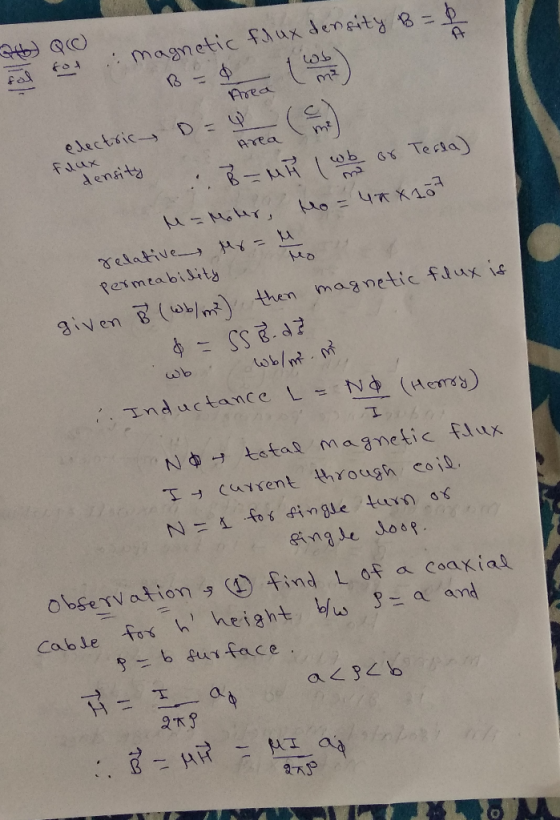
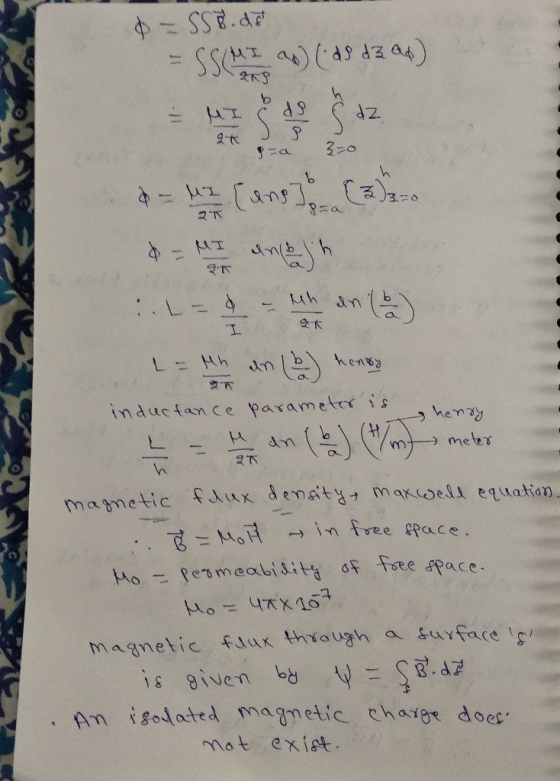
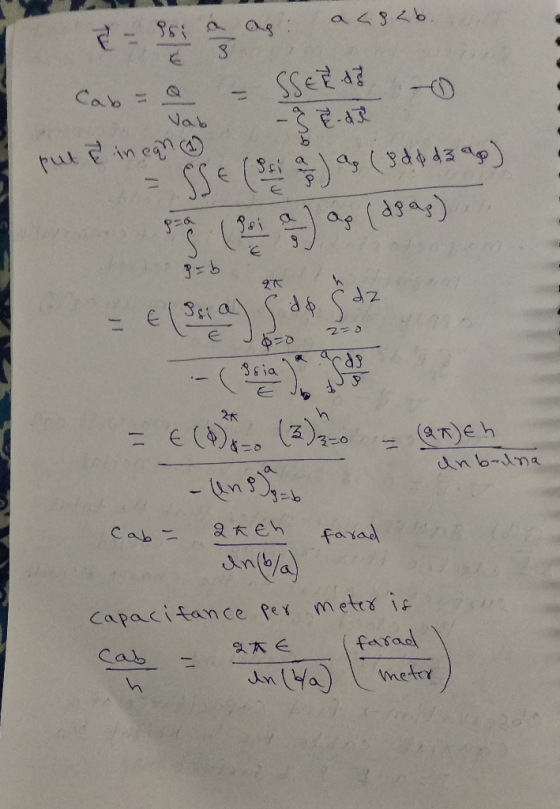
A coaxial line with cylindrical symmetry as shown in cross section by Figure A1-1. It is...
please help and show all work, preparation for final exam Problem 5. A Coaxial Conundrum Consider a coaxial cable whose cross-section is shown below. The outer conductor is a cylindrical shell, an...
 please help and show all work, preparation for final
exam
Problem 5. A Coaxial Conundrum Consider a coaxial cable whose cross-section is shown below. The outer conductor is a cylindrical shell, and the inner cylinder is solid. The cable has a length L (a) If the outer wire contains a net +Q and the inner wire contains a net -Q, compute (b) If the outer wire contains a net +Q and the inner wire contains a net -Q, compute (c)...
please help and show all work, preparation for final
exam
Problem 5. A Coaxial Conundrum Consider a coaxial cable whose cross-section is shown below. The outer conductor is a cylindrical shell, and the inner cylinder is solid. The cable has a length L (a) If the outer wire contains a net +Q and the inner wire contains a net -Q, compute (b) If the outer wire contains a net +Q and the inner wire contains a net -Q, compute (c)...
7.U)A cylindrical capacitor of length L consists of coaxial conducting surfaces of radii a and b...
 7.U)A cylindrical capacitor of length L consists of coaxial conducting surfaces of radii a and b (Fig. 4). The dielectric material between the surfaces has a relative permittivity s, 2+(4/r) for a <r< b. (a) Determine the capacitance of this capacitor. (b) Find the electrostatic energy stored in the dielectric region. (Neglect the fringing of the electric field at the edge.) (1490) If the constant electric field in Fig. 5 has a magnitude Eo, calculate the totala electric flux through...
The cross section of a 1-m long coaxial cable is shown in the figure, with radii...
 The cross section of a 1-m long coaxial cable is shown in the
figure, with radii as given. The charge on the inner conductor is
-30 nC and the charge on the outer conductor is -70 nC. The inner
and outer cylindrical surfaces are respectively denoted by
A, B, C, and D, as shown.
(a) The radial component of the electric field at a point that
34 mm from the axis is?
(b) The radial component of the electric field...
The cross section of a 1-m long coaxial cable is shown in the
figure, with radii as given. The charge on the inner conductor is
-30 nC and the charge on the outer conductor is -70 nC. The inner
and outer cylindrical surfaces are respectively denoted by
A, B, C, and D, as shown.
(a) The radial component of the electric field at a point that
34 mm from the axis is?
(b) The radial component of the electric field...
A coaxial capacitor (cylindrical shape) is filled with two coaxial dielectric lasers. The relative permittivity of...
 A coaxial capacitor (cylindrical shape) is filled with two coaxial dielectric lasers. The relative permittivity of the layer near the inner electrode of the capacitor is epsilon_r|, and that of the other laser is epsilon_r2. The radius of the inner electrode is a, the radius of the boundary surface between the layers is b, and the inner radius of the outer electrode is c. Calculate the capacitance per unit length of the cable. If the voltage between the inner and...
Q.3 Consider an infinitely long coaxial structure shown in the figure below. Inner conductor has a...
 Q.3 Consider an infinitely long coaxial structure shown in the figure below. Inner conductor has a radius a and outer conducting shell has a radius b. Thickness of the outer conductor is ignored as it is very small. Between two conductors, there is a magnetic material with permeability () = Mo a Assume that the current I is distributed uniformly over the cross-section of the inner conductor whereas it flows on the surface of the outer conductor. a) Find the...
A coaxial cable, as shown in Figure 2, consists of an inner conductor of radius a,...
 A coaxial cable, as shown in Figure 2, consists of an inner conductor of radius a, surrounded by an outer conductor of radius b, along the same axis. The space is filled with dielectric. The cable is connected to a power supply and it is deposited a charge of +Q uniformly along the length of the surface of the inner conductor and a charge - Q uniformly along the length of the inner surface of the outer conductor. No fields...
P25.5. Compare the loss in the inner conductor and outer conductor of a coaxial cable at 1 MHz. A...
 P25.5. Compare the loss in the inner conductor and outer conductor of a coaxial cable at 1 MHz. Assume the conductors are made of copper, that the cable is filled with a dielectric of permittivity er - 3, and that the dimensions are such that the inner conductor radiu:s a = 0.45 mm, and inner radius of the outer conductor b ae. The ratio of losses per unit length in the two conductors is: (a) 3.05. (b) 2.72. (c) 2.30....
Imagine a coaxial cable like transmission line with square cross-section of inner and outer conductors as shown in the figure. The cable is made transmission line at 300 MHz. 5.8x10. Calculate th...
 Imagine a coaxial cable like transmission line with square cross-section of inner and outer conductors as shown in the figure. The cable is made transmission line at 300 MHz. 5.8x10. Calculate the AC resistance this with conducti e of copper with conductivity σ 80m 4mm 2mm
Imagine a coaxial cable like transmission line with square cross-section of inner and outer conductors as shown in the figure. The cable is made transmission line at 300 MHz. 5.8x10. Calculate the AC resistance...
Imagine a coaxial cable like transmission line with square cross-section of inner and outer conductors as shown in the figure. The cable is made transmission line at 300 MHz. 5.8x10. Calculate the AC resistance this with conducti e of copper with conductivity σ 80m 4mm 2mm
Imagine a coaxial cable like transmission line with square cross-section of inner and outer conductors as shown in the figure. The cable is made transmission line at 300 MHz. 5.8x10. Calculate the AC resistance...
28 mm 49 Sim The cross section of a long coaxial cable is shown in the...
 28 mm 49 Sim The cross section of a long coaxial cable is shown in the figure, with radil as given. The linear charge density on the inner conductor is 50 nC/m and the linear charge density on the outer conductor is -40 nC/m. The inner and outer cylindrical surfaces are respectively denoted by A, B, C and D, as shown. - 8,85 x 10⁻¹²</m?) The radial component of the electric field at a point that 32 mm from the...
Question 23 & 24 36,4 A 4 [10123 The figure shows a cross section of a...
 Question 23 & 24
36,4 A 4 [10123 The figure shows a cross section of a long solid cylindrical conductor whose radius is 25.3 mm. The conductor carries a uniform current of 36.4 A. Using Ampere's Law, determine the magnetic field at a distance of 7.04 mm from the center. Answer: Direction: (Magnitude) 9 [5124. Determine the net electric flux through the surface shown by the broken line at the right 4.-58, 4.-+65e - +50e, 4.-360, and q.44. Answer:
Question 23 & 24
36,4 A 4 [10123 The figure shows a cross section of a long solid cylindrical conductor whose radius is 25.3 mm. The conductor carries a uniform current of 36.4 A. Using Ampere's Law, determine the magnetic field at a distance of 7.04 mm from the center. Answer: Direction: (Magnitude) 9 [5124. Determine the net electric flux through the surface shown by the broken line at the right 4.-58, 4.-+65e - +50e, 4.-360, and q.44. Answer:
 please help and show all work, preparation for final
exam
Problem 5. A Coaxial Conundrum Consider a coaxial cable whose cross-section is shown below. The outer conductor is a cylindrical shell, and the inner cylinder is solid. The cable has a length L (a) If the outer wire contains a net +Q and the inner wire contains a net -Q, compute (b) If the outer wire contains a net +Q and the inner wire contains a net -Q, compute (c)...
please help and show all work, preparation for final
exam
Problem 5. A Coaxial Conundrum Consider a coaxial cable whose cross-section is shown below. The outer conductor is a cylindrical shell, and the inner cylinder is solid. The cable has a length L (a) If the outer wire contains a net +Q and the inner wire contains a net -Q, compute (b) If the outer wire contains a net +Q and the inner wire contains a net -Q, compute (c)...
 7.U)A cylindrical capacitor of length L consists of coaxial conducting surfaces of radii a and b (Fig. 4). The dielectric material between the surfaces has a relative permittivity s, 2+(4/r) for a <r< b. (a) Determine the capacitance of this capacitor. (b) Find the electrostatic energy stored in the dielectric region. (Neglect the fringing of the electric field at the edge.) (1490) If the constant electric field in Fig. 5 has a magnitude Eo, calculate the totala electric flux through...
 The cross section of a 1-m long coaxial cable is shown in the
figure, with radii as given. The charge on the inner conductor is
-30 nC and the charge on the outer conductor is -70 nC. The inner
and outer cylindrical surfaces are respectively denoted by
A, B, C, and D, as shown.
(a) The radial component of the electric field at a point that
34 mm from the axis is?
(b) The radial component of the electric field...
The cross section of a 1-m long coaxial cable is shown in the
figure, with radii as given. The charge on the inner conductor is
-30 nC and the charge on the outer conductor is -70 nC. The inner
and outer cylindrical surfaces are respectively denoted by
A, B, C, and D, as shown.
(a) The radial component of the electric field at a point that
34 mm from the axis is?
(b) The radial component of the electric field...
 A coaxial capacitor (cylindrical shape) is filled with two coaxial dielectric lasers. The relative permittivity of the layer near the inner electrode of the capacitor is epsilon_r|, and that of the other laser is epsilon_r2. The radius of the inner electrode is a, the radius of the boundary surface between the layers is b, and the inner radius of the outer electrode is c. Calculate the capacitance per unit length of the cable. If the voltage between the inner and...
 Q.3 Consider an infinitely long coaxial structure shown in the figure below. Inner conductor has a radius a and outer conducting shell has a radius b. Thickness of the outer conductor is ignored as it is very small. Between two conductors, there is a magnetic material with permeability () = Mo a Assume that the current I is distributed uniformly over the cross-section of the inner conductor whereas it flows on the surface of the outer conductor. a) Find the...
 A coaxial cable, as shown in Figure 2, consists of an inner conductor of radius a, surrounded by an outer conductor of radius b, along the same axis. The space is filled with dielectric. The cable is connected to a power supply and it is deposited a charge of +Q uniformly along the length of the surface of the inner conductor and a charge - Q uniformly along the length of the inner surface of the outer conductor. No fields...
 P25.5. Compare the loss in the inner conductor and outer conductor of a coaxial cable at 1 MHz. Assume the conductors are made of copper, that the cable is filled with a dielectric of permittivity er - 3, and that the dimensions are such that the inner conductor radiu:s a = 0.45 mm, and inner radius of the outer conductor b ae. The ratio of losses per unit length in the two conductors is: (a) 3.05. (b) 2.72. (c) 2.30....
 Imagine a coaxial cable like transmission line with square cross-section of inner and outer conductors as shown in the figure. The cable is made transmission line at 300 MHz. 5.8x10. Calculate the AC resistance this with conducti e of copper with conductivity σ 80m 4mm 2mm
Imagine a coaxial cable like transmission line with square cross-section of inner and outer conductors as shown in the figure. The cable is made transmission line at 300 MHz. 5.8x10. Calculate the AC resistance...
Imagine a coaxial cable like transmission line with square cross-section of inner and outer conductors as shown in the figure. The cable is made transmission line at 300 MHz. 5.8x10. Calculate the AC resistance this with conducti e of copper with conductivity σ 80m 4mm 2mm
Imagine a coaxial cable like transmission line with square cross-section of inner and outer conductors as shown in the figure. The cable is made transmission line at 300 MHz. 5.8x10. Calculate the AC resistance...
 28 mm 49 Sim The cross section of a long coaxial cable is shown in the figure, with radil as given. The linear charge density on the inner conductor is 50 nC/m and the linear charge density on the outer conductor is -40 nC/m. The inner and outer cylindrical surfaces are respectively denoted by A, B, C and D, as shown. - 8,85 x 10⁻¹²</m?) The radial component of the electric field at a point that 32 mm from the...
 Question 23 & 24
36,4 A 4 [10123 The figure shows a cross section of a long solid cylindrical conductor whose radius is 25.3 mm. The conductor carries a uniform current of 36.4 A. Using Ampere's Law, determine the magnetic field at a distance of 7.04 mm from the center. Answer: Direction: (Magnitude) 9 [5124. Determine the net electric flux through the surface shown by the broken line at the right 4.-58, 4.-+65e - +50e, 4.-360, and q.44. Answer:
Question 23 & 24
36,4 A 4 [10123 The figure shows a cross section of a long solid cylindrical conductor whose radius is 25.3 mm. The conductor carries a uniform current of 36.4 A. Using Ampere's Law, determine the magnetic field at a distance of 7.04 mm from the center. Answer: Direction: (Magnitude) 9 [5124. Determine the net electric flux through the surface shown by the broken line at the right 4.-58, 4.-+65e - +50e, 4.-360, and q.44. Answer:
Most questions answered within 3 hours.
-
Where is the error in this code sequence?
String s1 = "Hello";
String s2 = "ello";...
asked 11 months ago -
Financial data for Joel de Paris, Inc., for last year
follow:
Joel de Paris, Inc.
Balance...
asked 11 months ago -
Consider this reaction:
Al2(SO4)3 (aq)+ BaCl3
(aq) Al2Cl6 (aq)- +
3BaSO4(s) . What is the...
asked 11 months ago -
Suppose that Savneet is considering increasing her
recent random sample from 20 car rentals to 40...
asked 11 months ago -
Trucks arrive at an unloading terminal at an average rate of 120
per hour.
Trucks arrive...
asked 11 months ago -
Why are methanol and ethanol completely soluble in water while
octanol is not very little soluble....
asked 11 months ago -
A facilities manager at a university reads in a research report
that the mean amount of...
asked 11 months ago -
When the CuSO4 is rehydrated by adding water to the anhydrous
compound, is this an endothermic...
asked 11 months ago -
A ray of sunlight is passing from diamond into crown glass; the
angle of incidence is...
asked 11 months ago -
A block of mass 0.249 kg is placed on top of a light, vertical
spring of...
asked 11 months ago -
how do the kidneys compensate in the presences of acidosis
a) trigger hyperventilate
b) reserve acid...
asked 11 months ago -
Question 501 pts
The rental rate of capital to the firm increases. Which of the
following...
asked 11 months ago