
Homework Answers
Add Answer to:
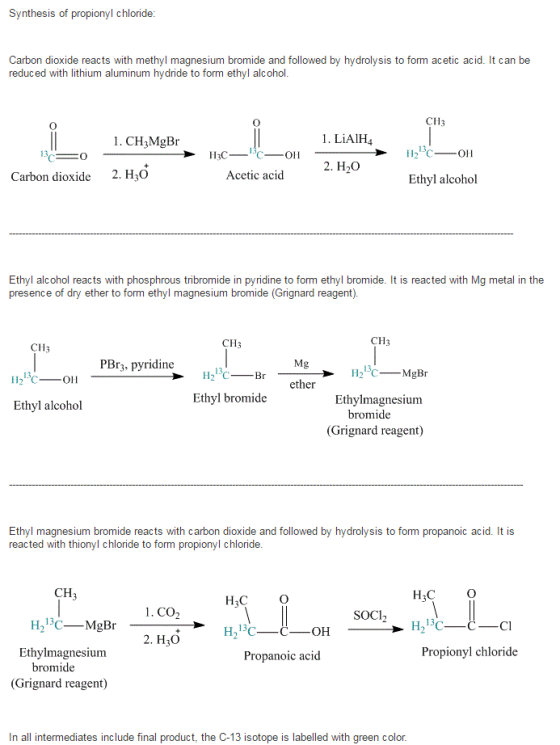
Select the appropriate reagent for each step of the following synthesis in which propionyl chloride is...
Must provide a clear drawing Identify the allylic carbons in each of the following structures. (Click...
 Must provide a clear drawing
Identify the allylic carbons in each of the following structures. (Click on an atom to select it. Selected atoms will turn green. If you make a mistake, click on the atom again to deselect it) An allylic carbon is a carbon adjacent to a double bond. Be careful to select only the carbon atoms and not the bonds.
Must provide a clear drawing
Identify the allylic carbons in each of the following structures. (Click on an atom to select it. Selected atoms will turn green. If you make a mistake, click on the atom again to deselect it) An allylic carbon is a carbon adjacent to a double bond. Be careful to select only the carbon atoms and not the bonds.
Identify the allylic carbons in each of the following structures. (Click on an atom to select...
 Identify the allylic carbons in each of
the following structures. (Click on an atom to select it. Selected
atoms will turn green. If you make a mistake, click on the atom
again to deselect it.)
Identify the allylic carbons in each of
the following structures. (Click on an atom to select it. Selected
atoms will turn green. If you make a mistake, click on the atom
again to deselect it.)
Identify the benzylic carbons in each of the following structures. (Click on an atom to select...
 Identify the benzylic carbons in each of the following
structures. (Click on an atom to select it. Selected atoms will
turn green. If you make a mistake, click on the atom again to
deselect it.)
Identify the benzylic carbons in each of the following
structures. (Click on an atom to select it. Selected atoms will
turn green. If you make a mistake, click on the atom again to
deselect it.)
Identify the benzylic carbons in each of the following structures. (Click on an atom to select...
 Identify the benzylic carbons in each of the following structures. (Click on an atom to select it. Selected atoms will turn green. If you make a mistake, click on the atom again to deselect it.)
Question: You buy a sample of glucose that has the radioactive carbon-14 (C) isotope at the...
 Question: You buy a sample of glucose that has the radioactive carbon-14 (C) isotope at the second position (Carbon #2). All other carbon positions in the glucose molecules have the "C isotope. "C is only a label and does not alter the biochemical behavior of the molecules in which it is found. This glucose sample is mixed with all the enzymes derived from liver cells, which initially contain no other C-labeled chemicals. A) Draw the Haworth structure of glucose and...
Which starting matrial, solvent and reagent should I use to get 1-phenyl-1-propanol? Grignard Addition VCL 10-1:...
 Which starting matrial, solvent and reagent should I use to
get 1-phenyl-1-propanol?
Grignard Addition VCL 10-1: Grignard Addition - 1 For this assignment, the target compound that you should synthesize is 1-phenyl-1-propanol. This is an organometallic addition reaction. Examine the product and identify potential bonds that may be formed. Keep in mind the mechanism and the need to quench the reaction with acid to liberate the neutral product. Synthesis Procedures 1. Start Virtual ChemLab and select Grignard Addition - /...
Which starting matrial, solvent and reagent should I use to
get 1-phenyl-1-propanol?
Grignard Addition VCL 10-1: Grignard Addition - 1 For this assignment, the target compound that you should synthesize is 1-phenyl-1-propanol. This is an organometallic addition reaction. Examine the product and identify potential bonds that may be formed. Keep in mind the mechanism and the need to quench the reaction with acid to liberate the neutral product. Synthesis Procedures 1. Start Virtual ChemLab and select Grignard Addition - /...
10. Complete the following synthesis by selecting from the list of 10 reagents below. Each reagent...
 10. Complete the following synthesis by selecting from the list of 10 reagents below. Each reagent (or set of reagents) is labeled as a letter. In the answer box, simply place the order of reagents used as uppercase letters. For example, if your synthesis involves using reagent A followed by B and then C, and then D, your answer would be: ABCD. ? CH3CI H2 HNO3 H2SO4 AICI Pd-C H2SO4 heat offen AICI A B С D E Cl2 H-Br...
Multiple-Cholce: Select the best answer to each of these multiple choice 1. Which of the following...
 Multiple-Cholce: Select the best answer to each of these multiple choice 1. Which of the following descriptions of a subatomic particle is correct? a) A proton has appositive charge and a mass of approximately 1 amu 9. b) An electron has a negative charge and a mass of approximately 1 amu c) A neutron has no charge and its mass is negligible d) A proton has appositive charge and a negligible mass. e) A neutron has appositive charge and a...
please help in all sections asap!! Identify the reagents for each of the following transformations. Select...
 please help in all sections asap!!
Identify the reagents for each of the following transformations. Select all that apply. V -a HC=CNa MCPBA NaOEt H2O2, NaOH NBS, heat Conc. H2S04, heat OBH3-THF OH PCC, CH2Cl2 Conc. H2SO4, heat OBH3-THF HC=CNa MCPBA H2O2, NaOH NBS, heat HCCNa ОМСРВА H2O2, NaOH PCC, CH2Cl2 Conc. H2SO4, heat The following two drawings are resonance structures of one compound. But the following two drawings are not resonance structures Not resonance structures They are, in fact,...
please help in all sections asap!!
Identify the reagents for each of the following transformations. Select all that apply. V -a HC=CNa MCPBA NaOEt H2O2, NaOH NBS, heat Conc. H2S04, heat OBH3-THF OH PCC, CH2Cl2 Conc. H2SO4, heat OBH3-THF HC=CNa MCPBA H2O2, NaOH NBS, heat HCCNa ОМСРВА H2O2, NaOH PCC, CH2Cl2 Conc. H2SO4, heat The following two drawings are resonance structures of one compound. But the following two drawings are not resonance structures Not resonance structures They are, in fact,...
Grignard reagent THE GRIGNARD REAGENT-PREPARATION AND REACTION In this experiment, you will prepa...
 i need help with the postlab questions please
Grignard reagent THE GRIGNARD REAGENT-PREPARATION AND REACTION In this experiment, you will prepare a Grignard reagent, phenyl magnesium bromide, from bromobenzene and magnesium metal. The Grignard reagent will then react with methyl benzoate to form triphenylmethanol. Introduction Grignard reagents, such as organomagnesium halides, were discovered in 1910 by French chemist Victor Grignard. The Grignard reaction is one of the most general methods for carbon- carbon bond formation in all of organic chemistry....
i need help with the postlab questions please
Grignard reagent THE GRIGNARD REAGENT-PREPARATION AND REACTION In this experiment, you will prepare a Grignard reagent, phenyl magnesium bromide, from bromobenzene and magnesium metal. The Grignard reagent will then react with methyl benzoate to form triphenylmethanol. Introduction Grignard reagents, such as organomagnesium halides, were discovered in 1910 by French chemist Victor Grignard. The Grignard reaction is one of the most general methods for carbon- carbon bond formation in all of organic chemistry....
 Must provide a clear drawing
Identify the allylic carbons in each of the following structures. (Click on an atom to select it. Selected atoms will turn green. If you make a mistake, click on the atom again to deselect it) An allylic carbon is a carbon adjacent to a double bond. Be careful to select only the carbon atoms and not the bonds.
Must provide a clear drawing
Identify the allylic carbons in each of the following structures. (Click on an atom to select it. Selected atoms will turn green. If you make a mistake, click on the atom again to deselect it) An allylic carbon is a carbon adjacent to a double bond. Be careful to select only the carbon atoms and not the bonds.
 Identify the allylic carbons in each of
the following structures. (Click on an atom to select it. Selected
atoms will turn green. If you make a mistake, click on the atom
again to deselect it.)
Identify the allylic carbons in each of
the following structures. (Click on an atom to select it. Selected
atoms will turn green. If you make a mistake, click on the atom
again to deselect it.)
 Identify the benzylic carbons in each of the following
structures. (Click on an atom to select it. Selected atoms will
turn green. If you make a mistake, click on the atom again to
deselect it.)
Identify the benzylic carbons in each of the following
structures. (Click on an atom to select it. Selected atoms will
turn green. If you make a mistake, click on the atom again to
deselect it.)
 Identify the benzylic carbons in each of the following structures. (Click on an atom to select it. Selected atoms will turn green. If you make a mistake, click on the atom again to deselect it.)
 Question: You buy a sample of glucose that has the radioactive carbon-14 (C) isotope at the second position (Carbon #2). All other carbon positions in the glucose molecules have the "C isotope. "C is only a label and does not alter the biochemical behavior of the molecules in which it is found. This glucose sample is mixed with all the enzymes derived from liver cells, which initially contain no other C-labeled chemicals. A) Draw the Haworth structure of glucose and...
 Which starting matrial, solvent and reagent should I use to
get 1-phenyl-1-propanol?
Grignard Addition VCL 10-1: Grignard Addition - 1 For this assignment, the target compound that you should synthesize is 1-phenyl-1-propanol. This is an organometallic addition reaction. Examine the product and identify potential bonds that may be formed. Keep in mind the mechanism and the need to quench the reaction with acid to liberate the neutral product. Synthesis Procedures 1. Start Virtual ChemLab and select Grignard Addition - /...
Which starting matrial, solvent and reagent should I use to
get 1-phenyl-1-propanol?
Grignard Addition VCL 10-1: Grignard Addition - 1 For this assignment, the target compound that you should synthesize is 1-phenyl-1-propanol. This is an organometallic addition reaction. Examine the product and identify potential bonds that may be formed. Keep in mind the mechanism and the need to quench the reaction with acid to liberate the neutral product. Synthesis Procedures 1. Start Virtual ChemLab and select Grignard Addition - /...
 10. Complete the following synthesis by selecting from the list of 10 reagents below. Each reagent (or set of reagents) is labeled as a letter. In the answer box, simply place the order of reagents used as uppercase letters. For example, if your synthesis involves using reagent A followed by B and then C, and then D, your answer would be: ABCD. ? CH3CI H2 HNO3 H2SO4 AICI Pd-C H2SO4 heat offen AICI A B С D E Cl2 H-Br...
 Multiple-Cholce: Select the best answer to each of these multiple choice 1. Which of the following descriptions of a subatomic particle is correct? a) A proton has appositive charge and a mass of approximately 1 amu 9. b) An electron has a negative charge and a mass of approximately 1 amu c) A neutron has no charge and its mass is negligible d) A proton has appositive charge and a negligible mass. e) A neutron has appositive charge and a...
 please help in all sections asap!!
Identify the reagents for each of the following transformations. Select all that apply. V -a HC=CNa MCPBA NaOEt H2O2, NaOH NBS, heat Conc. H2S04, heat OBH3-THF OH PCC, CH2Cl2 Conc. H2SO4, heat OBH3-THF HC=CNa MCPBA H2O2, NaOH NBS, heat HCCNa ОМСРВА H2O2, NaOH PCC, CH2Cl2 Conc. H2SO4, heat The following two drawings are resonance structures of one compound. But the following two drawings are not resonance structures Not resonance structures They are, in fact,...
please help in all sections asap!!
Identify the reagents for each of the following transformations. Select all that apply. V -a HC=CNa MCPBA NaOEt H2O2, NaOH NBS, heat Conc. H2S04, heat OBH3-THF OH PCC, CH2Cl2 Conc. H2SO4, heat OBH3-THF HC=CNa MCPBA H2O2, NaOH NBS, heat HCCNa ОМСРВА H2O2, NaOH PCC, CH2Cl2 Conc. H2SO4, heat The following two drawings are resonance structures of one compound. But the following two drawings are not resonance structures Not resonance structures They are, in fact,...
 i need help with the postlab questions please
Grignard reagent THE GRIGNARD REAGENT-PREPARATION AND REACTION In this experiment, you will prepare a Grignard reagent, phenyl magnesium bromide, from bromobenzene and magnesium metal. The Grignard reagent will then react with methyl benzoate to form triphenylmethanol. Introduction Grignard reagents, such as organomagnesium halides, were discovered in 1910 by French chemist Victor Grignard. The Grignard reaction is one of the most general methods for carbon- carbon bond formation in all of organic chemistry....
i need help with the postlab questions please
Grignard reagent THE GRIGNARD REAGENT-PREPARATION AND REACTION In this experiment, you will prepare a Grignard reagent, phenyl magnesium bromide, from bromobenzene and magnesium metal. The Grignard reagent will then react with methyl benzoate to form triphenylmethanol. Introduction Grignard reagents, such as organomagnesium halides, were discovered in 1910 by French chemist Victor Grignard. The Grignard reaction is one of the most general methods for carbon- carbon bond formation in all of organic chemistry....
Most questions answered within 3 hours.
-
Where is the error in this code sequence?
String s1 = "Hello";
String s2 = "ello";...
asked 10 months ago -
Financial data for Joel de Paris, Inc., for last year
follow:
Joel de Paris, Inc.
Balance...
asked 10 months ago -
Consider this reaction:
Al2(SO4)3 (aq)+ BaCl3
(aq) Al2Cl6 (aq)- +
3BaSO4(s) . What is the...
asked 10 months ago -
Suppose that Savneet is considering increasing her
recent random sample from 20 car rentals to 40...
asked 10 months ago -
Trucks arrive at an unloading terminal at an average rate of 120
per hour.
Trucks arrive...
asked 10 months ago -
Why are methanol and ethanol completely soluble in water while
octanol is not very little soluble....
asked 10 months ago -
A facilities manager at a university reads in a research report
that the mean amount of...
asked 10 months ago -
When the CuSO4 is rehydrated by adding water to the anhydrous
compound, is this an endothermic...
asked 10 months ago -
A ray of sunlight is passing from diamond into crown glass; the
angle of incidence is...
asked 10 months ago -
A block of mass 0.249 kg is placed on top of a light, vertical
spring of...
asked 10 months ago -
how do the kidneys compensate in the presences of acidosis
a) trigger hyperventilate
b) reserve acid...
asked 10 months ago -
Question 501 pts
The rental rate of capital to the firm increases. Which of the
following...
asked 10 months ago