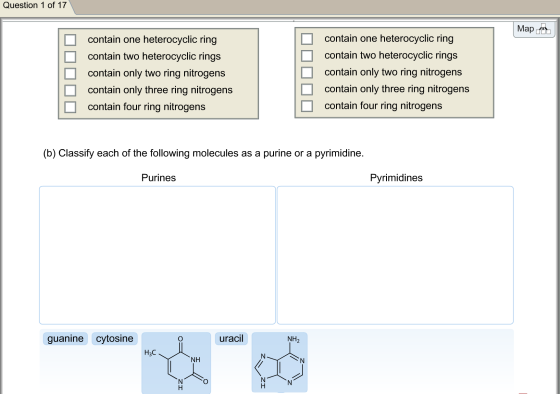
a) Identify the structural features of purines and pyrimidines. (Check 2 features for each group) Purines...
a) Identify the structural features of purines and pyrimidines. (Check 2 features for each group)
Purines for the left box, and pyrimidines for the right box.
Homework Answers
Nucleic acids are long-chain polymers, in which the monomer is nucleotides. Purine and pyrimidine are building blocks of nucleic acids. The amines that form nucleic acids are classified as purines and pyrimidines. DNA and RNA have four nucleotides, in which both contain same purines (adenine and guanine) and pyrimidines (cytosine). Fourth nucleotide in DNA is thymine and in RNA it is uracil.
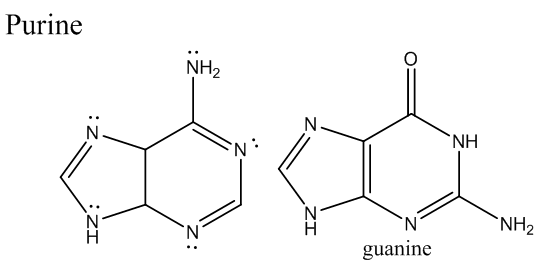
Pyrimidine: Pyrimidine base is heterocyclic aromatic organic compound and has 6-membered ring with two nitrogens and four carbons.

Purine: Purine base is heterocyclic aromatic organic compound and has 9-membered double ring with four nitrogen atoms and five carbons.

The structures are given below:

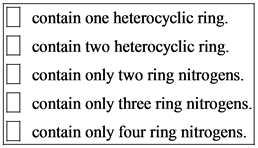
• Contain two heterocyclic rings.
• Contain four ring nitrogens.

• Contain one heterocyclic ring.
• Contain only two ring nitrogens.
Ans:
Classification of each of the following molecules as purine and pyrimidine is given below:

Add Answer to:
a) Identify the structural features of purines and pyrimidines.
(Check 2 features for each group)
Purines...
(a) Identify the structural features of purines and pyrimidines. (Check two features for each group). for...
 (a) Identify the structural features of purines and pyrimidines. (Check two features for each group). for each group). Nap, Purines Pyrimidines: □ □ □ contain one heterocyclic ring contain two heterocyclic rings contain only two ring nitrogens contain only three ring nitrogens contain four ring nitrogens contain one heterocyclic ring contain two heterocyclic rings contain only two ring nitrogens contain only three ring nitrogens contain four ring nitrogens □ □ (b) Classify each of the following molecules as a purine...
Predominant forms at physiological pH 3. Pyrimidines and purines can exist in alternate forms, or tautomers,...
 Predominant forms at physiological pH 3. Pyrimidines and purines can exist in alternate forms, or tautomers, shown here. Under common cellular conditions (physiological pH) the most common form of each purine or pyrimidine is shown on the left, and the rare tautomer on the right. Tautomers differ in the placement of hydrogen atoms and double bonds. Consider cytosine and its tautomer, the rare imino form of cytosine. Adenine Cytosine With which nitrogenous base will the imino form of cytosine most...
answer d and e d) 2-0-methyl-purines and 2-fluoro-pyrimidines were used in the selection for the RNA...
 answer d and e
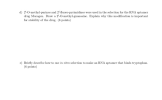
d) 2-0-methyl-purines and 2-fluoro-pyrimidines were used in the selection for the RNA aptamer drug Mucagen. Draw a 2-O-methyl-guanosine. Explain why this modification is important for stability of the drug. (6 points) e) Briefly describe how to use in vitro selection to make an RNA aptamer that binds tryptophan. (6 points)
answer d and e
d) 2-0-methyl-purines and 2-fluoro-pyrimidines were used in the selection for the RNA aptamer drug Mucagen. Draw a 2-O-methyl-guanosine. Explain why this modification is important for stability of the drug. (6 points) e) Briefly describe how to use in vitro selection to make an RNA aptamer that binds tryptophan. (6 points)
Identify the structural features of para red and discuss how they contribute to this dye's color
Identify the structural features of para red and discuss how they contribute to this dye's color
2 attempts left Check my work Be sure to answer all parts. Identify the main group...
 2 attempts left Check my work Be sure to answer all parts. Identify the main group to which X belongs in each ionic compound formula: (a) XF2; (b) MgX; (c) X2804 XF2 (select) MgX (select) X2804 (select)
For each of the following tissues, give a structural description (including any special features such as...
For each of the following tissues, give a structural description (including any special features such as cilia, goblet cells, etc.), state a key body location, draw simple sketch, and identify its function(s): • Simple Cuboidal ET • Nervous Tissue • Adipose Tissue • Blood tissue • Cardiac muscles tissue • Hyaline cartilage
Check my work correctly label the following anatomical features or the neart. Hiace your cursor on...
 Check my work correctly label the following anatomical features or the neart. Hiace your cursor on the boxes for more information left pulmonary artery na cava superior vena cava left atrium right coronary artery 2.67 points to pulmonary veins right ventricle eBook pulmonary trunk superior vena cava left ventricle References left ventricle aorta right atrium right ventricle left coronary artery right pulmonary veins right pulmonary artery left atrium inferior vena cava Reset Zoom
Examine the molecule below. Check the box next to each functional group the molecule contains. In...
 Examine the molecule below. Check the box next to each
functional group the molecule contains. In the last column, enter
the number of each group next to the functional group names you
selected. If the molecule does not contain a listed functional
group, do not check the box and leave the last column blank.
Select all functional groups present in the molecule How many? alcohol aldehyde alkene HO alkyne amide OH amine arene HO1 carboxylic acid ester ether ketone
Examine the molecule below. Check the box next to each
functional group the molecule contains. In the last column, enter
the number of each group next to the functional group names you
selected. If the molecule does not contain a listed functional
group, do not check the box and leave the last column blank.
Select all functional groups present in the molecule How many? alcohol aldehyde alkene HO alkyne amide OH amine arene HO1 carboxylic acid ester ether ketone
Examine the molecule below. Check the box next to each functional group the molecule contains. In...
 Examine the molecule below. Check the box next to each
functional group the molecule contains. In the last column, enter
the number of each group next to the functional group names you
selected. If the molecule does not contain a listed functional
group, do not check the box and leave the last column blank.
Select all functional groups present in the molecule How many? alcohol aldehyde alkene н alkyne amide amine arene carboxylic acid ester ether ketone O Z
Examine the molecule below. Check the box next to each
functional group the molecule contains. In the last column, enter
the number of each group next to the functional group names you
selected. If the molecule does not contain a listed functional
group, do not check the box and leave the last column blank.
Select all functional groups present in the molecule How many? alcohol aldehyde alkene н alkyne amide amine arene carboxylic acid ester ether ketone O Z
Examine the molecule below. Check the box next to each functional group the molecule contains. In...
 Examine the molecule below. Check the box next to each
functional group the molecule contains. In the last column, enter
the number of each group next to the functional group names you
selected. If the molecule does not contain a listed functional
group, do not check the box and leave the last column blank.
Select all functional groups present in the molecule How many? alcohol aldehyde alkene alkyne amide amine arene carboxylic acid ester ether ketone
Examine the molecule below. Check the box next to each
functional group the molecule contains. In the last column, enter
the number of each group next to the functional group names you
selected. If the molecule does not contain a listed functional
group, do not check the box and leave the last column blank.
Select all functional groups present in the molecule How many? alcohol aldehyde alkene alkyne amide amine arene carboxylic acid ester ether ketone
 (a) Identify the structural features of purines and pyrimidines. (Check two features for each group). for each group). Nap, Purines Pyrimidines: □ □ □ contain one heterocyclic ring contain two heterocyclic rings contain only two ring nitrogens contain only three ring nitrogens contain four ring nitrogens contain one heterocyclic ring contain two heterocyclic rings contain only two ring nitrogens contain only three ring nitrogens contain four ring nitrogens □ □ (b) Classify each of the following molecules as a purine...
 Predominant forms at physiological pH 3. Pyrimidines and purines can exist in alternate forms, or tautomers, shown here. Under common cellular conditions (physiological pH) the most common form of each purine or pyrimidine is shown on the left, and the rare tautomer on the right. Tautomers differ in the placement of hydrogen atoms and double bonds. Consider cytosine and its tautomer, the rare imino form of cytosine. Adenine Cytosine With which nitrogenous base will the imino form of cytosine most...
 answer d and e
d) 2-0-methyl-purines and 2-fluoro-pyrimidines were used in the selection for the RNA aptamer drug Mucagen. Draw a 2-O-methyl-guanosine. Explain why this modification is important for stability of the drug. (6 points) e) Briefly describe how to use in vitro selection to make an RNA aptamer that binds tryptophan. (6 points)
answer d and e
d) 2-0-methyl-purines and 2-fluoro-pyrimidines were used in the selection for the RNA aptamer drug Mucagen. Draw a 2-O-methyl-guanosine. Explain why this modification is important for stability of the drug. (6 points) e) Briefly describe how to use in vitro selection to make an RNA aptamer that binds tryptophan. (6 points)
 2 attempts left Check my work Be sure to answer all parts. Identify the main group to which X belongs in each ionic compound formula: (a) XF2; (b) MgX; (c) X2804 XF2 (select) MgX (select) X2804 (select)
 Check my work correctly label the following anatomical features or the neart. Hiace your cursor on the boxes for more information left pulmonary artery na cava superior vena cava left atrium right coronary artery 2.67 points to pulmonary veins right ventricle eBook pulmonary trunk superior vena cava left ventricle References left ventricle aorta right atrium right ventricle left coronary artery right pulmonary veins right pulmonary artery left atrium inferior vena cava Reset Zoom
 Examine the molecule below. Check the box next to each
functional group the molecule contains. In the last column, enter
the number of each group next to the functional group names you
selected. If the molecule does not contain a listed functional
group, do not check the box and leave the last column blank.
Select all functional groups present in the molecule How many? alcohol aldehyde alkene HO alkyne amide OH amine arene HO1 carboxylic acid ester ether ketone
Examine the molecule below. Check the box next to each
functional group the molecule contains. In the last column, enter
the number of each group next to the functional group names you
selected. If the molecule does not contain a listed functional
group, do not check the box and leave the last column blank.
Select all functional groups present in the molecule How many? alcohol aldehyde alkene HO alkyne amide OH amine arene HO1 carboxylic acid ester ether ketone
 Examine the molecule below. Check the box next to each
functional group the molecule contains. In the last column, enter
the number of each group next to the functional group names you
selected. If the molecule does not contain a listed functional
group, do not check the box and leave the last column blank.
Select all functional groups present in the molecule How many? alcohol aldehyde alkene н alkyne amide amine arene carboxylic acid ester ether ketone O Z
Examine the molecule below. Check the box next to each
functional group the molecule contains. In the last column, enter
the number of each group next to the functional group names you
selected. If the molecule does not contain a listed functional
group, do not check the box and leave the last column blank.
Select all functional groups present in the molecule How many? alcohol aldehyde alkene н alkyne amide amine arene carboxylic acid ester ether ketone O Z
 Examine the molecule below. Check the box next to each
functional group the molecule contains. In the last column, enter
the number of each group next to the functional group names you
selected. If the molecule does not contain a listed functional
group, do not check the box and leave the last column blank.
Select all functional groups present in the molecule How many? alcohol aldehyde alkene alkyne amide amine arene carboxylic acid ester ether ketone
Examine the molecule below. Check the box next to each
functional group the molecule contains. In the last column, enter
the number of each group next to the functional group names you
selected. If the molecule does not contain a listed functional
group, do not check the box and leave the last column blank.
Select all functional groups present in the molecule How many? alcohol aldehyde alkene alkyne amide amine arene carboxylic acid ester ether ketone
Most questions answered within 3 hours.
-
Where is the error in this code sequence?
String s1 = "Hello";
String s2 = "ello";...
asked 10 months ago -
Financial data for Joel de Paris, Inc., for last year
follow:
Joel de Paris, Inc.
Balance...
asked 10 months ago -
Consider this reaction:
Al2(SO4)3 (aq)+ BaCl3
(aq) Al2Cl6 (aq)- +
3BaSO4(s) . What is the...
asked 10 months ago -
Suppose that Savneet is considering increasing her
recent random sample from 20 car rentals to 40...
asked 10 months ago -
Trucks arrive at an unloading terminal at an average rate of 120
per hour.
Trucks arrive...
asked 10 months ago -
Why are methanol and ethanol completely soluble in water while
octanol is not very little soluble....
asked 10 months ago -
A facilities manager at a university reads in a research report
that the mean amount of...
asked 10 months ago -
When the CuSO4 is rehydrated by adding water to the anhydrous
compound, is this an endothermic...
asked 10 months ago -
A ray of sunlight is passing from diamond into crown glass; the
angle of incidence is...
asked 10 months ago -
A block of mass 0.249 kg is placed on top of a light, vertical
spring of...
asked 10 months ago -
how do the kidneys compensate in the presences of acidosis
a) trigger hyperventilate
b) reserve acid...
asked 10 months ago -
Question 501 pts
The rental rate of capital to the firm increases. Which of the
following...
asked 10 months ago