
Homework Answers

Add Answer to:
y) Predict the products of the following alkyl halide reactions. (Hint: are the alkyl halides 1,2,...
predict the major organic product formed in the following reaction alkyl halide nucleophile CH, e) H...
 predict the major organic product formed in the following
reaction
alkyl halide nucleophile CH, e) H Br KOBu" HOBu Br Н CH Br CH,CH,OH two products formed 8 + CHI h) Br NaOCH H
predict the major organic product formed in the following
reaction
alkyl halide nucleophile CH, e) H Br KOBu" HOBu Br Н CH Br CH,CH,OH two products formed 8 + CHI h) Br NaOCH H
sed book. The presence of a 40 points to pass) Alker G5 Reactions of Alkyl Halides:...
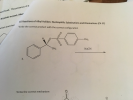 sed book. The presence of a 40 points to pass) Alker G5 Reactions of Alkyl Halides: Nucleophilic Substitutions and Eliminations (Ch 11) Write the correct product with the correct configuration nd shov CH3 CH3 NaCN 4. Write the correct mechanism 0 7. Choose the correct product: Cl Na OCH2CH, CH,CH OH d. b. C. a.
Which alkyl halide in each of the following reactions will react faster in an SN2 reaction...
Which alkyl halide in each of the following reactions will react faster in an SN2 reaction with hydroxide (-OH)? Explain. Hint, some of these compounds are unreactive in SN2 reactions- be sure to think about what type of alkyl halide undergoes SN2 reactions! Bromobenzene or benzyl bromide CH3Cl or (CH3)3Cl CH3CH=CHBr or H2C=CHCH2Br
For each of the following reactions, determine which ELIMINATION mechanism (E1 or 2) will occur. Alkyl...
 For each of the following reactions, determine which ELIMINATION mechanism (E1 or 2) will occur. Alkyl Halide Substitution: Base Strength: Mechanism Type: 2° 3° Methyl Strong E1 1° Weak E2 Draw the mechanism that leads to ALL products for the reaction. Finally, underline the major product of the elimination reaction: NaOCH Challenge Problems: Synthesis: Predicted Ability: Good Average Poor Actual Ability: Good Average Poor Propose a synthesis from the starting material to obtain the indicated goal molecule. Note that any...
Alkyl halides may undergo elimination reactions with BrØnstead-Lowry bases in which the halide and an adjacent...
Alkyl halides may undergo elimination reactions with BrØnstead-Lowry bases in which the halide and an adjacent proton are lost to form a new π bond. Because of the loss of a proton and a halide anion the reactions are termed ‘dehydrohalogenation’. The two most common associated mechanisms are designated as either unimolecular (E1) or bimolecular (E2) elimination reactions based on reaction rate studies. E1 reactions proceed via a two-step mechanism that involves the cleavage of the leaving group (here the...
3. Devise S2 reactions that would lead to the following products. Show stereochemistry where relevant. CH...
 3. Devise S2 reactions that would lead to the following products. Show stereochemistry where relevant. CH DMF + NaBr nucleophile alkyl halide N сн,он nucleophile alkyl halide THF LICI nucleophile alkyl halide 4. Show how the compounds below can be made in two ways in one reaction from the appropriate starting materials. a) a cuprate a different cuprade b) an alkene an alkyne
CHEM 2123/Pre-Lab Study Questions /Exp. #6 Reactivities of Alkyl Halides in Nucleophilic Subs. Reactions Amonda salas...
 CHEM 2123/Pre-Lab Study Questions /Exp. #6 Reactivities of Alkyl Halides in Nucleophilic Subs. Reactions Amonda salas Name 1. Classify the following substrates as 1°, 2, 3, aryl, allylic, or benzy lic: CH OCH CHB сна 2. Identify the substrate, nucleophile/base, and the leaving group in the following reactions and indicate the type of reaction (i.e. SN1, SN2, EI, E2) taking place: Br Nal Accionc H.с н.с Нас, CH,OH HEAT сH,он CH-Br Н-о CH CHs CH,CH-ONa HEAT Нс CH3 3. Rank...
7-46 Predict the dehydrohalogenation product(s) that result when the following alkyl halides are beated in asshole...
 7-46 Predict the dehydrohalogenation product(s) that result when the following alkyl halides are beated in asshole KOH When more than one product is formed, predict the major and minor products. (a) (CH3)2CH-C(CH3)2 (b) (CH3)-CH-CH-CH (e) (CH3)2C-CH-CH Br Br Br CH | (CHDC CI HD CI
Alkyl halides may undergo elimination reactions with BrØnstead-Lowry bases in which the halide and an adjacent...
Alkyl halides may undergo elimination reactions with BrØnstead-Lowry bases in which the halide and an adjacent proton are lost to form a new π bond. Because of the loss of a proton and a halide anion the reactions are termed ‘dehydrohalogenation’. The two most common associated mechanisms are designated as either unimolecular (E1) or bimolecular (E2) elimination reactions based on reaction rate studies. E1 reactions proceed via a two-step mechanism that involves the cleavage of the leaving group (here the...
pleas help 5,6,7,8,9,10 III IV 5. The product of free-radical halogenation reactions is an alkyl halide....
 pleas help 5,6,7,8,9,10
III IV 5. The product of free-radical halogenation reactions is an alkyl halide. The major amount of this halide forms during the second step of propagation. However, you should be aware that one possible termination step also forms alkyl halides. Why does the majority of the alkyl halide product come from the propagation step and not the termination step? A. At any given time during the reaction, the concentration of both the alkyl radical and the halide...
pleas help 5,6,7,8,9,10
III IV 5. The product of free-radical halogenation reactions is an alkyl halide. The major amount of this halide forms during the second step of propagation. However, you should be aware that one possible termination step also forms alkyl halides. Why does the majority of the alkyl halide product come from the propagation step and not the termination step? A. At any given time during the reaction, the concentration of both the alkyl radical and the halide...
 predict the major organic product formed in the following
reaction
alkyl halide nucleophile CH, e) H Br KOBu" HOBu Br Н CH Br CH,CH,OH two products formed 8 + CHI h) Br NaOCH H
predict the major organic product formed in the following
reaction
alkyl halide nucleophile CH, e) H Br KOBu" HOBu Br Н CH Br CH,CH,OH two products formed 8 + CHI h) Br NaOCH H
 sed book. The presence of a 40 points to pass) Alker G5 Reactions of Alkyl Halides: Nucleophilic Substitutions and Eliminations (Ch 11) Write the correct product with the correct configuration nd shov CH3 CH3 NaCN 4. Write the correct mechanism 0 7. Choose the correct product: Cl Na OCH2CH, CH,CH OH d. b. C. a.
 For each of the following reactions, determine which ELIMINATION mechanism (E1 or 2) will occur. Alkyl Halide Substitution: Base Strength: Mechanism Type: 2° 3° Methyl Strong E1 1° Weak E2 Draw the mechanism that leads to ALL products for the reaction. Finally, underline the major product of the elimination reaction: NaOCH Challenge Problems: Synthesis: Predicted Ability: Good Average Poor Actual Ability: Good Average Poor Propose a synthesis from the starting material to obtain the indicated goal molecule. Note that any...
 3. Devise S2 reactions that would lead to the following products. Show stereochemistry where relevant. CH DMF + NaBr nucleophile alkyl halide N сн,он nucleophile alkyl halide THF LICI nucleophile alkyl halide 4. Show how the compounds below can be made in two ways in one reaction from the appropriate starting materials. a) a cuprate a different cuprade b) an alkene an alkyne
 CHEM 2123/Pre-Lab Study Questions /Exp. #6 Reactivities of Alkyl Halides in Nucleophilic Subs. Reactions Amonda salas Name 1. Classify the following substrates as 1°, 2, 3, aryl, allylic, or benzy lic: CH OCH CHB сна 2. Identify the substrate, nucleophile/base, and the leaving group in the following reactions and indicate the type of reaction (i.e. SN1, SN2, EI, E2) taking place: Br Nal Accionc H.с н.с Нас, CH,OH HEAT сH,он CH-Br Н-о CH CHs CH,CH-ONa HEAT Нс CH3 3. Rank...
 7-46 Predict the dehydrohalogenation product(s) that result when the following alkyl halides are beated in asshole KOH When more than one product is formed, predict the major and minor products. (a) (CH3)2CH-C(CH3)2 (b) (CH3)-CH-CH-CH (e) (CH3)2C-CH-CH Br Br Br CH | (CHDC CI HD CI
 pleas help 5,6,7,8,9,10
III IV 5. The product of free-radical halogenation reactions is an alkyl halide. The major amount of this halide forms during the second step of propagation. However, you should be aware that one possible termination step also forms alkyl halides. Why does the majority of the alkyl halide product come from the propagation step and not the termination step? A. At any given time during the reaction, the concentration of both the alkyl radical and the halide...
pleas help 5,6,7,8,9,10
III IV 5. The product of free-radical halogenation reactions is an alkyl halide. The major amount of this halide forms during the second step of propagation. However, you should be aware that one possible termination step also forms alkyl halides. Why does the majority of the alkyl halide product come from the propagation step and not the termination step? A. At any given time during the reaction, the concentration of both the alkyl radical and the halide...
Most questions answered within 3 hours.
-
Where is the error in this code sequence?
String s1 = "Hello";
String s2 = "ello";...
asked 11 months ago -
Financial data for Joel de Paris, Inc., for last year
follow:
Joel de Paris, Inc.
Balance...
asked 11 months ago -
Consider this reaction:
Al2(SO4)3 (aq)+ BaCl3
(aq) Al2Cl6 (aq)- +
3BaSO4(s) . What is the...
asked 11 months ago -
Suppose that Savneet is considering increasing her
recent random sample from 20 car rentals to 40...
asked 11 months ago -
Trucks arrive at an unloading terminal at an average rate of 120
per hour.
Trucks arrive...
asked 11 months ago -
Why are methanol and ethanol completely soluble in water while
octanol is not very little soluble....
asked 11 months ago -
A facilities manager at a university reads in a research report
that the mean amount of...
asked 11 months ago -
When the CuSO4 is rehydrated by adding water to the anhydrous
compound, is this an endothermic...
asked 11 months ago -
A ray of sunlight is passing from diamond into crown glass; the
angle of incidence is...
asked 11 months ago -
A block of mass 0.249 kg is placed on top of a light, vertical
spring of...
asked 11 months ago -
how do the kidneys compensate in the presences of acidosis
a) trigger hyperventilate
b) reserve acid...
asked 11 months ago -
Question 501 pts
The rental rate of capital to the firm increases. Which of the
following...
asked 11 months ago