what Are the trends for heart rate and pulse amplitude at rest vs. 0, 30, 60,...
what Are the trends for heart rate and pulse amplitude at rest vs. 0, 30, 60, and 120 sec after exercise during the recovery period? Should there be a difference in recovery rate for a hand exercise vs leg exercise?
Homework Answers
Our pulse is our heart rate which is the number of times our heert beats in one minute. Our pulse is lower when we are at rest and increases when we exercise as more oxygen rich blood is needed by the body when we exercise.
Yes there be a difference in recovery rate for a hand exercise vs leg exercise.During leg exercises we are involving a larger muscle group that has greater fuel and oxygen than a smaller muscle group like hand .Leg exercises boosts the heart rate more than hand exercise.The cardiovascular system performs several vital functions during exercise and these are reflected in our heart rate .
Add Answer to:
what Are the trends for heart rate and pulse amplitude at rest
vs. 0, 30, 60,...
please help answer these questions, my results are on the chart The heart rate (HR) is...
 please help answer these questions, my results are on the
chart
The heart rate (HR) is expressed in beats per minute and is calculated from the average beat period (R-R) by using the following equation: 60 sec/min HR (b/min) - - R-R 7. Scroll through the recording and find the section of data immediately after exercise. Repeat Steps 2 through 6 for this section of data. 8. Move to the sections of data at 1 minute after exercise Repeat Steps...
please help answer these questions, my results are on the
chart
The heart rate (HR) is expressed in beats per minute and is calculated from the average beat period (R-R) by using the following equation: 60 sec/min HR (b/min) - - R-R 7. Scroll through the recording and find the section of data immediately after exercise. Repeat Steps 2 through 6 for this section of data. 8. Move to the sections of data at 1 minute after exercise Repeat Steps...
What are main differences between manually taking a pulse at rest (Resting Heart Rate) and manually...
 What are main differences between manually taking a pulse at rest (Resting Heart Rate) and manually taking and Exercising Heart Rate? (1pt) Select one: a. Resting pulse can be taken as a 60 second, 30 second x 2, or 15 second x 4 measurement - where exercise heart rate is measured within 5 seconds of ceasing/stopping the exercise, it is counted for only 10 seconds and then multiplied by 6. O b. There is no difference. O c. Resting pulse...
What are the minimum and maximum resting heart rates for an individual to be cleared for...
What are the minimum and maximum resting heart rates for an individual to be cleared for participation in an exercise test? [2 marks] Compared to rest, explain why an exercise heart rate pulse is easier to palpate at the radial artery? [2 marks] What is the cut-off relative contraindication for exercise testing value for resting blood pressure? Include both systolic and diastolic cut-off values. [2 marks Explain the normal change in blood pressure between rest, exercise and post-exercise recovery. [3...
Steve is a runner with a target heart rate of 135 bpm. His resting pulse is...
 Steve is a runner with a target heart rate of 135 bpm. His resting pulse is 70 bpm. His blood volume is approximately 6.8 liters. At rest, his cardiac output is 63 tr/min A What must his stroke volume be? B. What is his EDV if his ESV is 50 ml? C. During his workout, his heart rate increases to 136 born and his cardiac output to 13,500 mL/min. Did his SV change with exercise? If his EDV is 160...
A and B Lab Report-Human Cardiovascular Physiology 7. The figure below is cited from a research...
 A and B
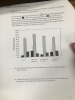
Lab Report-Human Cardiovascular Physiology 7. The figure below is cited from a research paper (Marbbn, C&Sharma, A, 2009, The Journal of Undergraduate Biological Study) It shows the effect of heat stress on heart rate (BPM), plethysmographic pulse wave amplitude ■ ) (voltsx 10, and R-pulse interval (seconds-10) in human cardiovascular response. Significant differences at 95% were noted in all three intervals documented using Student's t-test. Values are the means of n7 determinations t standard error. Note: Significance...
A and B
Lab Report-Human Cardiovascular Physiology 7. The figure below is cited from a research paper (Marbbn, C&Sharma, A, 2009, The Journal of Undergraduate Biological Study) It shows the effect of heat stress on heart rate (BPM), plethysmographic pulse wave amplitude ■ ) (voltsx 10, and R-pulse interval (seconds-10) in human cardiovascular response. Significant differences at 95% were noted in all three intervals documented using Student's t-test. Values are the means of n7 determinations t standard error. Note: Significance...
I need these questions answered as well please Discussion 1. How does the heart rate from...
 I need these questions answered as well please
Discussion 1. How does the heart rate from the subject at rest, immediately after exercise, and at 1 min, and 2 min after exercise compare? Explain the physiological reasons for any differences. 3. What is occurring during the P-Q interval? How do the average P-Q intervals from rest and each time interval compare? How does the average at rest value compare to the "normal" value? 4. What is occurring during the Q-T...
I need these questions answered as well please
Discussion 1. How does the heart rate from the subject at rest, immediately after exercise, and at 1 min, and 2 min after exercise compare? Explain the physiological reasons for any differences. 3. What is occurring during the P-Q interval? How do the average P-Q intervals from rest and each time interval compare? How does the average at rest value compare to the "normal" value? 4. What is occurring during the Q-T...
QUESTION 43 What would the rate pressure product be for heart rate of 60 bpm and...
 QUESTION 43 What would the rate pressure product be for heart rate of 60 bpm and blood pressure of 140/80? a. 1200 6.4600 C. 8400 d. 10,500 QUESTION 44 The heart extracts approximately % of its oxygen need at rest via the coronary vessels. O A. 25 OC.60 D.75
Vitals Assignment (Read this assignment to answer the questions below) Pulse Rate: • Palpate (feel) the...
 Vitals Assignment (Read this assignment to answer the questions below) Pulse Rate: • Palpate (feel) the pulse for 20-30 seconds to just make sure the pulse feels balanced / steady Age Newborn 0-5 months 6-12 months Normal heart rate (beats per minute) Range 29 Typical example 100-1601311 1 30 90-150 120 80-140 110 80-130 80-120 70-110 60-105 80 60-100 80 Normal respiratory rate (breaths per minute) Range 30 Typical example 30-50 25-40 20-30 20-30 20-30 15-30 12-20 12-30 citation needed...
muscle physiology lab Muscle Physiology Melissa e 1 - Fatigue in the forearm r pulse and...
 muscle physiology lab
Muscle Physiology Melissa e 1 - Fatigue in the forearm r pulse and record your starting heart rate- 0 1 BPM. esignate a counter, time recorder, and snapper Sing their dominant arm, the snapper should snap as fast as possible while counting their snaps out le counter should record the number of snaps in each 30 second interval (i.e. 30 snaps in the 0-30 s terval, 20 snaps in the 30-60 seconds interval) so that you have...
muscle physiology lab
Muscle Physiology Melissa e 1 - Fatigue in the forearm r pulse and record your starting heart rate- 0 1 BPM. esignate a counter, time recorder, and snapper Sing their dominant arm, the snapper should snap as fast as possible while counting their snaps out le counter should record the number of snaps in each 30 second interval (i.e. 30 snaps in the 0-30 s terval, 20 snaps in the 30-60 seconds interval) so that you have...
answer this question BLOOD AND FLUID QUESTION 1 (0A patient's blood pressure taken at the arm...
 answer this question
BLOOD AND FLUID QUESTION 1 (0A patient's blood pressure taken at the arm is 120 mmHg systolic and 70 mmHg diastolic. What would you expect the blood pressure (systolic and diastolic pressures) to be at the top of the head given that this point is 40 cm above the measurement point? Remember blood pressure is a gauge pressure and that 1 kPa = 7.5 mmHg. (The density of blood is about 1060 kg/m.) Choose one: a. 89...
answer this question
BLOOD AND FLUID QUESTION 1 (0A patient's blood pressure taken at the arm is 120 mmHg systolic and 70 mmHg diastolic. What would you expect the blood pressure (systolic and diastolic pressures) to be at the top of the head given that this point is 40 cm above the measurement point? Remember blood pressure is a gauge pressure and that 1 kPa = 7.5 mmHg. (The density of blood is about 1060 kg/m.) Choose one: a. 89...
 please help answer these questions, my results are on the
chart
The heart rate (HR) is expressed in beats per minute and is calculated from the average beat period (R-R) by using the following equation: 60 sec/min HR (b/min) - - R-R 7. Scroll through the recording and find the section of data immediately after exercise. Repeat Steps 2 through 6 for this section of data. 8. Move to the sections of data at 1 minute after exercise Repeat Steps...
please help answer these questions, my results are on the
chart
The heart rate (HR) is expressed in beats per minute and is calculated from the average beat period (R-R) by using the following equation: 60 sec/min HR (b/min) - - R-R 7. Scroll through the recording and find the section of data immediately after exercise. Repeat Steps 2 through 6 for this section of data. 8. Move to the sections of data at 1 minute after exercise Repeat Steps...
 What are main differences between manually taking a pulse at rest (Resting Heart Rate) and manually taking and Exercising Heart Rate? (1pt) Select one: a. Resting pulse can be taken as a 60 second, 30 second x 2, or 15 second x 4 measurement - where exercise heart rate is measured within 5 seconds of ceasing/stopping the exercise, it is counted for only 10 seconds and then multiplied by 6. O b. There is no difference. O c. Resting pulse...
 Steve is a runner with a target heart rate of 135 bpm. His resting pulse is 70 bpm. His blood volume is approximately 6.8 liters. At rest, his cardiac output is 63 tr/min A What must his stroke volume be? B. What is his EDV if his ESV is 50 ml? C. During his workout, his heart rate increases to 136 born and his cardiac output to 13,500 mL/min. Did his SV change with exercise? If his EDV is 160...
 A and B
Lab Report-Human Cardiovascular Physiology 7. The figure below is cited from a research paper (Marbbn, C&Sharma, A, 2009, The Journal of Undergraduate Biological Study) It shows the effect of heat stress on heart rate (BPM), plethysmographic pulse wave amplitude ■ ) (voltsx 10, and R-pulse interval (seconds-10) in human cardiovascular response. Significant differences at 95% were noted in all three intervals documented using Student's t-test. Values are the means of n7 determinations t standard error. Note: Significance...
A and B
Lab Report-Human Cardiovascular Physiology 7. The figure below is cited from a research paper (Marbbn, C&Sharma, A, 2009, The Journal of Undergraduate Biological Study) It shows the effect of heat stress on heart rate (BPM), plethysmographic pulse wave amplitude ■ ) (voltsx 10, and R-pulse interval (seconds-10) in human cardiovascular response. Significant differences at 95% were noted in all three intervals documented using Student's t-test. Values are the means of n7 determinations t standard error. Note: Significance...
 I need these questions answered as well please
Discussion 1. How does the heart rate from the subject at rest, immediately after exercise, and at 1 min, and 2 min after exercise compare? Explain the physiological reasons for any differences. 3. What is occurring during the P-Q interval? How do the average P-Q intervals from rest and each time interval compare? How does the average at rest value compare to the "normal" value? 4. What is occurring during the Q-T...
I need these questions answered as well please
Discussion 1. How does the heart rate from the subject at rest, immediately after exercise, and at 1 min, and 2 min after exercise compare? Explain the physiological reasons for any differences. 3. What is occurring during the P-Q interval? How do the average P-Q intervals from rest and each time interval compare? How does the average at rest value compare to the "normal" value? 4. What is occurring during the Q-T...
 QUESTION 43 What would the rate pressure product be for heart rate of 60 bpm and blood pressure of 140/80? a. 1200 6.4600 C. 8400 d. 10,500 QUESTION 44 The heart extracts approximately % of its oxygen need at rest via the coronary vessels. O A. 25 OC.60 D.75
 Vitals Assignment (Read this assignment to answer the questions below) Pulse Rate: • Palpate (feel) the pulse for 20-30 seconds to just make sure the pulse feels balanced / steady Age Newborn 0-5 months 6-12 months Normal heart rate (beats per minute) Range 29 Typical example 100-1601311 1 30 90-150 120 80-140 110 80-130 80-120 70-110 60-105 80 60-100 80 Normal respiratory rate (breaths per minute) Range 30 Typical example 30-50 25-40 20-30 20-30 20-30 15-30 12-20 12-30 citation needed...
 muscle physiology lab
Muscle Physiology Melissa e 1 - Fatigue in the forearm r pulse and record your starting heart rate- 0 1 BPM. esignate a counter, time recorder, and snapper Sing their dominant arm, the snapper should snap as fast as possible while counting their snaps out le counter should record the number of snaps in each 30 second interval (i.e. 30 snaps in the 0-30 s terval, 20 snaps in the 30-60 seconds interval) so that you have...
muscle physiology lab
Muscle Physiology Melissa e 1 - Fatigue in the forearm r pulse and record your starting heart rate- 0 1 BPM. esignate a counter, time recorder, and snapper Sing their dominant arm, the snapper should snap as fast as possible while counting their snaps out le counter should record the number of snaps in each 30 second interval (i.e. 30 snaps in the 0-30 s terval, 20 snaps in the 30-60 seconds interval) so that you have...
 answer this question
BLOOD AND FLUID QUESTION 1 (0A patient's blood pressure taken at the arm is 120 mmHg systolic and 70 mmHg diastolic. What would you expect the blood pressure (systolic and diastolic pressures) to be at the top of the head given that this point is 40 cm above the measurement point? Remember blood pressure is a gauge pressure and that 1 kPa = 7.5 mmHg. (The density of blood is about 1060 kg/m.) Choose one: a. 89...
answer this question
BLOOD AND FLUID QUESTION 1 (0A patient's blood pressure taken at the arm is 120 mmHg systolic and 70 mmHg diastolic. What would you expect the blood pressure (systolic and diastolic pressures) to be at the top of the head given that this point is 40 cm above the measurement point? Remember blood pressure is a gauge pressure and that 1 kPa = 7.5 mmHg. (The density of blood is about 1060 kg/m.) Choose one: a. 89...
Most questions answered within 3 hours.
-
Where is the error in this code sequence?
String s1 = "Hello";
String s2 = "ello";...
asked 10 months ago -
Financial data for Joel de Paris, Inc., for last year
follow:
Joel de Paris, Inc.
Balance...
asked 10 months ago -
Consider this reaction:
Al2(SO4)3 (aq)+ BaCl3
(aq) Al2Cl6 (aq)- +
3BaSO4(s) . What is the...
asked 10 months ago -
Suppose that Savneet is considering increasing her
recent random sample from 20 car rentals to 40...
asked 10 months ago -
Trucks arrive at an unloading terminal at an average rate of 120
per hour.
Trucks arrive...
asked 10 months ago -
Why are methanol and ethanol completely soluble in water while
octanol is not very little soluble....
asked 10 months ago -
A facilities manager at a university reads in a research report
that the mean amount of...
asked 10 months ago -
When the CuSO4 is rehydrated by adding water to the anhydrous
compound, is this an endothermic...
asked 10 months ago -
A ray of sunlight is passing from diamond into crown glass; the
angle of incidence is...
asked 10 months ago -
A block of mass 0.249 kg is placed on top of a light, vertical
spring of...
asked 10 months ago -
how do the kidneys compensate in the presences of acidosis
a) trigger hyperventilate
b) reserve acid...
asked 10 months ago -
Question 501 pts
The rental rate of capital to the firm increases. Which of the
following...
asked 10 months ago