A certain reaction is second order in N2 and second order in H2. Use this information to...
A certain reaction is second order in N2 and second order in H2. Use this information to complete the table below. Round each of your answers to 3 significant digits. [N2] [H2] initial rate of reaction 0.311 M 2.02 M 5.00 x 10⁴M/s 0.311 M 9.15 M _________M/s 0.884 M 0.710 M __________M/s
What makes the equilibrium constant, constant? Like, I know that Kc is affected by the conditions...
What makes the equilibrium constant, constant? Like, I know that Kc is affected by the conditions the reaction takes place in, like temperature. But, if I have four sets of data for the same reaction and each results in the calculation of the same Kc, why is that? Does it have anything to do with the fact that each of...
Chlorofluorocarbons (CFCs) used to be produced in mass quantities owing to their use as stable organic...
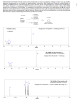 Chlorofluorocarbons (CFCs) used to be produced in mass quantities owing to their use as stable organic compounds in a variety of applications. However, the Montreal Protocol (established in 1997) prohibited their use because they were shown to be responsible for ozone layer depletion You have isolated a compound (CFC1) that you suspect is a chlorofluorocarbon. Using the NMR predict it's...
1. Synthetic organic chemists have established clever ways for probing the mechanisms of chemical reactions. In...
 1. Synthetic organic chemists have established clever ways for probing the mechanisms of chemical reactions. In general, a preference for anti- periplanar elimination is observed; however, under some conditions the syn-periplanar elimination product can be observed. How do chemists tell the difference between anti-and syn-periplanar eliminations? Let's find out! The reaction of the substrate below under E2 conditions (NaOEt in...
A chemical engineer is studying the two reactions shown in the table below. In each case,...
 A chemical engineer is studying the two reactions shown in the table below. In each case, he fils a reaction vessel with some mixture of the reactants and products at a constant temperature of 16.0 °C and constant total pressure. Then, he measures the reaction enthalpy AH and reaction entropy AS of the first reaction, and the reaction enthalpy AH...
At 400 K, the equilibrium constant for the reaction Br 2 (g) + Cl 2 (g) 2BrCl...
At 400 K, the equilibrium constant for the reaction Br 2 (g) + Cl 2 (g) 2BrCl (g) is K p = 7.0. A closed vessel at 400 K is charged with 1.00 atm of Br 2 (g), 1.00 atm of Cl 2 (g), and 2.00 atm of BrCl (g). Use Q to determine which of the statements below is true....
At 500 ∘ C , cyclopropane ( C 3 H 6 ) rearranges to propene (...
At 500 ∘ C , cyclopropane ( C 3 H 6 ) rearranges to propene ( CH 3 −CH= CH 2 ). The reaction is first order, and the rate constant is 6.7× 10 −4 s −1 . If the initial concentration of C 3 H 6 is 5.50×10⁻² M . Part A Part complete What is the half-life (in...
The solution you will use for this experiment was prepared by making a 0.25 M CoCl2...
The solution you will use for this experiment was prepared by making a 0.25 M CoCl2 solution in a solvent that already contains 4.0 M NaCl. Recall that as an ionic compound, CoCl2 will dissociate into Co(II) and chloride ions. What will the concentration of chloride ions be? 2. If all of the Co(II) ions described in the previous problem...
1. Sketeh the energy diagram for a spontaneous second order reaction. Clearly label all axis, the...
 1. Sketeh the energy diagram for a spontaneous second order reaction. Clearly label all axis, the rate limiting step, transition state(a), intermediate(s), and enthalpy change. (4pta) Draw the mechanism given the following reaction: 2. (4pta) (3pts) Rank the following in decreasing strength (1-strongest) of the C-halogen bond: 3. 4. Of all halogens we talked about in lecture, which halogen is...
3) Answer all parts of the following question. a. The reaction: Al(s) + Fe2O3(s) → Fe(s)...
3) Answer all parts of the following question. a. The reaction: Al(s) + Fe2O3(s) → Fe(s) + Al2O3(s) has ΔH = -847.6 kJ and ΔS = -41.3 J/K at 25°C. Calculate ΔG and determine if it is spontaneous. b. Above what temperature does the following reaction become nonspontaneous? FeO(s) + CO(g) → CO2(g) + Fe(s) ΔH = -11.0 kJ; ΔS...
 Chlorofluorocarbons (CFCs) used to be produced in mass quantities owing to their use as stable organic compounds in a variety of applications. However, the Montreal Protocol (established in 1997) prohibited their use because they were shown to be responsible for ozone layer depletion You have isolated a compound (CFC1) that you suspect is a chlorofluorocarbon. Using the NMR predict it's...
 1. Synthetic organic chemists have established clever ways for probing the mechanisms of chemical reactions. In general, a preference for anti- periplanar elimination is observed; however, under some conditions the syn-periplanar elimination product can be observed. How do chemists tell the difference between anti-and syn-periplanar eliminations? Let's find out! The reaction of the substrate below under E2 conditions (NaOEt in...
 A chemical engineer is studying the two reactions shown in the table below. In each case, he fils a reaction vessel with some mixture of the reactants and products at a constant temperature of 16.0 °C and constant total pressure. Then, he measures the reaction enthalpy AH and reaction entropy AS of the first reaction, and the reaction enthalpy AH...
 1. Sketeh the energy diagram for a spontaneous second order reaction. Clearly label all axis, the rate limiting step, transition state(a), intermediate(s), and enthalpy change. (4pta) Draw the mechanism given the following reaction: 2. (4pta) (3pts) Rank the following in decreasing strength (1-strongest) of the C-halogen bond: 3. 4. Of all halogens we talked about in lecture, which halogen is...
Most questions answered within 3 hours.