9. Identify each of the following molecules as aromatic, antiaromatic or nonaromatic. (For this problem, you...
 9. Identify each of the following molecules as aromatic, antiaromatic or nonaromatic. (For this problem, you may assume that each molecule can and will be planar, if that influences the analysis.) NUMBERS 10 and 11 are BIZZZZ-ONUSI (.e., bonus) 10. In learning about 1,2-vs. 1,4-addition to dienes, we discussed kinetic vs. thermodynamic control Apply what we learned in that discussion...
please answer a, b, and c. show all illustrations: graph and cleland notation answer a, b,...
 please answer a, b, and c. show all illustrations: graph and
cleland notation
answer a, b, and c please thank you
Someone who understands this please answer all parts of this
question asap
5. A protonated histidine residue in the active site of aspartate transcarbamoylase, ATCase, is thought to be important in stabilizing the transition state of the bound substrate...
please answer a, b, and c. show all illustrations: graph and
cleland notation
answer a, b, and c please thank you
Someone who understands this please answer all parts of this
question asap
5. A protonated histidine residue in the active site of aspartate transcarbamoylase, ATCase, is thought to be important in stabilizing the transition state of the bound substrate...
Required information Problem 12-4A Partnership income allocation, statement of partners' equity, and closing entries LO P2...
 Required information Problem 12-4A Partnership income allocation, statement of partners' equity, and closing entries LO P2 [The following information applies to the questions displayed below.] Mo, Lu, and Barb formed the MLB Partnership by making investments of $84,600, $329,000, and $526,400, respectively. They predict annual partnership net income of $550,500 and are considering the following alternative plans of sharing income...
Section A. Decide whether the following statements are true or false. 1. The order n is...
 Section A. Decide whether the following statements are true or false. 1. The order n is always a positive integer. 2. If the reaction rate doubles as the concentration of [A] doubles, the reaction is first order with respect to A. 3. If the reaction rate is constant as the concentration of [A] doubles, the reaction is zero order with...
what will the initial rate be if [a] is halved and [b] is tripled?
The reaction A+ B yields C+D rate = k[A][B]^2 has an intial rate of 0.0220 M/s what will the initial rate be if [A] is halved and [B] is tripled? answer must be in M/s What will the intial rate be if [A] is tripled and [B] is halved? answer must be in M/s
Enamines can serve as enolate surrogates in reactions at the ?-carbon. In the following reaction sequence,...
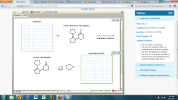 Enamines can serve as enolate surrogates in reactions at the
?-carbon. In the following reaction sequence, the structures of the
enamine addition product � the initial zwitterion and its neutral
tautomer � are shown. Draw the structures of the two reactants
forming these intermediates, and draw the structure of the final
product, obtained via hydrolysis of the neutral intermediate.
Enamines can serve as enolate surrogates in reactions at the
?-carbon. In the following reaction sequence, the structures of the
enamine addition product � the initial zwitterion and its neutral
tautomer � are shown. Draw the structures of the two reactants
forming these intermediates, and draw the structure of the final
product, obtained via hydrolysis of the neutral intermediate.
23) A chemical reaction of the general type: A → 2B is first-order, with a rate...
23) A chemical reaction of the general type: A → 2B is first-order, with a rate constant of 1.52 × 10⁻⁴ s-1. a. Calculate the half-life of A. b. Assuming the initial concentration of A is 0.067 mol L-1, calculate the time needed for the concentration to fall to 0.010 mol L-1.
Question 6 (5 points) A reaction that is second order in a single reactant has an...
 Question 6 (5 points) A reaction that is second order in a single reactant has an initial concentration of 0.910 M and a rate constant of 0.441 M-18-1. What is the concentration of this reactant at 94.0 s? 0.00907 M 0.157 M 0.420 M 0.365 M 0.0235 M
Question 5 (5 points) A reaction that is second order in a single reactant has an...
 Question 5 (5 points) A reaction that is second order in a single reactant has an initial concentration of 0.910 M and a rate constant of 0.441 M-15-1. What is the concentration of this reactant at 94.0 s? 0.0235 M 0.00907 M 0.157 M 0.420 M 0.365 M
Question 1 0 / 0.0001 points A reaction is found to be 2nd order with respect...
 Question 1 0 / 0.0001 points A reaction is found to be 2nd order with respect to phosphite ion. If the initial concentration of phosphite ion is 0.891M and the rate law constant is 0.0401 M/sec, how many seconds must pass before the concentration of phosphite ion drops to 0.319M? Answer:
 9. Identify each of the following molecules as aromatic, antiaromatic or nonaromatic. (For this problem, you may assume that each molecule can and will be planar, if that influences the analysis.) NUMBERS 10 and 11 are BIZZZZ-ONUSI (.e., bonus) 10. In learning about 1,2-vs. 1,4-addition to dienes, we discussed kinetic vs. thermodynamic control Apply what we learned in that discussion...
 please answer a, b, and c. show all illustrations: graph and
cleland notation
answer a, b, and c please thank you
Someone who understands this please answer all parts of this
question asap
5. A protonated histidine residue in the active site of aspartate transcarbamoylase, ATCase, is thought to be important in stabilizing the transition state of the bound substrate...
please answer a, b, and c. show all illustrations: graph and
cleland notation
answer a, b, and c please thank you
Someone who understands this please answer all parts of this
question asap
5. A protonated histidine residue in the active site of aspartate transcarbamoylase, ATCase, is thought to be important in stabilizing the transition state of the bound substrate...
 Required information Problem 12-4A Partnership income allocation, statement of partners' equity, and closing entries LO P2 [The following information applies to the questions displayed below.] Mo, Lu, and Barb formed the MLB Partnership by making investments of $84,600, $329,000, and $526,400, respectively. They predict annual partnership net income of $550,500 and are considering the following alternative plans of sharing income...
 Section A. Decide whether the following statements are true or false. 1. The order n is always a positive integer. 2. If the reaction rate doubles as the concentration of [A] doubles, the reaction is first order with respect to A. 3. If the reaction rate is constant as the concentration of [A] doubles, the reaction is zero order with...
 Enamines can serve as enolate surrogates in reactions at the
?-carbon. In the following reaction sequence, the structures of the
enamine addition product � the initial zwitterion and its neutral
tautomer � are shown. Draw the structures of the two reactants
forming these intermediates, and draw the structure of the final
product, obtained via hydrolysis of the neutral intermediate.
Enamines can serve as enolate surrogates in reactions at the
?-carbon. In the following reaction sequence, the structures of the
enamine addition product � the initial zwitterion and its neutral
tautomer � are shown. Draw the structures of the two reactants
forming these intermediates, and draw the structure of the final
product, obtained via hydrolysis of the neutral intermediate.
 Question 6 (5 points) A reaction that is second order in a single reactant has an initial concentration of 0.910 M and a rate constant of 0.441 M-18-1. What is the concentration of this reactant at 94.0 s? 0.00907 M 0.157 M 0.420 M 0.365 M 0.0235 M
 Question 5 (5 points) A reaction that is second order in a single reactant has an initial concentration of 0.910 M and a rate constant of 0.441 M-15-1. What is the concentration of this reactant at 94.0 s? 0.0235 M 0.00907 M 0.157 M 0.420 M 0.365 M
 Question 1 0 / 0.0001 points A reaction is found to be 2nd order with respect to phosphite ion. If the initial concentration of phosphite ion is 0.891M and the rate law constant is 0.0401 M/sec, how many seconds must pass before the concentration of phosphite ion drops to 0.319M? Answer:
Most questions answered within 3 hours.