According to chapter 3 page 84 figure 3.2, What are the three average techniques?
Homework Answers
1.Simple Average Method,
2. Weighted Average Method.
1(C)(i) Simple Average Method:
Under this method, simple average rate at cost is obtained by adding the rate of purchases represented by stock at the time of issue & then dividing the same by the number of such rates. The rate needs to be revised at the time of any new purchase or exhaustion of any existing stock. For the purpose of ascertaining the average rate, the quantity by which each purchase is made has to be ignored.
To dampen the severity of the effect of rises & falls in the purchase price, use of any kind of average rate is made. Thus, in case of fluctuating rates of purchase, average cost is used. However, obviously, cost does not get properly represented by the average cost.
Advantages:
(a) It is simple to work out & apply.
(b) Issue price cannot be affected considerably by the fluctuations
in prices of purchase.
(c) Average cost method is suitable for the condition when
different lots of purchases get mixed up so that the identification
is not possible.
(d) Where the quantity of each purchase is stable but the prices
fluctuate, average cost method suits the condition.
Disadvantages:
(a) Profit or loss in material arises as total cost incurred
usually does not become equal to the total charges.
(b) Frequent calculations of rates will be necessary in case of
frequent purchases, thereby involving much clerical work. Average
rate may have to be revised due to exhaustion of an existing stock
even if no new purchase comes.
(c) Too much profit or loss on materials may be resulted from the
method, when lots of purchases vary much in quantities.
(d) Due to fact that the identity of the materials disappeared in
the store, the verification of closing stock figures becomes
difficult.
(e) Absurd figures may be shown by the closing stock. The closing
stock account may even show credit balance, in times of
inflationary spiraling.
The simple average method can work well where:
(a) in each lot, there is standard quantity of purchase
(b) there is very mild fluctuation in prices.
Example:
Illustration 1:
From the details prepare stores ledger under simple average
method.
2010 Dec 1 Opening
Balance 400 kg @ $
1.25
5
Received
200 kg @ $ 1.30
8
Issued
480 kg
10
Issued
40 kg
15
Received
320 kg @ $ 1.35
18
Issued
200 kg
20
Received
400 kg @ $ 1.40
25
Issued
160 kg
28
Issued
240 kg
Shortage of 40 kg on 16.12.2010 & another shortage of 40 kg
on 26.12.2010 is found by the stock verifier.
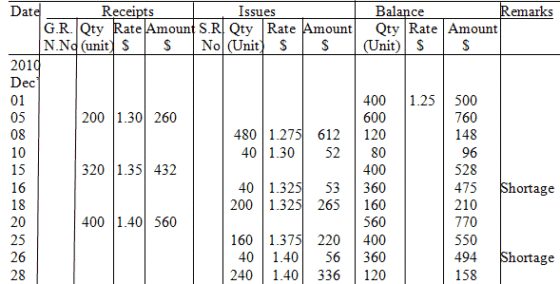
Workings: Calculation of
simple average price:-
For Issue on 8th Dec =
(1.25+1.30)/2 = $
1.275
For Issue on 10th Dec
=
$ 1.30
For Shortage on 16th Dec = (1.30+1.35)/2 = $ 1.325
For Issue on 18th
Dec
= $ 1.325
For Issue on 25th Dec =
(1.35+1.40)/2 = $
1.375
For Shortage on 26th
Dec
= $ 1.40
For Issue on 28th Dec
= $
1.40
1(C)(ii) Weighted Average Method:
The weighted average cost under this method is obtained by dividing the total value (at cost) of materials in stock at the time of issue by the total quantity of materials in stock. Only the rates are taken into consideration in case of simple average, on the other hand, the rates & corresponding quantities are considered in case of weighted average because by multiplying the quantity by the rate, the value at cost is obtained. Once a rate is worked out, it goes on being applied until a fresh purchase is made.
If q, q1, q2, & q3 are the quantities in stocks on a day with p, p1, p2 & p3 as the corresponding purchases, the weighted average rate will be worked out as below:
Weighted average rate = pq +
p1q1+p2q2+p3q3
q +
q1 + q2 + q3
Advantages:
(a) The effect of price fluctuations on issue rates are
smoothened effectively by the method.
(b) The rate continues in its application unless a new purchase
arrives.
(c) Only if, in the calculation of the rates, mathematical
approximation is made then profit or loss on materials
arises.
(d) Simple & not too much clerical work is involved unless
purchases are made frequently.
(e) Where both the price & quantity ordered fluctuate, this
method suits the condition.
Disadvantages:
(a) The work of calculation of rates becomes considerable in
case where a frequent purchase is made.
(b) The cost price (nor the market price) of the materials actually
issued are not represented by the charges made to issues.
(c) Unless the rates are calculated correcting up to 4 or 5 places
of decimal whenever necessary, profit or loss on materials may be
created by the method.
Example:
Illustration
2: From the below mentioned details prepare a stores
ledger account under weighted average method.
Date
Particulars
Units
Unit Cost ($)
2011 Feb
01
Purchases
1200
2.00
04
Purchases
600
2.10
06
Issues
1000
-
10
Purchases
1400
2.20
15
Issues
1600
-
20
Purchases
600
2.50
23
Issues
200
-
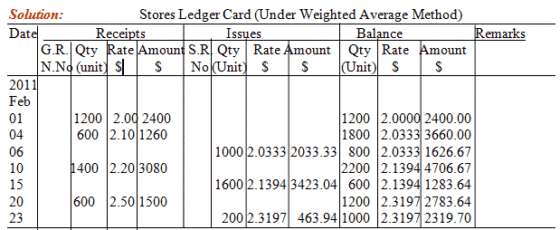
Workings: Calculation of Weighted Average Price-
For Balance of 04th Feb = (2400+1260) / (1200+600) = $ 2.0333
For Balance of 10th Feb = [(2400-2033.33) +
1260+3080]
= $ 2.1394
[(1200-1000) +600+1400]
For Balance of 20th = (2400+1260+3080+1500-2033.33-3423.04)
= $ 2.3197
(1200+600+1400+600-1000-1600)
Add Answer to:
According to chapter 3 page 84 figure 3.2, What are the three
average techniques?
what are the three categories of patient transfers (chapter 8, Pierson and Fairchild's Principles & Techniques...
what are the three categories of patient transfers (chapter 8, Pierson and Fairchild's Principles & Techniques of Patient Care (6th Edition)
134 CHAPTER FOUR 10x djxo.al d. 13u - IX FIGURE 429 dr 3.2 3 Find the...
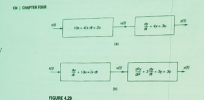 134 CHAPTER FOUR 10x djxo.al d. 13u - IX FIGURE 429 dr 3.2 3 Find the net transfer functions for the blocks shown in figure 4.29. Find the transfer function of the circuit shown in figure 4.30
Prepare responses to the Mini Case for Chapter 2(page 84-86 in corporate finance by ehrhardt and...
Prepare responses to the Mini Case for Chapter 2(page 84-86 in corporate finance by ehrhardt and brigham on Computron Industries)
1.(TCO 2) For the circuit in the following figure (Chapter 3, Figure 3-29, on page 135),...
 1.(TCO 2) For the circuit in the following figure (Chapter 3,
Figure 3-29, on page 135), VCC=18
V, R1=10 K?, R2=2.2
K?, RC=1
k?, RE1=220
?,RE2=220 ?, RL=10
K?, Rs=1 K?VCC=18 V,
R1=10 K?, R2=2.2 K?, RC=1 k?, RE1=220
?,RE2=220 ?, RL=10 K?, Rs=1 K? . Determine
the AC voltage gain.
2.(TCO 2) For the circuit in the following figure (Chapter 3,
Figure 3-29, on page 135), VCC=18
V, R1=10 K?, R2=2.2
K?, RC=3
k?, RE1=220
?,RE2=220 ?, RL=5
K?, Rs=1 K?VCC=18 V,
R1=10 K?, R2=2.2 K?, RC=3 k?, RE1=220
?,RE2=220 ?, RL=5 K?, Rs=1 K?...
1.(TCO 2) For the circuit in the following figure (Chapter 3,
Figure 3-29, on page 135), VCC=18
V, R1=10 K?, R2=2.2
K?, RC=1
k?, RE1=220
?,RE2=220 ?, RL=10
K?, Rs=1 K?VCC=18 V,
R1=10 K?, R2=2.2 K?, RC=1 k?, RE1=220
?,RE2=220 ?, RL=10 K?, Rs=1 K? . Determine
the AC voltage gain.
2.(TCO 2) For the circuit in the following figure (Chapter 3,
Figure 3-29, on page 135), VCC=18
V, R1=10 K?, R2=2.2
K?, RC=3
k?, RE1=220
?,RE2=220 ?, RL=5
K?, Rs=1 K?VCC=18 V,
R1=10 K?, R2=2.2 K?, RC=3 k?, RE1=220
?,RE2=220 ?, RL=5 K?, Rs=1 K?...
3. Use Figure Three on the next to the last page to answer (3). In the longrug competitive equilibrium:
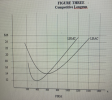 3. Use Figure Three on the next to the last page to answer (3). In the longrug competitive equilibrium: a) what is the competitive firm's output? b) what is the competitive industry's price? c) what is the competitive firm's profits in this long run equilibrium? 4. Use Figure Four on the last page to answer (4). In the short run, what is the monopolist's: a) output? b) price? c) firm's profits per-unit? 4) firm's total profits? 5. Use Figure Five on the last page to answer (5). In the...
According to a magazine, people read an average of more than three books in a month....
 According to a magazine, people read an average of more than three books in a month. A survey of 30 random individuals found that the mean number of books they read was 3.2 with a standard deviation of 1.25. a. To test the magazine's claim, what should the appropriate hypotheses be? b. Compute the test statistic. c. Using a level of significance of 0.05, what is the critical value? d. Find the p-value for the test. e. What is your...
Chapter 29, Problem 029 In the figure, four long straight wires are perpendicular to the page,...
 Chapter 29, Problem 029 In the figure, four long straight wires are perpendicular to the page, and their cross sections form a square of edge length a 19 cm. The currents are out of the page in wires 1 and 4 and into the page in wires 2 and 3, and each wire carries 17 A. What is the magnitude of the net magnetic field at the square's center? Number Units Chapter 29, Problem 062 In the figure, current i-35.9...
Chapter 30, Problem 4 In the figure, four long straight wires are perpendicular to the page,...
 Chapter 30, Problem 4 In the figure, four long straight wires are perpendicular to the page, and their cross sections form a square of edge length a 18 cm. The currents are out of the page in wires 1 and 2 and into the page in wires 3 and 4, and each wire carries 7.0 A. What is the magnitude of the net magnetic field at the square's center?
According to a magazine, people read an average of more than three books in a month....
According to a magazine, people read an average of more than three books in a month. A survey of 30 random individuals found that the mean number of books they read was 3.2 with a standard deviation of 1.26. a. To test the magazine's claim, what should the appropriate hypotheses be? b. Compute the test statistic. c. Using a level of significance of 0.05, what is the critical value? d. Find the p-value for the test. e. What is your...
Write a three to five page summary of how active listening techniques affected the conversation. How...
Write a three to five page summary of how active listening techniques affected the conversation. How was this conversation different than others you've had with this individual? How will this exercise affect your communication behavior in the future?
 134 CHAPTER FOUR 10x djxo.al d. 13u - IX FIGURE 429 dr 3.2 3 Find the net transfer functions for the blocks shown in figure 4.29. Find the transfer function of the circuit shown in figure 4.30
 1.(TCO 2) For the circuit in the following figure (Chapter 3,
Figure 3-29, on page 135), VCC=18
V, R1=10 K?, R2=2.2
K?, RC=1
k?, RE1=220
?,RE2=220 ?, RL=10
K?, Rs=1 K?VCC=18 V,
R1=10 K?, R2=2.2 K?, RC=1 k?, RE1=220
?,RE2=220 ?, RL=10 K?, Rs=1 K? . Determine
the AC voltage gain.
2.(TCO 2) For the circuit in the following figure (Chapter 3,
Figure 3-29, on page 135), VCC=18
V, R1=10 K?, R2=2.2
K?, RC=3
k?, RE1=220
?,RE2=220 ?, RL=5
K?, Rs=1 K?VCC=18 V,
R1=10 K?, R2=2.2 K?, RC=3 k?, RE1=220
?,RE2=220 ?, RL=5 K?, Rs=1 K?...
1.(TCO 2) For the circuit in the following figure (Chapter 3,
Figure 3-29, on page 135), VCC=18
V, R1=10 K?, R2=2.2
K?, RC=1
k?, RE1=220
?,RE2=220 ?, RL=10
K?, Rs=1 K?VCC=18 V,
R1=10 K?, R2=2.2 K?, RC=1 k?, RE1=220
?,RE2=220 ?, RL=10 K?, Rs=1 K? . Determine
the AC voltage gain.
2.(TCO 2) For the circuit in the following figure (Chapter 3,
Figure 3-29, on page 135), VCC=18
V, R1=10 K?, R2=2.2
K?, RC=3
k?, RE1=220
?,RE2=220 ?, RL=5
K?, Rs=1 K?VCC=18 V,
R1=10 K?, R2=2.2 K?, RC=3 k?, RE1=220
?,RE2=220 ?, RL=5 K?, Rs=1 K?...
 According to a magazine, people read an average of more than three books in a month. A survey of 30 random individuals found that the mean number of books they read was 3.2 with a standard deviation of 1.25. a. To test the magazine's claim, what should the appropriate hypotheses be? b. Compute the test statistic. c. Using a level of significance of 0.05, what is the critical value? d. Find the p-value for the test. e. What is your...
 Chapter 29, Problem 029 In the figure, four long straight wires are perpendicular to the page, and their cross sections form a square of edge length a 19 cm. The currents are out of the page in wires 1 and 4 and into the page in wires 2 and 3, and each wire carries 17 A. What is the magnitude of the net magnetic field at the square's center? Number Units Chapter 29, Problem 062 In the figure, current i-35.9...
 Chapter 30, Problem 4 In the figure, four long straight wires are perpendicular to the page, and their cross sections form a square of edge length a 18 cm. The currents are out of the page in wires 1 and 2 and into the page in wires 3 and 4, and each wire carries 7.0 A. What is the magnitude of the net magnetic field at the square's center?
Most questions answered within 3 hours.
-
Where is the error in this code sequence?
String s1 = "Hello";
String s2 = "ello";...
asked 10 months ago -
Financial data for Joel de Paris, Inc., for last year
follow:
Joel de Paris, Inc.
Balance...
asked 10 months ago -
Consider this reaction:
Al2(SO4)3 (aq)+ BaCl3
(aq) Al2Cl6 (aq)- +
3BaSO4(s) . What is the...
asked 10 months ago -
Suppose that Savneet is considering increasing her
recent random sample from 20 car rentals to 40...
asked 10 months ago -
Trucks arrive at an unloading terminal at an average rate of 120
per hour.
Trucks arrive...
asked 10 months ago -
Why are methanol and ethanol completely soluble in water while
octanol is not very little soluble....
asked 10 months ago -
A facilities manager at a university reads in a research report
that the mean amount of...
asked 10 months ago -
When the CuSO4 is rehydrated by adding water to the anhydrous
compound, is this an endothermic...
asked 10 months ago -
A ray of sunlight is passing from diamond into crown glass; the
angle of incidence is...
asked 10 months ago -
A block of mass 0.249 kg is placed on top of a light, vertical
spring of...
asked 10 months ago -
how do the kidneys compensate in the presences of acidosis
a) trigger hyperventilate
b) reserve acid...
asked 10 months ago -
Question 501 pts
The rental rate of capital to the firm increases. Which of the
following...
asked 10 months ago