
Homework Answers

Add Answer to:
Question 4 Using R-2-chlorobutane as an example, compare and contrast SNl and SN2 reactions (a) Things...
(a) Using S-2-chlorobutane as an example, compare and contrast Syl and SN2 reactions. Things you may...
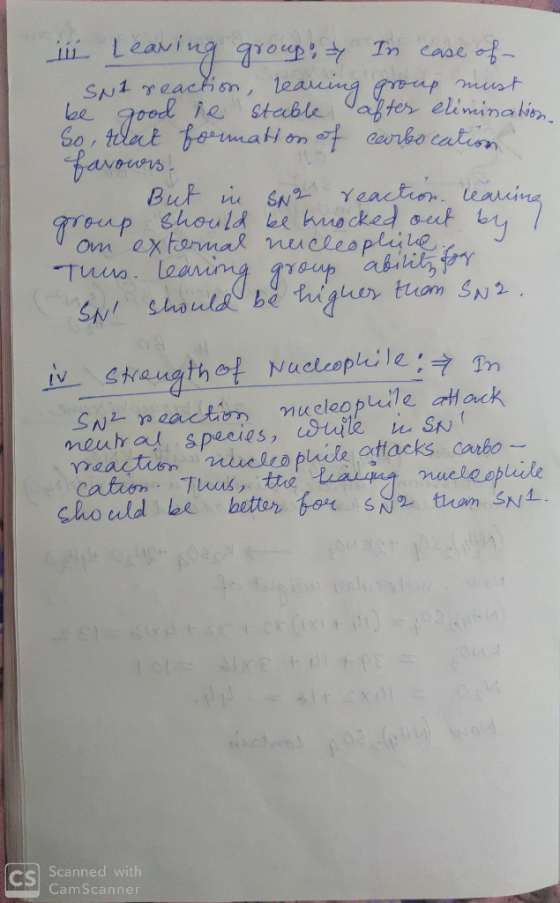
 (a) Using S-2-chlorobutane as an example, compare and contrast Syl and SN2 reactions. Things you may wish to consider are: i. stereochemistry ii. solvent iii. leaving group iv. strength of nucleophile
1) Compare and contrast SN1, SN2, E1, and E2 reactions! (similarities abd differences. Requirements for each...
 1) Compare and contrast SN1, SN2, E1, and E2 reactions!
(similarities abd differences. Requirements for each to
work.)
2) Why is SN2 is in direct competition with E2 while SN1 is
direct competition with E1 reaction.
3) Rate expression of each
4) which reactions are concerted? Which are atep wise?
5) which are sterospecific and what stereospecificity of each
are?
6) how do the variables below (A-D) influence reaction
pathway?
Compare and contrast SNI, SN2, El and E2 reactions. What...
1) Compare and contrast SN1, SN2, E1, and E2 reactions!
(similarities abd differences. Requirements for each to
work.)
2) Why is SN2 is in direct competition with E2 while SN1 is
direct competition with E1 reaction.
3) Rate expression of each
4) which reactions are concerted? Which are atep wise?
5) which are sterospecific and what stereospecificity of each
are?
6) how do the variables below (A-D) influence reaction
pathway?
Compare and contrast SNI, SN2, El and E2 reactions. What...
Compare and contrast SN1, SN2, E1 and E2 reactions. What are some obvious similarities and differences...
Compare and contrast SN1, SN2, E1 and E2 reactions. What are some obvious similarities and differences between each reaction pathway? What are the requirements for each reaction to work? Discuss why SN2 is in direct competition with E2 while SN1 is in direct competition with the E1 reaction pathway. What is the rate expression for each? Which reactions are concerted? Which reactions are step-wise? Which reactions are stereospecific and what is the stereospecificity of each that are? How do the...
2. List the trend of relative reactivity of compounds in: SN2 & SN1. Indicate which favors...
 2. List the trend of relative reactivity of compounds in: SN2 & SN1. Indicate which favors 1°, 2° or 3° carbon. 3. What makes a good leaving group, or poor leaving group in a substitution reaction? List examples. 4. What makes a good nucleophile or poor nucleophile group in a substitution reaction? List examples. Be able to identify the nucleophile in a reaction. 5. What makes a good solvent for an SN2 reaction? List examples. Assign R & S to...
2) Predict the order of reactivity (1=least, 4=most) of primary, secondary, tertiary, and aryl halides toward...
 2) Predict the order of reactivity (1=least, 4=most) of
primary, secondary, tertiary, and aryl halides toward nucleophilic
displacement by an SN1 reaction mechanism. Explain
3) Give a detailed summary of the chemistry in both reactions
SN2 and SN1 in details please for both reactions. include any
general statements about the experiments.
LAB)o Organic Chemistry I Lab CHEM 3512 Nueleophilic Substitution Reactions: Sl vs S2 To review Sul, S2, El and E2 reactions and mechanisms and compare and contrast the effect...
2) Predict the order of reactivity (1=least, 4=most) of
primary, secondary, tertiary, and aryl halides toward nucleophilic
displacement by an SN1 reaction mechanism. Explain
3) Give a detailed summary of the chemistry in both reactions
SN2 and SN1 in details please for both reactions. include any
general statements about the experiments.
LAB)o Organic Chemistry I Lab CHEM 3512 Nueleophilic Substitution Reactions: Sl vs S2 To review Sul, S2, El and E2 reactions and mechanisms and compare and contrast the effect...
Draw the strcture of all substrates you will be using in this reaction and classify them...
 Draw the strcture of all substrates you will be using in this
reaction and classify them as( primary, Secondary, and tertiary)
aryl bezylic or some combination of these (such as primary
bezylic). Identify the nucleophile, substrate, and leaving group in
general equations for reactions 1 and 2
ORRAS sminilah you dimensions (R) or (S), and show their stereochemistry clearly. If your instructor reguests, obtain another set of atoms and connectors and use it to prepare isomers as well. R eal...
Draw the strcture of all substrates you will be using in this
reaction and classify them as( primary, Secondary, and tertiary)
aryl bezylic or some combination of these (such as primary
bezylic). Identify the nucleophile, substrate, and leaving group in
general equations for reactions 1 and 2
ORRAS sminilah you dimensions (R) or (S), and show their stereochemistry clearly. If your instructor reguests, obtain another set of atoms and connectors and use it to prepare isomers as well. R eal...
Using the book, write another paragraph or two: write 170 words: Q: Compare the assumptions of...
 Using the book, write another paragraph or two: write 170
words:
Q: Compare the assumptions of physician-centered and
collaborative communication. How is the caregiver’s role different
in each model? How is the patient’s role different?
Answer: Physical-centered communication involves the specialists
taking control of the conversation. They decide on the topics of
discussion and when to end the process. The patient responds to the
issues raised by the caregiver and acts accordingly. On the other
hand, Collaborative communication involves a...
Using the book, write another paragraph or two: write 170
words:
Q: Compare the assumptions of physician-centered and
collaborative communication. How is the caregiver’s role different
in each model? How is the patient’s role different?
Answer: Physical-centered communication involves the specialists
taking control of the conversation. They decide on the topics of
discussion and when to end the process. The patient responds to the
issues raised by the caregiver and acts accordingly. On the other
hand, Collaborative communication involves a...
Need help, numbers 3-6 please show work. and fill out table of chemicals for all chemical...
 Need help, numbers 3-6 please show work. and fill out table of
chemicals for all chemical used.
calculate mmol in the table as well show work please
and each of these must be listed in its own row. There are 10 column headings: IUPAC name OR common name, structure, CAS number (Chemical Abstract Service number) molecular mass, melting point (if applicable), boiling point (if applicable), solubility (in water, if applicable), density, amounts to be used in the experiment, and the...
Need help, numbers 3-6 please show work. and fill out table of
chemicals for all chemical used.
calculate mmol in the table as well show work please
and each of these must be listed in its own row. There are 10 column headings: IUPAC name OR common name, structure, CAS number (Chemical Abstract Service number) molecular mass, melting point (if applicable), boiling point (if applicable), solubility (in water, if applicable), density, amounts to be used in the experiment, and the...
 (a) Using S-2-chlorobutane as an example, compare and contrast Syl and SN2 reactions. Things you may wish to consider are: i. stereochemistry ii. solvent iii. leaving group iv. strength of nucleophile
 1) Compare and contrast SN1, SN2, E1, and E2 reactions!
(similarities abd differences. Requirements for each to
work.)
2) Why is SN2 is in direct competition with E2 while SN1 is
direct competition with E1 reaction.
3) Rate expression of each
4) which reactions are concerted? Which are atep wise?
5) which are sterospecific and what stereospecificity of each
are?
6) how do the variables below (A-D) influence reaction
pathway?
Compare and contrast SNI, SN2, El and E2 reactions. What...
1) Compare and contrast SN1, SN2, E1, and E2 reactions!
(similarities abd differences. Requirements for each to
work.)
2) Why is SN2 is in direct competition with E2 while SN1 is
direct competition with E1 reaction.
3) Rate expression of each
4) which reactions are concerted? Which are atep wise?
5) which are sterospecific and what stereospecificity of each
are?
6) how do the variables below (A-D) influence reaction
pathway?
Compare and contrast SNI, SN2, El and E2 reactions. What...
 2. List the trend of relative reactivity of compounds in: SN2 & SN1. Indicate which favors 1°, 2° or 3° carbon. 3. What makes a good leaving group, or poor leaving group in a substitution reaction? List examples. 4. What makes a good nucleophile or poor nucleophile group in a substitution reaction? List examples. Be able to identify the nucleophile in a reaction. 5. What makes a good solvent for an SN2 reaction? List examples. Assign R & S to...
 2) Predict the order of reactivity (1=least, 4=most) of
primary, secondary, tertiary, and aryl halides toward nucleophilic
displacement by an SN1 reaction mechanism. Explain
3) Give a detailed summary of the chemistry in both reactions
SN2 and SN1 in details please for both reactions. include any
general statements about the experiments.
LAB)o Organic Chemistry I Lab CHEM 3512 Nueleophilic Substitution Reactions: Sl vs S2 To review Sul, S2, El and E2 reactions and mechanisms and compare and contrast the effect...
2) Predict the order of reactivity (1=least, 4=most) of
primary, secondary, tertiary, and aryl halides toward nucleophilic
displacement by an SN1 reaction mechanism. Explain
3) Give a detailed summary of the chemistry in both reactions
SN2 and SN1 in details please for both reactions. include any
general statements about the experiments.
LAB)o Organic Chemistry I Lab CHEM 3512 Nueleophilic Substitution Reactions: Sl vs S2 To review Sul, S2, El and E2 reactions and mechanisms and compare and contrast the effect...
 Draw the strcture of all substrates you will be using in this
reaction and classify them as( primary, Secondary, and tertiary)
aryl bezylic or some combination of these (such as primary
bezylic). Identify the nucleophile, substrate, and leaving group in
general equations for reactions 1 and 2
ORRAS sminilah you dimensions (R) or (S), and show their stereochemistry clearly. If your instructor reguests, obtain another set of atoms and connectors and use it to prepare isomers as well. R eal...
Draw the strcture of all substrates you will be using in this
reaction and classify them as( primary, Secondary, and tertiary)
aryl bezylic or some combination of these (such as primary
bezylic). Identify the nucleophile, substrate, and leaving group in
general equations for reactions 1 and 2
ORRAS sminilah you dimensions (R) or (S), and show their stereochemistry clearly. If your instructor reguests, obtain another set of atoms and connectors and use it to prepare isomers as well. R eal...
 Using the book, write another paragraph or two: write 170
words:
Q: Compare the assumptions of physician-centered and
collaborative communication. How is the caregiver’s role different
in each model? How is the patient’s role different?
Answer: Physical-centered communication involves the specialists
taking control of the conversation. They decide on the topics of
discussion and when to end the process. The patient responds to the
issues raised by the caregiver and acts accordingly. On the other
hand, Collaborative communication involves a...
Using the book, write another paragraph or two: write 170
words:
Q: Compare the assumptions of physician-centered and
collaborative communication. How is the caregiver’s role different
in each model? How is the patient’s role different?
Answer: Physical-centered communication involves the specialists
taking control of the conversation. They decide on the topics of
discussion and when to end the process. The patient responds to the
issues raised by the caregiver and acts accordingly. On the other
hand, Collaborative communication involves a...
 Need help, numbers 3-6 please show work. and fill out table of
chemicals for all chemical used.
calculate mmol in the table as well show work please
and each of these must be listed in its own row. There are 10 column headings: IUPAC name OR common name, structure, CAS number (Chemical Abstract Service number) molecular mass, melting point (if applicable), boiling point (if applicable), solubility (in water, if applicable), density, amounts to be used in the experiment, and the...
Need help, numbers 3-6 please show work. and fill out table of
chemicals for all chemical used.
calculate mmol in the table as well show work please
and each of these must be listed in its own row. There are 10 column headings: IUPAC name OR common name, structure, CAS number (Chemical Abstract Service number) molecular mass, melting point (if applicable), boiling point (if applicable), solubility (in water, if applicable), density, amounts to be used in the experiment, and the...
Most questions answered within 3 hours.
-
Where is the error in this code sequence?
String s1 = "Hello";
String s2 = "ello";...
asked 10 months ago -
Financial data for Joel de Paris, Inc., for last year
follow:
Joel de Paris, Inc.
Balance...
asked 10 months ago -
Consider this reaction:
Al2(SO4)3 (aq)+ BaCl3
(aq) Al2Cl6 (aq)- +
3BaSO4(s) . What is the...
asked 10 months ago -
Suppose that Savneet is considering increasing her
recent random sample from 20 car rentals to 40...
asked 10 months ago -
Trucks arrive at an unloading terminal at an average rate of 120
per hour.
Trucks arrive...
asked 10 months ago -
Why are methanol and ethanol completely soluble in water while
octanol is not very little soluble....
asked 10 months ago -
A facilities manager at a university reads in a research report
that the mean amount of...
asked 10 months ago -
When the CuSO4 is rehydrated by adding water to the anhydrous
compound, is this an endothermic...
asked 10 months ago -
A ray of sunlight is passing from diamond into crown glass; the
angle of incidence is...
asked 10 months ago -
A block of mass 0.249 kg is placed on top of a light, vertical
spring of...
asked 10 months ago -
how do the kidneys compensate in the presences of acidosis
a) trigger hyperventilate
b) reserve acid...
asked 10 months ago -
Question 501 pts
The rental rate of capital to the firm increases. Which of the
following...
asked 10 months ago