
Homework Answers

Add Answer to:
- MIUI I PUNIL) TUUL U LCU allenPLS TICIS Hallen 1 Question (1 point) A 281.0...
A 301.0 g piece of granite, heated to 561.0°C in a campfire, is dropped into 1.00...
A 301.0 g piece of granite, heated to 561.0°C in a campfire, is dropped into 1.00 L water (d = 1.00 g/mL) at 25.0°C. The molar heat capacity of water is cp,water = 75.3 J/(mol ·°C), and the specific heat of granite is cs,granite = 0.790 J/(g ·°C). Calculate the final temperature of the granite.
A 296.0 g piece of granite, heated to 601.0°C in a campfire, is dropped into 1.10...
A 296.0 g piece of granite, heated to 601.0°C in a campfire, is dropped into 1.10 L water (d = 1.00 g/mL) at 25.0°C. The molar heat capacity of water is cp,water = 75.3 J/(mol ·°C), and the specific heat of granite is cs,granite = 0.790 J/(g ·°C). Calculate the final temperature of the granite.
need help with 3 Question (1 point) A 296.0 g piece of granite, heated to 551.0°C...
 need help with
3 Question (1 point) A 296.0 g piece of granite, heated to 551.0°C in a campfire, is dropped into 1.20 L water (d - 1.00 g/ml) at 25.0°C. The molar heat capacity of water is Gpwater = 75.3J/(mol-C), and the specific heat of granite is granite = 0.790 J/g °C). 4th attempt hi See Peri Calculate the final temperature of the granite.
need help with
3 Question (1 point) A 296.0 g piece of granite, heated to 551.0°C in a campfire, is dropped into 1.20 L water (d - 1.00 g/ml) at 25.0°C. The molar heat capacity of water is Gpwater = 75.3J/(mol-C), and the specific heat of granite is granite = 0.790 J/g °C). 4th attempt hi See Peri Calculate the final temperature of the granite.
4. Heat transfer: q = mass x Cs x ΔT and –qreaction = +qsolution a. A...
4. Heat transfer: q = mass x Cs x ΔT and –qreaction = +qsolution a. A piece of metal with a mass of 8.6 g was heated to 100.0°C and dropped into a coffee cup calorimeter containing 402.4 g of water at 25.0°C. If the temperature of the water and the metal at thermal equilibrium is 26.4°C, what is the specific heat of this metal in J/g°C? b. How much heat energy must be added in order to boil a...
A 17.0 g piece of aluminum (which has a molar heat capacity of 24.03 J/°C·mol) is...
A 17.0 g piece of aluminum (which has a molar heat capacity of 24.03 J/°C·mol) is heated to 82.4°C and dropped into a calorimeter containing water (specific heat capacity of water is 4.18 J/g°C) initially at 22.3°C. The final temperature of the water is 25.3°C. Ignoring significant figures, calculate the mass of water in the calorimeter.
A 92.5 g piece of aluminum (which has a molar heat capacity of 24.03]/°C-mol) is heated...
 A 92.5 g piece of aluminum (which has a molar heat capacity of 24.03]/°C-mol) is heated to 624°C and dropped into a calorimeter containing water (specific heat capacity of water is 4.18 J/g°C) initially at 19.2°C. The final temperature of the water is 135.2°C. Ignoring significant figures, calculate the mass of water in the calorimeter.
b. A 92.5 g piece of aluminum (which has a molar heat capacity of 24.03 J/°C-mol)...
 b. A 92.5 g piece of aluminum (which has a molar heat capacity of 24.03 J/°C-mol) is heated to 621 and dropped into a calorimeter containing water (specific heat capacity of water is 1.10 MB initially at 19.2°C. The final temperature of the water is 135.2°C. Ignoring significant figures, calculate the mass of water in the calorimeter.
A piece of gold metal is heated from 25C to 90C. It is then dropped into...
A piece of gold metal is heated from 25C to 90C. It is then dropped into 1 litre of water at 25.0 o C and the water temperature increases to 25.4 o C. The heat capacity of gold is 0.129 J K-1 g -1 and that of water is 4.18 J K-1 g -1. (A) what is the mass of gold sample (b) what is the entropy change in the gold as it is heated up? (c) assume that water...
Question 22 (3 points) A 42.1 g piece of metal was heated to 95.4°C and then...
 Question 22 (3 points) A 42.1 g piece of metal was heated to 95.4°C and then dropped into a beaker containing 42.0 g of water at 23.00°C. When the water and metal come to thermal equilibrium, the temperature is 32.10°C. What is the specific heat capacity of the metal? The specific heat capacity of the water is 4.184 J/(g-K) 0.387 J/(g-K) 0.600 J/(g-K) 0.488 J/(g-K) 0.720 J/(g-K) 0.980 J/(g-K)
Question 5 of 17 > Attempt 5 Two 20.0 g ice cubes at -21.0 °C are...
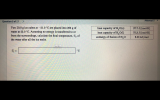 Question 5 of 17 > Attempt 5 Two 20.0 g ice cubes at -21.0 °C are placed into 285 g of water at 25.0 °C. Assuming no energy is transferred to or from the surroundings, calculate the final temperature, Tf, of the water after all the ice melts. heat capacity of H,O(s) heat capacity of H, 0(1) enthalpy of fusion of H,O 37.7J/(mol-K) 75.3 J/(mol.K) 6.01 kJ/mol View Menu Tp =
 need help with
3 Question (1 point) A 296.0 g piece of granite, heated to 551.0°C in a campfire, is dropped into 1.20 L water (d - 1.00 g/ml) at 25.0°C. The molar heat capacity of water is Gpwater = 75.3J/(mol-C), and the specific heat of granite is granite = 0.790 J/g °C). 4th attempt hi See Peri Calculate the final temperature of the granite.
need help with
3 Question (1 point) A 296.0 g piece of granite, heated to 551.0°C in a campfire, is dropped into 1.20 L water (d - 1.00 g/ml) at 25.0°C. The molar heat capacity of water is Gpwater = 75.3J/(mol-C), and the specific heat of granite is granite = 0.790 J/g °C). 4th attempt hi See Peri Calculate the final temperature of the granite.
 A 92.5 g piece of aluminum (which has a molar heat capacity of 24.03]/°C-mol) is heated to 624°C and dropped into a calorimeter containing water (specific heat capacity of water is 4.18 J/g°C) initially at 19.2°C. The final temperature of the water is 135.2°C. Ignoring significant figures, calculate the mass of water in the calorimeter.
 b. A 92.5 g piece of aluminum (which has a molar heat capacity of 24.03 J/°C-mol) is heated to 621 and dropped into a calorimeter containing water (specific heat capacity of water is 1.10 MB initially at 19.2°C. The final temperature of the water is 135.2°C. Ignoring significant figures, calculate the mass of water in the calorimeter.
 Question 22 (3 points) A 42.1 g piece of metal was heated to 95.4°C and then dropped into a beaker containing 42.0 g of water at 23.00°C. When the water and metal come to thermal equilibrium, the temperature is 32.10°C. What is the specific heat capacity of the metal? The specific heat capacity of the water is 4.184 J/(g-K) 0.387 J/(g-K) 0.600 J/(g-K) 0.488 J/(g-K) 0.720 J/(g-K) 0.980 J/(g-K)
 Question 5 of 17 > Attempt 5 Two 20.0 g ice cubes at -21.0 °C are placed into 285 g of water at 25.0 °C. Assuming no energy is transferred to or from the surroundings, calculate the final temperature, Tf, of the water after all the ice melts. heat capacity of H,O(s) heat capacity of H, 0(1) enthalpy of fusion of H,O 37.7J/(mol-K) 75.3 J/(mol.K) 6.01 kJ/mol View Menu Tp =
Most questions answered within 3 hours.
-
Where is the error in this code sequence?
String s1 = "Hello";
String s2 = "ello";...
asked 11 months ago -
Financial data for Joel de Paris, Inc., for last year
follow:
Joel de Paris, Inc.
Balance...
asked 11 months ago -
Consider this reaction:
Al2(SO4)3 (aq)+ BaCl3
(aq) Al2Cl6 (aq)- +
3BaSO4(s) . What is the...
asked 11 months ago -
Suppose that Savneet is considering increasing her
recent random sample from 20 car rentals to 40...
asked 11 months ago -
Trucks arrive at an unloading terminal at an average rate of 120
per hour.
Trucks arrive...
asked 11 months ago -
Why are methanol and ethanol completely soluble in water while
octanol is not very little soluble....
asked 11 months ago -
A facilities manager at a university reads in a research report
that the mean amount of...
asked 11 months ago -
When the CuSO4 is rehydrated by adding water to the anhydrous
compound, is this an endothermic...
asked 11 months ago -
A ray of sunlight is passing from diamond into crown glass; the
angle of incidence is...
asked 11 months ago -
A block of mass 0.249 kg is placed on top of a light, vertical
spring of...
asked 11 months ago -
how do the kidneys compensate in the presences of acidosis
a) trigger hyperventilate
b) reserve acid...
asked 11 months ago -
Question 501 pts
The rental rate of capital to the firm increases. Which of the
following...
asked 11 months ago