How do I set the problems below in R?
How do I set the problems below in R?
Homework Answers
As per HomeworkLib policy we need to solve one question per post. Please post the remaining questions in another post.
How do I set the problems below in R? Use the rnorm function in R to...
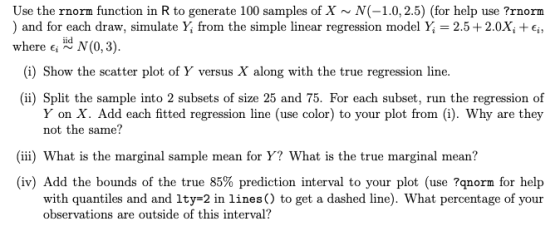
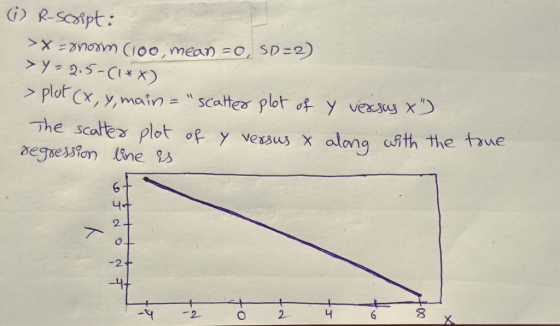
 How do I set the problems below in R? Use the rnorm function in R to generate 100 samples of X ~N(-1.0,2.5) (for help use ?rnorm ) and for each draw, simulate Yǐ from the simple linear regression model = 2.5+2.0x,+티, where e, N N(0,3 ). We were unable to transcribe this image
How do I set the problems below in R? Use the rnorm function in R to...
 How do I set the problems below in R? Use the rnorm function in R to generate 100 samples of X ~N(-1.0,2.5) (for help use ?rnorm ) and for each draw, simulate Yǐ from the simple linear regression model = 2.5+2.0x,+티, where e, N N(0,3 ). (iii) What is the marginal sample mean for Y? What is the true marginal mean?
How do I set the problems below in R? Use the rnorm function in R to...
 How do I set the problems below in R? Use the rnorm function in R to generate 100 samples of X ~N(-1.0,2.5) (for help use ?rnorm ) and for each draw, simulate Yǐ from the simple linear regression model = 2.5+2.0x,+티, where e, N N(0,3 ). (ii) Split the sample into 2 subsets of size 25 and 75. For each subset, run the regression of Y on X. Add each fitted regression line (use color) to your plot from (i)....
How do I set the problem in R? My data file is leverage.csv and the variables...
 How do I set the problem in R? My data file is leverage.csv and
the variables are: Date, SPX and VIX
Plot a summary of the predictive distribution (i.e., predictive mean and 90% interval. You will find lines command very helpful.) for VIX returns ranging from-20% to 20%.
How do I set the problem in R? My data file is leverage.csv and
the variables are: Date, SPX and VIX
Plot a summary of the predictive distribution (i.e., predictive mean and 90% interval. You will find lines command very helpful.) for VIX returns ranging from-20% to 20%.
I know how to do refraction problems involving different layers but I don't quite understand how...
I know how to do refraction problems involving different layers but I don't quite understand how to do it with prisms. Could you walk me through it? Thanks! 1.) The light beam in the figure below strikes surface 2 at the critical angle, ?c = 42
4. Set up (but do not solve) the associated v and w problems which homogenize the...
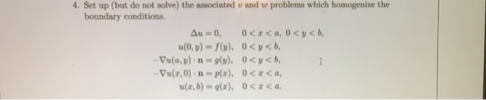 4. Set up (but do not solve) the associated v and w problems which homogenize the boundary conditions. Au=0 u(0, y)-f(u), 0 <y< b Vu(a,v) n-g(v), 0<y<b, Vu(r,0) n p(), 0<<a u(z,b)q(z), 0 <r<a. 0<r<a, 0<y < b I
PLEASE EXPLAIN HOW TO DO THESE PROBLEMS IN GREAT DETAIL SO THAT I CAN DO SIMILAR...
 PLEASE EXPLAIN HOW TO DO THESE PROBLEMS IN GREAT DETAIL SO THAT
I CAN DO SIMILAR PROBLEMS.
Use the diagram below for the following two questions.
Indicate the direction of the net electric field at point P using the direction arrows below. What is the electric potential at point P in the upper diagram? 5.39e3 V 1.0864 V 1.08e6V 0.0 V 4.40e3 V
PLEASE EXPLAIN HOW TO DO THESE PROBLEMS IN GREAT DETAIL SO THAT
I CAN DO SIMILAR PROBLEMS.
Use the diagram below for the following two questions.
Indicate the direction of the net electric field at point P using the direction arrows below. What is the electric potential at point P in the upper diagram? 5.39e3 V 1.0864 V 1.08e6V 0.0 V 4.40e3 V
how to do these five problems how to do these 6 problems 4- Zeis a multiple...
 how
to do these five problems
how
to do these 6 problems
4- Zeis a multiple } 1) Let Boteze is a multiple of 4 a) Prove that ASB b) Is BCA? Prove or disprove. 2) Let 4-CZ-3 scade Prove that A is equal to the set of even numbers. - PC-+7,rcz} 3) Let - EZ-4+3, rez} a) List 5 elements of A and 5 elements of B b) Is AC ? Prove or disprove. c) Is BC? Prove or...
how
to do these five problems
how
to do these 6 problems
4- Zeis a multiple } 1) Let Boteze is a multiple of 4 a) Prove that ASB b) Is BCA? Prove or disprove. 2) Let 4-CZ-3 scade Prove that A is equal to the set of even numbers. - PC-+7,rcz} 3) Let - EZ-4+3, rez} a) List 5 elements of A and 5 elements of B b) Is AC ? Prove or disprove. c) Is BC? Prove or...
Problems: Recall that GL(3, R) denotes the set of all non-singular 3× 3 ats over R,...
 Problems: Recall that GL(3, R) denotes the set of all non-singular 3× 3 ats over R, considered as a group with respect to multiplication. In (a)-(e) below, determine whether the given subset is a subgroup of GL(3, R).
How do I get the plot below in R? 95% Prediction Interval Std Dev Fit Area...
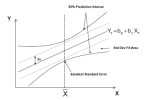 How do I get the plot below in R?
95% Prediction Interval Std Dev Fit Area ← 2s Smallest Standard Error
How do I get the plot below in R?
95% Prediction Interval Std Dev Fit Area ← 2s Smallest Standard Error
 How do I set the problems below in R? Use the rnorm function in R to generate 100 samples of X ~N(-1.0,2.5) (for help use ?rnorm ) and for each draw, simulate Yǐ from the simple linear regression model = 2.5+2.0x,+티, where e, N N(0,3 ). We were unable to transcribe this image
 How do I set the problems below in R? Use the rnorm function in R to generate 100 samples of X ~N(-1.0,2.5) (for help use ?rnorm ) and for each draw, simulate Yǐ from the simple linear regression model = 2.5+2.0x,+티, where e, N N(0,3 ). (iii) What is the marginal sample mean for Y? What is the true marginal mean?
 How do I set the problems below in R? Use the rnorm function in R to generate 100 samples of X ~N(-1.0,2.5) (for help use ?rnorm ) and for each draw, simulate Yǐ from the simple linear regression model = 2.5+2.0x,+티, where e, N N(0,3 ). (ii) Split the sample into 2 subsets of size 25 and 75. For each subset, run the regression of Y on X. Add each fitted regression line (use color) to your plot from (i)....
 How do I set the problem in R? My data file is leverage.csv and
the variables are: Date, SPX and VIX
Plot a summary of the predictive distribution (i.e., predictive mean and 90% interval. You will find lines command very helpful.) for VIX returns ranging from-20% to 20%.
How do I set the problem in R? My data file is leverage.csv and
the variables are: Date, SPX and VIX
Plot a summary of the predictive distribution (i.e., predictive mean and 90% interval. You will find lines command very helpful.) for VIX returns ranging from-20% to 20%.
 4. Set up (but do not solve) the associated v and w problems which homogenize the boundary conditions. Au=0 u(0, y)-f(u), 0 <y< b Vu(a,v) n-g(v), 0<y<b, Vu(r,0) n p(), 0<<a u(z,b)q(z), 0 <r<a. 0<r<a, 0<y < b I
 PLEASE EXPLAIN HOW TO DO THESE PROBLEMS IN GREAT DETAIL SO THAT
I CAN DO SIMILAR PROBLEMS.
Use the diagram below for the following two questions.
Indicate the direction of the net electric field at point P using the direction arrows below. What is the electric potential at point P in the upper diagram? 5.39e3 V 1.0864 V 1.08e6V 0.0 V 4.40e3 V
PLEASE EXPLAIN HOW TO DO THESE PROBLEMS IN GREAT DETAIL SO THAT
I CAN DO SIMILAR PROBLEMS.
Use the diagram below for the following two questions.
Indicate the direction of the net electric field at point P using the direction arrows below. What is the electric potential at point P in the upper diagram? 5.39e3 V 1.0864 V 1.08e6V 0.0 V 4.40e3 V
 how
to do these five problems
how
to do these 6 problems
4- Zeis a multiple } 1) Let Boteze is a multiple of 4 a) Prove that ASB b) Is BCA? Prove or disprove. 2) Let 4-CZ-3 scade Prove that A is equal to the set of even numbers. - PC-+7,rcz} 3) Let - EZ-4+3, rez} a) List 5 elements of A and 5 elements of B b) Is AC ? Prove or disprove. c) Is BC? Prove or...
how
to do these five problems
how
to do these 6 problems
4- Zeis a multiple } 1) Let Boteze is a multiple of 4 a) Prove that ASB b) Is BCA? Prove or disprove. 2) Let 4-CZ-3 scade Prove that A is equal to the set of even numbers. - PC-+7,rcz} 3) Let - EZ-4+3, rez} a) List 5 elements of A and 5 elements of B b) Is AC ? Prove or disprove. c) Is BC? Prove or...
 Problems: Recall that GL(3, R) denotes the set of all non-singular 3× 3 ats over R, considered as a group with respect to multiplication. In (a)-(e) below, determine whether the given subset is a subgroup of GL(3, R).
 How do I get the plot below in R?
95% Prediction Interval Std Dev Fit Area ← 2s Smallest Standard Error
How do I get the plot below in R?
95% Prediction Interval Std Dev Fit Area ← 2s Smallest Standard Error
Most questions answered within 3 hours.
-
Where is the error in this code sequence?
String s1 = "Hello";
String s2 = "ello";...
asked 10 months ago -
Financial data for Joel de Paris, Inc., for last year
follow:
Joel de Paris, Inc.
Balance...
asked 10 months ago -
Consider this reaction:
Al2(SO4)3 (aq)+ BaCl3
(aq) Al2Cl6 (aq)- +
3BaSO4(s) . What is the...
asked 10 months ago -
Suppose that Savneet is considering increasing her
recent random sample from 20 car rentals to 40...
asked 10 months ago -
Trucks arrive at an unloading terminal at an average rate of 120
per hour.
Trucks arrive...
asked 10 months ago -
Why are methanol and ethanol completely soluble in water while
octanol is not very little soluble....
asked 10 months ago -
A facilities manager at a university reads in a research report
that the mean amount of...
asked 10 months ago -
When the CuSO4 is rehydrated by adding water to the anhydrous
compound, is this an endothermic...
asked 10 months ago -
A ray of sunlight is passing from diamond into crown glass; the
angle of incidence is...
asked 10 months ago -
A block of mass 0.249 kg is placed on top of a light, vertical
spring of...
asked 10 months ago -
how do the kidneys compensate in the presences of acidosis
a) trigger hyperventilate
b) reserve acid...
asked 10 months ago -
Question 501 pts
The rental rate of capital to the firm increases. Which of the
following...
asked 10 months ago