
Homework Answers

Add Answer to:
2. Draw structures for the following alkyl halides. Be sure to indicate any stereochemistry as needed....
1. For each of the following structures, i. write the IUPAC name. (2 pts.) ii. classify...
 1. For each of the following structures, i. write the IUPAC name. (2 pts.) ii. classify each halogen as 1º, 2º, or 3º. (1 pt.) 2. Draw structures for the following alkyl halides. Be sure to indicate any stereochemistry as needed. (2 pts. each) a. 3,6-dibromo-3,6-dichlorononane b. 2-iodo-2-methylpentane Page 3 4. Indicate which alkyl halide you would expect to react more rapidly by an S12 mechanism. (2 pts.) Explain your answer. (2 pts.) 3. i. State which reagent you would...
Which of the following alkyl halides is likely to undergo rearrangement by a 1, 2- methyl...
 Which of the following alkyl halides is likely to undergo rearrangement by a 1, 2- methyl shift? A) 3-bromo-3-methylpentane B) 2-chloro-3, 3-dimethylpentane C) 3-bromo-2, 3-dimethylpentane D) 2-iodo-2-methylpentane Which of the following alkyl halides is the worst substrate for the Sn2 reaction? A) Br B) Br C) Br D) Br In the mechanism for the reaction shown below, the first curved arrow moves from_ to Н. CH3CH2NH2 H3C + CH3 A) carbon (in CH3CH2NH2) to oxygen B) oxygen to nitrogen C)...
Alkyl Halides: Elimination reaction with (2R,3R)-2-chloro-3-methylpentane Draw the product formed when (2R,3R)-2-chloro-3-methylpentane under-goes an elimination reaction...
Alkyl Halides: Elimination reaction with (2R,3R)-2-chloro-3-methylpentane Draw the product formed when (2R,3R)-2-chloro-3-methylpentane under-goes an elimination reaction with NaOCH3. Alkyl Halides: Elimination reaction with 3-chloro-3-ethyl-2,2-dimethylpentane. Draw the structure of the product that is formed when 3-chloro-3-ethyl-2,2-dimethylpentane undergoes an elimination reaction with NaOCH3. Indicate the stereochemistry of the product. Identify the three products formed when 2-bromo-2-methylpropane is dissolved in a mixture of 80% ethanol and 20% water.
2. Draw the bond-line structures of the following alkyl halides. Choose the compound that is mostly...
 2. Draw the bond-line structures of the following alkyl halides. Choose the compound that is mostly to undergo an S2 attack by a nucleophile in each of the following comparisons: a. chloromethane vs. 2-chloro-2-methylpropane (tert-butyl chloride) b. 2-chlorobutane vs. 1-chlorobutane c. l-chloro-2,2-dimethylpropane (neopentyl chloride) vs. l-chloropentane
Page 9 of 60 Question 9 (1 point) Which of the following alkyl halides is likely...
 Page 9 of 60 Question 9 (1 point) Which of the following alkyl halides is likely to undergo rearrangement by a 1, 2- methyl shift? A) 2-iodo-2-methylpentane B) 3-bromo-3-methylpentane C) 3-bromo-2, 3-dimethylpentane D) 2-chloro-3, 3-dimethylpentane
Draw the carbocation intermediate that is expected when each of the following alkyl halides undergoes ionization....
 Draw the carbocation intermediate that is expected when each of
the following alkyl halides undergoes ionization. In each case, if
the carbocation is resonance-stabilized, make sure to draw the
resonance structures. Include formal charges in your answer. Do not
add curved arrow(s) or resonance arrow(s) in your answer if
any.
x Your answer is incorrect. Try again. Edit By accessing this Question Assistance, you will learn while you earn points based on the Point Pot
Draw the carbocation intermediate that is expected when each of
the following alkyl halides undergoes ionization. In each case, if
the carbocation is resonance-stabilized, make sure to draw the
resonance structures. Include formal charges in your answer. Do not
add curved arrow(s) or resonance arrow(s) in your answer if
any.
x Your answer is incorrect. Try again. Edit By accessing this Question Assistance, you will learn while you earn points based on the Point Pot
3. (2 pts) Draw all possible elimination products for the following alkyl halides, circle the favored...
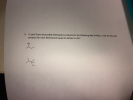 3. (2 pts) Draw all possible elimination products for the following alkyl halides, circle the favored product for each elimination based on Zaitsev's rule? Вг
Draw the structures of organic compounds A and B. Indicate stereochemistry where applicable. Draw the structures...
 Draw the structures of organic compounds A and B. Indicate
stereochemistry where applicable.
Draw the structures of organic compounds A and B. Indicate stereochemistry where applicable.
Draw the structures of organic compounds A and B. Indicate
stereochemistry where applicable.
Draw the structures of organic compounds A and B. Indicate stereochemistry where applicable.
Draw the structures of organic compounds A and B. Indicate stereochemistry where applicable. Draw the structures...
 Draw the structures of organic compounds A and B. Indicate
stereochemistry where applicable.
Draw the structures of organic compounds A and B. Indicate stereochemistry where applicable.
Draw the structures of organic compounds A and B. Indicate
stereochemistry where applicable.
Draw the structures of organic compounds A and B. Indicate stereochemistry where applicable.
Draw the structures of organic compounds A and B. Indicate stereochemistry where applicable. Draw the structures...
 Draw the structures of organic compounds A and B. Indicate
stereochemistry where applicable.
Draw the structures of organic compounds A and B. Indicate stereochemistry where applicable.
Draw the structures of organic compounds A and B. Indicate
stereochemistry where applicable.
Draw the structures of organic compounds A and B. Indicate stereochemistry where applicable.
 1. For each of the following structures, i. write the IUPAC name. (2 pts.) ii. classify each halogen as 1º, 2º, or 3º. (1 pt.) 2. Draw structures for the following alkyl halides. Be sure to indicate any stereochemistry as needed. (2 pts. each) a. 3,6-dibromo-3,6-dichlorononane b. 2-iodo-2-methylpentane Page 3 4. Indicate which alkyl halide you would expect to react more rapidly by an S12 mechanism. (2 pts.) Explain your answer. (2 pts.) 3. i. State which reagent you would...
 Which of the following alkyl halides is likely to undergo rearrangement by a 1, 2- methyl shift? A) 3-bromo-3-methylpentane B) 2-chloro-3, 3-dimethylpentane C) 3-bromo-2, 3-dimethylpentane D) 2-iodo-2-methylpentane Which of the following alkyl halides is the worst substrate for the Sn2 reaction? A) Br B) Br C) Br D) Br In the mechanism for the reaction shown below, the first curved arrow moves from_ to Н. CH3CH2NH2 H3C + CH3 A) carbon (in CH3CH2NH2) to oxygen B) oxygen to nitrogen C)...
 2. Draw the bond-line structures of the following alkyl halides. Choose the compound that is mostly to undergo an S2 attack by a nucleophile in each of the following comparisons: a. chloromethane vs. 2-chloro-2-methylpropane (tert-butyl chloride) b. 2-chlorobutane vs. 1-chlorobutane c. l-chloro-2,2-dimethylpropane (neopentyl chloride) vs. l-chloropentane
 Page 9 of 60 Question 9 (1 point) Which of the following alkyl halides is likely to undergo rearrangement by a 1, 2- methyl shift? A) 2-iodo-2-methylpentane B) 3-bromo-3-methylpentane C) 3-bromo-2, 3-dimethylpentane D) 2-chloro-3, 3-dimethylpentane
 Draw the carbocation intermediate that is expected when each of
the following alkyl halides undergoes ionization. In each case, if
the carbocation is resonance-stabilized, make sure to draw the
resonance structures. Include formal charges in your answer. Do not
add curved arrow(s) or resonance arrow(s) in your answer if
any.
x Your answer is incorrect. Try again. Edit By accessing this Question Assistance, you will learn while you earn points based on the Point Pot
Draw the carbocation intermediate that is expected when each of
the following alkyl halides undergoes ionization. In each case, if
the carbocation is resonance-stabilized, make sure to draw the
resonance structures. Include formal charges in your answer. Do not
add curved arrow(s) or resonance arrow(s) in your answer if
any.
x Your answer is incorrect. Try again. Edit By accessing this Question Assistance, you will learn while you earn points based on the Point Pot
 3. (2 pts) Draw all possible elimination products for the following alkyl halides, circle the favored product for each elimination based on Zaitsev's rule? Вг
 Draw the structures of organic compounds A and B. Indicate
stereochemistry where applicable.
Draw the structures of organic compounds A and B. Indicate stereochemistry where applicable.
Draw the structures of organic compounds A and B. Indicate
stereochemistry where applicable.
Draw the structures of organic compounds A and B. Indicate stereochemistry where applicable.
 Draw the structures of organic compounds A and B. Indicate
stereochemistry where applicable.
Draw the structures of organic compounds A and B. Indicate stereochemistry where applicable.
Draw the structures of organic compounds A and B. Indicate
stereochemistry where applicable.
Draw the structures of organic compounds A and B. Indicate stereochemistry where applicable.
 Draw the structures of organic compounds A and B. Indicate
stereochemistry where applicable.
Draw the structures of organic compounds A and B. Indicate stereochemistry where applicable.
Draw the structures of organic compounds A and B. Indicate
stereochemistry where applicable.
Draw the structures of organic compounds A and B. Indicate stereochemistry where applicable.
Most questions answered within 3 hours.
-
Where is the error in this code sequence?
String s1 = "Hello";
String s2 = "ello";...
asked 10 months ago -
Financial data for Joel de Paris, Inc., for last year
follow:
Joel de Paris, Inc.
Balance...
asked 10 months ago -
Consider this reaction:
Al2(SO4)3 (aq)+ BaCl3
(aq) Al2Cl6 (aq)- +
3BaSO4(s) . What is the...
asked 10 months ago -
Suppose that Savneet is considering increasing her
recent random sample from 20 car rentals to 40...
asked 10 months ago -
Trucks arrive at an unloading terminal at an average rate of 120
per hour.
Trucks arrive...
asked 10 months ago -
Why are methanol and ethanol completely soluble in water while
octanol is not very little soluble....
asked 10 months ago -
A facilities manager at a university reads in a research report
that the mean amount of...
asked 10 months ago -
When the CuSO4 is rehydrated by adding water to the anhydrous
compound, is this an endothermic...
asked 10 months ago -
A ray of sunlight is passing from diamond into crown glass; the
angle of incidence is...
asked 10 months ago -
A block of mass 0.249 kg is placed on top of a light, vertical
spring of...
asked 10 months ago -
how do the kidneys compensate in the presences of acidosis
a) trigger hyperventilate
b) reserve acid...
asked 10 months ago -
Question 501 pts
The rental rate of capital to the firm increases. Which of the
following...
asked 10 months ago