
Homework Answers
Add Answer to:
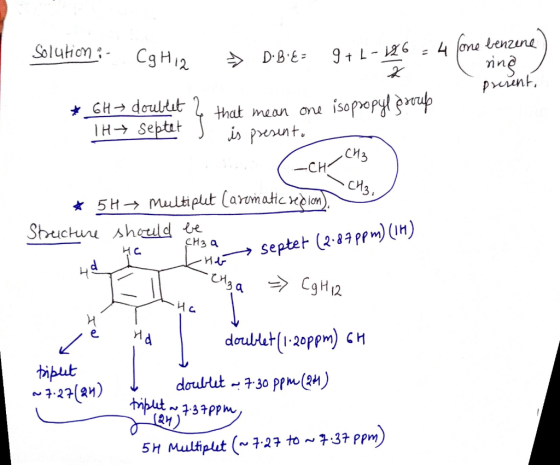
2.01 1.00 6.03 5.01 2.00 2.00 45 18 ) Compound H,C9H12, gives a proton NMR spectrum...
label the spectrum OTBS Meo Yome Me H NMR spectrum (CDC13, 400 MHz) 8.5 8.0 7.5...
 label the spectrum
OTBS Meo Yome Me H NMR spectrum (CDC13, 400 MHz) 8.5 8.0 7.5 7.0 6.5 6.0 5.5 5.0 4.5 4.0 f1 (ppm) 3.5 3.0 2.5 2.0 1.5 1.0 0.5 0.0 -0.5 18C NMR spectrum (CDCI, 100 MHz) 210 200 190 180 170 160 150 140 130 120 110 100 fi (ppm) 90 80 70 60 50 40 30 20 10 -10
label the spectrum
OTBS Meo Yome Me H NMR spectrum (CDC13, 400 MHz) 8.5 8.0 7.5 7.0 6.5 6.0 5.5 5.0 4.5 4.0 f1 (ppm) 3.5 3.0 2.5 2.0 1.5 1.0 0.5 0.0 -0.5 18C NMR spectrum (CDCI, 100 MHz) 210 200 190 180 170 160 150 140 130 120 110 100 fi (ppm) 90 80 70 60 50 40 30 20 10 -10
The 1H NMR spectrum has peaks (marked with "x") for a minor byproduct - what might...
 The 1H NMR spectrum has peaks (marked with "x") for a minor
byproduct - what might that be?
7.4741 7.3572 7.3393 -5.4109 4.2023 4.1906 -4.1725 4.1608 -3.5350 -3.5065 -3.4775 Spectrometer: 400 MHZ Solvent: CDCI T 4.4 4.3 4.2 4.1 4.0 3.9 3.8 3.7 3.6 3.5 3.4 3.3 <3.2368 CDCI, x = peak from minor byproduct do 1.00-1 F-602 3.1444 Feer to 7.5 7.0 6.5 6.0 5.5 5.0 4.5 4.0 3.5 3.0 2.5 2.0 1.5 ppm 1.0 CHEM 08LB: 1H NMR...
The 1H NMR spectrum has peaks (marked with "x") for a minor
byproduct - what might that be?
7.4741 7.3572 7.3393 -5.4109 4.2023 4.1906 -4.1725 4.1608 -3.5350 -3.5065 -3.4775 Spectrometer: 400 MHZ Solvent: CDCI T 4.4 4.3 4.2 4.1 4.0 3.9 3.8 3.7 3.6 3.5 3.4 3.3 <3.2368 CDCI, x = peak from minor byproduct do 1.00-1 F-602 3.1444 Feer to 7.5 7.0 6.5 6.0 5.5 5.0 4.5 4.0 3.5 3.0 2.5 2.0 1.5 ppm 1.0 CHEM 08LB: 1H NMR...
To give you more practice with analyzing NMR spectra, match each of the following 'H-NMR spectra...
 To give you more practice with analyzing NMR spectra, match each of the following 'H-NMR spectra to one of the five possible compounds (structures below). Assign the NMR peaks to their respective hydrogens. Possible compounds: CH2. (H3 diethyl malonate p-ethylanisole OH 3-methylbutanal 1-pentene 1-propanol 6.0 2.0 4.8 4.6 4.4 4.2 4.0 3.8 3.6 3.4 3.2 3.0 2.8 2.6 2.4 2.2 2.0 1.8 1.6 1.4 1.2 1.0 ppm a. 1.80 1.70 1.60 1.50 1.40 1.30 3.0 ( 2.0 | 2.0 2.32...
H2 Ha a) Given that the 'H NMR spectrum was acquired at 300 MHz, convert the ppm values...
 H2 Ha a) Given that the 'H NMR spectrum was acquired at 300 MHz, convert the ppm values for the alkenyl region to Hz and provide the cis proton coupling constant to 1 decimal place. CEC Ha OH b) Please provide the chemical shift values for i) Both alkyne carbons i) The aromatic carbon bearing the substituent ii)H iv) H v) H vi) H H NMR spectrum as 25 1C NMR spectrum 9911 1C NMR spectrum 90 60 10 170...
Identify the peak in the 1H NMR spectrum corresponding to the CH3 group, explain what coupling...
 Identify the peak in the 1H NMR spectrum corresponding to the
CH3 group, explain what coupling pattern it has and why it has that
pattern.
7.4741 7.3572 7.3393 -5.4109 4.2023 4.1906 -4.1725 4.1608 -3.5350 -3.5065 -3.4775 Spectrometer: 400 MHZ Solvent: CDCI T 4.4 4.3 4.2 4.1 4.0 3.9 3.8 3.7 3.6 3.5 3.4 3.3 <3.2368 CDCI, x = peak from minor byproduct do 1.00-1 F-602 3.1444 Feer to 7.5 7.0 6.5 6.0 5.5 5.0 4.5 4.0 3.5 3.0 2.5 2.0...
Identify the peak in the 1H NMR spectrum corresponding to the
CH3 group, explain what coupling pattern it has and why it has that
pattern.
7.4741 7.3572 7.3393 -5.4109 4.2023 4.1906 -4.1725 4.1608 -3.5350 -3.5065 -3.4775 Spectrometer: 400 MHZ Solvent: CDCI T 4.4 4.3 4.2 4.1 4.0 3.9 3.8 3.7 3.6 3.5 3.4 3.3 <3.2368 CDCI, x = peak from minor byproduct do 1.00-1 F-602 3.1444 Feer to 7.5 7.0 6.5 6.0 5.5 5.0 4.5 4.0 3.5 3.0 2.5 2.0...
identify the peak in the 1H NMR spectrum corresponding to the CH3 group, explain what coupling...
 identify the peak in the 1H NMR spectrum corresponding to the
CH3 group, explain what coupling pattern it has and why it has that
pattern.
7.4741 7.3572 7.3393 -5.4109 4.2023 4.1906 -4.1725 4.1608 -3.5350 -3.5065 -3.4775 Spectrometer: 400 MHZ Solvent: CDCI T 4.4 4.3 4.2 4.1 4.0 3.9 3.8 3.7 3.6 3.5 3.4 3.3 <3.2368 CDCI, x = peak from minor byproduct do 1.00-1 F-602 3.1444 Feer to 7.5 7.0 6.5 6.0 5.5 5.0 4.5 4.0 3.5 3.0 2.5 2.0...
identify the peak in the 1H NMR spectrum corresponding to the
CH3 group, explain what coupling pattern it has and why it has that
pattern.
7.4741 7.3572 7.3393 -5.4109 4.2023 4.1906 -4.1725 4.1608 -3.5350 -3.5065 -3.4775 Spectrometer: 400 MHZ Solvent: CDCI T 4.4 4.3 4.2 4.1 4.0 3.9 3.8 3.7 3.6 3.5 3.4 3.3 <3.2368 CDCI, x = peak from minor byproduct do 1.00-1 F-602 3.1444 Feer to 7.5 7.0 6.5 6.0 5.5 5.0 4.5 4.0 3.5 3.0 2.5 2.0...
A variety of spectra for an organic compound with molecular formula C10H16O are presented below. The experimental accurate mass using (+) APCI source is 153.1280 u. The 1H, 13C, COSY, HSQC and HMBC NM...
 A variety of spectra for an organic compound with molecular
formula C10H16O are presented below. The
experimental accurate mass using (+) APCI source is 153.1280 u. The
1H, 13C, COSY, HSQC and HMBC NMR spectra are given in the following
slides. Propose a structure for this unknown and answer or address
the following questions or requirements:
d. If there are still any questionable assignments, propose
additional NMR experiments which would solve those questions and
briefly explain specifically what correlations you...
A variety of spectra for an organic compound with molecular
formula C10H16O are presented below. The
experimental accurate mass using (+) APCI source is 153.1280 u. The
1H, 13C, COSY, HSQC and HMBC NMR spectra are given in the following
slides. Propose a structure for this unknown and answer or address
the following questions or requirements:
d. If there are still any questionable assignments, propose
additional NMR experiments which would solve those questions and
briefly explain specifically what correlations you...
In the proton NMR for benzil, there are clearly some impurity peaks below 8 ppm. Although...
 In the proton NMR for benzil, there are clearly some impurity
peaks below 8 ppm. Although we cannot assign these for certain, is
it possible that these peaks come from unreacted benzoin? Why or
why not?
8.0 8.3 7.5 8.2 NMR nuclei observed: H Solvent: CDCl3 NMR field strength: 400MHz 7.0 6.5 6.0 5.5 5.0 4.5 4.0 3.5 3.0 2.5 (ppm) f1 8.1 8.0 7.9 7.8 7.7 7.6 7.5 7.4 7.3 f1 (ppm) 11 10 12 13 14 2.0 1.5...
In the proton NMR for benzil, there are clearly some impurity
peaks below 8 ppm. Although we cannot assign these for certain, is
it possible that these peaks come from unreacted benzoin? Why or
why not?
8.0 8.3 7.5 8.2 NMR nuclei observed: H Solvent: CDCl3 NMR field strength: 400MHz 7.0 6.5 6.0 5.5 5.0 4.5 4.0 3.5 3.0 2.5 (ppm) f1 8.1 8.0 7.9 7.8 7.7 7.6 7.5 7.4 7.3 f1 (ppm) 11 10 12 13 14 2.0 1.5...
Assign the NMR peaks below DIRECTLY onto the paper, please!!!! The impurities are water at 2.19 p...
 Assign the NMR peaks below DIRECTLY onto the paper,
please!!!!
The impurities are water at 2.19 ppm and acetone at 1.6 ppm. So
just ignore those peaks. The peaks for the aromatic Hydrogens can
be grouped up to one (I believe they are the left most peaks at
around 7 to 7.5 ppm. Given that please assign the rest of the
hydrogens.
We were unable to transcribe this imager2 30 25 20 15 10 9.0 8.5 8.0 7.5 7.0 6.5...
Assign the NMR peaks below DIRECTLY onto the paper,
please!!!!
The impurities are water at 2.19 ppm and acetone at 1.6 ppm. So
just ignore those peaks. The peaks for the aromatic Hydrogens can
be grouped up to one (I believe they are the left most peaks at
around 7 to 7.5 ppm. Given that please assign the rest of the
hydrogens.
We were unable to transcribe this imager2 30 25 20 15 10 9.0 8.5 8.0 7.5 7.0 6.5...
A variety of spectra for an organic compound with molecular formula C10H16O are presented below. The experimental accurate mass using (+) APCI source is 153.1280 u. The 1H, 13C, COSY, HSQC and HMBC NM...
 A variety of spectra for an organic compound with molecular
formula C10H16O are presented below. The
experimental accurate mass using (+) APCI source is 153.1280 u. The
1H, 13C, COSY, HSQC and HMBC NMR spectra are given in the following
slides. Propose a structure for this unknown and answer or address
the following questions or requirements:
a. Using the most abundant isotopes of C, H and O, what are the
errors in ppm and milli-Daltons for the experimental accurate
mass?...
A variety of spectra for an organic compound with molecular
formula C10H16O are presented below. The
experimental accurate mass using (+) APCI source is 153.1280 u. The
1H, 13C, COSY, HSQC and HMBC NMR spectra are given in the following
slides. Propose a structure for this unknown and answer or address
the following questions or requirements:
a. Using the most abundant isotopes of C, H and O, what are the
errors in ppm and milli-Daltons for the experimental accurate
mass?...
 label the spectrum
OTBS Meo Yome Me H NMR spectrum (CDC13, 400 MHz) 8.5 8.0 7.5 7.0 6.5 6.0 5.5 5.0 4.5 4.0 f1 (ppm) 3.5 3.0 2.5 2.0 1.5 1.0 0.5 0.0 -0.5 18C NMR spectrum (CDCI, 100 MHz) 210 200 190 180 170 160 150 140 130 120 110 100 fi (ppm) 90 80 70 60 50 40 30 20 10 -10
label the spectrum
OTBS Meo Yome Me H NMR spectrum (CDC13, 400 MHz) 8.5 8.0 7.5 7.0 6.5 6.0 5.5 5.0 4.5 4.0 f1 (ppm) 3.5 3.0 2.5 2.0 1.5 1.0 0.5 0.0 -0.5 18C NMR spectrum (CDCI, 100 MHz) 210 200 190 180 170 160 150 140 130 120 110 100 fi (ppm) 90 80 70 60 50 40 30 20 10 -10
 The 1H NMR spectrum has peaks (marked with "x") for a minor
byproduct - what might that be?
7.4741 7.3572 7.3393 -5.4109 4.2023 4.1906 -4.1725 4.1608 -3.5350 -3.5065 -3.4775 Spectrometer: 400 MHZ Solvent: CDCI T 4.4 4.3 4.2 4.1 4.0 3.9 3.8 3.7 3.6 3.5 3.4 3.3 <3.2368 CDCI, x = peak from minor byproduct do 1.00-1 F-602 3.1444 Feer to 7.5 7.0 6.5 6.0 5.5 5.0 4.5 4.0 3.5 3.0 2.5 2.0 1.5 ppm 1.0 CHEM 08LB: 1H NMR...
The 1H NMR spectrum has peaks (marked with "x") for a minor
byproduct - what might that be?
7.4741 7.3572 7.3393 -5.4109 4.2023 4.1906 -4.1725 4.1608 -3.5350 -3.5065 -3.4775 Spectrometer: 400 MHZ Solvent: CDCI T 4.4 4.3 4.2 4.1 4.0 3.9 3.8 3.7 3.6 3.5 3.4 3.3 <3.2368 CDCI, x = peak from minor byproduct do 1.00-1 F-602 3.1444 Feer to 7.5 7.0 6.5 6.0 5.5 5.0 4.5 4.0 3.5 3.0 2.5 2.0 1.5 ppm 1.0 CHEM 08LB: 1H NMR...
 To give you more practice with analyzing NMR spectra, match each of the following 'H-NMR spectra to one of the five possible compounds (structures below). Assign the NMR peaks to their respective hydrogens. Possible compounds: CH2. (H3 diethyl malonate p-ethylanisole OH 3-methylbutanal 1-pentene 1-propanol 6.0 2.0 4.8 4.6 4.4 4.2 4.0 3.8 3.6 3.4 3.2 3.0 2.8 2.6 2.4 2.2 2.0 1.8 1.6 1.4 1.2 1.0 ppm a. 1.80 1.70 1.60 1.50 1.40 1.30 3.0 ( 2.0 | 2.0 2.32...
 H2 Ha a) Given that the 'H NMR spectrum was acquired at 300 MHz, convert the ppm values for the alkenyl region to Hz and provide the cis proton coupling constant to 1 decimal place. CEC Ha OH b) Please provide the chemical shift values for i) Both alkyne carbons i) The aromatic carbon bearing the substituent ii)H iv) H v) H vi) H H NMR spectrum as 25 1C NMR spectrum 9911 1C NMR spectrum 90 60 10 170...
 Identify the peak in the 1H NMR spectrum corresponding to the
CH3 group, explain what coupling pattern it has and why it has that
pattern.
7.4741 7.3572 7.3393 -5.4109 4.2023 4.1906 -4.1725 4.1608 -3.5350 -3.5065 -3.4775 Spectrometer: 400 MHZ Solvent: CDCI T 4.4 4.3 4.2 4.1 4.0 3.9 3.8 3.7 3.6 3.5 3.4 3.3 <3.2368 CDCI, x = peak from minor byproduct do 1.00-1 F-602 3.1444 Feer to 7.5 7.0 6.5 6.0 5.5 5.0 4.5 4.0 3.5 3.0 2.5 2.0...
Identify the peak in the 1H NMR spectrum corresponding to the
CH3 group, explain what coupling pattern it has and why it has that
pattern.
7.4741 7.3572 7.3393 -5.4109 4.2023 4.1906 -4.1725 4.1608 -3.5350 -3.5065 -3.4775 Spectrometer: 400 MHZ Solvent: CDCI T 4.4 4.3 4.2 4.1 4.0 3.9 3.8 3.7 3.6 3.5 3.4 3.3 <3.2368 CDCI, x = peak from minor byproduct do 1.00-1 F-602 3.1444 Feer to 7.5 7.0 6.5 6.0 5.5 5.0 4.5 4.0 3.5 3.0 2.5 2.0...
 identify the peak in the 1H NMR spectrum corresponding to the
CH3 group, explain what coupling pattern it has and why it has that
pattern.
7.4741 7.3572 7.3393 -5.4109 4.2023 4.1906 -4.1725 4.1608 -3.5350 -3.5065 -3.4775 Spectrometer: 400 MHZ Solvent: CDCI T 4.4 4.3 4.2 4.1 4.0 3.9 3.8 3.7 3.6 3.5 3.4 3.3 <3.2368 CDCI, x = peak from minor byproduct do 1.00-1 F-602 3.1444 Feer to 7.5 7.0 6.5 6.0 5.5 5.0 4.5 4.0 3.5 3.0 2.5 2.0...
identify the peak in the 1H NMR spectrum corresponding to the
CH3 group, explain what coupling pattern it has and why it has that
pattern.
7.4741 7.3572 7.3393 -5.4109 4.2023 4.1906 -4.1725 4.1608 -3.5350 -3.5065 -3.4775 Spectrometer: 400 MHZ Solvent: CDCI T 4.4 4.3 4.2 4.1 4.0 3.9 3.8 3.7 3.6 3.5 3.4 3.3 <3.2368 CDCI, x = peak from minor byproduct do 1.00-1 F-602 3.1444 Feer to 7.5 7.0 6.5 6.0 5.5 5.0 4.5 4.0 3.5 3.0 2.5 2.0...
 A variety of spectra for an organic compound with molecular
formula C10H16O are presented below. The
experimental accurate mass using (+) APCI source is 153.1280 u. The
1H, 13C, COSY, HSQC and HMBC NMR spectra are given in the following
slides. Propose a structure for this unknown and answer or address
the following questions or requirements:
d. If there are still any questionable assignments, propose
additional NMR experiments which would solve those questions and
briefly explain specifically what correlations you...
A variety of spectra for an organic compound with molecular
formula C10H16O are presented below. The
experimental accurate mass using (+) APCI source is 153.1280 u. The
1H, 13C, COSY, HSQC and HMBC NMR spectra are given in the following
slides. Propose a structure for this unknown and answer or address
the following questions or requirements:
d. If there are still any questionable assignments, propose
additional NMR experiments which would solve those questions and
briefly explain specifically what correlations you...
 In the proton NMR for benzil, there are clearly some impurity
peaks below 8 ppm. Although we cannot assign these for certain, is
it possible that these peaks come from unreacted benzoin? Why or
why not?
8.0 8.3 7.5 8.2 NMR nuclei observed: H Solvent: CDCl3 NMR field strength: 400MHz 7.0 6.5 6.0 5.5 5.0 4.5 4.0 3.5 3.0 2.5 (ppm) f1 8.1 8.0 7.9 7.8 7.7 7.6 7.5 7.4 7.3 f1 (ppm) 11 10 12 13 14 2.0 1.5...
In the proton NMR for benzil, there are clearly some impurity
peaks below 8 ppm. Although we cannot assign these for certain, is
it possible that these peaks come from unreacted benzoin? Why or
why not?
8.0 8.3 7.5 8.2 NMR nuclei observed: H Solvent: CDCl3 NMR field strength: 400MHz 7.0 6.5 6.0 5.5 5.0 4.5 4.0 3.5 3.0 2.5 (ppm) f1 8.1 8.0 7.9 7.8 7.7 7.6 7.5 7.4 7.3 f1 (ppm) 11 10 12 13 14 2.0 1.5...
 Assign the NMR peaks below DIRECTLY onto the paper,
please!!!!
The impurities are water at 2.19 ppm and acetone at 1.6 ppm. So
just ignore those peaks. The peaks for the aromatic Hydrogens can
be grouped up to one (I believe they are the left most peaks at
around 7 to 7.5 ppm. Given that please assign the rest of the
hydrogens.
We were unable to transcribe this imager2 30 25 20 15 10 9.0 8.5 8.0 7.5 7.0 6.5...
Assign the NMR peaks below DIRECTLY onto the paper,
please!!!!
The impurities are water at 2.19 ppm and acetone at 1.6 ppm. So
just ignore those peaks. The peaks for the aromatic Hydrogens can
be grouped up to one (I believe they are the left most peaks at
around 7 to 7.5 ppm. Given that please assign the rest of the
hydrogens.
We were unable to transcribe this imager2 30 25 20 15 10 9.0 8.5 8.0 7.5 7.0 6.5...
 A variety of spectra for an organic compound with molecular
formula C10H16O are presented below. The
experimental accurate mass using (+) APCI source is 153.1280 u. The
1H, 13C, COSY, HSQC and HMBC NMR spectra are given in the following
slides. Propose a structure for this unknown and answer or address
the following questions or requirements:
a. Using the most abundant isotopes of C, H and O, what are the
errors in ppm and milli-Daltons for the experimental accurate
mass?...
A variety of spectra for an organic compound with molecular
formula C10H16O are presented below. The
experimental accurate mass using (+) APCI source is 153.1280 u. The
1H, 13C, COSY, HSQC and HMBC NMR spectra are given in the following
slides. Propose a structure for this unknown and answer or address
the following questions or requirements:
a. Using the most abundant isotopes of C, H and O, what are the
errors in ppm and milli-Daltons for the experimental accurate
mass?...
Most questions answered within 3 hours.
-
Where is the error in this code sequence?
String s1 = "Hello";
String s2 = "ello";...
asked 11 months ago -
Financial data for Joel de Paris, Inc., for last year
follow:
Joel de Paris, Inc.
Balance...
asked 11 months ago -
Consider this reaction:
Al2(SO4)3 (aq)+ BaCl3
(aq) Al2Cl6 (aq)- +
3BaSO4(s) . What is the...
asked 11 months ago -
Suppose that Savneet is considering increasing her
recent random sample from 20 car rentals to 40...
asked 11 months ago -
Trucks arrive at an unloading terminal at an average rate of 120
per hour.
Trucks arrive...
asked 11 months ago -
Why are methanol and ethanol completely soluble in water while
octanol is not very little soluble....
asked 11 months ago -
A facilities manager at a university reads in a research report
that the mean amount of...
asked 11 months ago -
When the CuSO4 is rehydrated by adding water to the anhydrous
compound, is this an endothermic...
asked 11 months ago -
A ray of sunlight is passing from diamond into crown glass; the
angle of incidence is...
asked 11 months ago -
A block of mass 0.249 kg is placed on top of a light, vertical
spring of...
asked 11 months ago -
how do the kidneys compensate in the presences of acidosis
a) trigger hyperventilate
b) reserve acid...
asked 11 months ago -
Question 501 pts
The rental rate of capital to the firm increases. Which of the
following...
asked 11 months ago