
Homework Answers
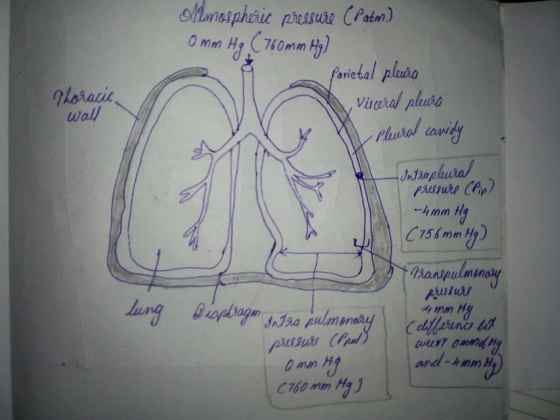
During inspiration the intrapulmonary pressure and intrapleural pressure increases because while inspiring the lung volume increases and so pressure also increases.
The muscles involved in quiet inspiration:
Diaphragm
External intercoastal
Intercartilaginous
The muscles involved in forced inspiration:
Scaleness
Sternocleidomastoid muscle
The lungs are sealed to the Diaphragm by pleura.
During expiration the intrapulmonary and intrapleural pressure decreases and comes to normal level. Because during expiration the air is going out and volume of lung is decreased.
The muscle involved in quiet expiration:
All the respiratory muscles are relaxed
The muscles involved in forced expiration:
External intercoastal
Pectoral
Abdominal muscles
2)
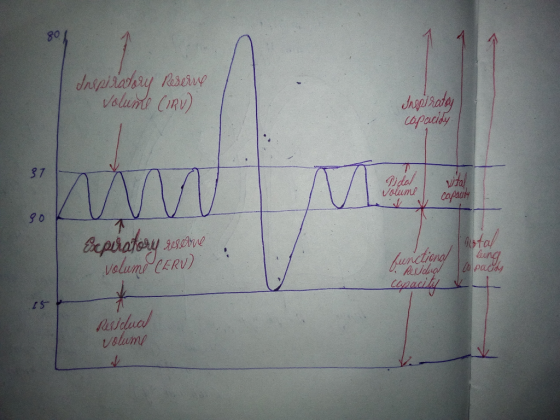
Add Answer to:
.Draw another diagram of the lungs, but this time with the pleura. Indicate the relative pressures...
1. Ventilation include A. inspiration only B. expiration only c. both inspiration and expiration d. the...
1. Ventilation include A. inspiration only B. expiration only c. both inspiration and expiration d. the volume of air that can be exhaled 2. What part of the respiratory system carries out gas exchange? a. larynx b. nasal cavity c. lungs d. diaphragm 3. Which of the following is NOT part of the inspiration? a. the pressure in the lung increases b. the rib cage moves up and out c. the intercostal muscles pull the ribs outwards d. the diaphragm...
Section 1 (2 pts) 1) Which of the following is true: A. the diaphragm is responsible...
 Section 1 (2 pts) 1) Which of the following is true: A. the diaphragm is responsible for 75% of thoracic expansion B. expiration is dependent upon external intercostal muscle activity C. Intrapulmonary pressure is always greater than atmospheric pressure D. The diaphragm and external intercostal muscles are two major accessory muscles OOOO 2) Which of the following statements on external respiration is true: (2pts) A. the concentration of oxygen is greater in pulmonary circulation than in the alveoli B. the...
decreases the long that (6 The nurse is describing the receptors in the long that a...
 decreases the long that (6 The nurse is describing the receptors in the long that a Ventilatory rate and volume when stimulated, which receptors is the nurse discussing ? a. carbon dioxide receptors b. Baroreceptors c. stretch receptors. d. chemoreceptors @ What nerve provides the lungs with para sympathetic innervation? a. vagus b. phrenic c. Brachial do Pectoral & If an individual with respiratory difficulty were retaining too much carbon dioxide, which of the following componsatory responses would the nurse...
Post Lab Forms-om Any M o m * * x + € → C - online...
 Post Lab Forms-om Any M o m * * x + € → C - online vi r e.com/books/9781307132225/6/ 0.00617 CARON Exercise 24.10: Mechanics of Ventilation 20. Ain increase decrease in thoracic volume leads to an increase in intrapulmonary pressure 21. A decrease in intrapulmonary pressure allows air to flow _linto/out of the lungs, Exercise 24. 11: Auscultation of Respiratory Sounds 22. The optimal position for auscultation of bronchial sounds is over the xiphold process of the sternum _True/Falsel Exercise...
1. Select ALL statements that correctly describe a function of the Respiratory System, or describe a...
1. Select ALL statements that correctly describe a function of the Respiratory System, or describe a process of Respiration. a. Moves air in and out of the body. b. Warms and humidifies the air. c. Regulates the cellular compositon of the blood. d. Filters the air. e. Exchanges gases with the blood. f. Occurs in the Lung. g. All of the above. 2. Select the correct set of gross structures associated with the Lung. A. 1. Two large organs 2....
OPTIONA OPTIONS 1. Site of gas exchange in lungs 2. Bicarbonate formation occurs in the 3....
 OPTIONA OPTIONS 1. Site of gas exchange in lungs 2. Bicarbonate formation occurs in the 3. Greater dead space volume alveolar ventilation 4. Anatomic dead space is found in the 5. In normal, quiet breathing, expiration is 6. Gas exchange across the respiratory membrane occurs by 7. During inspiration, the external intercostals 8. A right shift of the OD curve indicates higher oxygen 9. Bicarbonates are transported in the 10. The diaphragm contracts during 11. CO, is mostly transported in...
LABORATORY 9 Lab Report: Respiratory System: Physiology 1. Purpose of this exercise: Procedure 1. View histological...
 LABORATORY 9 Lab Report: Respiratory System: Physiology 1. Purpose of this exercise: Procedure 1. View histological slides pertaining to the respiratory system. 2. View torso and Respiratory models and diagrams. Questions 1. State the role carbon dioxide plays in maintaining a consistent blood pH. 2. There are two pairs of vocal folds. Which pair are the true vocal cords (superior/inferior)? Explain how the vocal cords produce speech? 3. State the function of the following structures nasal mucosa glottis cardiac notch...
Name 13. During gas exchange in the lungs, several factors affect the rate of gas diffusion acros...
 Name 13. During gas exchange in the lungs, several factors affect the rate of gas diffusion across alveolar (the alveoli are tiny air sacs in the lungs) and tissue membranes. One of the factors is the difference in partial pressures of the gases across the membranes. The gases will diffuse from an area of high partial pressure to an area of low partial pressure, Look at the illustration below and note which blood vessels carry blood away from the lungs...
Which of these statements regarding the structure of the respiratory system is INCORRECT? The nose and...
Which of these statements regarding the structure of the respiratory system is INCORRECT? The nose and pharynx are primarily involved in warming and humidifying air The bronchial tree becomes increasingly smaller towards the alveoli with the primary bronchi involved in filtering the air and removing foreign particles In the alveoli Type I cells are involved in surfactant production and Type II cells are involved in gas exchange The conducting airways of the lower respiratory system include the trachea and primary...
Joe Smith is a 69-year-old male with a 50-year history of smoking 2 packs of cigarettes...
 Joe Smith is a 69-year-old male with a 50-year history of
smoking 2 packs of cigarettes a day (i.e. 100-pack-year smoking
history). Over the past 5 years, he has become increasingly short
of breath. At first, he noticed this only when exercising, but now
he is even short of breath at rest. Over the past two years, he has
had several bouts of lower respiratory tract infection treated
successfully with antibiotics. His shortness of breath hasn't
subsided, and his breathing...
Joe Smith is a 69-year-old male with a 50-year history of
smoking 2 packs of cigarettes a day (i.e. 100-pack-year smoking
history). Over the past 5 years, he has become increasingly short
of breath. At first, he noticed this only when exercising, but now
he is even short of breath at rest. Over the past two years, he has
had several bouts of lower respiratory tract infection treated
successfully with antibiotics. His shortness of breath hasn't
subsided, and his breathing...
 Section 1 (2 pts) 1) Which of the following is true: A. the diaphragm is responsible for 75% of thoracic expansion B. expiration is dependent upon external intercostal muscle activity C. Intrapulmonary pressure is always greater than atmospheric pressure D. The diaphragm and external intercostal muscles are two major accessory muscles OOOO 2) Which of the following statements on external respiration is true: (2pts) A. the concentration of oxygen is greater in pulmonary circulation than in the alveoli B. the...
 decreases the long that (6 The nurse is describing the receptors in the long that a Ventilatory rate and volume when stimulated, which receptors is the nurse discussing ? a. carbon dioxide receptors b. Baroreceptors c. stretch receptors. d. chemoreceptors @ What nerve provides the lungs with para sympathetic innervation? a. vagus b. phrenic c. Brachial do Pectoral & If an individual with respiratory difficulty were retaining too much carbon dioxide, which of the following componsatory responses would the nurse...
 Post Lab Forms-om Any M o m * * x + € → C - online vi r e.com/books/9781307132225/6/ 0.00617 CARON Exercise 24.10: Mechanics of Ventilation 20. Ain increase decrease in thoracic volume leads to an increase in intrapulmonary pressure 21. A decrease in intrapulmonary pressure allows air to flow _linto/out of the lungs, Exercise 24. 11: Auscultation of Respiratory Sounds 22. The optimal position for auscultation of bronchial sounds is over the xiphold process of the sternum _True/Falsel Exercise...
 OPTIONA OPTIONS 1. Site of gas exchange in lungs 2. Bicarbonate formation occurs in the 3. Greater dead space volume alveolar ventilation 4. Anatomic dead space is found in the 5. In normal, quiet breathing, expiration is 6. Gas exchange across the respiratory membrane occurs by 7. During inspiration, the external intercostals 8. A right shift of the OD curve indicates higher oxygen 9. Bicarbonates are transported in the 10. The diaphragm contracts during 11. CO, is mostly transported in...
 LABORATORY 9 Lab Report: Respiratory System: Physiology 1. Purpose of this exercise: Procedure 1. View histological slides pertaining to the respiratory system. 2. View torso and Respiratory models and diagrams. Questions 1. State the role carbon dioxide plays in maintaining a consistent blood pH. 2. There are two pairs of vocal folds. Which pair are the true vocal cords (superior/inferior)? Explain how the vocal cords produce speech? 3. State the function of the following structures nasal mucosa glottis cardiac notch...
 Name 13. During gas exchange in the lungs, several factors affect the rate of gas diffusion across alveolar (the alveoli are tiny air sacs in the lungs) and tissue membranes. One of the factors is the difference in partial pressures of the gases across the membranes. The gases will diffuse from an area of high partial pressure to an area of low partial pressure, Look at the illustration below and note which blood vessels carry blood away from the lungs...
 Joe Smith is a 69-year-old male with a 50-year history of
smoking 2 packs of cigarettes a day (i.e. 100-pack-year smoking
history). Over the past 5 years, he has become increasingly short
of breath. At first, he noticed this only when exercising, but now
he is even short of breath at rest. Over the past two years, he has
had several bouts of lower respiratory tract infection treated
successfully with antibiotics. His shortness of breath hasn't
subsided, and his breathing...
Joe Smith is a 69-year-old male with a 50-year history of
smoking 2 packs of cigarettes a day (i.e. 100-pack-year smoking
history). Over the past 5 years, he has become increasingly short
of breath. At first, he noticed this only when exercising, but now
he is even short of breath at rest. Over the past two years, he has
had several bouts of lower respiratory tract infection treated
successfully with antibiotics. His shortness of breath hasn't
subsided, and his breathing...
Most questions answered within 3 hours.
-
Where is the error in this code sequence?
String s1 = "Hello";
String s2 = "ello";...
asked 11 months ago -
Financial data for Joel de Paris, Inc., for last year
follow:
Joel de Paris, Inc.
Balance...
asked 11 months ago -
Consider this reaction:
Al2(SO4)3 (aq)+ BaCl3
(aq) Al2Cl6 (aq)- +
3BaSO4(s) . What is the...
asked 11 months ago -
Suppose that Savneet is considering increasing her
recent random sample from 20 car rentals to 40...
asked 11 months ago -
Trucks arrive at an unloading terminal at an average rate of 120
per hour.
Trucks arrive...
asked 11 months ago -
Why are methanol and ethanol completely soluble in water while
octanol is not very little soluble....
asked 11 months ago -
A facilities manager at a university reads in a research report
that the mean amount of...
asked 11 months ago -
When the CuSO4 is rehydrated by adding water to the anhydrous
compound, is this an endothermic...
asked 11 months ago -
A ray of sunlight is passing from diamond into crown glass; the
angle of incidence is...
asked 11 months ago -
A block of mass 0.249 kg is placed on top of a light, vertical
spring of...
asked 11 months ago -
how do the kidneys compensate in the presences of acidosis
a) trigger hyperventilate
b) reserve acid...
asked 11 months ago -
Question 501 pts
The rental rate of capital to the firm increases. Which of the
following...
asked 11 months ago