
Homework Answers
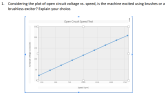
Presently, the large synchronous machines are using brush less excitation system. It is because it requires less maintenance due to the absence of brushes and slip rings. The power loss is also reduced . A Brushless Exciter is a small direct coupled AC generator with its field circuit on the stator and the armature circuit on the rotor. The three phase output of the AC exciter generator is rectified by solid state rectifiers. The rectified output is connected directly to the field winding, thus eliminating the use of brushes and slip rings.
Add Answer to:
Synchronous Machines
Considering the plot of open circuit voltage vs. speed, is the machine excited using...
Considering the plot of open circuit voltage vs. speed, is the machine excited using brushes or a...
 Synchronous Machines
Considering the plot of open circuit voltage vs. speed, is the machine excited using brushes or a brushless exciter? Explain your choice 1. Open Circuit Speed Test 200 150 2 100 50 1500 Speed (rpm
Considering the plot of open circuit voltage vs. speed, is the machine excited using brushes or a brushless exciter? Explain your choice 1. Open Circuit Speed Test 200 150 2 100 50 1500 Speed (rpm
Synchronous Machines
Considering the plot of open circuit voltage vs. speed, is the machine excited using brushes or a brushless exciter? Explain your choice 1. Open Circuit Speed Test 200 150 2 100 50 1500 Speed (rpm
Considering the plot of open circuit voltage vs. speed, is the machine excited using brushes or a brushless exciter? Explain your choice 1. Open Circuit Speed Test 200 150 2 100 50 1500 Speed (rpm
a. The figure below is a set of Synchronous Generator and Synchronous Motor. The ratings of...
 a. The figure below is a set of Synchronous Generator and Synchronous Motor. The ratings of the machines are as follows: Synchronous Generator:. 3ph, 1.0MVA, 2.3kV, 50Hz, 0.85 lagging power factor, X.=0.9 pu Synchronous Motor: 3ph, 0.5 MVA, 2.36V, 50Hz, 0.85 leading power factor, X.=0.8 pu Synchronous generator Synchronous motor The generator is equipped with a voltage regulator which maintains the terminal voltage at the rated value. The motor delivers 500 hp and it field current is adjusted to make...
The following readings were taken during an open-circuit test and short-circuit test on a three-phase, 10...
The following readings were taken during an open-circuit test and short-circuit test on a three-phase, 10 MVA, 13.8 kV, 50 Hz synchronous generator driven at rated speed. Open Circuit Test Field Current 150 A 180 A 200 A 250 A 300 A 350 A Line voltage 11.2 kV 12.0 kV 12.5 kV 13.5 kV 14.3 kV 14.8 kV Short Circuit Test Field Current 150 A 180 A Short Circuit Current 400 A 480 A a) Plot the open-circuit and short-circuit...
Results and Discussion: 1. Plot machine speed vs resistance
 DC series MOTOR...
LABResults and Discussion: 1. Plot machine speed vs resistance 2. Plot machine speed vs current 3. Explain the above plots 4. Using DC Motor Theory, explain the current profile you obtained 5. Plot the motor speed against the input voltage. Explain the results obtained. 6. Using the graph, right, determine the torque at each current setting. Plot the motor speed (n) against the torque (T) of the motor. Discuss the results obtained. 7. Calculate the efficiency of the motor at each current setting. Plot...
DC series MOTOR...
LABResults and Discussion: 1. Plot machine speed vs resistance 2. Plot machine speed vs current 3. Explain the above plots 4. Using DC Motor Theory, explain the current profile you obtained 5. Plot the motor speed against the input voltage. Explain the results obtained. 6. Using the graph, right, determine the torque at each current setting. Plot the motor speed (n) against the torque (T) of the motor. Discuss the results obtained. 7. Calculate the efficiency of the motor at each current setting. Plot...
1. (25 points) The following data are obtained from a 3-phase, 10MVA, 14kV, Y-connected synchronous machine....
 1. (25 points) The following data are obtained from a 3-phase, 10MVA, 14kV, Y-connected synchronous machine. Field Current (A)Open-Circuit Voltage Short-Circuit Current line-to-line 8.0 12.0 16.0 19.2 21.6 250 375 500 625 750 100 150 200 250 300 In the DC test, a voltage of 50V is applied and the current is found to be 25A. Find the per-phase unsaturated synchronous reactance and armature resistance for the machine
DC series MOTOR... LAB I need help answering question 6 and 7. Results and Discussion: 1. Plot machine speed vs resistance 2. Plot machine speed vs current 3. Explain the above plots 4. Using DC M...
 DC series MOTOR...
LAB
I need help answering question 6 and 7.
Results and Discussion: 1. Plot machine speed vs resistance 2. Plot machine speed vs current 3. Explain the above plots 4. Using DC Motor Theory, explain the current profile Totque (mV) 12 you obtained Plot the motor speed against the input voltage. Explain the results obtained. Using the graph, right, determine the torque at each current setting. Plot the motor speed (n) against the torque (T) of the...
DC series MOTOR...
LAB
I need help answering question 6 and 7.
Results and Discussion: 1. Plot machine speed vs resistance 2. Plot machine speed vs current 3. Explain the above plots 4. Using DC Motor Theory, explain the current profile Totque (mV) 12 you obtained Plot the motor speed against the input voltage. Explain the results obtained. Using the graph, right, determine the torque at each current setting. Plot the motor speed (n) against the torque (T) of the...
Test 3-ENT 371 Electric Machines-Ch 7,8,9 Name: 04- Chapter 8 Synchronous Motors Referring to the V curves in Figure 8.13, the machine is at 50% load with a Unity Power Factor. Mark the operating...
 Test 3-ENT 371 Electric Machines-Ch 7,8,9 Name: 04- Chapter 8 Synchronous Motors Referring to the V curves in Figure 8.13, the machine is at 50% load with a Unity Power Factor. Mark the operating point on the V-curve and estimate or determine: (a) The excitation voltage to maintain unity power factor is the machine is loaded to 50%? (b) If the load is increased to 100% and the field current is not changed, will the machine pull out of synchronism?...
Open/short circuit of star connected motor question help
Question: The equivalent circuit parameters of a 440 V, 3-phase, 8-poles, and 50 Hz star connected motor are given below. The short-circuit test is conducted with a locked rotor and a line current of 80 A. The open-circuit test is conducted by supplying the stator winding at rated voltage and at the same time driving the rotor in the same direction as the rotating field, at synchronous speed; s=0.R1 = 0.1, X1 = 0.5, RI2 = 0.1, XI2 = 0.5,...
DC-DC Converter Machine Drives D QUE D EA TI C+ ata at I A separately excited...
 DC-DC Converter Machine Drives D QUE D EA TI C+ ata at I A separately excited DC motor is powered by a full bridge power converter using MOSFET power transistors and freewheeling diodes as shown above, Converter: Vs - 250 V Switching frequency - 5 kHz. Two-quadrant mode: Q3 always open and Q4 always closed. Assume ideal switches and diodes. DC machine: R-50 m2 LA = 300 H Ex -0.2 V/(r/min) Ignore rotational losses and brush voltage drop Answer the...
R1=0.98ohms, pole pairs is 2 since rated speed is 1410 rpm and frequency is 50Hz Using this equivalent circuit, calculat...
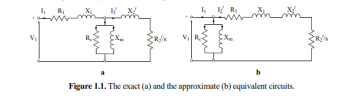 R1=0.98ohms, pole pairs is 2 since rated speed is 1410 rpm and
frequency is 50Hz
Using this equivalent circuit, calculate the following
quantities out by hand (showing your working) at rated speed when
operating with rated voltage.
1) Rated slip
2) Rated output torque (using torque equation)
3) Rated output power
4) Magnitude and phase of rated stator current
5) rated input power
6) rated input power factor
7) rated efficiency
1В Ri I X3 I RI V R Xm...
R1=0.98ohms, pole pairs is 2 since rated speed is 1410 rpm and
frequency is 50Hz
Using this equivalent circuit, calculate the following
quantities out by hand (showing your working) at rated speed when
operating with rated voltage.
1) Rated slip
2) Rated output torque (using torque equation)
3) Rated output power
4) Magnitude and phase of rated stator current
5) rated input power
6) rated input power factor
7) rated efficiency
1В Ri I X3 I RI V R Xm...
 Synchronous Machines
Considering the plot of open circuit voltage vs. speed, is the machine excited using brushes or a brushless exciter? Explain your choice 1. Open Circuit Speed Test 200 150 2 100 50 1500 Speed (rpm
Considering the plot of open circuit voltage vs. speed, is the machine excited using brushes or a brushless exciter? Explain your choice 1. Open Circuit Speed Test 200 150 2 100 50 1500 Speed (rpm
Synchronous Machines
Considering the plot of open circuit voltage vs. speed, is the machine excited using brushes or a brushless exciter? Explain your choice 1. Open Circuit Speed Test 200 150 2 100 50 1500 Speed (rpm
Considering the plot of open circuit voltage vs. speed, is the machine excited using brushes or a brushless exciter? Explain your choice 1. Open Circuit Speed Test 200 150 2 100 50 1500 Speed (rpm
 a. The figure below is a set of Synchronous Generator and Synchronous Motor. The ratings of the machines are as follows: Synchronous Generator:. 3ph, 1.0MVA, 2.3kV, 50Hz, 0.85 lagging power factor, X.=0.9 pu Synchronous Motor: 3ph, 0.5 MVA, 2.36V, 50Hz, 0.85 leading power factor, X.=0.8 pu Synchronous generator Synchronous motor The generator is equipped with a voltage regulator which maintains the terminal voltage at the rated value. The motor delivers 500 hp and it field current is adjusted to make...
 1. (25 points) The following data are obtained from a 3-phase, 10MVA, 14kV, Y-connected synchronous machine. Field Current (A)Open-Circuit Voltage Short-Circuit Current line-to-line 8.0 12.0 16.0 19.2 21.6 250 375 500 625 750 100 150 200 250 300 In the DC test, a voltage of 50V is applied and the current is found to be 25A. Find the per-phase unsaturated synchronous reactance and armature resistance for the machine
 DC series MOTOR...
LAB
I need help answering question 6 and 7.
Results and Discussion: 1. Plot machine speed vs resistance 2. Plot machine speed vs current 3. Explain the above plots 4. Using DC Motor Theory, explain the current profile Totque (mV) 12 you obtained Plot the motor speed against the input voltage. Explain the results obtained. Using the graph, right, determine the torque at each current setting. Plot the motor speed (n) against the torque (T) of the...
DC series MOTOR...
LAB
I need help answering question 6 and 7.
Results and Discussion: 1. Plot machine speed vs resistance 2. Plot machine speed vs current 3. Explain the above plots 4. Using DC Motor Theory, explain the current profile Totque (mV) 12 you obtained Plot the motor speed against the input voltage. Explain the results obtained. Using the graph, right, determine the torque at each current setting. Plot the motor speed (n) against the torque (T) of the...
 Test 3-ENT 371 Electric Machines-Ch 7,8,9 Name: 04- Chapter 8 Synchronous Motors Referring to the V curves in Figure 8.13, the machine is at 50% load with a Unity Power Factor. Mark the operating point on the V-curve and estimate or determine: (a) The excitation voltage to maintain unity power factor is the machine is loaded to 50%? (b) If the load is increased to 100% and the field current is not changed, will the machine pull out of synchronism?...
 DC-DC Converter Machine Drives D QUE D EA TI C+ ata at I A separately excited DC motor is powered by a full bridge power converter using MOSFET power transistors and freewheeling diodes as shown above, Converter: Vs - 250 V Switching frequency - 5 kHz. Two-quadrant mode: Q3 always open and Q4 always closed. Assume ideal switches and diodes. DC machine: R-50 m2 LA = 300 H Ex -0.2 V/(r/min) Ignore rotational losses and brush voltage drop Answer the...
 R1=0.98ohms, pole pairs is 2 since rated speed is 1410 rpm and
frequency is 50Hz
Using this equivalent circuit, calculate the following
quantities out by hand (showing your working) at rated speed when
operating with rated voltage.
1) Rated slip
2) Rated output torque (using torque equation)
3) Rated output power
4) Magnitude and phase of rated stator current
5) rated input power
6) rated input power factor
7) rated efficiency
1В Ri I X3 I RI V R Xm...
R1=0.98ohms, pole pairs is 2 since rated speed is 1410 rpm and
frequency is 50Hz
Using this equivalent circuit, calculate the following
quantities out by hand (showing your working) at rated speed when
operating with rated voltage.
1) Rated slip
2) Rated output torque (using torque equation)
3) Rated output power
4) Magnitude and phase of rated stator current
5) rated input power
6) rated input power factor
7) rated efficiency
1В Ri I X3 I RI V R Xm...
Most questions answered within 3 hours.
-
Where is the error in this code sequence?
String s1 = "Hello";
String s2 = "ello";...
asked 10 months ago -
Financial data for Joel de Paris, Inc., for last year
follow:
Joel de Paris, Inc.
Balance...
asked 10 months ago -
Consider this reaction:
Al2(SO4)3 (aq)+ BaCl3
(aq) Al2Cl6 (aq)- +
3BaSO4(s) . What is the...
asked 10 months ago -
Suppose that Savneet is considering increasing her
recent random sample from 20 car rentals to 40...
asked 10 months ago -
Trucks arrive at an unloading terminal at an average rate of 120
per hour.
Trucks arrive...
asked 10 months ago -
Why are methanol and ethanol completely soluble in water while
octanol is not very little soluble....
asked 10 months ago -
A facilities manager at a university reads in a research report
that the mean amount of...
asked 10 months ago -
When the CuSO4 is rehydrated by adding water to the anhydrous
compound, is this an endothermic...
asked 10 months ago -
A ray of sunlight is passing from diamond into crown glass; the
angle of incidence is...
asked 10 months ago -
A block of mass 0.249 kg is placed on top of a light, vertical
spring of...
asked 10 months ago -
how do the kidneys compensate in the presences of acidosis
a) trigger hyperventilate
b) reserve acid...
asked 10 months ago -
Question 501 pts
The rental rate of capital to the firm increases. Which of the
following...
asked 10 months ago