
Homework Answers
Add Answer to:
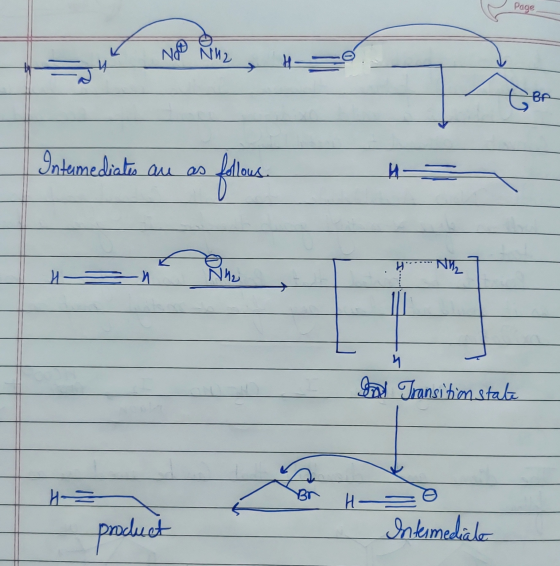
Draw the reaction mechanism
(c) NaNH2, Br (must show intermediate or transition state)
Press Esc to exit full screen Consider the reaction below. 6. CH3OH Br a. Give a complete curved-arrow reaction mechanism b. Draw the reaction-coordinate diagram for this reaction Draw the transition...
 Press Esc to exit full screen Consider the reaction below. 6. CH3OH Br a. Give a complete curved-arrow reaction mechanism b. Draw the reaction-coordinate diagram for this reaction Draw the transition state for the carbocation rearrangement. c. d. What is the driving force for this carbocation rearrangement?
Press Esc to exit full screen Consider the reaction below. 6. CH3OH Br a. Give a complete curved-arrow reaction mechanism b. Draw the reaction-coordinate diagram for this reaction Draw the transition state for...
Press Esc to exit full screen Consider the reaction below. 6. CH3OH Br a. Give a complete curved-arrow reaction mechanism b. Draw the reaction-coordinate diagram for this reaction Draw the transition state for the carbocation rearrangement. c. d. What is the driving force for this carbocation rearrangement?
Press Esc to exit full screen Consider the reaction below. 6. CH3OH Br a. Give a complete curved-arrow reaction mechanism b. Draw the reaction-coordinate diagram for this reaction Draw the transition state for...
Descriptions of enzyme mechanisms often contain the terms reaction intermediate, transition state, and transition state analogue....
 Descriptions of enzyme mechanisms often contain the terms
reaction intermediate, transition state, and transition state
analogue. The terms intermediate and transition state both describe
chemical species along the reaction pathway, but there are
important distinctions between the two. Transition state analogues
are often used in enzyme mechanism studies. Match the phrases to
the term that they describe. Scroll down to see all the items.
Descriptions of enzyme mechanisms often contain the terms reaction intermediate, transition state, and transition state analogue....
Descriptions of enzyme mechanisms often contain the terms
reaction intermediate, transition state, and transition state
analogue. The terms intermediate and transition state both describe
chemical species along the reaction pathway, but there are
important distinctions between the two. Transition state analogues
are often used in enzyme mechanism studies. Match the phrases to
the term that they describe. Scroll down to see all the items.
Descriptions of enzyme mechanisms often contain the terms reaction intermediate, transition state, and transition state analogue....
In the below reaction, which represents the transition state or intermediate that occurs? Br CH3 NaOH...
 In the below reaction, which represents the transition state or
intermediate that occurs?
Br CH3 NaOH I want me HzC CH3 HzC CHz
In the below reaction, which represents the transition state or
intermediate that occurs?
Br CH3 NaOH I want me HzC CH3 HzC CHz
3. Draw a detailed arrow-pushing mechanism for the following transformation. (4 pts) Br. Br 1. NaNH2...
 3. Draw a detailed arrow-pushing mechanism for the following transformation. (4 pts) Br. Br 1. NaNH2 2. H30+
Write the mechanism of the reaction of trans-2-butene with hydrogen bromide. Label the transition state and...
Write the mechanism of the reaction of trans-2-butene with hydrogen bromide. Label the transition state and intermediate and the product. Draw an energy diagram for this reaction assuming the reaction is exergonic.
1. Draw the transition state for the following SN2 reactions Br SH NaSH a. NaOH b....
 1. Draw the transition state for the following SN2 reactions Br SH NaSH a. NaOH b. Br OH OH NaOH C. d. 2. Draw the concerted mechanism of the SN2 reactions from the previous question. a. b. C. d.
3. (15 pts) Draw the complete stepwise mechanism for the following reactions. Show all intermediate Br...
 3. (15 pts) Draw the complete stepwise mechanism for the following reactions. Show all intermediate Br H2o Heat
5. For the following reaction: a) draw the substitution product. Br. но CH, b) Draw the...
 5. For the following reaction: a) draw the substitution product. Br. но CH, b) Draw the full mechanism of the reaction above, showing an SN2 pathway. Include all relevant electrons and curved arrows showing electron movement, AND draw the transition state. c) Draw the full mechanism of the reaction above, showing an Sn1 pathway. Include all relevant electrons and curved arrows showing electron movement, AND all intermediates in the reaction. d) Draw the energy diagrams of the Sw2 pathway and...
a) Consider sider this two-step reaction. Draw the structure for the transition state in each step...
 a) Consider sider this two-step reaction. Draw the structure for the transition state in each step of the mechanism. arly show any partially broken or partially formed bonds. Include only the hydrogens shown. (0.6 pts) Step 1 Step 2 (b) How many partially formed or partially broken bonds are found in the transition state structure for step 1? # of partially formed bonds (step 1) = ; # of partially broken bonds (step 1) = Will AH® for this reaction...
(a) Draw a stepwise, detailed mechanism for the following reaction. Used curved arrows to show the...
 (a) Draw a stepwise, detailed mechanism for the following reaction. Used curved arrows to show the movement of electrons. Br CN NaCN DMF NaBr (b) Assign the configuration (Ror S) of the chiral centre in the substrate and product (c) List the bonds broken and formed in this reaction (d) Assume that this is an endothermic reaction. Draw an energy diagram for this reaction. Label the axes, reactants, products, E, and AH. Draw the structure for both transition states.
 Press Esc to exit full screen Consider the reaction below. 6. CH3OH Br a. Give a complete curved-arrow reaction mechanism b. Draw the reaction-coordinate diagram for this reaction Draw the transition state for the carbocation rearrangement. c. d. What is the driving force for this carbocation rearrangement?
Press Esc to exit full screen Consider the reaction below. 6. CH3OH Br a. Give a complete curved-arrow reaction mechanism b. Draw the reaction-coordinate diagram for this reaction Draw the transition state for...
Press Esc to exit full screen Consider the reaction below. 6. CH3OH Br a. Give a complete curved-arrow reaction mechanism b. Draw the reaction-coordinate diagram for this reaction Draw the transition state for the carbocation rearrangement. c. d. What is the driving force for this carbocation rearrangement?
Press Esc to exit full screen Consider the reaction below. 6. CH3OH Br a. Give a complete curved-arrow reaction mechanism b. Draw the reaction-coordinate diagram for this reaction Draw the transition state for...
 Descriptions of enzyme mechanisms often contain the terms
reaction intermediate, transition state, and transition state
analogue. The terms intermediate and transition state both describe
chemical species along the reaction pathway, but there are
important distinctions between the two. Transition state analogues
are often used in enzyme mechanism studies. Match the phrases to
the term that they describe. Scroll down to see all the items.
Descriptions of enzyme mechanisms often contain the terms reaction intermediate, transition state, and transition state analogue....
Descriptions of enzyme mechanisms often contain the terms
reaction intermediate, transition state, and transition state
analogue. The terms intermediate and transition state both describe
chemical species along the reaction pathway, but there are
important distinctions between the two. Transition state analogues
are often used in enzyme mechanism studies. Match the phrases to
the term that they describe. Scroll down to see all the items.
Descriptions of enzyme mechanisms often contain the terms reaction intermediate, transition state, and transition state analogue....
 In the below reaction, which represents the transition state or
intermediate that occurs?
Br CH3 NaOH I want me HzC CH3 HzC CHz
In the below reaction, which represents the transition state or
intermediate that occurs?
Br CH3 NaOH I want me HzC CH3 HzC CHz
 3. Draw a detailed arrow-pushing mechanism for the following transformation. (4 pts) Br. Br 1. NaNH2 2. H30+
 1. Draw the transition state for the following SN2 reactions Br SH NaSH a. NaOH b. Br OH OH NaOH C. d. 2. Draw the concerted mechanism of the SN2 reactions from the previous question. a. b. C. d.
 3. (15 pts) Draw the complete stepwise mechanism for the following reactions. Show all intermediate Br H2o Heat
 5. For the following reaction: a) draw the substitution product. Br. но CH, b) Draw the full mechanism of the reaction above, showing an SN2 pathway. Include all relevant electrons and curved arrows showing electron movement, AND draw the transition state. c) Draw the full mechanism of the reaction above, showing an Sn1 pathway. Include all relevant electrons and curved arrows showing electron movement, AND all intermediates in the reaction. d) Draw the energy diagrams of the Sw2 pathway and...
 a) Consider sider this two-step reaction. Draw the structure for the transition state in each step of the mechanism. arly show any partially broken or partially formed bonds. Include only the hydrogens shown. (0.6 pts) Step 1 Step 2 (b) How many partially formed or partially broken bonds are found in the transition state structure for step 1? # of partially formed bonds (step 1) = ; # of partially broken bonds (step 1) = Will AH® for this reaction...
 (a) Draw a stepwise, detailed mechanism for the following reaction. Used curved arrows to show the movement of electrons. Br CN NaCN DMF NaBr (b) Assign the configuration (Ror S) of the chiral centre in the substrate and product (c) List the bonds broken and formed in this reaction (d) Assume that this is an endothermic reaction. Draw an energy diagram for this reaction. Label the axes, reactants, products, E, and AH. Draw the structure for both transition states.
Most questions answered within 3 hours.
-
Where is the error in this code sequence?
String s1 = "Hello";
String s2 = "ello";...
asked 11 months ago -
Financial data for Joel de Paris, Inc., for last year
follow:
Joel de Paris, Inc.
Balance...
asked 11 months ago -
Consider this reaction:
Al2(SO4)3 (aq)+ BaCl3
(aq) Al2Cl6 (aq)- +
3BaSO4(s) . What is the...
asked 11 months ago -
Suppose that Savneet is considering increasing her
recent random sample from 20 car rentals to 40...
asked 11 months ago -
Trucks arrive at an unloading terminal at an average rate of 120
per hour.
Trucks arrive...
asked 11 months ago -
Why are methanol and ethanol completely soluble in water while
octanol is not very little soluble....
asked 11 months ago -
A facilities manager at a university reads in a research report
that the mean amount of...
asked 11 months ago -
When the CuSO4 is rehydrated by adding water to the anhydrous
compound, is this an endothermic...
asked 11 months ago -
A ray of sunlight is passing from diamond into crown glass; the
angle of incidence is...
asked 11 months ago -
A block of mass 0.249 kg is placed on top of a light, vertical
spring of...
asked 11 months ago -
how do the kidneys compensate in the presences of acidosis
a) trigger hyperventilate
b) reserve acid...
asked 11 months ago -
Question 501 pts
The rental rate of capital to the firm increases. Which of the
following...
asked 11 months ago