
Homework Answers
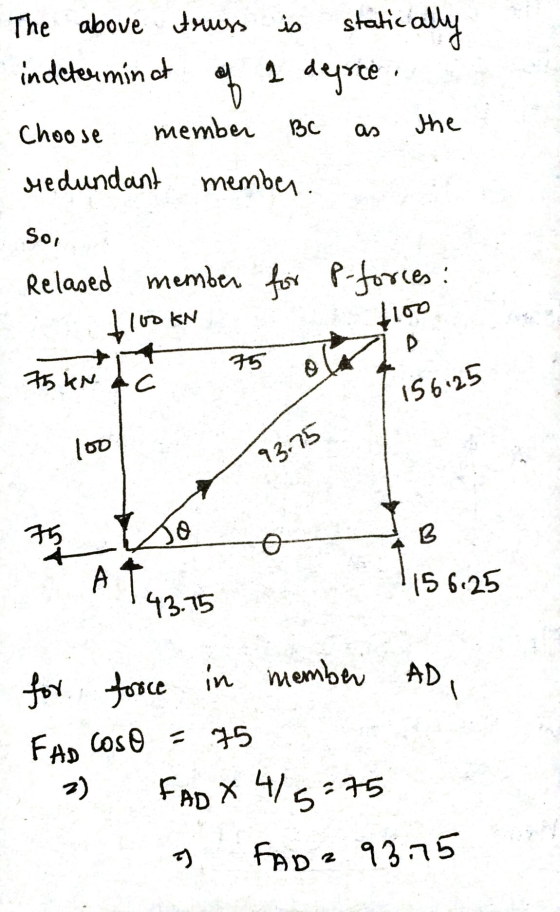
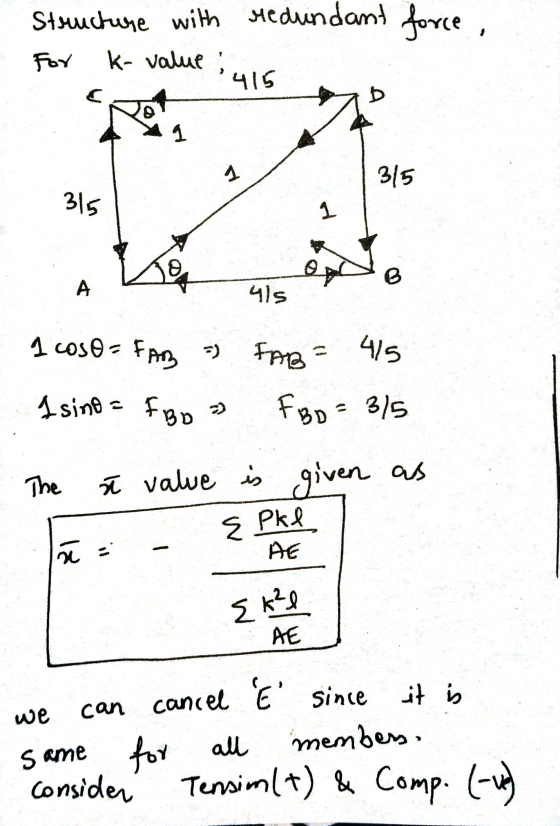
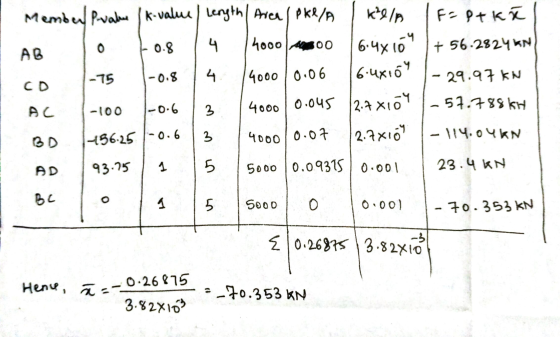
 DEAR
STUDENT, IF YOU HAVE ANY DOUBT, DO COMMENT. I WILL REPLY WITHIN FEW
SECONDS.
DEAR
STUDENT, IF YOU HAVE ANY DOUBT, DO COMMENT. I WILL REPLY WITHIN FEW
SECONDS.
DO UPVOTE
Add Answer to:
Theory of Structures
Determine ALL the SUPPORT REACTIONS and determine the forces in each member of...
SAN4701 JAN/FE8 2017 QUESTION 1 1 is having a hinge support at 1 and a roller support at 2. (E - 200 GPa) for all the m...
 SAN4701 JAN/FE8 2017 QUESTION 1 1 is having a hinge support at 1 and a roller support at 2. (E - 200 GPa) for all the members and the members 1, d 3 have their cross sectional areas as 4000 mm2, 4000 mm2 and 6000 mm2 The truss shown in Figure Assuming that E is constant respectively, use the matrix stiffness method to determine the following Number of degrees of freedom. a. (15) b. Structure stiffness matrıx. (10) c Member...
Problem 2: a. For the plane truss shown in Figure 2, determine the nodal displacements, the element forces and stresses, and the support reactions. All elements have E-70 GPa and A-25 cm 100 k...
 Problem 2: a. For the plane truss shown in Figure 2, determine the nodal displacements, the element forces and stresses, and the support reactions. All elements have E-70 GPa and A-25 cm 100 kN 50 kN 50 kN 4 4 6 Figure 2. Plane Truss
Problem 2: a. For the plane truss shown in Figure 2, determine the nodal displacements, the element forces and stresses, and the support reactions. All elements have E-70 GPa and A-25 cm 100 kN 50...
Problem 2: a. For the plane truss shown in Figure 2, determine the nodal displacements, the element forces and stresses, and the support reactions. All elements have E-70 GPa and A-25 cm 100 kN 50 kN 50 kN 4 4 6 Figure 2. Plane Truss
Problem 2: a. For the plane truss shown in Figure 2, determine the nodal displacements, the element forces and stresses, and the support reactions. All elements have E-70 GPa and A-25 cm 100 kN 50...
6.10 reactions and all internal forces 3m 6.9 and 6.10 Determine the force in each member...
 6.10
reactions and all internal forces
3m 6.9 and 6.10 Determine the force in each member of the truss shown. State whether each member is in tension (1) or compression (C). A 12.5 kN 12.5 kN 12.5 kN 12.5 KN 8 KN Fig. P6.9 2.5 m Fig. P6.10 6.11 Determine the force in each member of the Gambrel roof truss shown. State whether each member is in tension (T) or compression (C). 600 lb 600 lb 600 lb 2 ft...
6.10
reactions and all internal forces
3m 6.9 and 6.10 Determine the force in each member of the truss shown. State whether each member is in tension (1) or compression (C). A 12.5 kN 12.5 kN 12.5 kN 12.5 KN 8 KN Fig. P6.9 2.5 m Fig. P6.10 6.11 Determine the force in each member of the Gambrel roof truss shown. State whether each member is in tension (T) or compression (C). 600 lb 600 lb 600 lb 2 ft...
please fine the reactions as well as the truss forces in each member thank you ?...
 please fine the reactions as well as the truss forces in each
member
thank you ?
Australian College of Kuwall 0.072 KN 191,19 mm 268,81 mm 45° 381,27mm 270,38mm us 381,27 270,38 MM 191, 19 mm Find the reactions and truss forces in each member of
please fine the reactions as well as the truss forces in each
member
thank you ?
Australian College of Kuwall 0.072 KN 191,19 mm 268,81 mm 45° 381,27mm 270,38mm us 381,27 270,38 MM 191, 19 mm Find the reactions and truss forces in each member of
Example 16.1 Determine the loadings at the joints of the 2-member frame as shown. Take for...
 Example 16.1 Determine the loadings at the joints of the 2-member frame as shown. Take for both members: E-200 GPa I180(108) mm 6 m 20 kN 6 m Q. 3 (a) Determine the stiffness matrix of the 2-member frame as showil. Takefor both members: E = 200 GPa, 1-180(106) mm", A = 4000 mm (10 Marks) トーーーー6m_ 26 mm
QUESTION 1 [25 marks A frame loaded with a uniformly distributed load at Member AB and...
 QUESTION 1 [25 marks A frame loaded with a uniformly distributed load at Member AB and point load at Member BC and joint B. It has pinned supports A and C, while joint B is fixed connected, as can be seen in Figure 1. Take E-200 GPa. a) Using the slope-deflection method, calculate the moments and illustrate the bending moment diagram. [15 marks) b) Then calculate the shear forces and sketch the shear force diagram. [10 marks) 22 KN 10...
Determine the support reactions and member forces of the trusses shown. Verify the results with R...
 Determine the support reactions and member forces of the trusses shown. Verify the results with RISA-2D 4. 60 kips 15' a-4m 20kN
Determine the support reactions and member forces of the trusses shown. Verify the results with RISA-2D 4. 60 kips 15' a-4m 20kN
Determine the support reactions and member forces of the trusses shown. Verify the results with RISA-2D 4. 60 kips 15' a-4m 20kN
The cross-sectional area of each member of the truss shown in the figure is 4 =...
 The cross-sectional area of each member of the truss shown in the figure is 4 = 400 mm and E = 200 GPa. (a) Determine the vertical displacement of joint Cif a 4-KN force is applied to the truss at C. (b) If no loads act on the truss, what would be the vertical displacement of joint C if member AB were 5 mm too short? (c) If 4 kN force and fabrication error are both accounted, what would be...
If P = 40 kN, determine the internal forces acting on each member of the cantilever...
 If P = 40 kN, determine the internal forces acting on each
member of the cantilever truss below.
PROBLEM 4 If P = 40 kN, determine the internal forces acting on each member of the cantilever truss below. (35) D E 1.50 m A B 2.0 m 2.0 m 0.5P P
If P = 40 kN, determine the internal forces acting on each
member of the cantilever truss below.
PROBLEM 4 If P = 40 kN, determine the internal forces acting on each member of the cantilever truss below. (35) D E 1.50 m A B 2.0 m 2.0 m 0.5P P
If we use an I beam vs a solid beam will the support reactions and the force in each member stay the same? Assuming each member has a cross-sectional area of 180 mm² and E=kN/mm², Why or why not?...
 If we
use an I beam vs a solid beam will the support
reactions and the force in each member stay the same?
Assuming each member has a
cross-sectional area of 180 mm² and E=kN/mm², Why
or why not?
Statically Indeterminate Truss 1: VD 40 kN 3.0 m 3.0 m 6.0 m The cross-sectional area of all members is equal to 180 mm E-205 kN/mm2
Statically Indeterminate Truss 1: VD 40 kN 3.0 m 3.0 m 6.0 m The cross-sectional...
If we
use an I beam vs a solid beam will the support
reactions and the force in each member stay the same?
Assuming each member has a
cross-sectional area of 180 mm² and E=kN/mm², Why
or why not?
Statically Indeterminate Truss 1: VD 40 kN 3.0 m 3.0 m 6.0 m The cross-sectional area of all members is equal to 180 mm E-205 kN/mm2
Statically Indeterminate Truss 1: VD 40 kN 3.0 m 3.0 m 6.0 m The cross-sectional...
 SAN4701 JAN/FE8 2017 QUESTION 1 1 is having a hinge support at 1 and a roller support at 2. (E - 200 GPa) for all the members and the members 1, d 3 have their cross sectional areas as 4000 mm2, 4000 mm2 and 6000 mm2 The truss shown in Figure Assuming that E is constant respectively, use the matrix stiffness method to determine the following Number of degrees of freedom. a. (15) b. Structure stiffness matrıx. (10) c Member...
 Problem 2: a. For the plane truss shown in Figure 2, determine the nodal displacements, the element forces and stresses, and the support reactions. All elements have E-70 GPa and A-25 cm 100 kN 50 kN 50 kN 4 4 6 Figure 2. Plane Truss
Problem 2: a. For the plane truss shown in Figure 2, determine the nodal displacements, the element forces and stresses, and the support reactions. All elements have E-70 GPa and A-25 cm 100 kN 50...
Problem 2: a. For the plane truss shown in Figure 2, determine the nodal displacements, the element forces and stresses, and the support reactions. All elements have E-70 GPa and A-25 cm 100 kN 50 kN 50 kN 4 4 6 Figure 2. Plane Truss
Problem 2: a. For the plane truss shown in Figure 2, determine the nodal displacements, the element forces and stresses, and the support reactions. All elements have E-70 GPa and A-25 cm 100 kN 50...
 6.10
reactions and all internal forces
3m 6.9 and 6.10 Determine the force in each member of the truss shown. State whether each member is in tension (1) or compression (C). A 12.5 kN 12.5 kN 12.5 kN 12.5 KN 8 KN Fig. P6.9 2.5 m Fig. P6.10 6.11 Determine the force in each member of the Gambrel roof truss shown. State whether each member is in tension (T) or compression (C). 600 lb 600 lb 600 lb 2 ft...
6.10
reactions and all internal forces
3m 6.9 and 6.10 Determine the force in each member of the truss shown. State whether each member is in tension (1) or compression (C). A 12.5 kN 12.5 kN 12.5 kN 12.5 KN 8 KN Fig. P6.9 2.5 m Fig. P6.10 6.11 Determine the force in each member of the Gambrel roof truss shown. State whether each member is in tension (T) or compression (C). 600 lb 600 lb 600 lb 2 ft...
 please fine the reactions as well as the truss forces in each
member
thank you ?
Australian College of Kuwall 0.072 KN 191,19 mm 268,81 mm 45° 381,27mm 270,38mm us 381,27 270,38 MM 191, 19 mm Find the reactions and truss forces in each member of
please fine the reactions as well as the truss forces in each
member
thank you ?
Australian College of Kuwall 0.072 KN 191,19 mm 268,81 mm 45° 381,27mm 270,38mm us 381,27 270,38 MM 191, 19 mm Find the reactions and truss forces in each member of
 Example 16.1 Determine the loadings at the joints of the 2-member frame as shown. Take for both members: E-200 GPa I180(108) mm 6 m 20 kN 6 m Q. 3 (a) Determine the stiffness matrix of the 2-member frame as showil. Takefor both members: E = 200 GPa, 1-180(106) mm", A = 4000 mm (10 Marks) トーーーー6m_ 26 mm
 QUESTION 1 [25 marks A frame loaded with a uniformly distributed load at Member AB and point load at Member BC and joint B. It has pinned supports A and C, while joint B is fixed connected, as can be seen in Figure 1. Take E-200 GPa. a) Using the slope-deflection method, calculate the moments and illustrate the bending moment diagram. [15 marks) b) Then calculate the shear forces and sketch the shear force diagram. [10 marks) 22 KN 10...
 Determine the support reactions and member forces of the trusses shown. Verify the results with RISA-2D 4. 60 kips 15' a-4m 20kN
Determine the support reactions and member forces of the trusses shown. Verify the results with RISA-2D 4. 60 kips 15' a-4m 20kN
Determine the support reactions and member forces of the trusses shown. Verify the results with RISA-2D 4. 60 kips 15' a-4m 20kN
 The cross-sectional area of each member of the truss shown in the figure is 4 = 400 mm and E = 200 GPa. (a) Determine the vertical displacement of joint Cif a 4-KN force is applied to the truss at C. (b) If no loads act on the truss, what would be the vertical displacement of joint C if member AB were 5 mm too short? (c) If 4 kN force and fabrication error are both accounted, what would be...
 If P = 40 kN, determine the internal forces acting on each
member of the cantilever truss below.
PROBLEM 4 If P = 40 kN, determine the internal forces acting on each member of the cantilever truss below. (35) D E 1.50 m A B 2.0 m 2.0 m 0.5P P
If P = 40 kN, determine the internal forces acting on each
member of the cantilever truss below.
PROBLEM 4 If P = 40 kN, determine the internal forces acting on each member of the cantilever truss below. (35) D E 1.50 m A B 2.0 m 2.0 m 0.5P P
 If we
use an I beam vs a solid beam will the support
reactions and the force in each member stay the same?
Assuming each member has a
cross-sectional area of 180 mm² and E=kN/mm², Why
or why not?
Statically Indeterminate Truss 1: VD 40 kN 3.0 m 3.0 m 6.0 m The cross-sectional area of all members is equal to 180 mm E-205 kN/mm2
Statically Indeterminate Truss 1: VD 40 kN 3.0 m 3.0 m 6.0 m The cross-sectional...
If we
use an I beam vs a solid beam will the support
reactions and the force in each member stay the same?
Assuming each member has a
cross-sectional area of 180 mm² and E=kN/mm², Why
or why not?
Statically Indeterminate Truss 1: VD 40 kN 3.0 m 3.0 m 6.0 m The cross-sectional area of all members is equal to 180 mm E-205 kN/mm2
Statically Indeterminate Truss 1: VD 40 kN 3.0 m 3.0 m 6.0 m The cross-sectional...
Most questions answered within 3 hours.
-
Where is the error in this code sequence?
String s1 = "Hello";
String s2 = "ello";...
asked 10 months ago -
Financial data for Joel de Paris, Inc., for last year
follow:
Joel de Paris, Inc.
Balance...
asked 10 months ago -
Consider this reaction:
Al2(SO4)3 (aq)+ BaCl3
(aq) Al2Cl6 (aq)- +
3BaSO4(s) . What is the...
asked 10 months ago -
Suppose that Savneet is considering increasing her
recent random sample from 20 car rentals to 40...
asked 10 months ago -
Trucks arrive at an unloading terminal at an average rate of 120
per hour.
Trucks arrive...
asked 10 months ago -
Why are methanol and ethanol completely soluble in water while
octanol is not very little soluble....
asked 10 months ago -
A facilities manager at a university reads in a research report
that the mean amount of...
asked 10 months ago -
When the CuSO4 is rehydrated by adding water to the anhydrous
compound, is this an endothermic...
asked 10 months ago -
A ray of sunlight is passing from diamond into crown glass; the
angle of incidence is...
asked 10 months ago -
A block of mass 0.249 kg is placed on top of a light, vertical
spring of...
asked 10 months ago -
how do the kidneys compensate in the presences of acidosis
a) trigger hyperventilate
b) reserve acid...
asked 10 months ago -
Question 501 pts
The rental rate of capital to the firm increases. Which of the
following...
asked 10 months ago