1. It is a component of a refrigeration system that has high thermal conductivity and interests...
1. It is a component of a refrigeration system that has high thermal conductivity and interests with the refrigerant
2. The phase of the refrigerant at the inlet of the evaporator in an ideal Vapor compression refrigeration cycle is?
3. It is the type of stroke in an otto cycle where the piston is being pushed downward
4. This is a type of compressor which uses the piston motion for compression
Homework Answers
Answer -
1. Evaporater and Condenser have high thermal conductivity. Refrigerant absorbs heat from the refrigerated space in the evaporater so the thermal conductivity of the evaporater material should be high. Similarly, refrigerent rejects heat to the cold fluid. So it should have high thermal conductivity.
2. In ideal vapour compression system, the refrigerent at the entry of the evaporater is in wet state.
3. in the Expansion stroke, in the Otto cycle, the piston is piushed downwards. It is pushed due to the expansion of the burnt fuel.
4. Reciprocating compresser uses the piston motion for compression. Piston encloses the gas to be compressed and due to its reciprocating motion, compression process is completed.
Add Answer to:
1. It is a component of a refrigeration system that has high
thermal conductivity and interests...
Question 9 The phase of the refrigerant at the inlet of the evaporator in an ideal...
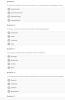 Question 9 The phase of the refrigerant at the inlet of the evaporator in an ideal Vapor Compression Refrigeration Cycle is A Saturated Liquid B Cannot be determined C Superheated Vapor D Saturated Mixture Question 10 It is the type of stroke in an Otto cycle where the piston is being pushed downward A Compression B Exhaust C Combustion D Intake Question 11 This is a type of compressor which uses the piston motion for compression A Centrifugal B Reciprocating...
Please also draw the T-S diagrams and PH diagrams to facilitate understanding. Thank you. 5. The refrigeration system s...
 Please also draw the T-S diagrams and PH diagrams to facilitate
understanding. Thank you.
5. The refrigeration system shown below is another variation of the basic vapor compression refrigeration system which attempts to reduce the compression work. In this system, a heat exchanger is used to superheat the vapor entering the compressor while sub-cooling the liquid exiting from the condenser Consider a system of this type that uses refrigerant-134a as its refrigerant and operates the evaporator at -10°C, and the...
Please also draw the T-S diagrams and PH diagrams to facilitate
understanding. Thank you.
5. The refrigeration system shown below is another variation of the basic vapor compression refrigeration system which attempts to reduce the compression work. In this system, a heat exchanger is used to superheat the vapor entering the compressor while sub-cooling the liquid exiting from the condenser Consider a system of this type that uses refrigerant-134a as its refrigerant and operates the evaporator at -10°C, and the...
1. Wet Compression Refrigerator A standard vapor-compression refrigeration system produces 20 tons of refrigeration using R-12...
 1. Wet Compression Refrigerator A standard vapor-compression refrigeration system produces 20 tons of refrigeration using R-12 as a and an evaporator temperature of -33 °C. The system runs on the wet compression cycle. Determine (a) the refrigeration in [kJ/kg], (b) the circulating rate of R-12 in [kg/s], (c) the power required, (d) the COR, (e) the heat rejected in [kW], and (f) the volume flowrate of refrigerant at compressor inlet conditions. qin 87.5 kJ/kg COR 2.16 refrigerant while operating between...
Problem #1 [30 Points] Vapor Compression Refrigeration Cycle An ideal vapor compression refrigeration system cycle, with...
 Problem #1 [30 Points] Vapor Compression Refrigeration Cycle An ideal vapor compression refrigeration system cycle, with ammonia as the working fluid, has an evaporator temperature of -20°C and a condenser pressure of 12 bar. Saturated vapor enters the compressor, and saturated liquid exits the condenser. The mass flow rate of refrigerant is 3 kg/minute. Determine the coefficient of performance and the refrigerating capacity in tons. Given: Find: T-s Process Diagram: Schematic Assume:
An ideal vapor compression refrigeration cycle uses refrigerant 12 as a working fluid in an air...
An ideal vapor compression refrigeration cycle uses refrigerant 12 as a working fluid in an air conditioning system. The refrigerant enter the compressor as saturated vapor at 5oC and leaves the condenser as saturated liquid at 55oC. The mass flow rate of refrigerant is 0.7 kg/s. Heat is transferred from a reservoir at 15oC (the cool space) to the refrigerant in the evaporator and the heat rejected by the condenser is transferred to the environment which is at a temperature...
A two-stage compression refrigeration system with an adiabatic liquid-vapor separation unit uses refrigerant-134a as working fluid....
 A two-stage compression refrigeration system with an adiabatic liquid-vapor separation unit uses refrigerant-134a as working fluid. The system operates the evaporator at 0.4 MPa, the condenser at 1.6 MPa, and the separator at 0.8 MPa. The compressors use 25 kW of power. Given that the refrigerant is saturated liquid at the inlet of each expansion valve and saturated vapor at the inlet of each compressor, and the compressors are isentropic: (0) show the process on a T-s diagram; ) calculate...
A 20-ton industrial refrigeration system is used to maintain a freezer room at 20oF. The system...
A 20-ton industrial refrigeration system is used to maintain a freezer room at 20oF. The system uses R-22 refrigerant with evaporating temperature of 10oF and a condensing temperature of 100oF. The refrigerant enters the compressor at 20oF and exits the condenser at 85oF. Sketch the cycle on a p-h diagram and determine: a) The Carnot COP b) The compressor suction and discharge pressures in psig c) The refrigerant mass flow rate, lbs./h d) The specific volume of the refrigerant at...
A 20-ton industrial refrigeration system is used to maintain a freezer room at 20oF. The system...
A 20-ton industrial refrigeration system is used to maintain a freezer room at 20oF. The system uses R-22 refrigerant with evaporating temperature of 10 oF and a condensing temperature of 100oF. The refrigerant enters the compressor at 20 oF and exits the condenser at 85oF. Sketch the cycle on a p-h diagram and determine: a) The Carnot COP b) The compressor suction and discharge pressures in psig c) The refrigerant mass flow rate, lbs./h d) The specific volume of the...
Consider a 300 kJ/min refrigeration system that operates on an ideal vapor-compression refrigerat...
 Consider a 300 kJ/min refrigeration system that operates on an ideal vapor-compression refrigeration cycle with R-134a as the working fluid. The refrigerant enters the compressor as saturated vapor at 140 kPa and is compressed to 800 kPa. Show the cycle on a T-s diagram with respect to saturation lines and determine (a) the quality of the refrigerant at the end of the throttling process, (b) coefficient of performance, (c) the power input to the compressor , (d) Generation of entropy...
A two-stage compression refrigeration system with an adiabatic liquid-vapor separation unit uses refrigerant-134a as working fluid....
A two-stage compression refrigeration system with an adiabatic liquid-vapor separation unit uses refrigerant-134a as working fluid. the system operates the evaporator at 0.4Mpa, the condenser at 1.6Mpa and the separator at 0.8 Mpa. The compressors use 25kW of power. Given that the refrigerant is saturated liquid at the inlet of each compressor, and the compressors are isentropic: i) show the process on a T-s diagram, ii) calculate the rate of cooling provided by the evaporator, the COP of the heat...
 Question 9 The phase of the refrigerant at the inlet of the evaporator in an ideal Vapor Compression Refrigeration Cycle is A Saturated Liquid B Cannot be determined C Superheated Vapor D Saturated Mixture Question 10 It is the type of stroke in an Otto cycle where the piston is being pushed downward A Compression B Exhaust C Combustion D Intake Question 11 This is a type of compressor which uses the piston motion for compression A Centrifugal B Reciprocating...
 Please also draw the T-S diagrams and PH diagrams to facilitate
understanding. Thank you.
5. The refrigeration system shown below is another variation of the basic vapor compression refrigeration system which attempts to reduce the compression work. In this system, a heat exchanger is used to superheat the vapor entering the compressor while sub-cooling the liquid exiting from the condenser Consider a system of this type that uses refrigerant-134a as its refrigerant and operates the evaporator at -10°C, and the...
Please also draw the T-S diagrams and PH diagrams to facilitate
understanding. Thank you.
5. The refrigeration system shown below is another variation of the basic vapor compression refrigeration system which attempts to reduce the compression work. In this system, a heat exchanger is used to superheat the vapor entering the compressor while sub-cooling the liquid exiting from the condenser Consider a system of this type that uses refrigerant-134a as its refrigerant and operates the evaporator at -10°C, and the...
 1. Wet Compression Refrigerator A standard vapor-compression refrigeration system produces 20 tons of refrigeration using R-12 as a and an evaporator temperature of -33 °C. The system runs on the wet compression cycle. Determine (a) the refrigeration in [kJ/kg], (b) the circulating rate of R-12 in [kg/s], (c) the power required, (d) the COR, (e) the heat rejected in [kW], and (f) the volume flowrate of refrigerant at compressor inlet conditions. qin 87.5 kJ/kg COR 2.16 refrigerant while operating between...
 Problem #1 [30 Points] Vapor Compression Refrigeration Cycle An ideal vapor compression refrigeration system cycle, with ammonia as the working fluid, has an evaporator temperature of -20°C and a condenser pressure of 12 bar. Saturated vapor enters the compressor, and saturated liquid exits the condenser. The mass flow rate of refrigerant is 3 kg/minute. Determine the coefficient of performance and the refrigerating capacity in tons. Given: Find: T-s Process Diagram: Schematic Assume:
 A two-stage compression refrigeration system with an adiabatic liquid-vapor separation unit uses refrigerant-134a as working fluid. The system operates the evaporator at 0.4 MPa, the condenser at 1.6 MPa, and the separator at 0.8 MPa. The compressors use 25 kW of power. Given that the refrigerant is saturated liquid at the inlet of each expansion valve and saturated vapor at the inlet of each compressor, and the compressors are isentropic: (0) show the process on a T-s diagram; ) calculate...
 Consider a 300 kJ/min refrigeration system that operates on an ideal vapor-compression refrigeration cycle with R-134a as the working fluid. The refrigerant enters the compressor as saturated vapor at 140 kPa and is compressed to 800 kPa. Show the cycle on a T-s diagram with respect to saturation lines and determine (a) the quality of the refrigerant at the end of the throttling process, (b) coefficient of performance, (c) the power input to the compressor , (d) Generation of entropy...
Most questions answered within 3 hours.
-
Where is the error in this code sequence?
String s1 = "Hello";
String s2 = "ello";...
asked 11 months ago -
Financial data for Joel de Paris, Inc., for last year
follow:
Joel de Paris, Inc.
Balance...
asked 11 months ago -
Consider this reaction:
Al2(SO4)3 (aq)+ BaCl3
(aq) Al2Cl6 (aq)- +
3BaSO4(s) . What is the...
asked 11 months ago -
Suppose that Savneet is considering increasing her
recent random sample from 20 car rentals to 40...
asked 11 months ago -
Trucks arrive at an unloading terminal at an average rate of 120
per hour.
Trucks arrive...
asked 11 months ago -
Why are methanol and ethanol completely soluble in water while
octanol is not very little soluble....
asked 11 months ago -
A facilities manager at a university reads in a research report
that the mean amount of...
asked 11 months ago -
When the CuSO4 is rehydrated by adding water to the anhydrous
compound, is this an endothermic...
asked 11 months ago -
A ray of sunlight is passing from diamond into crown glass; the
angle of incidence is...
asked 11 months ago -
A block of mass 0.249 kg is placed on top of a light, vertical
spring of...
asked 11 months ago -
how do the kidneys compensate in the presences of acidosis
a) trigger hyperventilate
b) reserve acid...
asked 11 months ago -
Question 501 pts
The rental rate of capital to the firm increases. Which of the
following...
asked 11 months ago