work,energy and power
work,energy and power
Homework Answers
Work:
It can be also be defined as the transfer of energy. In physics the work is done on an object when the energy transfer to that object. If one object transfers (gives) energy to a second object, then the first object does work on the second object.
OR
Work is done when a force applied to an object moves that object.
Mathematically,
Work = {Force* displacement} Joule
Energy:
The capacity to do work is known as energy.
Types of energy:
Kinetic Energy = Energy of Motion
Potential Energy = Stored Energy
The SI unit of energy is Joule.
Power:
The rate or work done is known as power.
OR
The work done per unit time is known as power.
The SI unit of the power is {J/s = Watt}
Dear student,
Please “LIKE” the solution If you have any doubt please ask me in the comment before rate I will clear your doubt as soon as possible by the comments.....
Your LIKES are very important for me so please LIKE….
Power in the rate at which work is done or energy is transformed. That is, Power=...
Power in the rate at which work is done or energy is transformed. That is, Power= Energy/Time Use the energy found above and the time measured during the demonstration to calculate the power developed in the eruption. Starting Mass 4.6 lbs Max height 41 inches Time of Eruption 3.35 sec Final Mass after Eruption: 1.7 lbs Amount of Mass that left the bottle during Eruption 2.9lbs Please help me answer the above question with the results from the experiment.
Explain how a power screwdriver works in terms of energy conservation and work and force.
Explain how a power screwdriver works in terms of energy conservation and work and force.
work , energy and power 120 m A boy rides a soapbox car down a hill...
 work , energy and power
120 m A boy rides a soapbox car down a hill as shown. The total mass of the 60 m boy and the car is 50 kg. If 1 000) of work are done against friction, the total kinetic energy of car and rider at the bottom is
work , energy and power
120 m A boy rides a soapbox car down a hill as shown. The total mass of the 60 m boy and the car is 50 kg. If 1 000) of work are done against friction, the total kinetic energy of car and rider at the bottom is
a Question 1 (10 points) Power is the same as: energy work done - rate of...
 a Question 1 (10 points) Power is the same as: energy work done - rate of work done force Save Question 2 (10 points) If non-conservative force is present in an isolated system, is the total mechanical
work, energy and power In a tug-of-war contest, the boys hockey team exerts a force of...
 work, energy and power
In a tug-of-war contest, the boys hockey team exerts a force of 5 000 N, while the first team rugby forwards exert a force of 6 500 N in the opposite direction. After 2 s the hockey team has tumbled through a distance of 6 m. What is the power of the forwards?
work, energy and power
In a tug-of-war contest, the boys hockey team exerts a force of 5 000 N, while the first team rugby forwards exert a force of 6 500 N in the opposite direction. After 2 s the hockey team has tumbled through a distance of 6 m. What is the power of the forwards?
signals and systems (power and energy signals) Q) Prove that the power of an energy signal...
signals and systems (power and energy signals) Q) Prove that the power of an energy signal is zero over infinite time. Also, prove that the energy of a power signal is infinite over infinite time.
1. Power and Work: What units are used to measure power? How would you calculate work...
1. Power and Work: What units are used to measure power? How would you calculate work from a graph of power vs. time? 2. Energy and Capacitance: How much energy can a capacitor C store at a given voltage? Call this quantity E. How much energy (in terms of E) can the capacitor store if the voltage is doubled? 3. Assume you have just used the energy stored in a capacitor to raise up a mass on a string using...
The energy of motion is called: Kinetic energy. potential energy, inertial energy. Power. In an inelastic...
 The energy of motion is called: Kinetic energy. potential energy, inertial energy. Power. In an inelastic collision: momentum is conserved. kinetic energy is conserved, both (a) and (b). If the velocity of a moving object is doubled and its mass is cut in half, the kinetic energy of the object is; remains the same, doubled quadrupled, cut in half. When the net work done on an object is speed of the object is me on an object is zero; the...
Instruction: Determine whether the following signals are energy, power, or neither energy nor power.
 Instruction: Determine whether the following signals are energy, power, or neither energy nor power. 1. x[n] = (−0.5)n u[n] 2. x[n] = u[n] 3. x[n] = 2ej3n
The time history of power produced by a renewable energy power plant is as shown in...
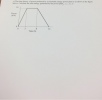 The time history of power produced by a renewable energy power plant is as shown in the figure below. Calculate the total energy generated by the power plant
 work , energy and power
120 m A boy rides a soapbox car down a hill as shown. The total mass of the 60 m boy and the car is 50 kg. If 1 000) of work are done against friction, the total kinetic energy of car and rider at the bottom is
work , energy and power
120 m A boy rides a soapbox car down a hill as shown. The total mass of the 60 m boy and the car is 50 kg. If 1 000) of work are done against friction, the total kinetic energy of car and rider at the bottom is
 a Question 1 (10 points) Power is the same as: energy work done - rate of work done force Save Question 2 (10 points) If non-conservative force is present in an isolated system, is the total mechanical
 work, energy and power
In a tug-of-war contest, the boys hockey team exerts a force of 5 000 N, while the first team rugby forwards exert a force of 6 500 N in the opposite direction. After 2 s the hockey team has tumbled through a distance of 6 m. What is the power of the forwards?
work, energy and power
In a tug-of-war contest, the boys hockey team exerts a force of 5 000 N, while the first team rugby forwards exert a force of 6 500 N in the opposite direction. After 2 s the hockey team has tumbled through a distance of 6 m. What is the power of the forwards?
 The energy of motion is called: Kinetic energy. potential energy, inertial energy. Power. In an inelastic collision: momentum is conserved. kinetic energy is conserved, both (a) and (b). If the velocity of a moving object is doubled and its mass is cut in half, the kinetic energy of the object is; remains the same, doubled quadrupled, cut in half. When the net work done on an object is speed of the object is me on an object is zero; the...
 The time history of power produced by a renewable energy power plant is as shown in the figure below. Calculate the total energy generated by the power plant
Most questions answered within 3 hours.
-
Where is the error in this code sequence?
String s1 = "Hello";
String s2 = "ello";...
asked 11 months ago -
Financial data for Joel de Paris, Inc., for last year
follow:
Joel de Paris, Inc.
Balance...
asked 11 months ago -
Consider this reaction:
Al2(SO4)3 (aq)+ BaCl3
(aq) Al2Cl6 (aq)- +
3BaSO4(s) . What is the...
asked 11 months ago -
Suppose that Savneet is considering increasing her
recent random sample from 20 car rentals to 40...
asked 11 months ago -
Trucks arrive at an unloading terminal at an average rate of 120
per hour.
Trucks arrive...
asked 11 months ago -
Why are methanol and ethanol completely soluble in water while
octanol is not very little soluble....
asked 11 months ago -
A facilities manager at a university reads in a research report
that the mean amount of...
asked 11 months ago -
When the CuSO4 is rehydrated by adding water to the anhydrous
compound, is this an endothermic...
asked 11 months ago -
A ray of sunlight is passing from diamond into crown glass; the
angle of incidence is...
asked 11 months ago -
A block of mass 0.249 kg is placed on top of a light, vertical
spring of...
asked 11 months ago -
how do the kidneys compensate in the presences of acidosis
a) trigger hyperventilate
b) reserve acid...
asked 11 months ago -
Question 501 pts
The rental rate of capital to the firm increases. Which of the
following...
asked 11 months ago