
Homework Answers
Ans ) Correct option is D. All of the above.
Restriction Fragment Length Polymorphism (RFLP) is a technique to
find variations in DNA on the basis of restriction enzymes
specificity. For RFLP, genomic DNA is isolated from the organism
and prepared for fragmentation. It is treated with restriction
endonucleases, leading to formation of a number of DNA fragments
which depends on the presence of of the recognition sites for the
enzyme. The fragments are separated on the basis of size using
Agarose Gel Electrophoresis. The bands from the gel are transferred
to nylon membrane after their treatment with alkali to denature the
double strandDNA into single strand DNA. This is called southern
blotting. The nylon membrane is treated with radioactive labelling
DNA probes which hybridize with their complementary sequences
present on the nylon membrane. An autoradiogram is generated using
X- ray to detect polymorphisms.
Hence, options A, B and C all are correct.
Add Answer to:
Question 40 Which of the following is involved in the Restriction Fragment-Length Polymorphism method: A. Southern...
(3) Polymorphism analysis of the sickle cell gene fragment (317 bp) that helps to make hemoglobin....
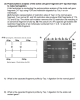 (3) Polymorphism analysis of the sickle cell gene fragment (317 bp) that helps to make hemoglobin. A lab technician is conducting the polymorphism analysis of the sickle cell gene fragment (317 bp) using PCR and restriction digestion by Taq 1 on six individuals. A) Schematic representation of restriction sites of Taq l in the normal gene fragment. Two normal S1 and S2 restriction sites produce DNA fragments of 174, 78, and 65 bp. The sickle cell mutation removes the S2...
9. On Worksheet 16.IIIB is a restriction map of bacteriophage lambda. You digest some lambda DNA...
 9. On Worksheet 16.IIIB is a restriction map of bacteriophage lambda. You digest some lambda DNA with the enzymes BamHI and HindIII separately and then load the fragments into an agarose gel and perform electrophoresis. Next, you perform a Southern analysis using the 4,878-bp EcoRI lambda fragment as a probe. a. Draw a picture of the electrophoresis gel, using the outline of the stained electrophoresis gel in Worksheet 16.IIIB (the two smallest HindIII fragments will run off the gel.) b....
Which of the following statements is FALSE about Southern blotting? a) smaller nucleic acid fragments move...
Which of the following statements is FALSE about Southern blotting? a) smaller nucleic acid fragments move faster than larger nucleic acid fragments in gels b) a hybridization probe for Southern blot can be single stranded DNA or RNA c) In most cases, DNA is cut with a restriction enzyme prior to gel electrophoresis d) smaller hybridization probes will always detect smaller DNA fragments than larger probes e) Southern blotting is used to analyze DNA
15- Which option BEST describes sticky ends by restriction enzymes B. Sticky ends A. Sticky ends...
 15- Which option BEST describes sticky ends by restriction enzymes B. Sticky ends A. Sticky ends are DNA fragments that carry a higher charge than normal after they have been cleaved are DNA fragments cleaved by a restriction enzyme so that one strand is longer than the other C. Sticky ends are DNA fragments cleaved by a restriction enzyme so that both strands are the same length. D. Sticky ends are DNA fragments that attract a carbohydrate molecule to one...
command 145 Genetics Assignment Genomic Analysis 1. Some bacteria normally produce endonucleases for what purpose? a)...
 command 145 Genetics Assignment Genomic Analysis 1. Some bacteria normally produce endonucleases for what purpose? a) necessary digestion of their own genome b) defense against viral infection c) bacteria never make endonucleases naturally 2. A blunt cutter produces DNA fragments with complementary overhanging regions. a) True b) False 3. Which of the following DNA sequences (when double-stranded) most likely represents a restriction endonuclease site for a 6-mer cutter? a) AGTAAGCTTC c) AGAGAGCCAA b) GGTAGATTCC d) None of the above 4....
And.. Exercise1: Give the basic steps involved in extracting genomic DNA from animal cells and tossues?...
 And..
Exercise1:
Give the basic steps involved in extracting genomic
DNA from animal cells and tossues?
23- Which of the following statements is correct? a. Longer DNA fragments migrate farther than shorter fragments. b. Migration distance is inversely proportional to the fragment size. c. Positively charged DNA migrates more rapidly than negatively charged DNA. d. Uncut DNA migrates farther than DNA cut with restriction enzymes. 24- Why do scientists load DNA of known sizes (also called "marker" or "ladder") into...
And..
Exercise1:
Give the basic steps involved in extracting genomic
DNA from animal cells and tossues?
23- Which of the following statements is correct? a. Longer DNA fragments migrate farther than shorter fragments. b. Migration distance is inversely proportional to the fragment size. c. Positively charged DNA migrates more rapidly than negatively charged DNA. d. Uncut DNA migrates farther than DNA cut with restriction enzymes. 24- Why do scientists load DNA of known sizes (also called "marker" or "ladder") into...
7. Explain the procedure for cloning DNA fragment into the plasmid PBR322 (shown on the right) (S...
 7. Explain the procedure for cloning DNA fragment into the plasmid PBR322 (shown on the right) (S pts.). The gene fragment of interest was obtained by digestion of chromosomal DNA with the restriction enzyme Sall and subsequent purification using agarose gel electrophoresis. Which antiblotic would you use in the final step of the cloning procedure, and Pst why? EcoR Sal Ampicillin Tetracycline resistanica(Ter Amp) PBR322 4,361 bp) Origin of replicatiorn (ori Pvull 8. Assume that your gene fragment from question...
Luestion 3 1 pts Review: You have the DNA that is radioactively labeled at the S'ends...
 Luestion 3 1 pts Review: You have the DNA that is radioactively labeled at the S'ends of DNA as shown below. But you want DNA that is labeled only at one end of the DNA, not both ends. One of the other undergraduate students in the lab suggests that you use a restriction enzyme to cut the DNA, then electrophorese the DNA in an agarose gel, then cut out the region of the gel with radioactive DNA fragment you want,...
A linear piece of DNA has the following restrictions sites: You decided to set up an...
 A linear piece of DNA has the following restrictions sites:
You decided to set up an experiment where you added one of these
restriction enzymes to this DNA. After this DNA was digested with
that restriction enzyme, you separated the resulting fragment(s)
using agarose electrophoresis. After the gel was stained with
ethidium bromide, you observed the following gel (the DNA ladder is
your reference standard and is comprised of a series of DNA
fragments of known length).
a) Which restriction...
A linear piece of DNA has the following restrictions sites:
You decided to set up an experiment where you added one of these
restriction enzymes to this DNA. After this DNA was digested with
that restriction enzyme, you separated the resulting fragment(s)
using agarose electrophoresis. After the gel was stained with
ethidium bromide, you observed the following gel (the DNA ladder is
your reference standard and is comprised of a series of DNA
fragments of known length).
a) Which restriction...
Easy question Given that a DNA fragment law the end (on right): Which one of the...
 Easy question
Given that a DNA fragment law the end (on right): Which one of the following DNA ends is com, Place the following steps in chronological order when creating a tomato genomic DNA library. The available materials are DNA ligase, restriction enzyme, tomato leaves, plasmid DNK to act as vector that has already been digested with the restriction enzyme, competent bacteria, and nutrient agar plates containing ampicillin. You may use a step more than once. Add DNA ligase Transform...
Easy question
Given that a DNA fragment law the end (on right): Which one of the following DNA ends is com, Place the following steps in chronological order when creating a tomato genomic DNA library. The available materials are DNA ligase, restriction enzyme, tomato leaves, plasmid DNK to act as vector that has already been digested with the restriction enzyme, competent bacteria, and nutrient agar plates containing ampicillin. You may use a step more than once. Add DNA ligase Transform...
 (3) Polymorphism analysis of the sickle cell gene fragment (317 bp) that helps to make hemoglobin. A lab technician is conducting the polymorphism analysis of the sickle cell gene fragment (317 bp) using PCR and restriction digestion by Taq 1 on six individuals. A) Schematic representation of restriction sites of Taq l in the normal gene fragment. Two normal S1 and S2 restriction sites produce DNA fragments of 174, 78, and 65 bp. The sickle cell mutation removes the S2...
 9. On Worksheet 16.IIIB is a restriction map of bacteriophage lambda. You digest some lambda DNA with the enzymes BamHI and HindIII separately and then load the fragments into an agarose gel and perform electrophoresis. Next, you perform a Southern analysis using the 4,878-bp EcoRI lambda fragment as a probe. a. Draw a picture of the electrophoresis gel, using the outline of the stained electrophoresis gel in Worksheet 16.IIIB (the two smallest HindIII fragments will run off the gel.) b....
 15- Which option BEST describes sticky ends by restriction enzymes B. Sticky ends A. Sticky ends are DNA fragments that carry a higher charge than normal after they have been cleaved are DNA fragments cleaved by a restriction enzyme so that one strand is longer than the other C. Sticky ends are DNA fragments cleaved by a restriction enzyme so that both strands are the same length. D. Sticky ends are DNA fragments that attract a carbohydrate molecule to one...
 command 145 Genetics Assignment Genomic Analysis 1. Some bacteria normally produce endonucleases for what purpose? a) necessary digestion of their own genome b) defense against viral infection c) bacteria never make endonucleases naturally 2. A blunt cutter produces DNA fragments with complementary overhanging regions. a) True b) False 3. Which of the following DNA sequences (when double-stranded) most likely represents a restriction endonuclease site for a 6-mer cutter? a) AGTAAGCTTC c) AGAGAGCCAA b) GGTAGATTCC d) None of the above 4....
 And..
Exercise1:
Give the basic steps involved in extracting genomic
DNA from animal cells and tossues?
23- Which of the following statements is correct? a. Longer DNA fragments migrate farther than shorter fragments. b. Migration distance is inversely proportional to the fragment size. c. Positively charged DNA migrates more rapidly than negatively charged DNA. d. Uncut DNA migrates farther than DNA cut with restriction enzymes. 24- Why do scientists load DNA of known sizes (also called "marker" or "ladder") into...
And..
Exercise1:
Give the basic steps involved in extracting genomic
DNA from animal cells and tossues?
23- Which of the following statements is correct? a. Longer DNA fragments migrate farther than shorter fragments. b. Migration distance is inversely proportional to the fragment size. c. Positively charged DNA migrates more rapidly than negatively charged DNA. d. Uncut DNA migrates farther than DNA cut with restriction enzymes. 24- Why do scientists load DNA of known sizes (also called "marker" or "ladder") into...
 7. Explain the procedure for cloning DNA fragment into the plasmid PBR322 (shown on the right) (S pts.). The gene fragment of interest was obtained by digestion of chromosomal DNA with the restriction enzyme Sall and subsequent purification using agarose gel electrophoresis. Which antiblotic would you use in the final step of the cloning procedure, and Pst why? EcoR Sal Ampicillin Tetracycline resistanica(Ter Amp) PBR322 4,361 bp) Origin of replicatiorn (ori Pvull 8. Assume that your gene fragment from question...
 Luestion 3 1 pts Review: You have the DNA that is radioactively labeled at the S'ends of DNA as shown below. But you want DNA that is labeled only at one end of the DNA, not both ends. One of the other undergraduate students in the lab suggests that you use a restriction enzyme to cut the DNA, then electrophorese the DNA in an agarose gel, then cut out the region of the gel with radioactive DNA fragment you want,...
 A linear piece of DNA has the following restrictions sites:
You decided to set up an experiment where you added one of these
restriction enzymes to this DNA. After this DNA was digested with
that restriction enzyme, you separated the resulting fragment(s)
using agarose electrophoresis. After the gel was stained with
ethidium bromide, you observed the following gel (the DNA ladder is
your reference standard and is comprised of a series of DNA
fragments of known length).
a) Which restriction...
A linear piece of DNA has the following restrictions sites:
You decided to set up an experiment where you added one of these
restriction enzymes to this DNA. After this DNA was digested with
that restriction enzyme, you separated the resulting fragment(s)
using agarose electrophoresis. After the gel was stained with
ethidium bromide, you observed the following gel (the DNA ladder is
your reference standard and is comprised of a series of DNA
fragments of known length).
a) Which restriction...
 Easy question
Given that a DNA fragment law the end (on right): Which one of the following DNA ends is com, Place the following steps in chronological order when creating a tomato genomic DNA library. The available materials are DNA ligase, restriction enzyme, tomato leaves, plasmid DNK to act as vector that has already been digested with the restriction enzyme, competent bacteria, and nutrient agar plates containing ampicillin. You may use a step more than once. Add DNA ligase Transform...
Easy question
Given that a DNA fragment law the end (on right): Which one of the following DNA ends is com, Place the following steps in chronological order when creating a tomato genomic DNA library. The available materials are DNA ligase, restriction enzyme, tomato leaves, plasmid DNK to act as vector that has already been digested with the restriction enzyme, competent bacteria, and nutrient agar plates containing ampicillin. You may use a step more than once. Add DNA ligase Transform...
Most questions answered within 3 hours.
-
Where is the error in this code sequence?
String s1 = "Hello";
String s2 = "ello";...
asked 11 months ago -
Financial data for Joel de Paris, Inc., for last year
follow:
Joel de Paris, Inc.
Balance...
asked 11 months ago -
Consider this reaction:
Al2(SO4)3 (aq)+ BaCl3
(aq) Al2Cl6 (aq)- +
3BaSO4(s) . What is the...
asked 11 months ago -
Suppose that Savneet is considering increasing her
recent random sample from 20 car rentals to 40...
asked 11 months ago -
Trucks arrive at an unloading terminal at an average rate of 120
per hour.
Trucks arrive...
asked 11 months ago -
Why are methanol and ethanol completely soluble in water while
octanol is not very little soluble....
asked 11 months ago -
A facilities manager at a university reads in a research report
that the mean amount of...
asked 11 months ago -
When the CuSO4 is rehydrated by adding water to the anhydrous
compound, is this an endothermic...
asked 11 months ago -
A ray of sunlight is passing from diamond into crown glass; the
angle of incidence is...
asked 11 months ago -
A block of mass 0.249 kg is placed on top of a light, vertical
spring of...
asked 11 months ago -
how do the kidneys compensate in the presences of acidosis
a) trigger hyperventilate
b) reserve acid...
asked 11 months ago -
Question 501 pts
The rental rate of capital to the firm increases. Which of the
following...
asked 11 months ago