Homework Answers

Add Answer to:
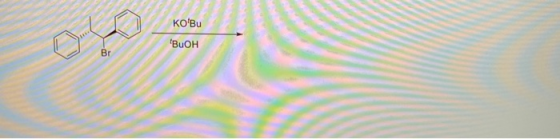
Justify the chemcial phenomena. Im this recation, only 1
stereoisomer is observed. Draw the predicted product...
Justify the chemcial phenomena. explain the role that an ether complain stabilizing the product of the...
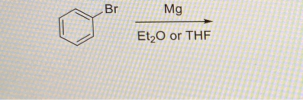 Justify the chemcial phenomena. explain the role that an ether
complain stabilizing the product of the reaction and why the ether
must be anhydrous. Draw the predicted product as well.
Br Mg Et20 or THE
Justify the chemcial phenomena. explain the role that an ether
complain stabilizing the product of the reaction and why the ether
must be anhydrous. Draw the predicted product as well.
Br Mg Et20 or THE
The stereoisomer is meso but can someone help me draw and justify the mechanism Lab 13-...
 The stereoisomer is meso but can someone help me draw and
justify the mechanism
Lab 13- Preparation of dibromosuccinicacid (due week 11) 1) Which stereoisomer of dibromosuccinic acid (racemic melting point 170°C, meso melting point 2900C) did you obtain? Draw it and show a mechanism to justify its formation.
The stereoisomer is meso but can someone help me draw and
justify the mechanism
Lab 13- Preparation of dibromosuccinicacid (due week 11) 1) Which stereoisomer of dibromosuccinic acid (racemic melting point 170°C, meso melting point 2900C) did you obtain? Draw it and show a mechanism to justify its formation.
3. For each of the reactions shown below, predict the single major product and determine which...
 3. For each of the reactions shown below, predict the single major product and determine which mechanism, S1, Sh2, E1, or E2, is operative. Briefly justify your choice. Be sure to indicate stereochemistry in the product if it is relevant s Ko'Bu BUOH C. conc. H2SO4 d. [1 equiv ) NaOMe Br MeOH
3) For the following transformations draw the product(s) in the box(es) below. Draw only one stereoisomer...
 3) For the following transformations draw the product(s) in the box(es) below. Draw only one stereoisomer in the box if there is more than one. On the right side check the box that corresponds to the product obtained from the reaction, if one is provided. Only organic products need to be d. 1 enantiomer 1:1 mix of mixture of (1 chiral compound) Br2 1 enantiomer 1:1 mix of mixture of (1 chiral compound) H20 1 enantiomer (1 chiral compound) c)...
2. (40 pts, 4 pts each) Prediet-the-products. Draw the major organic product after each series of...
 2. (40 pts, 4 pts each) Prediet-the-products. Draw the major organic product after each series of reactions. You must draw the correct regioisomer and/or stereoisomer for full credit. Some schemes contain more than one step; you do not need to draw the product after each step. Only the final products drawn in the boxes provided will be graded. 1. Brz, CHCI 1. Na, NHI -CHE 2. NaOMe (xs) DMSO 2. mCPBA CHCI 3. H. HSO4 НО. CI Но, Me 1....
1a. Draw the product in the following lb. Draw the two diastereomeric substitution products reaction and...
 1a. Draw the product in the following lb. Draw the two diastereomeric substitution products reaction and clearly indicate the obtained in the reaction below. stereochemistry Br CH2OH, CH,OH2 Br reflux CH3OH, Br H.LLDMSO + t-BuOH + KCI 1-BUOK 1 equiv 1c. Draw the reactive conformation (with 1d. The most favored and least favored compounds arrow pushing) and the product for the that could be obtained by treatment of 2,4- reaction below (show stereochemistry). dimethylpenta-1,3-diene with one equivalent of HBr. +...
3. Draw the expected products for the following reactions. Treat each stereoisomer as a separate product...
 3. Draw the expected products for the following reactions. Treat each stereoisomer as a separate product and draw it. No mechanisms are required. Note: you will be penalized for redundant or irrelevant structures: 37 points. a. (6 points) b. (6 points) C. (5 points) d. Consider only monohalogenation and ignore stereochemistry (9 points) e. (5 points) 1. (6 points)
5) For the following transformations draw the product(s) in the box(es) below. Draw only one stereoisomer in the box if there is more than one. On the right side check the box that corresponds to...
 5) For the following transformations draw the product(s) in the box(es) below. Draw only one stereoisomer in the box if there is more than one. On the right side check the box that corresponds to the product obtained from the reaction, if one is provided. Only organic products need to be 1 enantiomer 1:1 mx of mixture of 1 chiral compound) 1) HNO3, H2SO4 2) Ni, H2 O2N Liche 1 enantiomer 1:1 mix of mture of b) (1 chiral compound)...
1a. Draw the product in the following lb. Draw the two diastereomeric substitution products reaction and...
 1a. Draw the product in the following lb. Draw the two diastereomeric substitution products reaction and clearly indicate the obtained in the reaction below. stereochemistry. Br CH2OH, CH.DH, Br reflux H. LL. DMSO CHBuOK. + t-BuOH + KCI t-BuOK 1 equiv 1c. Draw the reactive conformation (with 1d. The most favored and least favored compounds arrow pushing) and the product for the that could be obtained by treatment of 2,4- reaction below (show stereochemistry). dimethylpenta-1,3-diene with one equivalent of HBr....
please help with all questions!!! TIDO P ODPD 1a. Draw the product in the following 1b. Draw the two diastereomeric...
 please help with all questions!!!
TIDO P ODPD 1a. Draw the product in the following 1b. Draw the two diastereomeric substitution products reaction and clearly indicate the obtained in the reaction below. stereochemistry Br CHOH CH OH, Br reflux + t-BuOH SH DMSO 1-BUOK 1 equiv + KCI 1c. Draw the reactive conformation (with 1d. The most favored and least favored compounds arrow pushing) and the product for the that could be obtained by treatment of 2,4- reaction below (show...
please help with all questions!!!
TIDO P ODPD 1a. Draw the product in the following 1b. Draw the two diastereomeric substitution products reaction and clearly indicate the obtained in the reaction below. stereochemistry Br CHOH CH OH, Br reflux + t-BuOH SH DMSO 1-BUOK 1 equiv + KCI 1c. Draw the reactive conformation (with 1d. The most favored and least favored compounds arrow pushing) and the product for the that could be obtained by treatment of 2,4- reaction below (show...
 Justify the chemcial phenomena. explain the role that an ether
complain stabilizing the product of the reaction and why the ether
must be anhydrous. Draw the predicted product as well.
Br Mg Et20 or THE
Justify the chemcial phenomena. explain the role that an ether
complain stabilizing the product of the reaction and why the ether
must be anhydrous. Draw the predicted product as well.
Br Mg Et20 or THE
 The stereoisomer is meso but can someone help me draw and
justify the mechanism
Lab 13- Preparation of dibromosuccinicacid (due week 11) 1) Which stereoisomer of dibromosuccinic acid (racemic melting point 170°C, meso melting point 2900C) did you obtain? Draw it and show a mechanism to justify its formation.
The stereoisomer is meso but can someone help me draw and
justify the mechanism
Lab 13- Preparation of dibromosuccinicacid (due week 11) 1) Which stereoisomer of dibromosuccinic acid (racemic melting point 170°C, meso melting point 2900C) did you obtain? Draw it and show a mechanism to justify its formation.
 3. For each of the reactions shown below, predict the single major product and determine which mechanism, S1, Sh2, E1, or E2, is operative. Briefly justify your choice. Be sure to indicate stereochemistry in the product if it is relevant s Ko'Bu BUOH C. conc. H2SO4 d. [1 equiv ) NaOMe Br MeOH
 3) For the following transformations draw the product(s) in the box(es) below. Draw only one stereoisomer in the box if there is more than one. On the right side check the box that corresponds to the product obtained from the reaction, if one is provided. Only organic products need to be d. 1 enantiomer 1:1 mix of mixture of (1 chiral compound) Br2 1 enantiomer 1:1 mix of mixture of (1 chiral compound) H20 1 enantiomer (1 chiral compound) c)...
 2. (40 pts, 4 pts each) Prediet-the-products. Draw the major organic product after each series of reactions. You must draw the correct regioisomer and/or stereoisomer for full credit. Some schemes contain more than one step; you do not need to draw the product after each step. Only the final products drawn in the boxes provided will be graded. 1. Brz, CHCI 1. Na, NHI -CHE 2. NaOMe (xs) DMSO 2. mCPBA CHCI 3. H. HSO4 НО. CI Но, Me 1....
 1a. Draw the product in the following lb. Draw the two diastereomeric substitution products reaction and clearly indicate the obtained in the reaction below. stereochemistry Br CH2OH, CH,OH2 Br reflux CH3OH, Br H.LLDMSO + t-BuOH + KCI 1-BUOK 1 equiv 1c. Draw the reactive conformation (with 1d. The most favored and least favored compounds arrow pushing) and the product for the that could be obtained by treatment of 2,4- reaction below (show stereochemistry). dimethylpenta-1,3-diene with one equivalent of HBr. +...
 3. Draw the expected products for the following reactions. Treat each stereoisomer as a separate product and draw it. No mechanisms are required. Note: you will be penalized for redundant or irrelevant structures: 37 points. a. (6 points) b. (6 points) C. (5 points) d. Consider only monohalogenation and ignore stereochemistry (9 points) e. (5 points) 1. (6 points)
 5) For the following transformations draw the product(s) in the box(es) below. Draw only one stereoisomer in the box if there is more than one. On the right side check the box that corresponds to the product obtained from the reaction, if one is provided. Only organic products need to be 1 enantiomer 1:1 mx of mixture of 1 chiral compound) 1) HNO3, H2SO4 2) Ni, H2 O2N Liche 1 enantiomer 1:1 mix of mture of b) (1 chiral compound)...
 1a. Draw the product in the following lb. Draw the two diastereomeric substitution products reaction and clearly indicate the obtained in the reaction below. stereochemistry. Br CH2OH, CH.DH, Br reflux H. LL. DMSO CHBuOK. + t-BuOH + KCI t-BuOK 1 equiv 1c. Draw the reactive conformation (with 1d. The most favored and least favored compounds arrow pushing) and the product for the that could be obtained by treatment of 2,4- reaction below (show stereochemistry). dimethylpenta-1,3-diene with one equivalent of HBr....
 please help with all questions!!!
TIDO P ODPD 1a. Draw the product in the following 1b. Draw the two diastereomeric substitution products reaction and clearly indicate the obtained in the reaction below. stereochemistry Br CHOH CH OH, Br reflux + t-BuOH SH DMSO 1-BUOK 1 equiv + KCI 1c. Draw the reactive conformation (with 1d. The most favored and least favored compounds arrow pushing) and the product for the that could be obtained by treatment of 2,4- reaction below (show...
please help with all questions!!!
TIDO P ODPD 1a. Draw the product in the following 1b. Draw the two diastereomeric substitution products reaction and clearly indicate the obtained in the reaction below. stereochemistry Br CHOH CH OH, Br reflux + t-BuOH SH DMSO 1-BUOK 1 equiv + KCI 1c. Draw the reactive conformation (with 1d. The most favored and least favored compounds arrow pushing) and the product for the that could be obtained by treatment of 2,4- reaction below (show...
Most questions answered within 3 hours.
-
Where is the error in this code sequence?
String s1 = "Hello";
String s2 = "ello";...
asked 10 months ago -
Financial data for Joel de Paris, Inc., for last year
follow:
Joel de Paris, Inc.
Balance...
asked 10 months ago -
Consider this reaction:
Al2(SO4)3 (aq)+ BaCl3
(aq) Al2Cl6 (aq)- +
3BaSO4(s) . What is the...
asked 10 months ago -
Suppose that Savneet is considering increasing her
recent random sample from 20 car rentals to 40...
asked 10 months ago -
Trucks arrive at an unloading terminal at an average rate of 120
per hour.
Trucks arrive...
asked 10 months ago -
Why are methanol and ethanol completely soluble in water while
octanol is not very little soluble....
asked 10 months ago -
A facilities manager at a university reads in a research report
that the mean amount of...
asked 10 months ago -
When the CuSO4 is rehydrated by adding water to the anhydrous
compound, is this an endothermic...
asked 10 months ago -
A ray of sunlight is passing from diamond into crown glass; the
angle of incidence is...
asked 10 months ago -
A block of mass 0.249 kg is placed on top of a light, vertical
spring of...
asked 10 months ago -
how do the kidneys compensate in the presences of acidosis
a) trigger hyperventilate
b) reserve acid...
asked 10 months ago -
Question 501 pts
The rental rate of capital to the firm increases. Which of the
following...
asked 10 months ago